Loading archive…
Chicago 2016
Please don’t look at my vacation photos
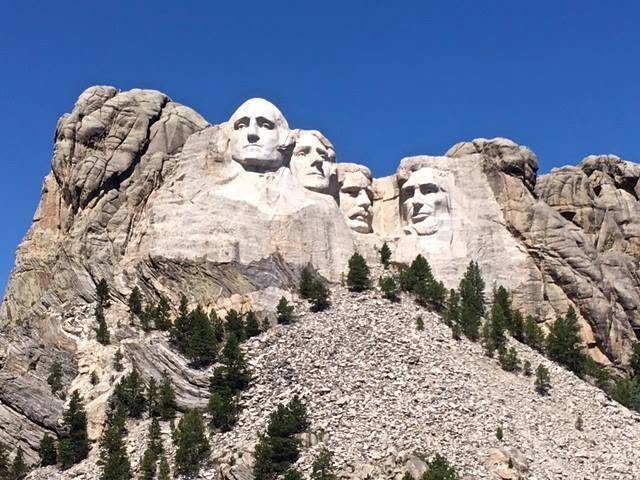
Please don't feel obligated to look at my 'vacation' photos. First of all, you're not in them-- and photographs that do not feature the viewer have been socially-proven to be mass lamer than ones that do. Secondly they're not that good. And lastly, it wasn't even really a vacation.
I recently logged more than 4700 miles on a round-trip drive to Chicago to drop my son at college. At times, the road was so long and boring it seemed that by the time I reached the end of it, he'd be graduated. In reality it was only 12 days...
My hope was to return from this adventure having at least learned something about myself-- perhaps even having undertaken some kind of reasonably profound midlife transformation. I don't know what I was thinking! All I got was hoarse and dizzy, with a semi-dislocated hip I like to call 'accelerator hip' (the cruise control isn't working in the van...)
I don't know what I learned. Covering as much ground as I did, I'm not even sure what I saw. I strove to stay as fully inside each moment as possible-- to SEE things rather than merely look at them. But in the end, most of my discretionary time was spent working, as the internet connection was generally much more reliable than I'd hoped it would be. In that respect it was kind of like being at home, only I had to clean bugs off my windsheild more often...
A couple of general impressions:
* People are people. I've been known to make comedy jokes about those who don't live where I live or don't look like I look or don't dig what I dig. But there are genuinely kind people out there who don't give a damn about what I like or do. They're just doing their jobs and taking care of their own shits
* I've seen as many Trump signs in Ferndale as I did in South Dakota, Wisconsin and Idaho combined. In general, I did not notice much evidence that Donald Trump even exists, let alone is running for president. I assume he still does and is, but the uppermost western quadrant of the US doesn't seem inclined to erect billboards on their land--and they have a ton of it
* We live in a crowded and expensive place on Earth. Other than coming into Chicago on a weekday at rush hour, I never had to slow my vehicle down once-- anywhere. The traffic in Seattle is worse than Chicago and the traffic in Bellingham is heavier than any other surface street I drove and that includes not only Rapid City, Butte and Sioux Falls, but also Madison, Milwaukee and Minneapolis. There's a lot of people and cars on the west coast, and the people who drive them are willing to pay a TON for what they eat & drink, and for the souvenirs they buy
Still, I wouldn't trade. It was nice being in Bellingham today. And even though I'd only been gone 12 days, I felt as though I could see it through objective eyes.
But boy are my arms tired...
12 dusty days on the trail roundtrip Bellingham-to-Chicago. Please don't look at these photos-- I'm only posting them so they'll be in one place for me to enjoy later...
Vietnam 2026
Saigon
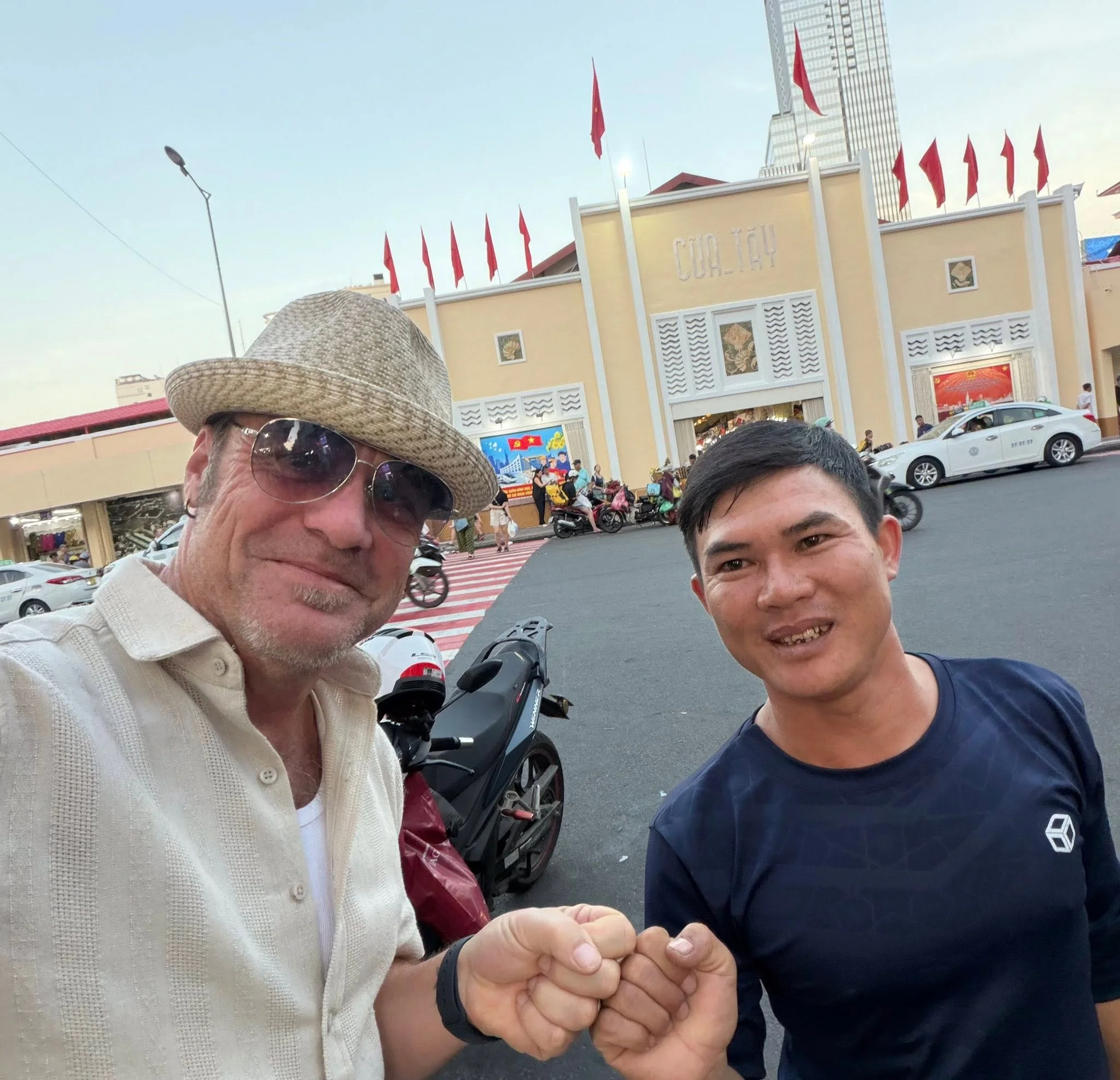
“Saigon. Shit…” — Ben Willard, 1969
A lot has changed here since the Captain’s apocalyptic bender, but there’s probably a lot that aint, too. Ancient cultures can be like that.
We are crazy about the current version of this place. And we’re entitled to that opinion with zero else to compare it to. Tomorrow we leave to begin exploring the rest of Vietnam, but for the moment we are are entirely spun out on Saigon.
Neither Patti nor I have been in Asia before. Maybe it’s all like this, but I guess I kind of doubt it…
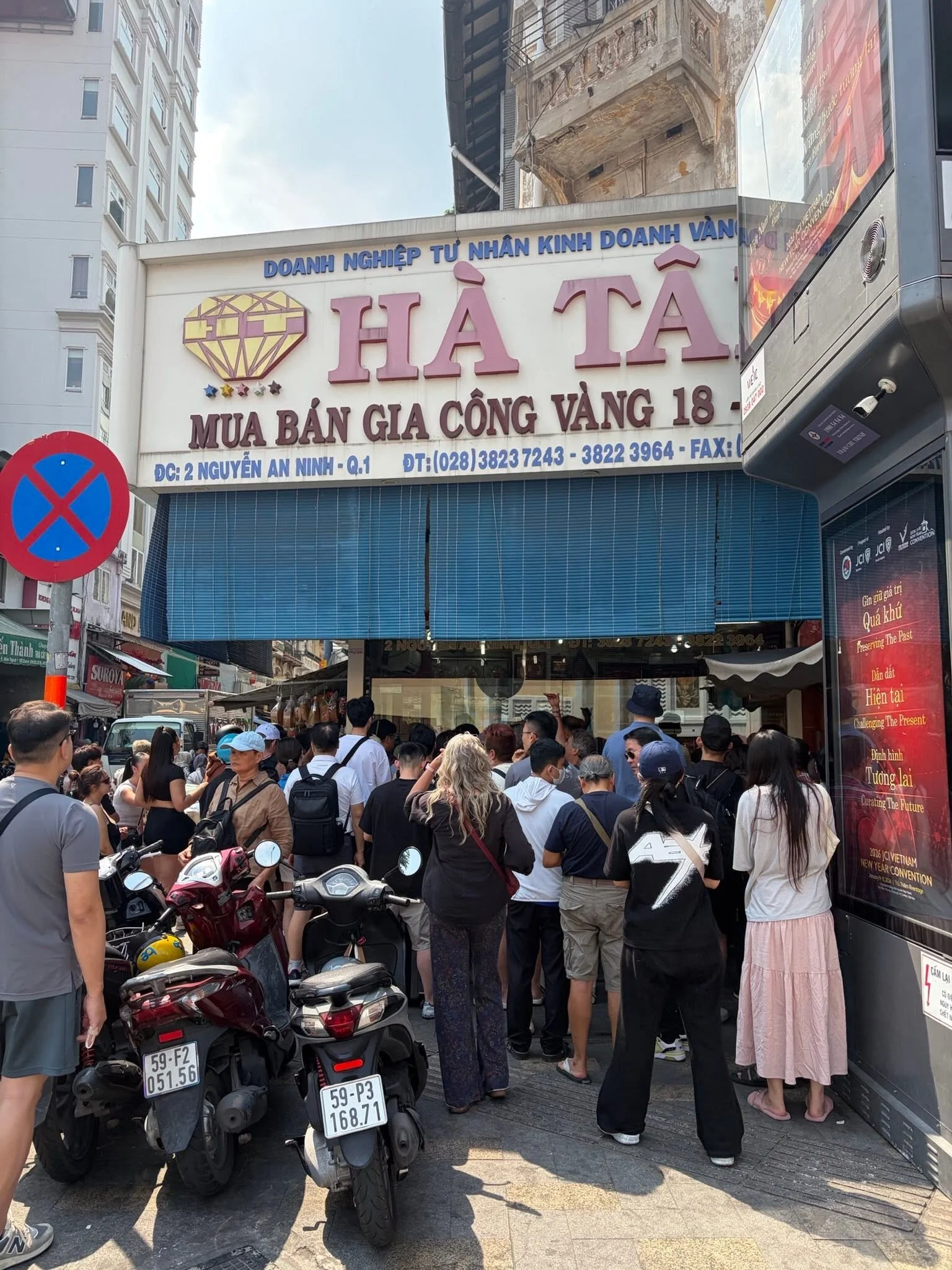
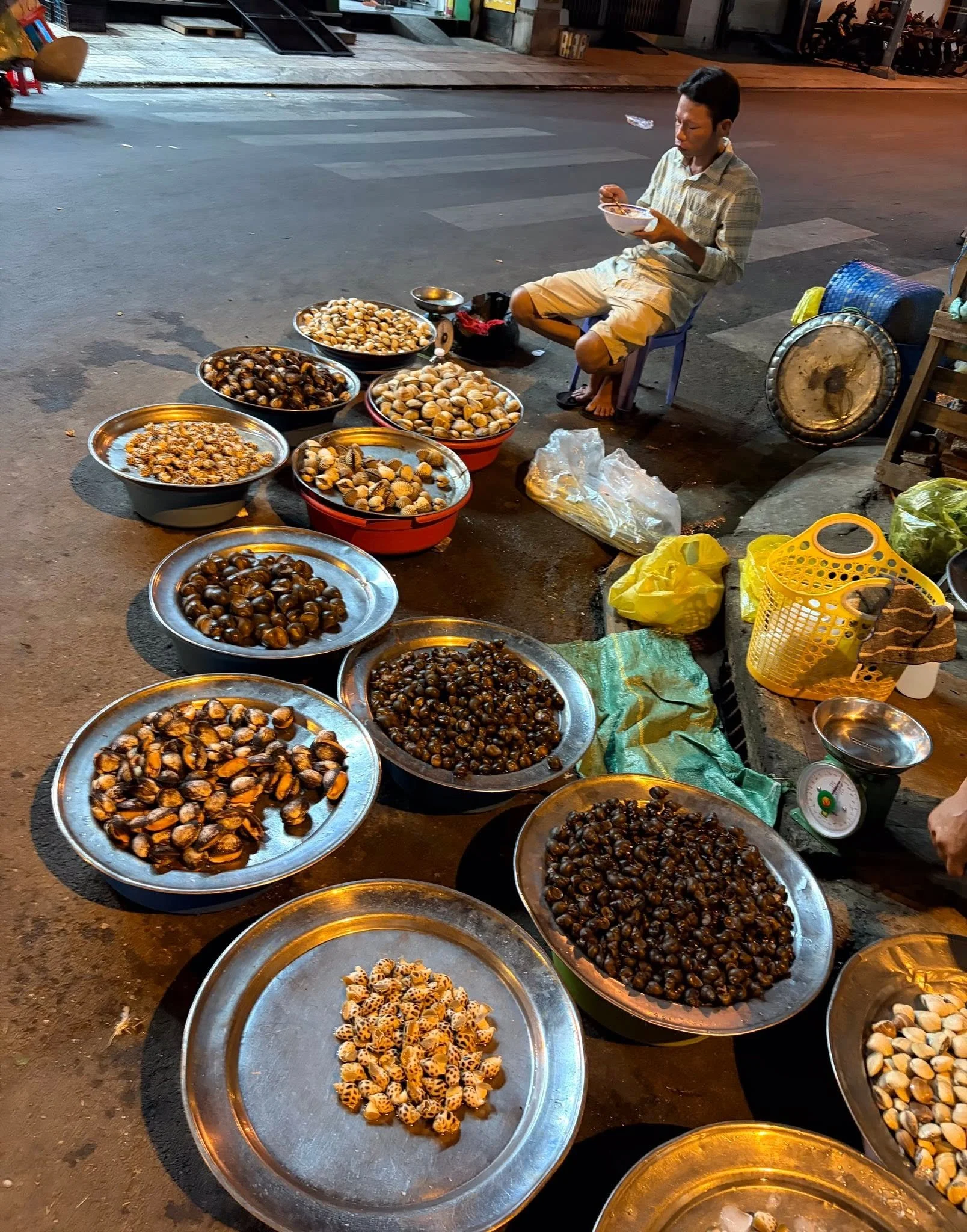
I have a weakness for a zoomy, chaotic, dirty city. The hustle, the smells, the commerce great and small. The barking is incessant here— food, body work, counterfeit Addidas. There’s no visible sex or drug trade, but pretty much anything else you want is here, for cheap. But don’t stop walking if you don’t want a shoeshine.
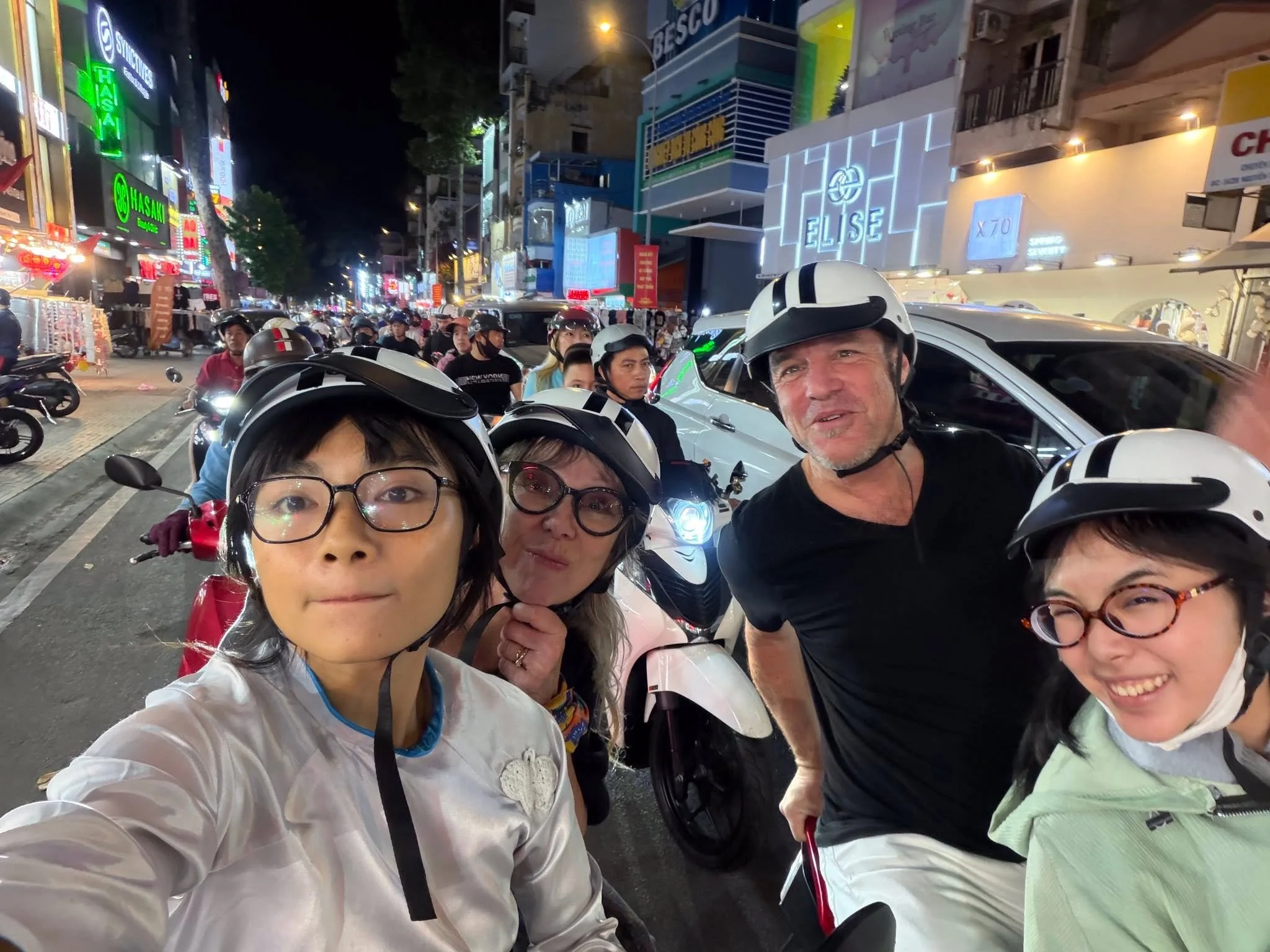
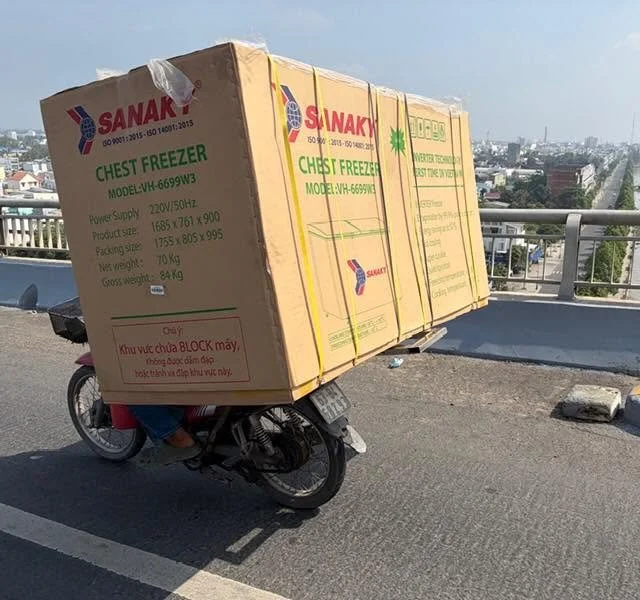
You can read all you want about the motorbike culture in Vietnam, but until you’ve swum in it, it cannot be fully understood. Tens of thousands (millions city-wide, actually) of 150cc scooters zig-zagging through every street, alley and sidewalk. Not only are there no lanes, but there doesn’t always even appear to be an agreed-upon direction. Add the odd bicycle, a few cars and a bunch of equally anarchistic pedestrians and it’s a real dance. Yet somehow it works, like a school of fish. There are plenty of wheezy 150cc horns— but no glares or flip-offs or furious oaths. Maneuvers you’d get shot for in the US happen at every ‘intersection’ but there’s no rage here.
About anything, really— as far as we could tell. The United States government had a prominent role in roughing this city (and country) up pretty bad (during our lifetimes) but there’s certainly no perceptable animosity toward Americans here. Not to mention the Chinese, Japanese or the fucking French.
There are scars. The architecture is a tangle because so much of the older stuff was rubbled by war. The food is a delicious riddle which benefits from the Imperialsim that wrote its recipes. Even ol’ Ma Nature has extracted her pound, unleashing 16 typhoons on the country during the wet season of 2025 alone, causing hellish flooding the likes of which Vietnam has never seen.
But by all accounts, these hardy and hearty people just get up in the morning and light a candle, then get to work cleaning up, again. It’s just what they do. It’s what they’ve always done.
I could go on (and on) but we need to pack for the next leg. The EZ Rider Motorcycle Gus guys pick us up at 8am to start our 6-day bike trip through the Mekong Delta and into the central highlands to DaLat. Talk to you then!
Vietnam 2026
Mekong Delta
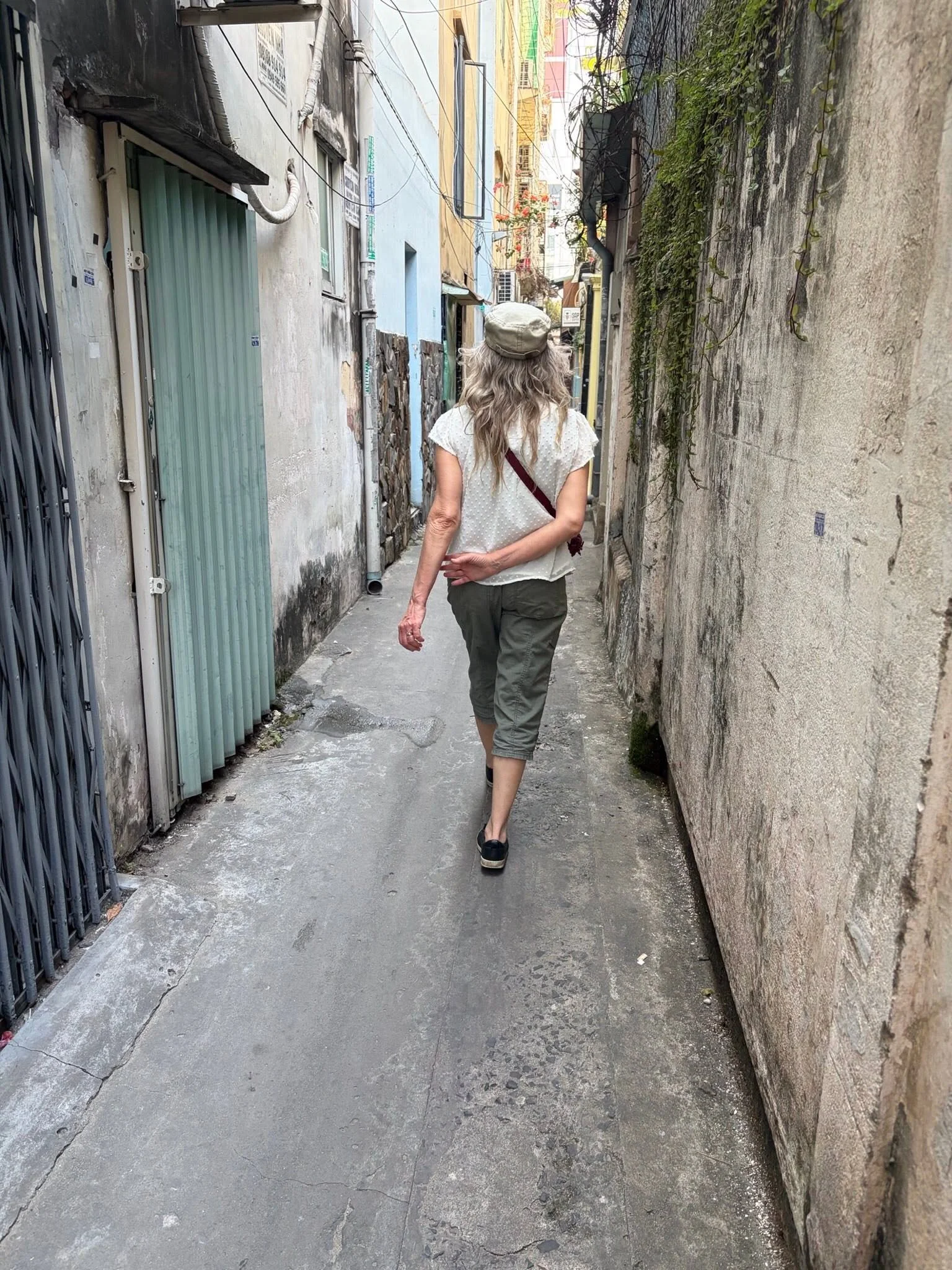
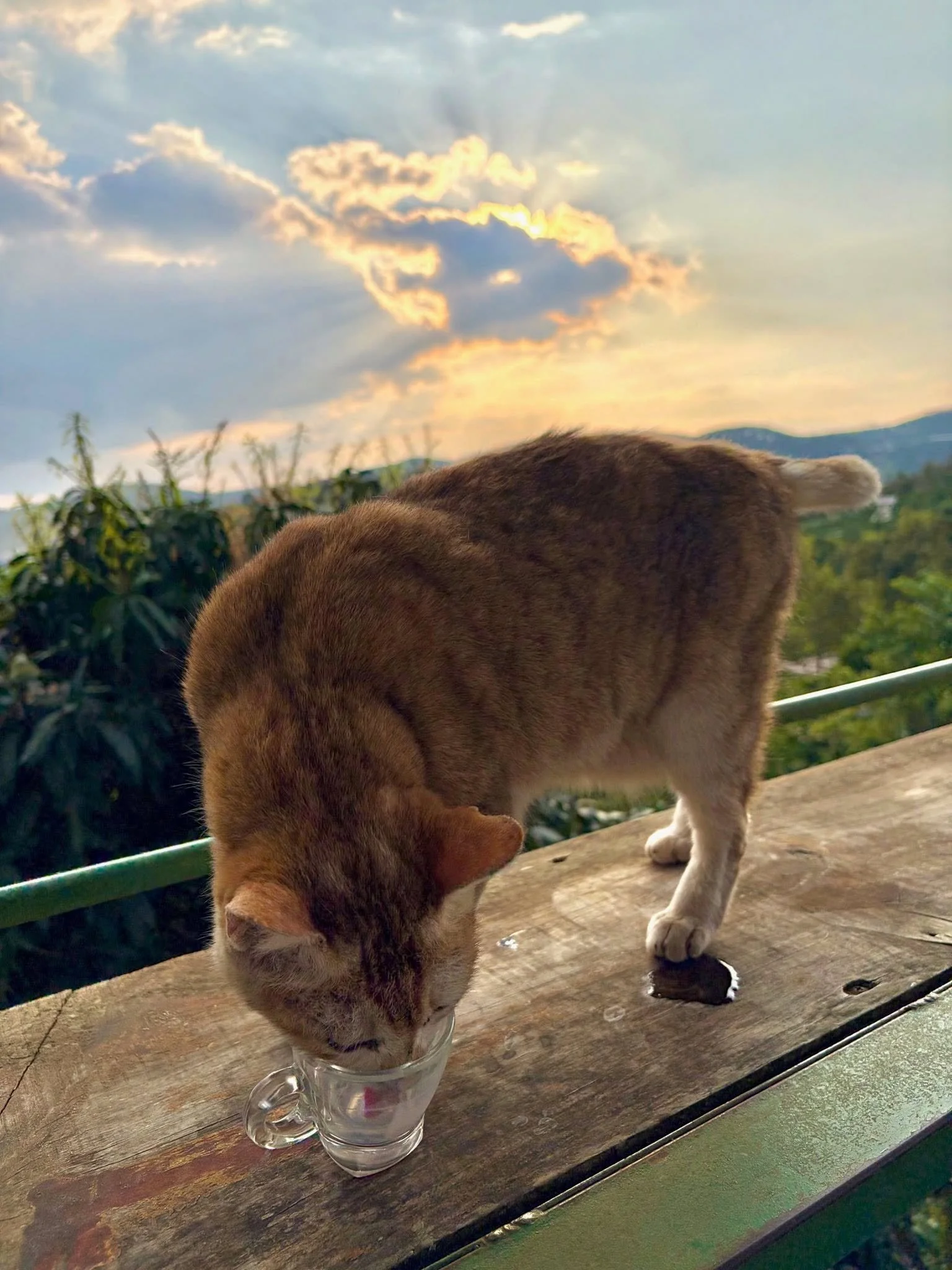
It did not take long for the chaos and clutter of Central Saigon to give way to the chaos and clutter of the outskirts, suburbs and eventually the agricultural land bounding the great metropolis. There were increasingly more potholes, squat toilets, feral cats, hammock cafes and piles of burning garbage the further out of the core we got. During the hour it took to reach the city limits, the backdrop changed from modern marbled mid-rises to a seemingly unending row of 1-level poured concrete structures with tin roofs and no real front doors. These structures were residential in the back, but with some level of ‘retail’ in front, selling anything from souvenirs to banh mi, coffee to coconuts— all just a few feet from the swarm of motorbikes, literally hundreds of them speeding by per minute.
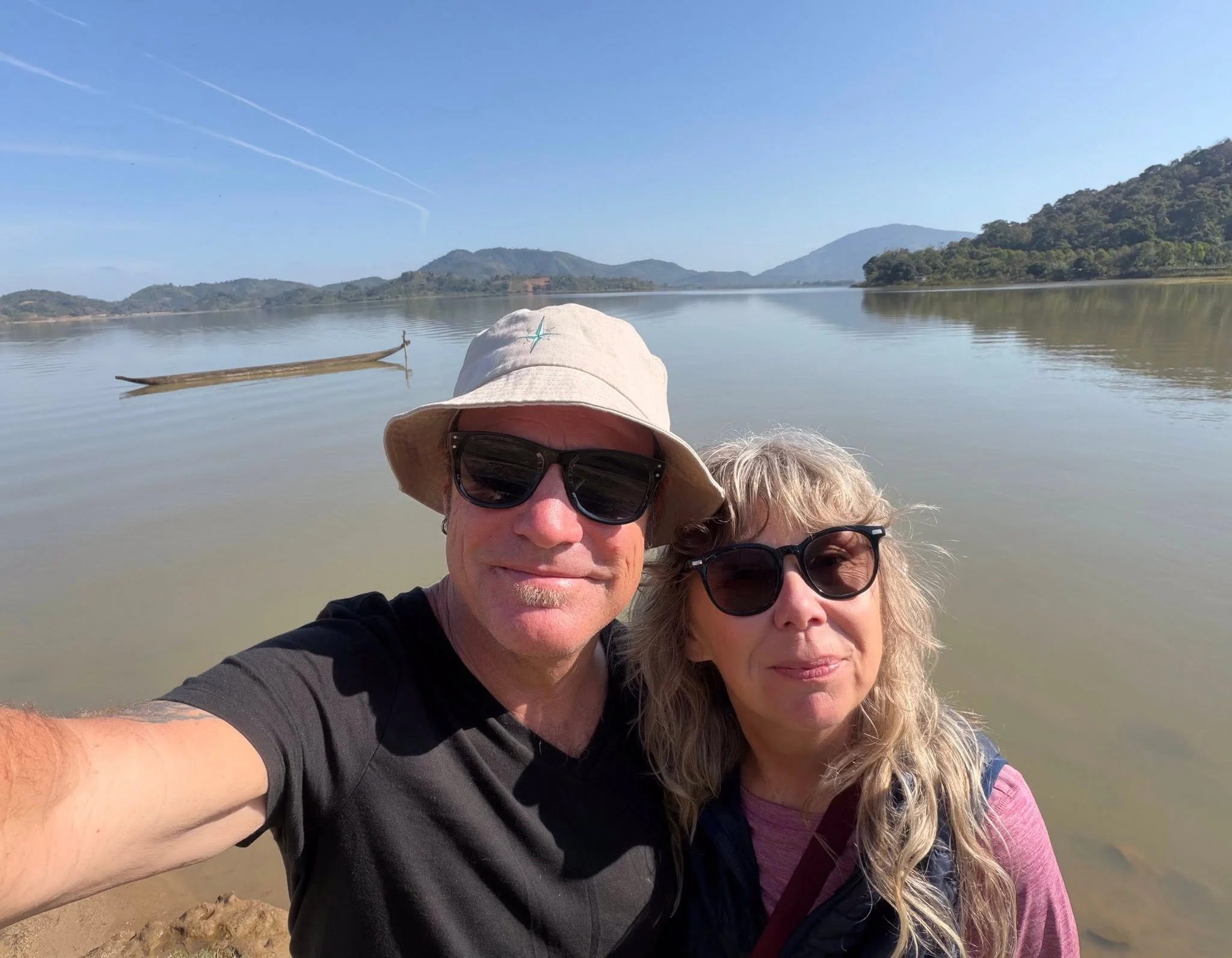
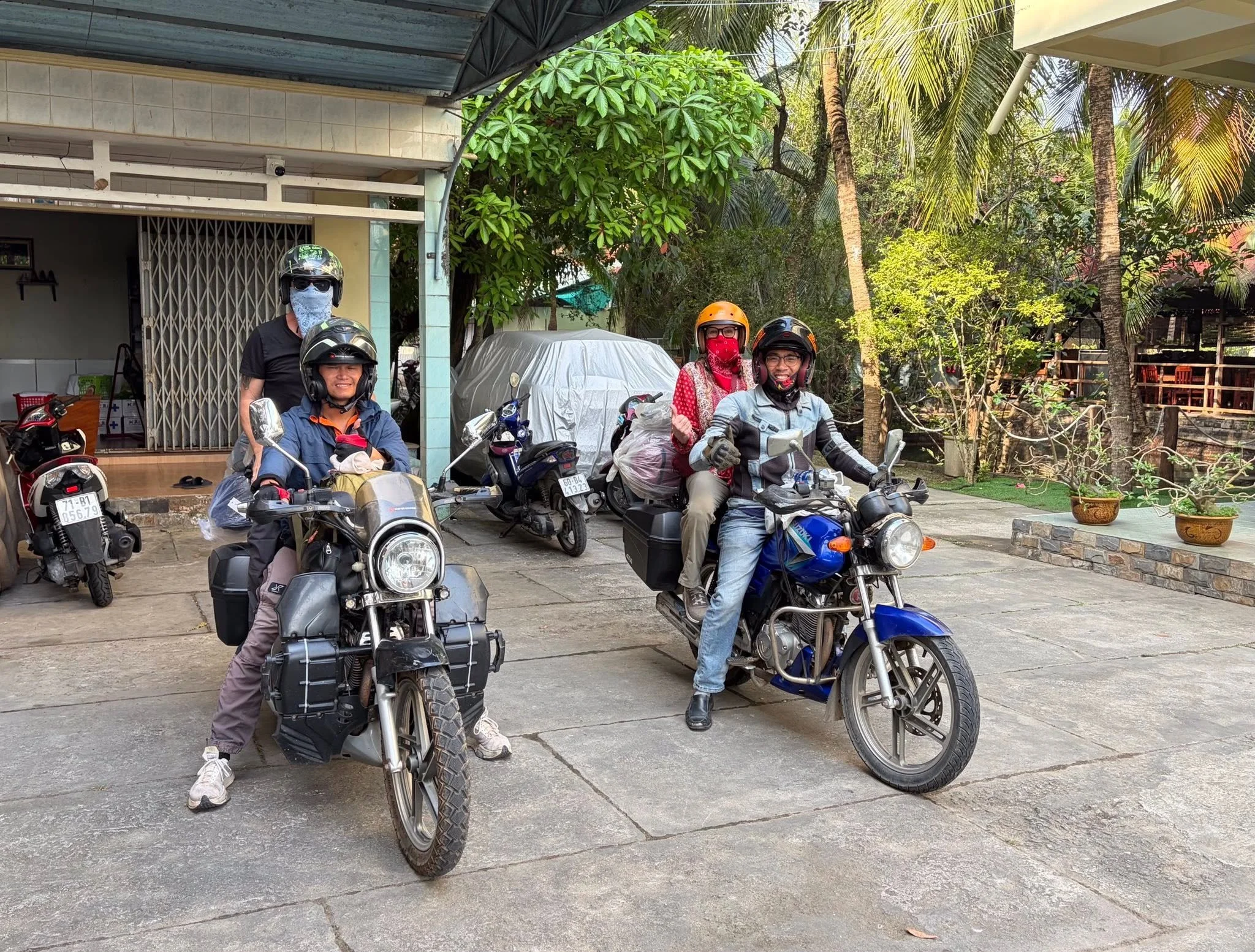
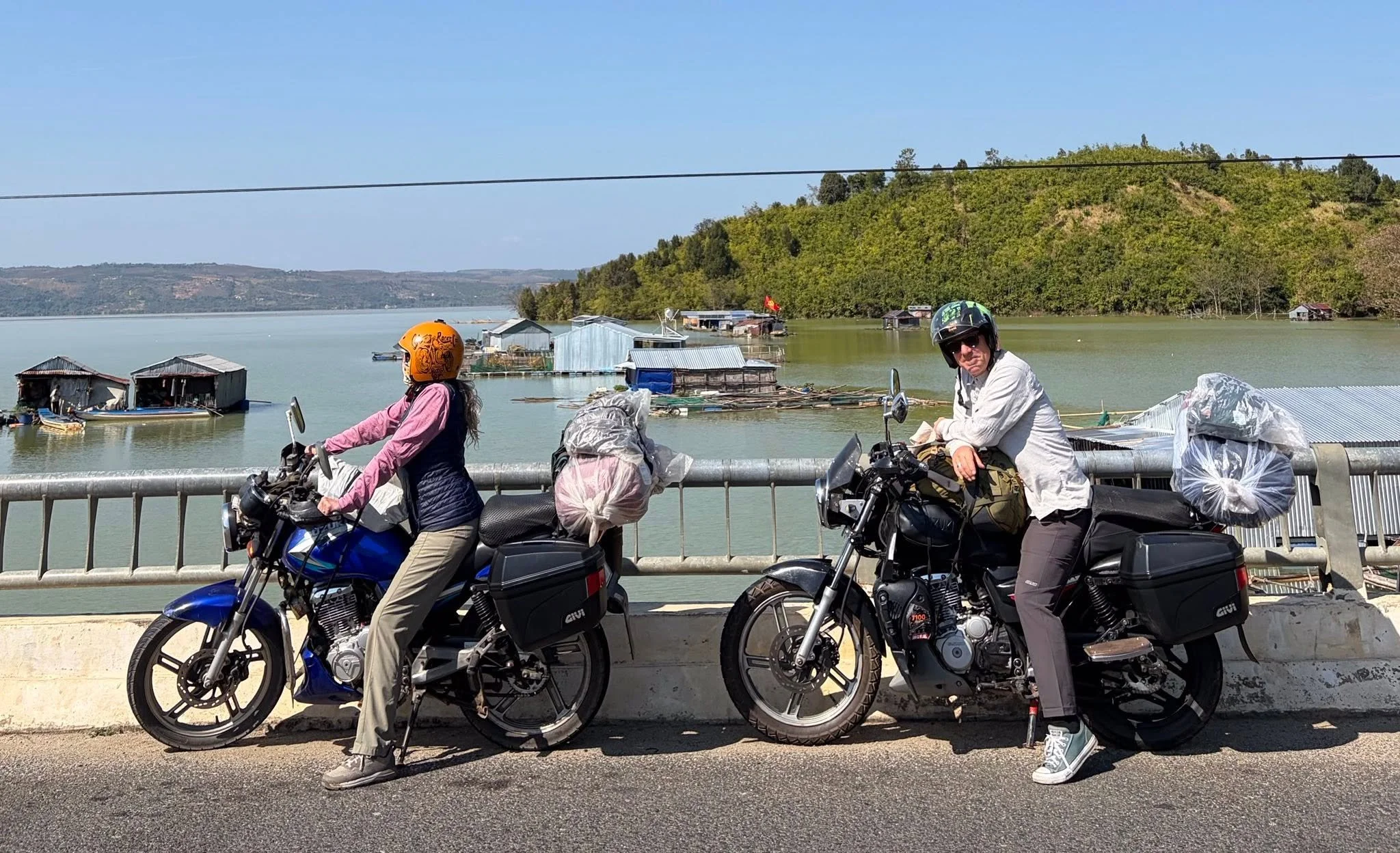
Our guides from the well-regarded Easy Rider tour company met us on the sidewalk in front of our hotel at 8:30 Friday morning, just like they said they would. Patti and I are not normally big on tours— I especially am more of a ‘get lost and find out’ traveler. But with the limited number of longer-haul transportation options available, we had decided to take a chance on this adventure which would boogie us from Saigon down through the Mekong Delta and then back up north and east to DaLat in the Central Highlands. Neither of us had ever been on a long motorcycle ride and had no idea what to expect.
It would be impossible to say enough about Sonny and Tim, but I’ll make a symbolic effort here. The entire experience was A+ and our guys were warm, articulate, intuitive, informed, hilarious and infinitely skilled at navigating a 150cc Yamaha motorcycle through any traffic, whether it be horn-blaring delivery trucks, packs of other 150cc motorbikes also carrying passengers (often 3 or even 4 of them!) or herds of water buffalo. By the time they’d strapped our gear onto the backs of their bikes, we felt like old friends. With a last glance at our Saigon hotel, we merged into traffic and out of the cocoon of District 1, into Vietnam.
That first day was hard. Neither of us were prepared for the workout 9 hours on the back of a motorcycle would be. Not just the butt, but the quads and lower back too, with the deterioration of the roads once leaving National Route 1 west of the city, on the outskirts of the Delta. We never rode much more than about an hour without stopping for something, be it a coffee, meal, a quick Vong or an educational opportunity. That first day we stopped to talk to some rice farmers and to some eucalyptus twig traders on the canal.
After not one but two ferry rides, we finally reached the hotel in Can Tho at about 7pm and fell immediately into a deep sleep on the cardboard mattress, not to stir until the alarm went off just before 5.
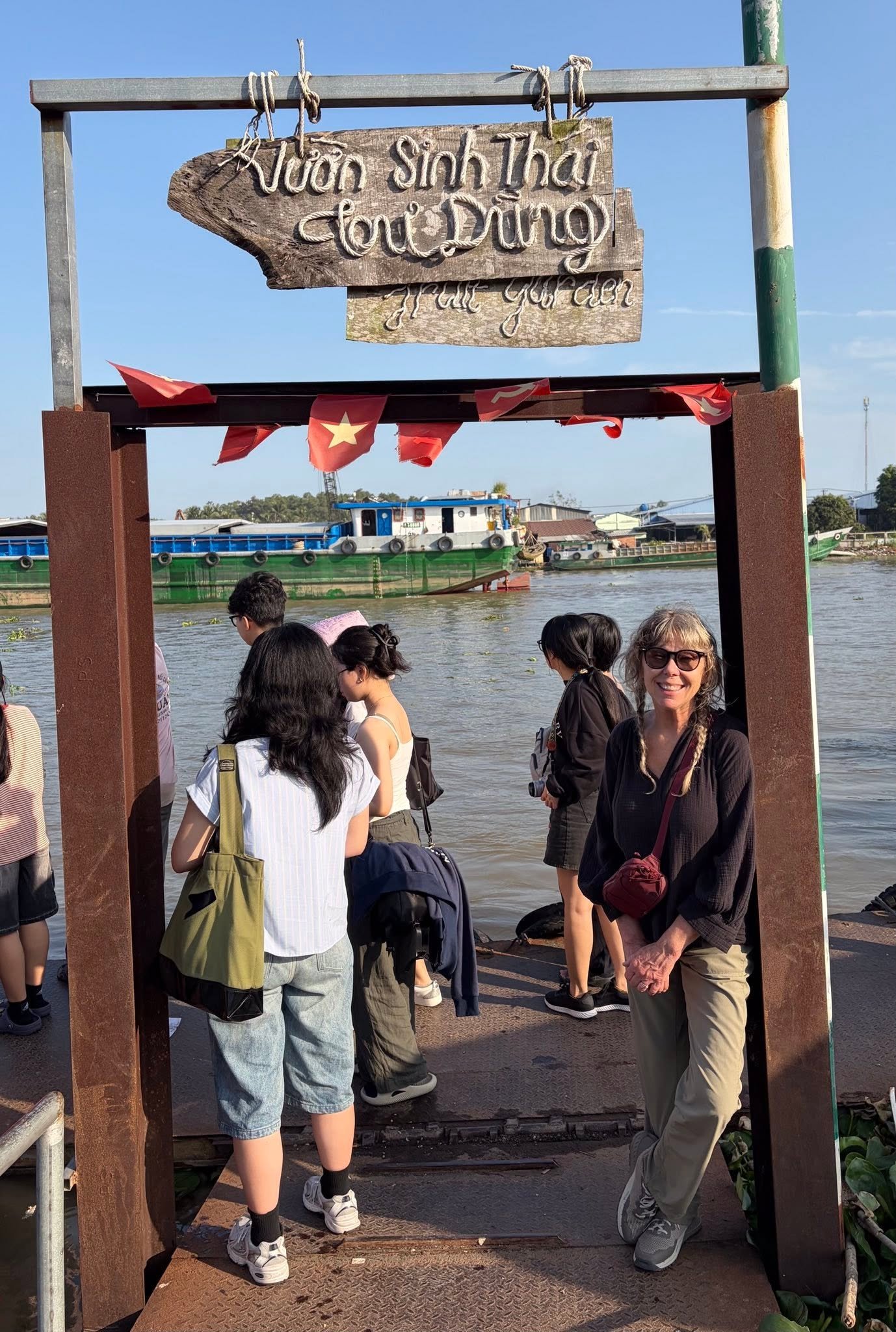
When Anthony Bourdain made the Cai Rang floating market a household bucket list item during his historic first trip to Vietnam in 2002, the markets were still functioning trading posts. Villagers would paddle to the site hours before dawn to position themselves to trade their turmeric, water spinach and jackfruit for seasonal flowers, live snakehead fish, and rice wine. It was the marketplace. But even since Bourdain, there have been four bridges built spanning the river as part of the Central Mekong Delta Connectivity Project. The bridges have made life for the common Delta resident more convenient— but have also diluted the function of the markets. Today the vendors are there with their wares largely for photo opportunities and maybe to offer a bowl of sunrise Pho. It was delicious, and the experience breathtaking even now. But, you know— it aint like before the internet.
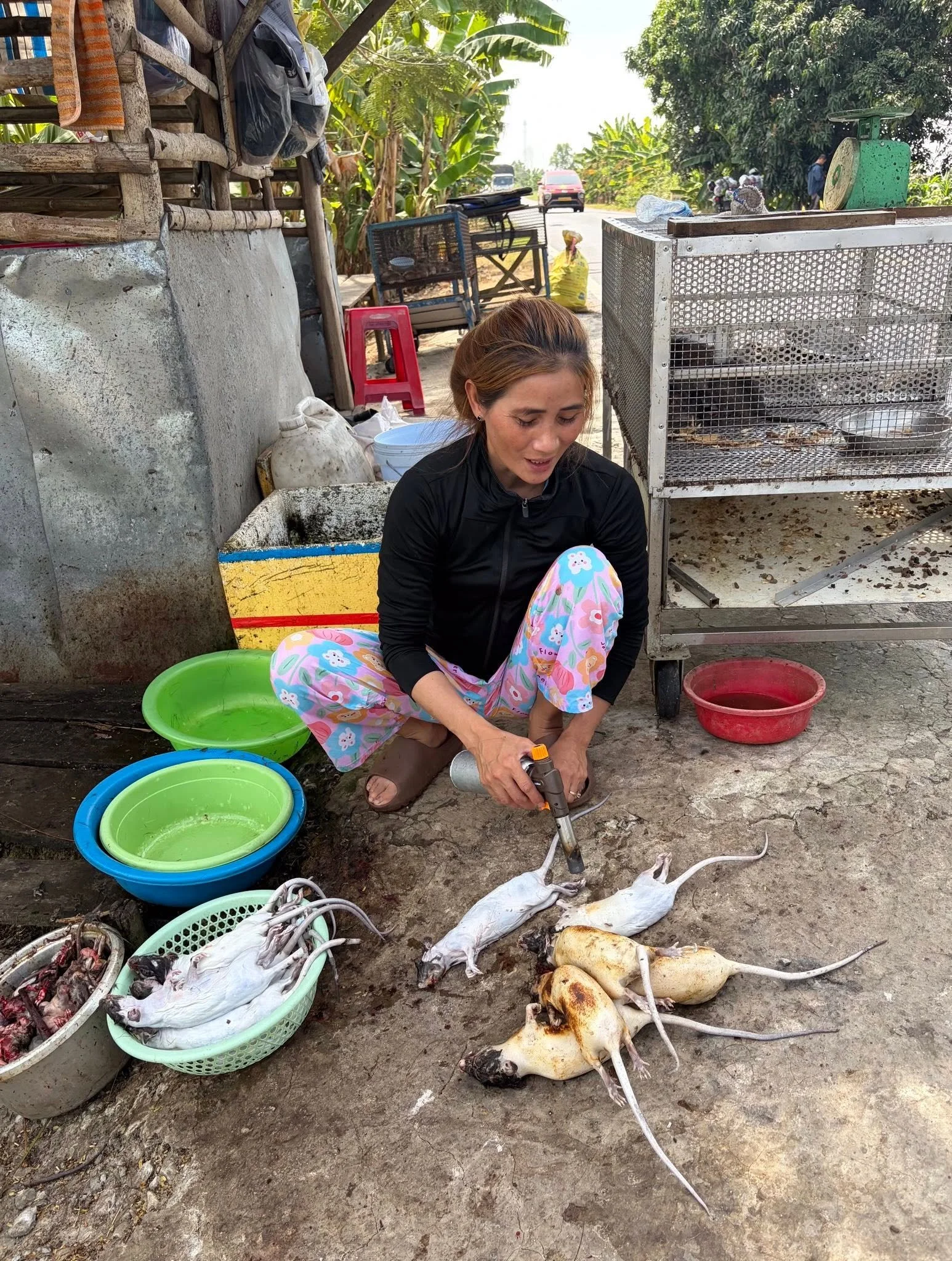
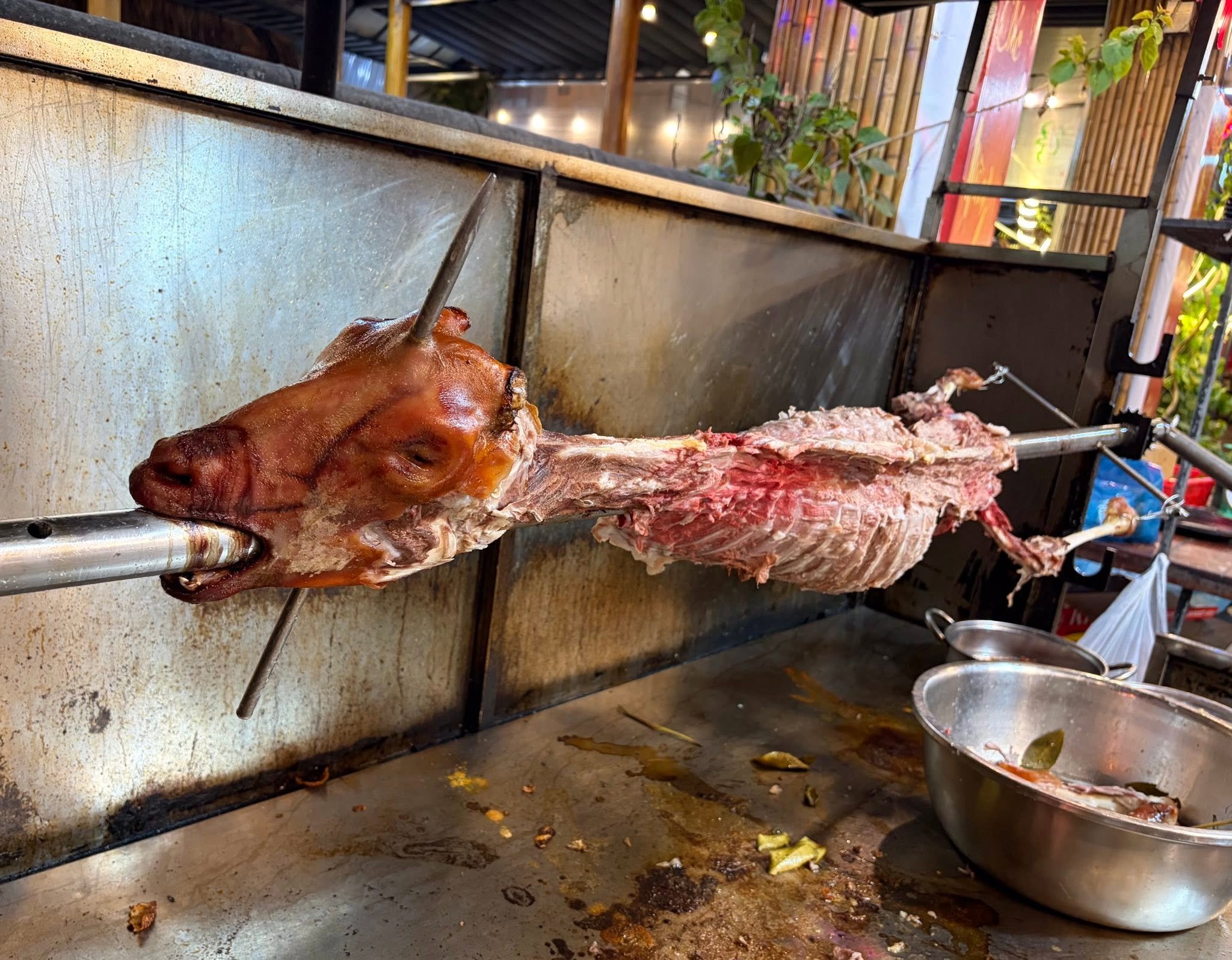
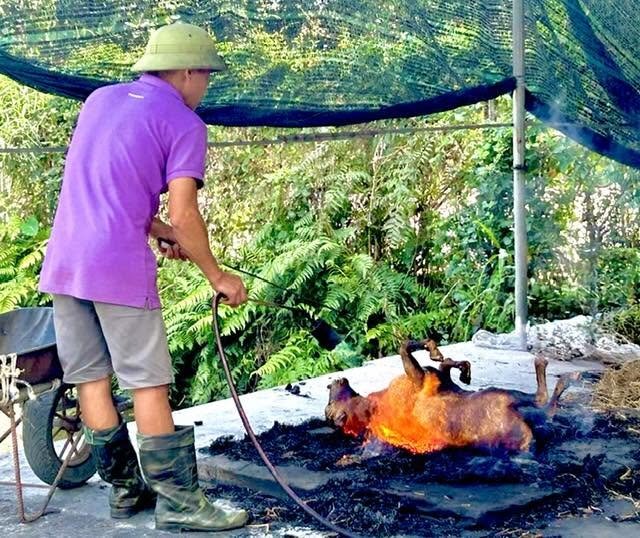
This said, the modern food distribution network of Vietnam couldn’t be more different than how things flow in the US. Stuff may now be getting from one side of the river to the other without need of a boat, but it’s still gettting there in small batches— often on the back of a motorcycle. And once it gets to the other side, it’s still sold off a blanket on the sidewalk or a resin table in a tiny storefront. There are no grocery stores, certainly no Cstco or WLmrt. The staggering variety of raw food for sale on any street corner was grown nearby, harvested or slaughtered that morning (when it is not, in fact, still alive). Talk about your farm-to-table. There just aint no middle man.
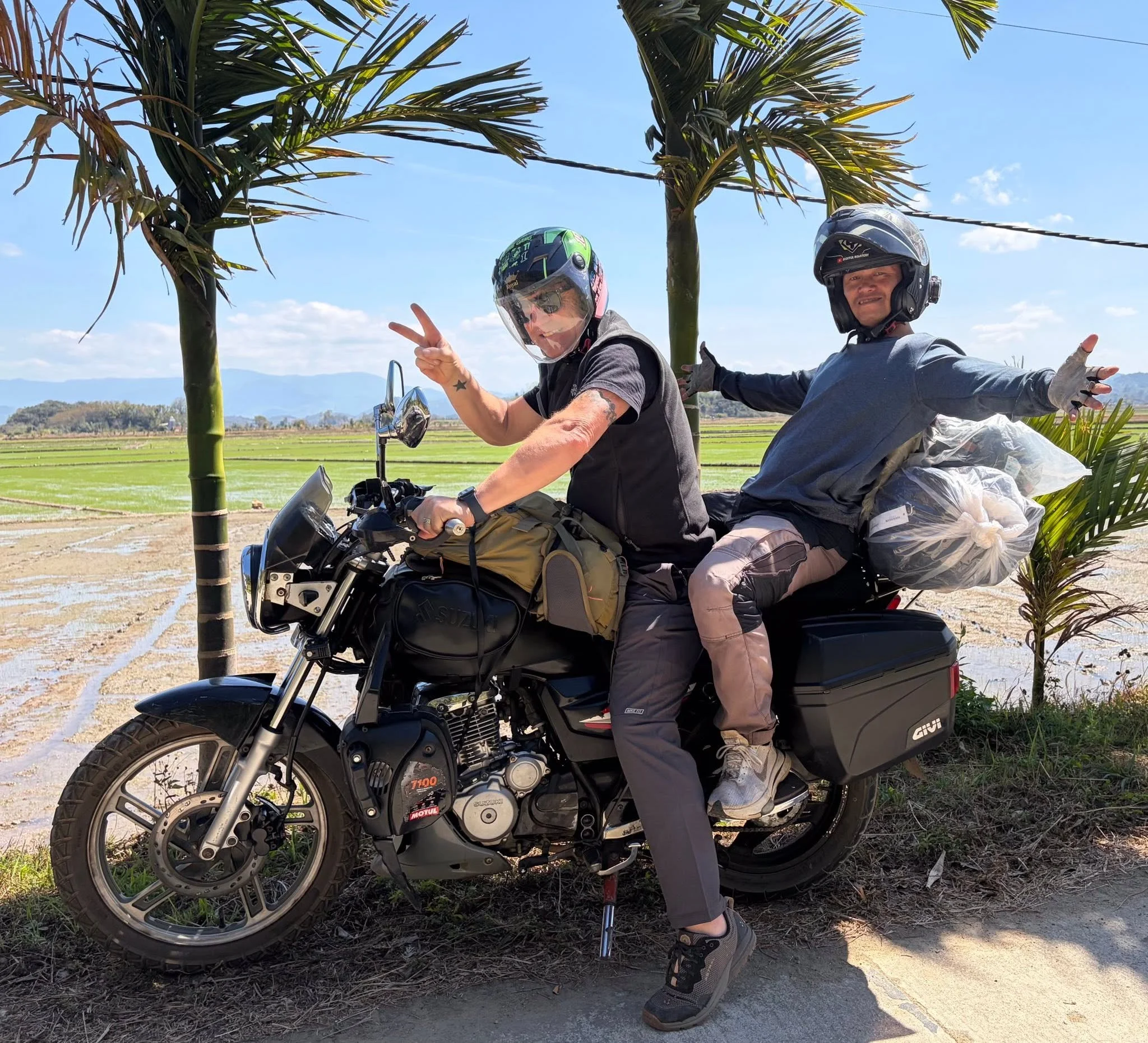
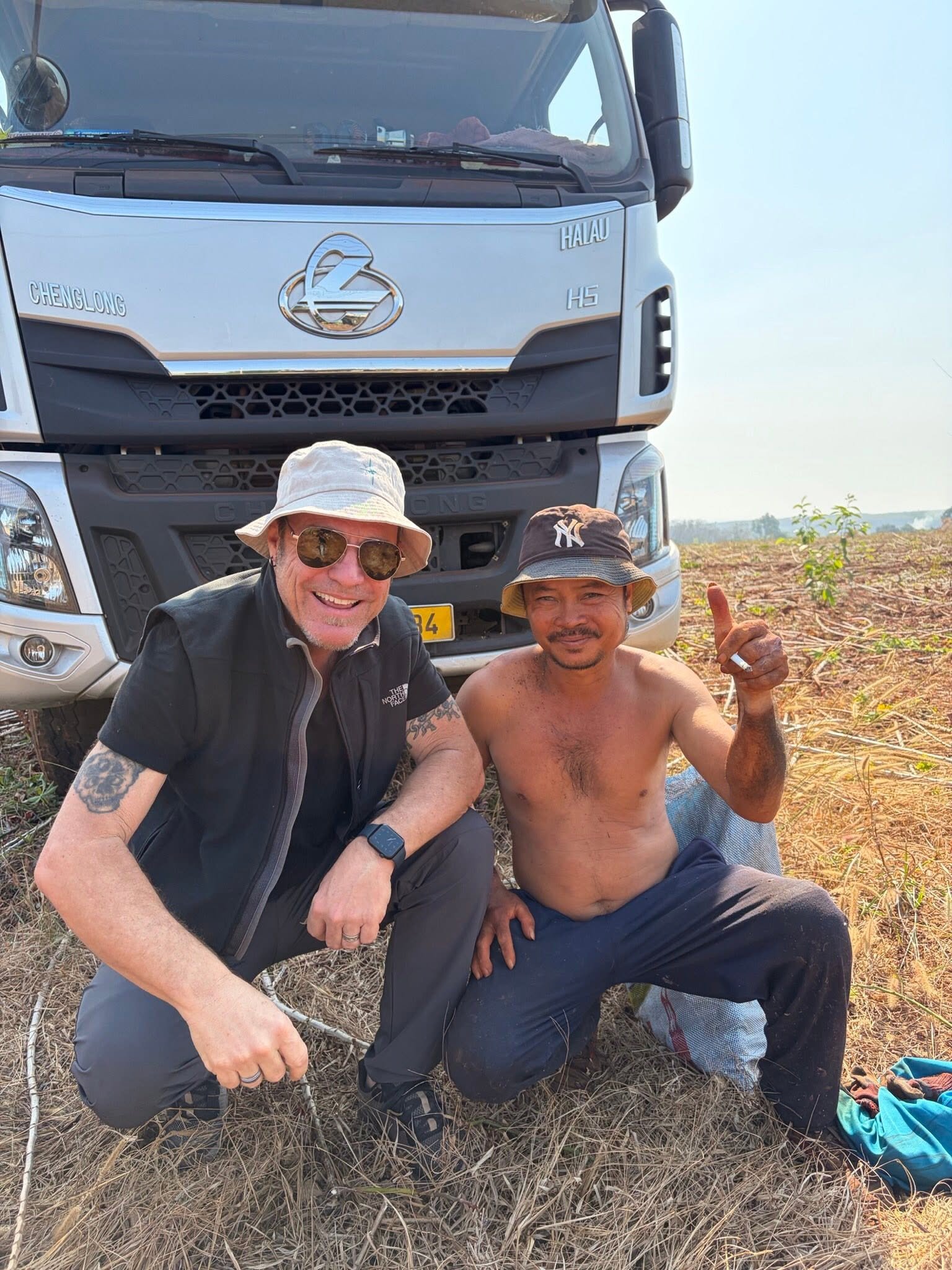
The second day on the bikes was much shorter, not getting rolling till after our 3-hour floating tour. It felt good to be moving again. It really is a great way to travel in a narrow, colorful place with good weather. Patti rode with the captain Sonny, and they were always the lead bike. So I had the luxury of watching the locals stop, turn and stare as Patti roared by, through the center of the village. It wasn’t like she was naked or glowing or wearing Gene makeup. But we always seemed to be something of a curiosity, as if the locals had never seen another non-Vietnamese person in their lives.
And they certainly have. While it’s a fact that we noticed very few other honkies outside of Can Tho, it is also true that this is a commonly traveled path and that tourists do use it to get in-and-out of the Delta and to the Central Highlands. But there was a lot of smiling and waving and and I was left with the impression that Patti and I are frightfully popular here.
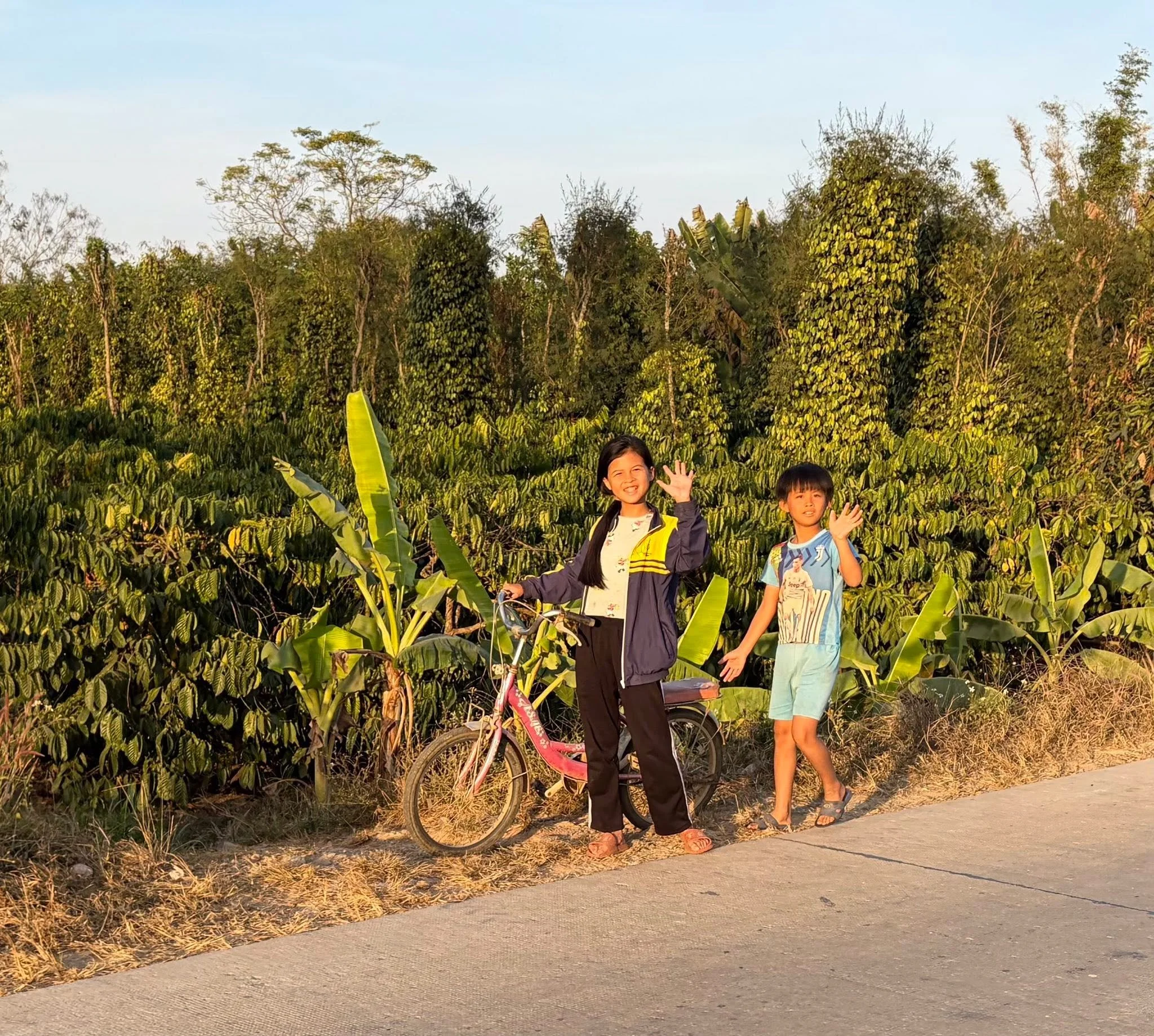
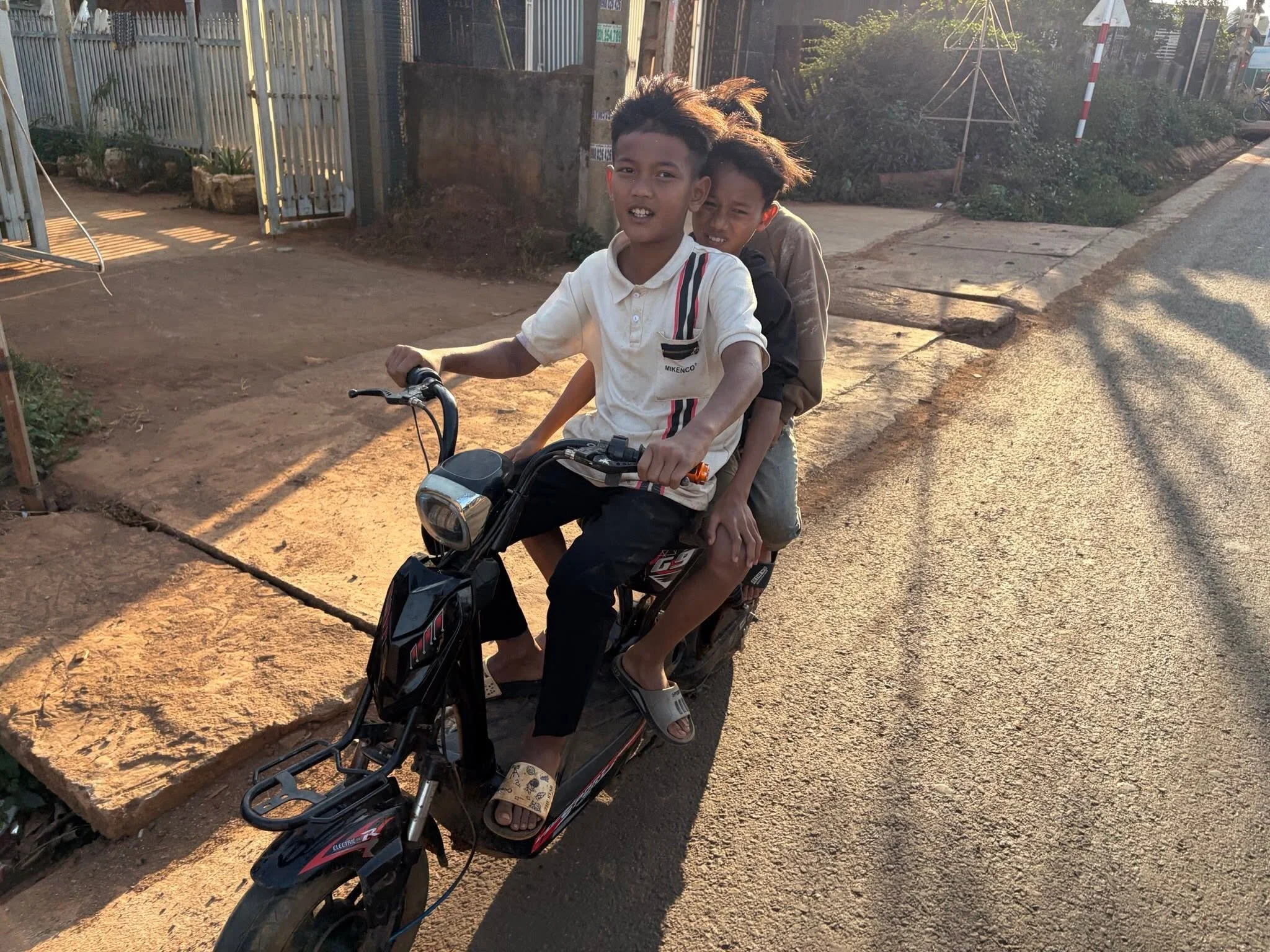
Not with everyone though. Most of the waving and air-guitaring actually came from the very young and the very old. Ages 9 through about mid-70s seemed fairly indifferent to our presence. But the school kids and the ancient? Definitely our target audience. Particularly the ladies. The ladies…
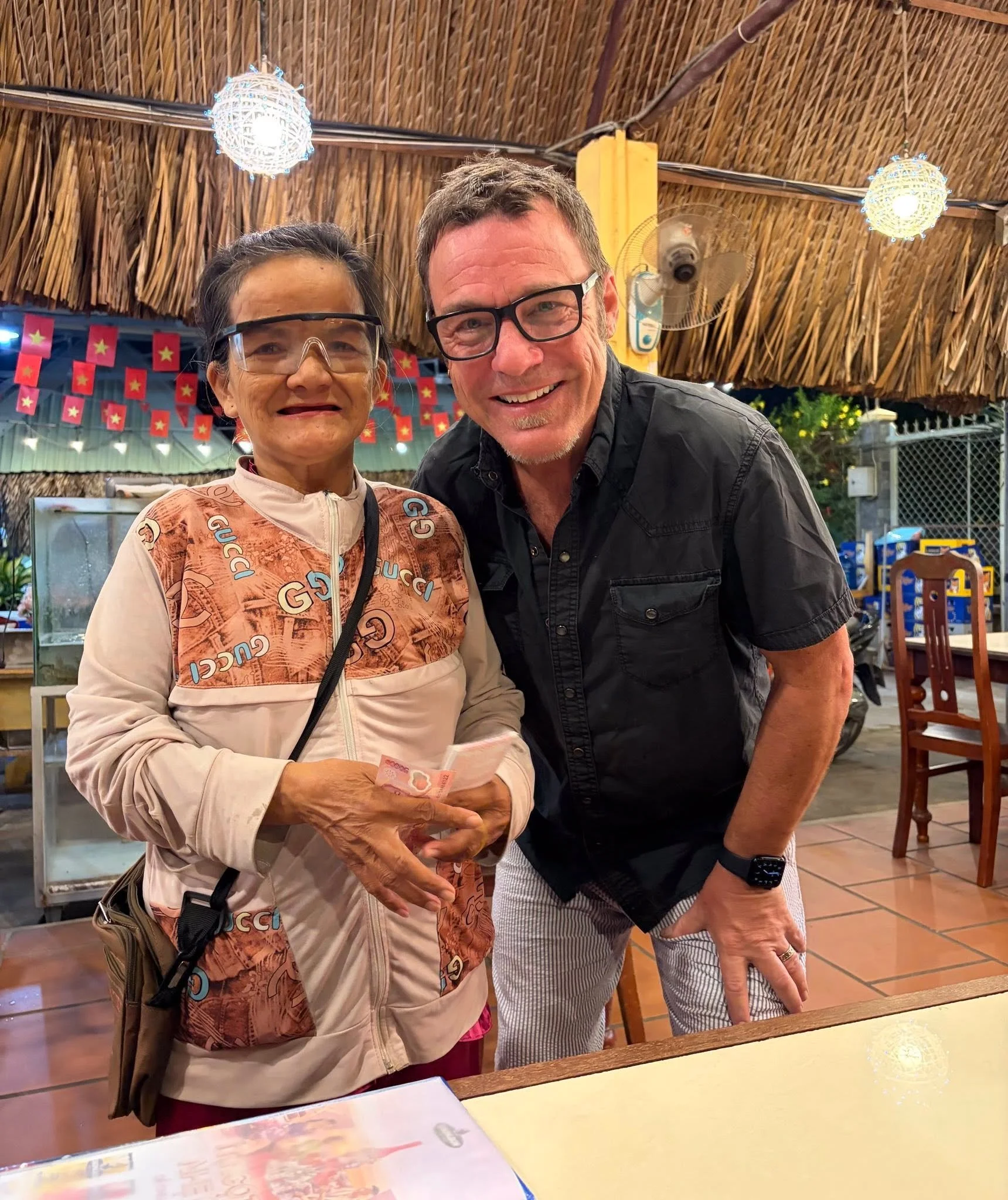
The old Vietnamese ladies— such a force they are! They survived the war and rebuilt this place with their own strong hands because often times their husbands did not survive. And still they work, selling frogs or stirring tapiocah batter over a boiling caldron or hawking daily lottery tickets. They smile easily and ride a bicycle everywhere they go, which isn’t far. Not every 90-year old woman in Vietnam rides a bicycle. But it’s equally true that everyone who does ride a bicycle in Vietnam is a 90-year old woman—usually wearing a conical and often pedaling against traffic. She does not look to the side.
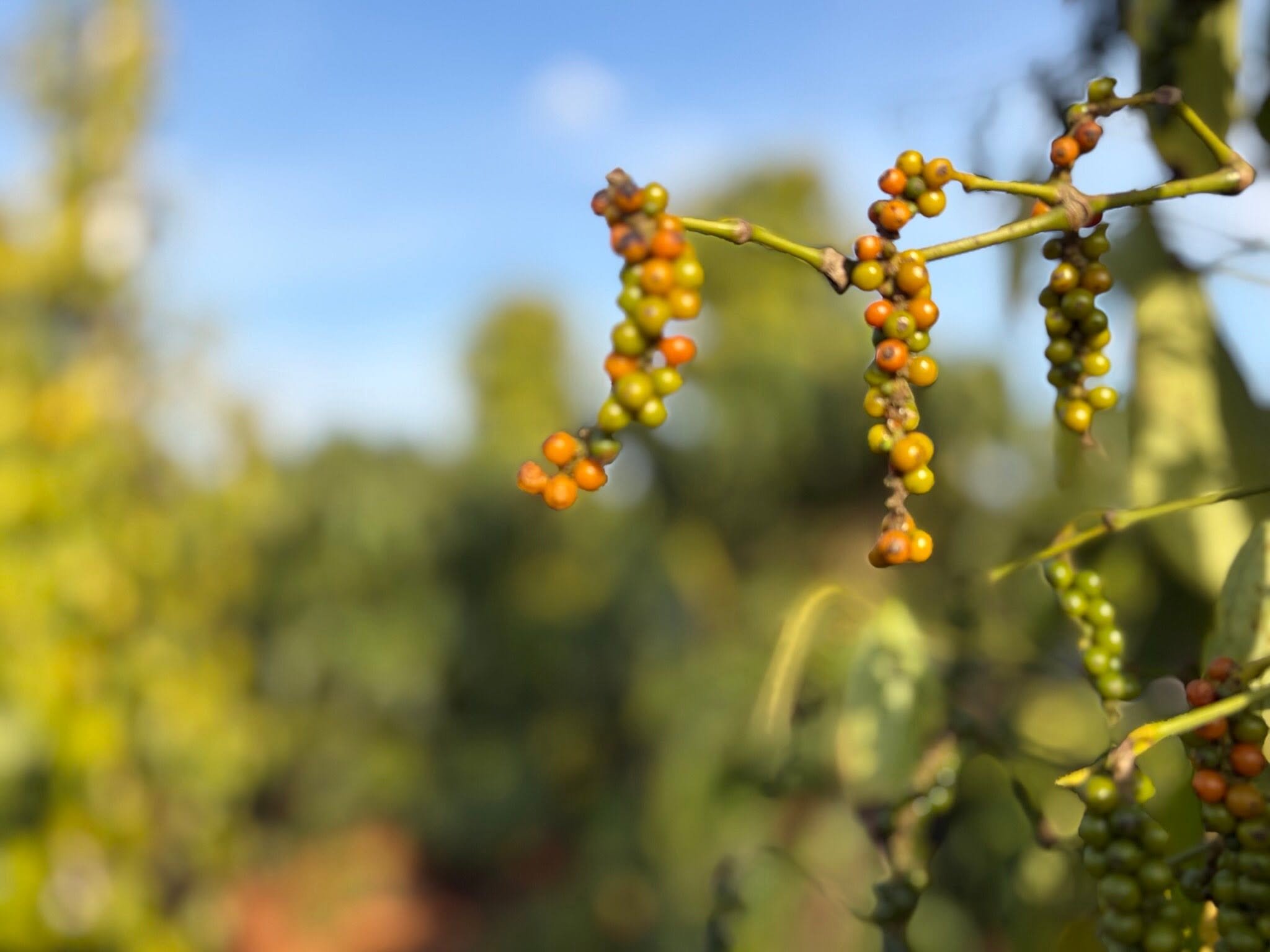
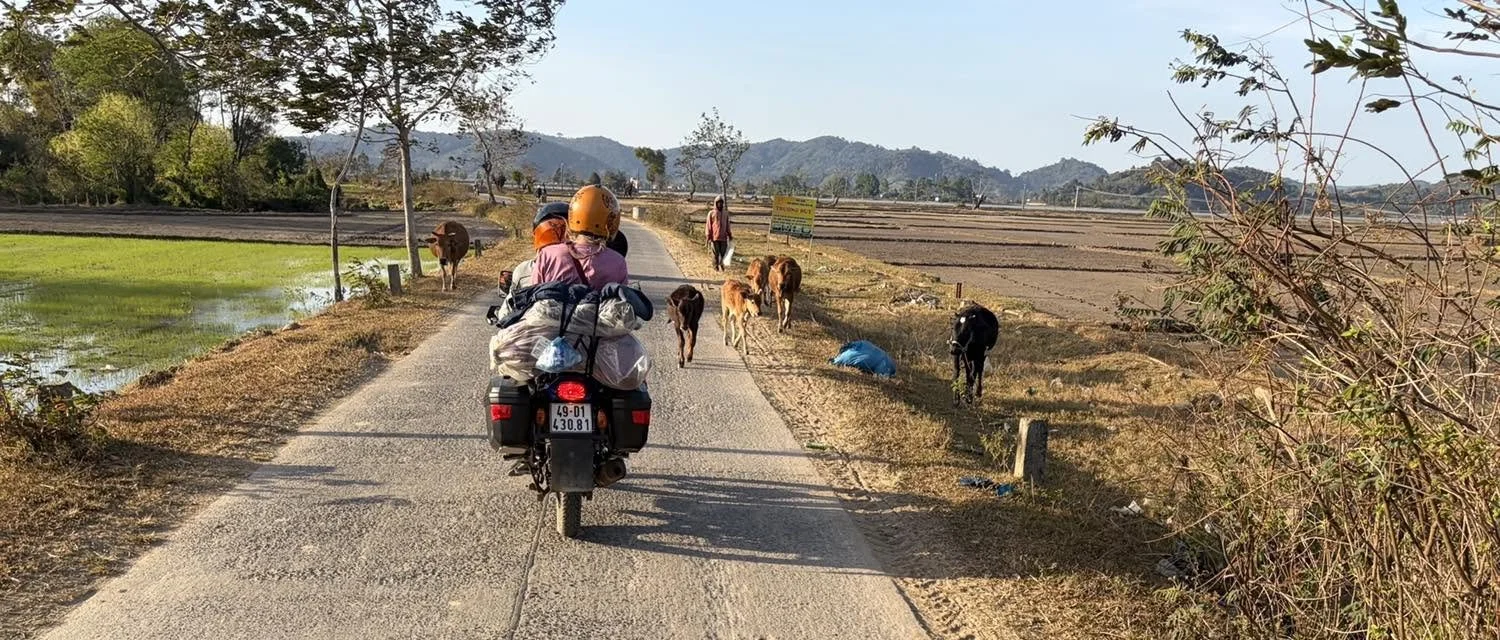
There were more bicycles on the roads as we rid the Delta and began following the Ho Chi Minh Trail east of Phuoc Long. The feral cats turned into stray dogs and there were more brick buildings. Traffic thinned and the green spaces between villages got longer and more pastoral. The rice and rubber of the lowlands began to give way to the money crops of the highlands: cashew, macadamia, cocoa, pepper and— of course— coffee.
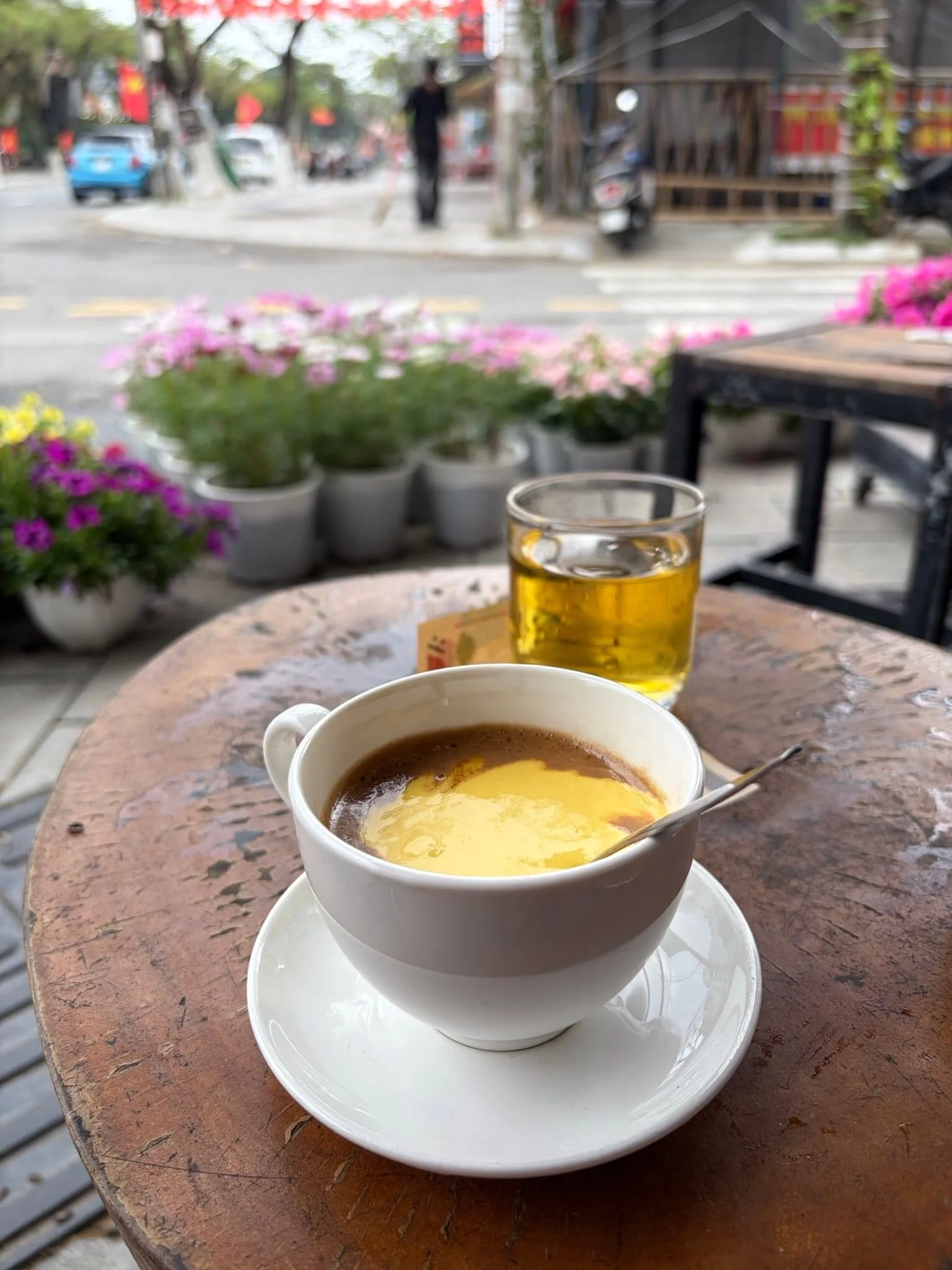
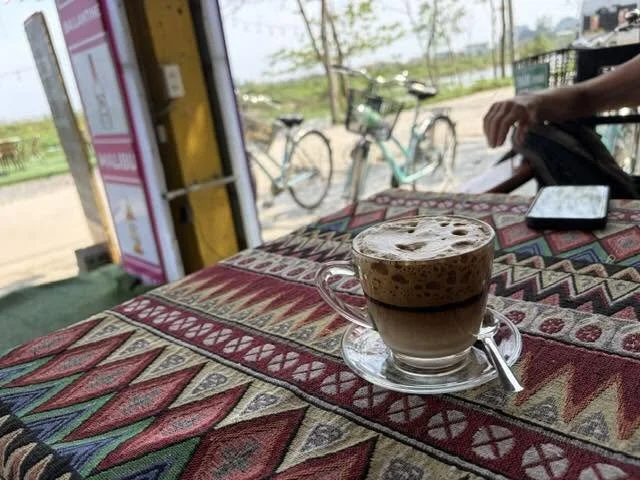
Lord, the coffee. It’s true that most things are better with condensed milk and sugar stirred up from the bottom— but it’s more than that. The coffee is rich and strong and fragrant and the milk just makes it that much more delectable. The locals drink it mostly iced, but in an effort to stay off the pot, we’re avoiding ice when possible— so we’re drinking it hot. Whenever we get the chance. It’s everything you’ve heard. Sweet baby Buddha, it is heavenly.
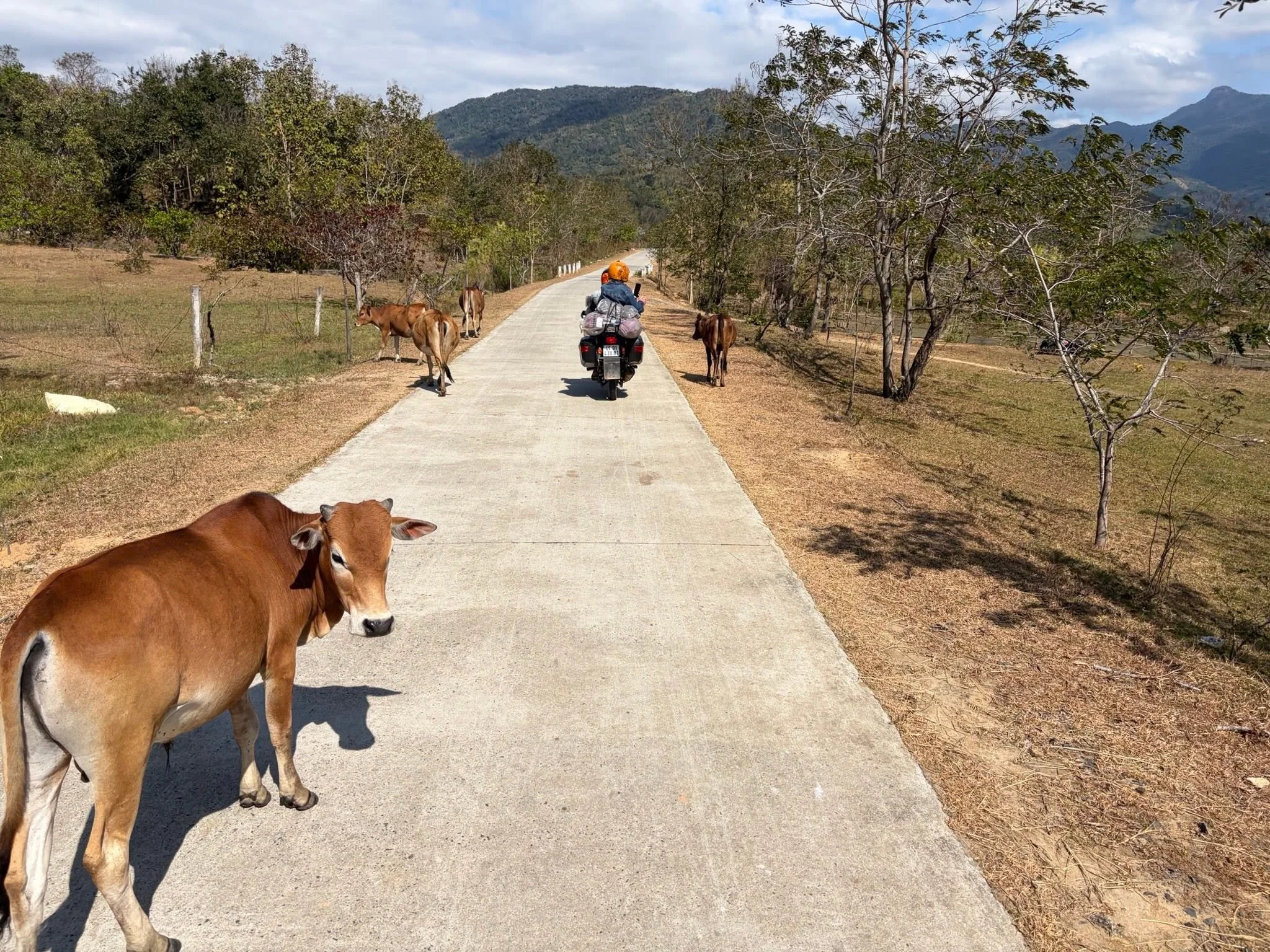
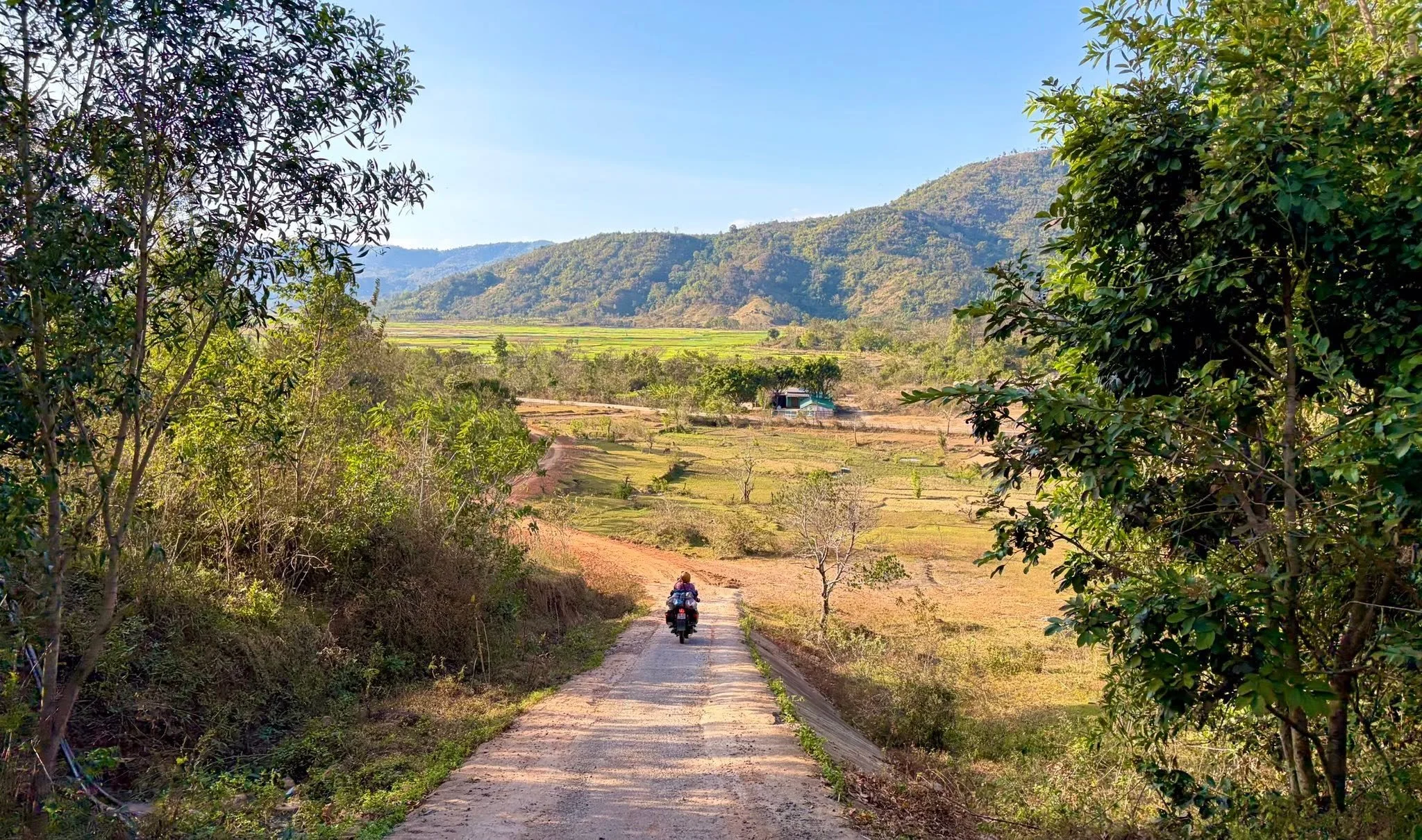
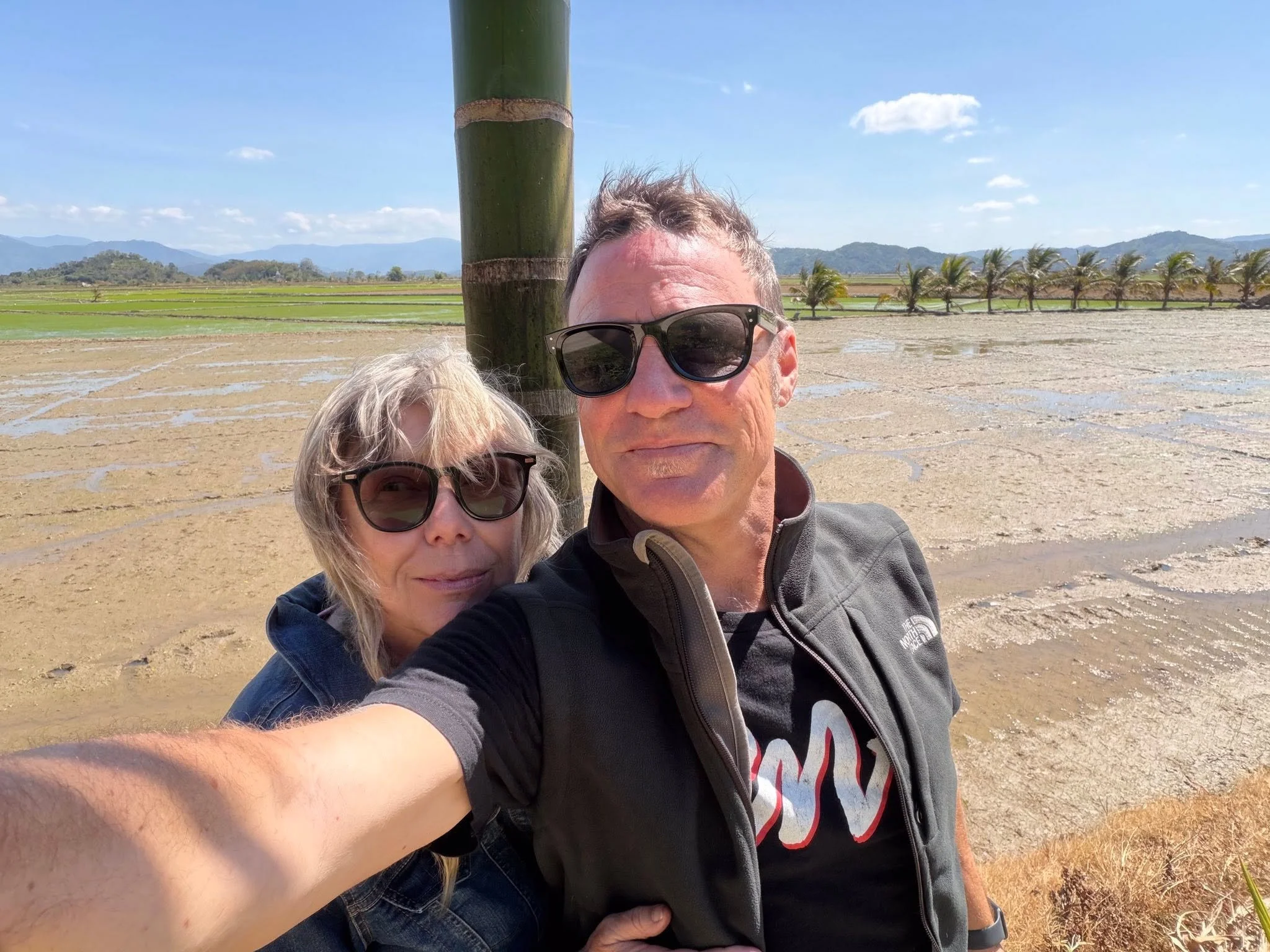
Day 5 was the brochure day, with a long sunny ride through the rice paddies of the M’Drak Valley. Stopping the bikes and dismounting on the side of the road, it occurred to us that it was very quiet here— something we couldn’t have said about anywhere else we’d been. Our drivers said ‘see you up the road’ and without further explanation just rode away, leaving Patti and I standing alone on a farm road in the middle of nowhere. A generator chugged in the distance, but otherwise it was totally quiet. Funny how silence can choke you up when you’re not expecting it.
But our guides knew. They seemed to always know exactly what to do or say— or what not to. Sometimes an explanation of a site seen is useful and appropriate. But knowing when to fade wordlessly into the background and let a traveler steep in a moment that requires no explanation— that’s where the magic happens. That’s the beautiful part. And leaving us on that road without explaining to us why was a great example of this type of presence Sonny & Tim displayed every kilometer of this long journey.
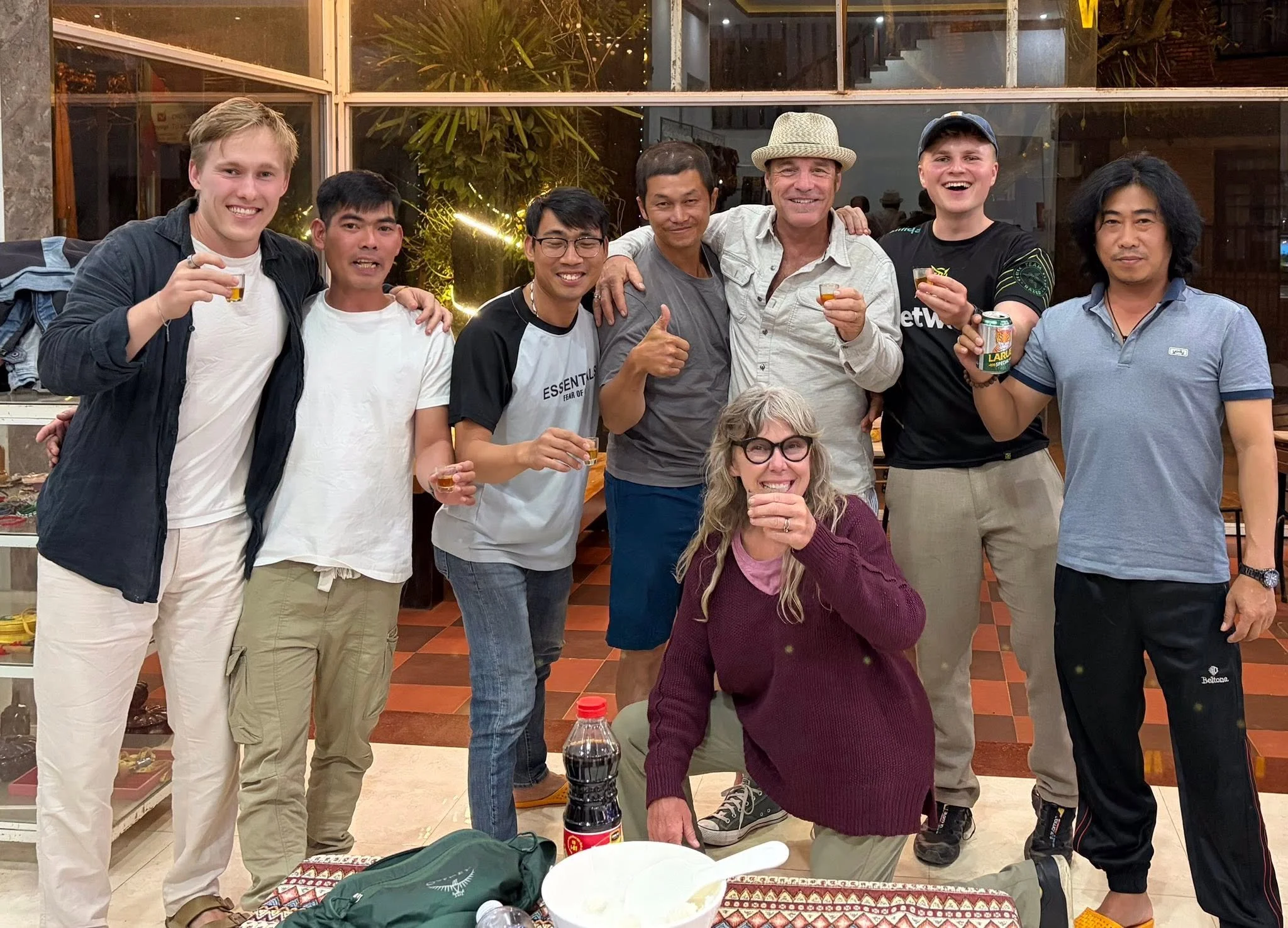
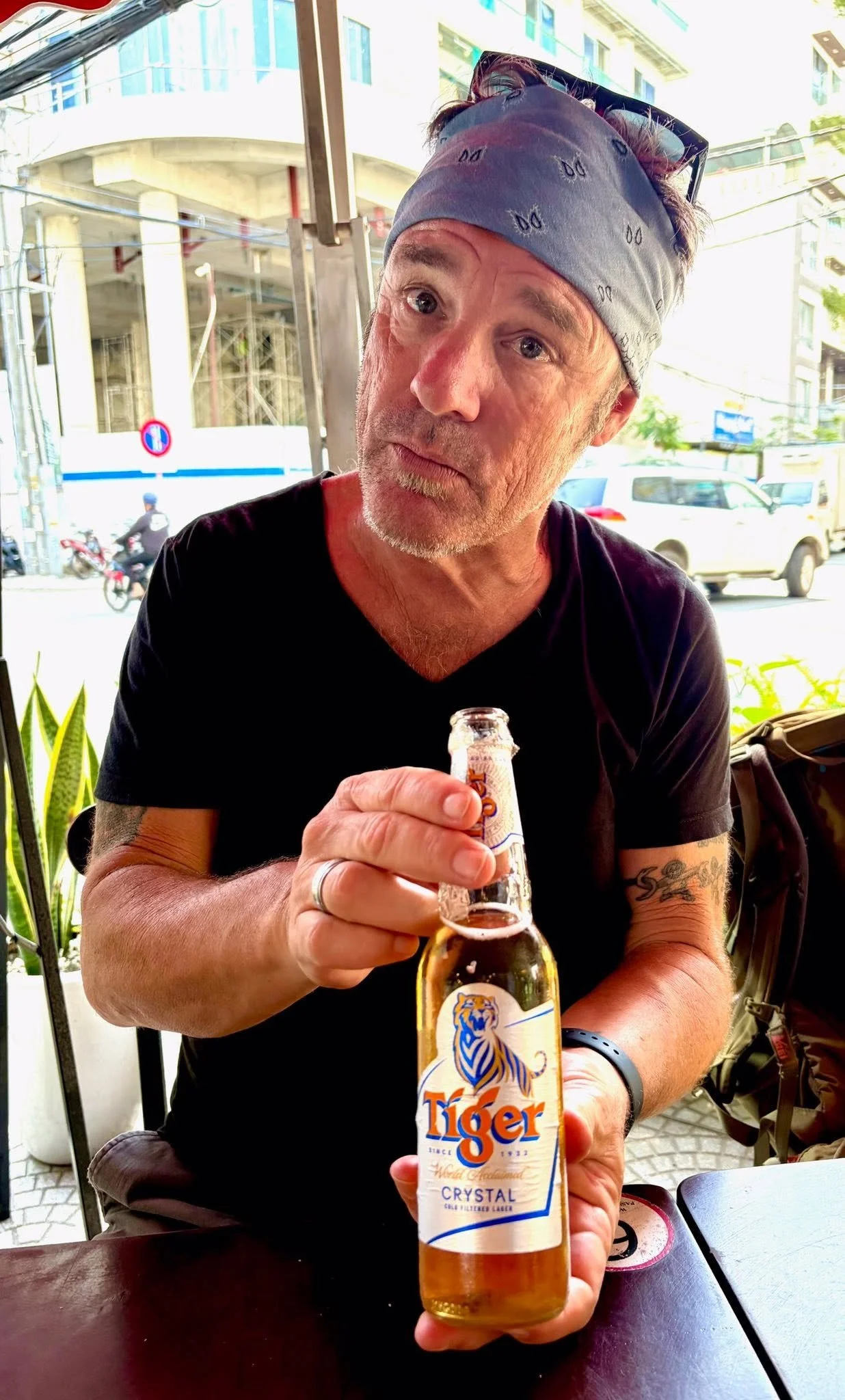
The last night at the Lak Lake hotel was a celebration, re-connecting with another Easy Rider tour whose paths we had crossed on occasion during the previous week. Two young Danes were also seeing Vietnam for the first time and it was lovely to debrief with some other westerners having our same experience in parallel. Dinner consisted of tilapia in tomato sauce, steamed vegetables, spring rolls and of course lots of white rice. The 8 of us hung out at the long table well after dinner, sipping Tiger lagers and toasting shots of banana wine. It was a fitting finale.
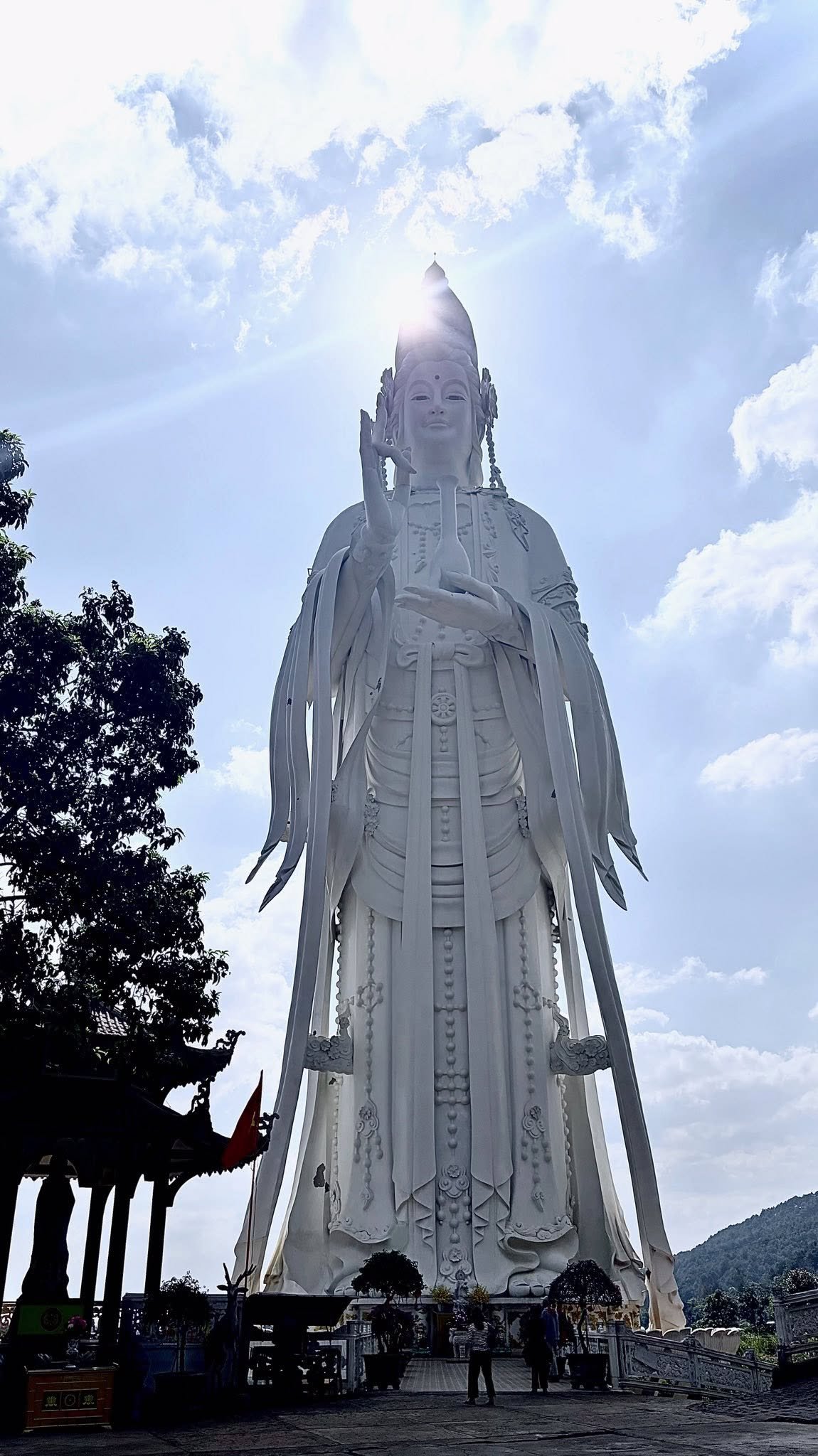
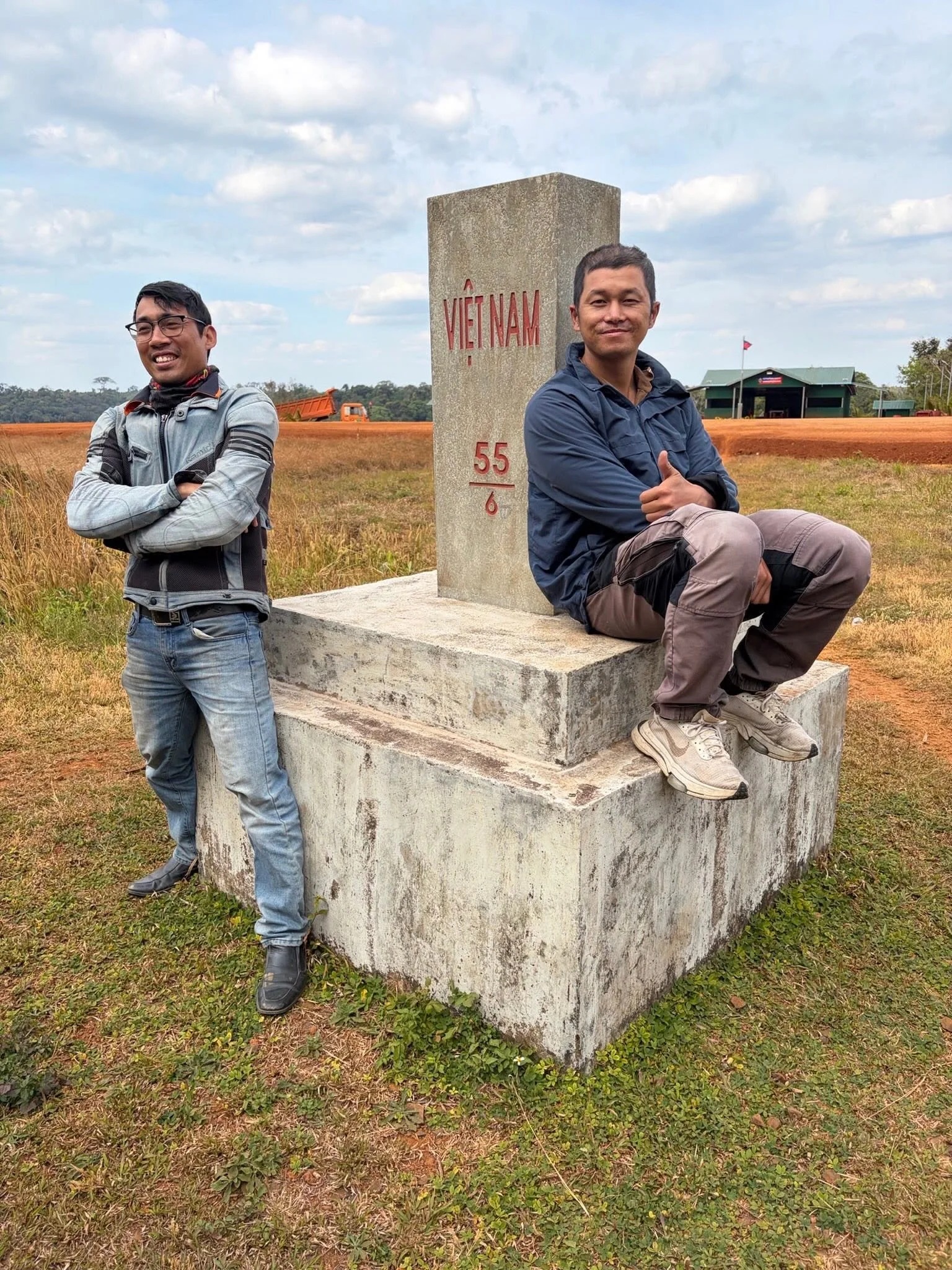
The last day on the road was an eventful and emotional one. The inspiring Linh An Pagoda. The silk factory. The weasel coffee roasters and the cricket mart (yum!). But with each progressive stop, my mood grew more and more melancholy, knowing we would be saying goodbye to our easy riding champions very soon. These guys had been so much more than drivers. So much more than tour guides. They’d been our advocates and our translators. Our protectors and teachers. Idiot checkers, constant reminders, porters and drinking buddies. They had become our friends. We will always be friends.
DaLat City, Wednesday
Vietnam 2026
DaLat Rock City
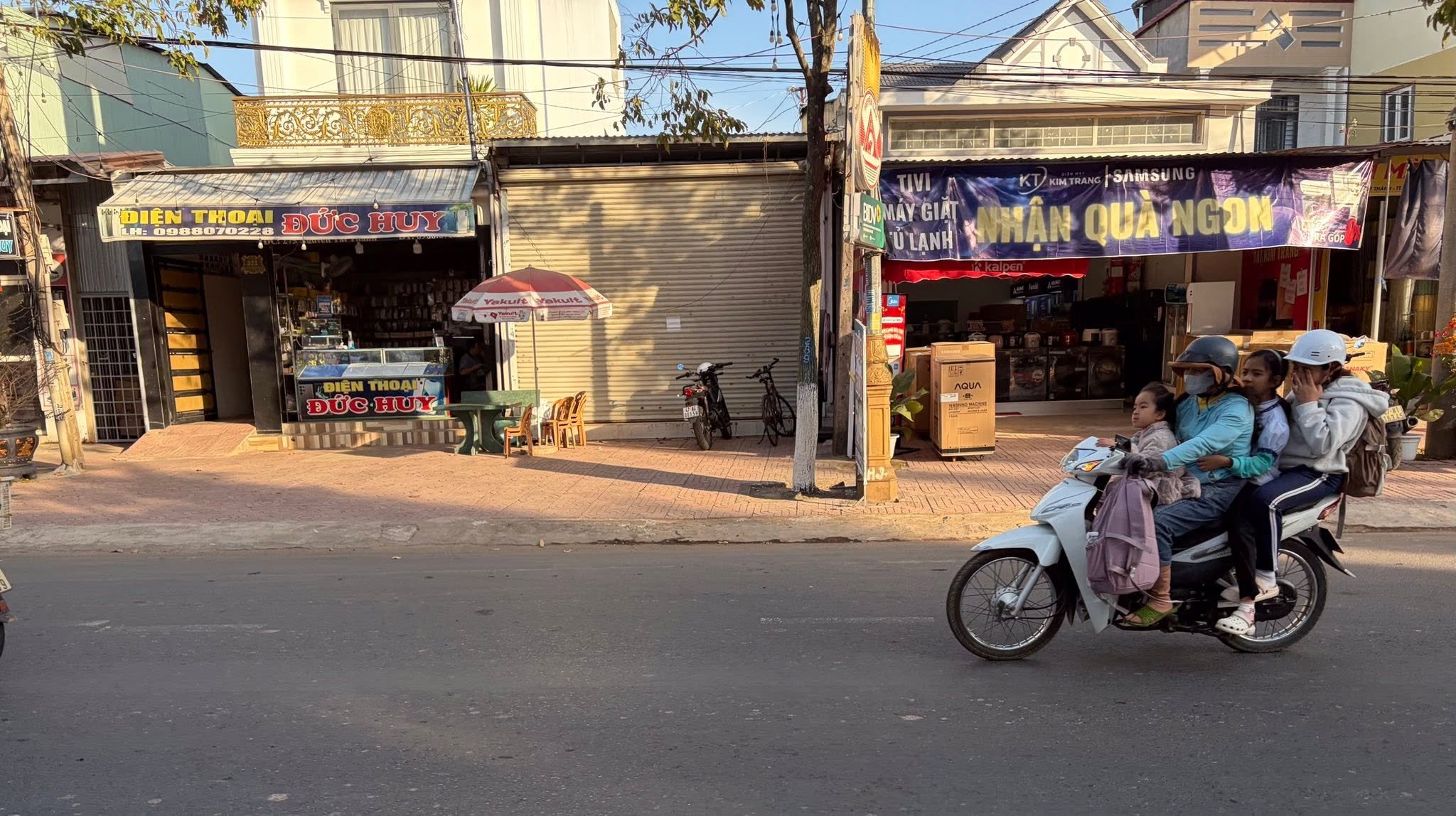
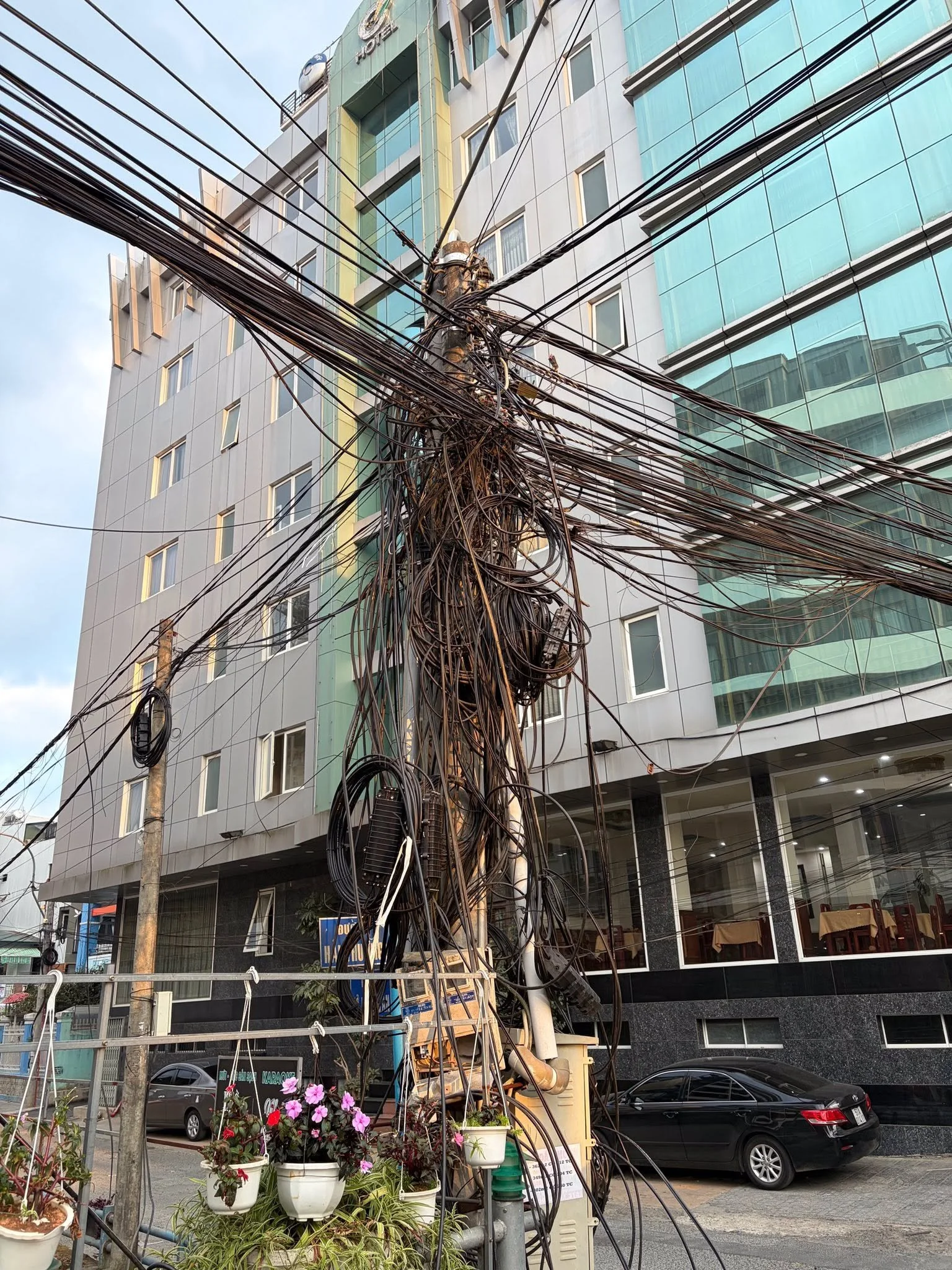
It felt very cosmopolitan landing in DaLat Rock City on Tuesday at dusk after six days of zooming through one-horse villages and the wide-open foothill frontier of the lower Central Highlands. DaLat felt downright urban with its tile showrooms and HVAC outlets, petrol stations, bars and hillside greenhouses. And honkies. Suddenly there were a lot of people around who weren’t Asian.
Not that there are many Americans. Mostly the whities seem European. You can spot the Russians a mile away, and the Australians are easy to identify too because they’re usually talking super loud about being Australian. There are a lot of Israeli travelers here also, and what I keep forgetting is that just because someone is Asian doesn’t mean they’re Vietnamese. There are tons of Chinese and Korean tourists, but in my tiny self-aware Braimesworld worldview, I still just think we’re the only Americans— which would be fine with me if it were true.
Not that anyone cares. When asked, I do often say we are from Southern Canada. But honestly it seems like Americans are less unpopular than many other tourists. And as far as the grotesquely flawed personality behind US foreign policy goes, it seems many Vietnamese view Trump as anti-China and that is much more positive to them than his domestic developmental disabilities are expensive. They don’t know him like we know him; his character is not their conern. They have much more pressing issues to deal with in China.
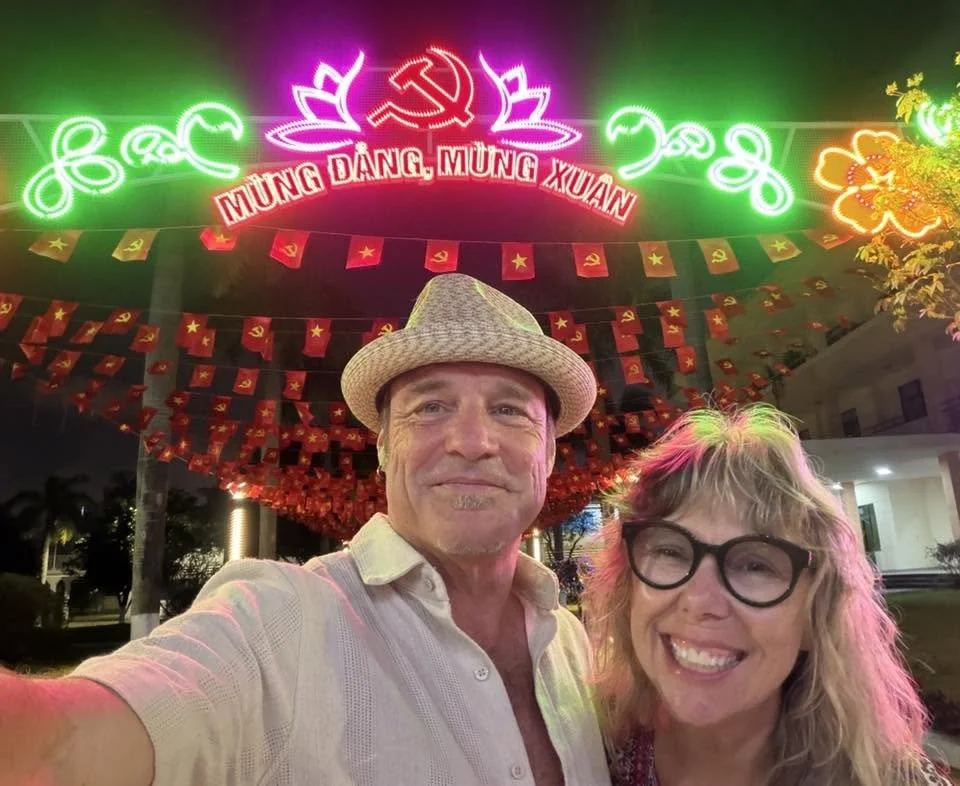
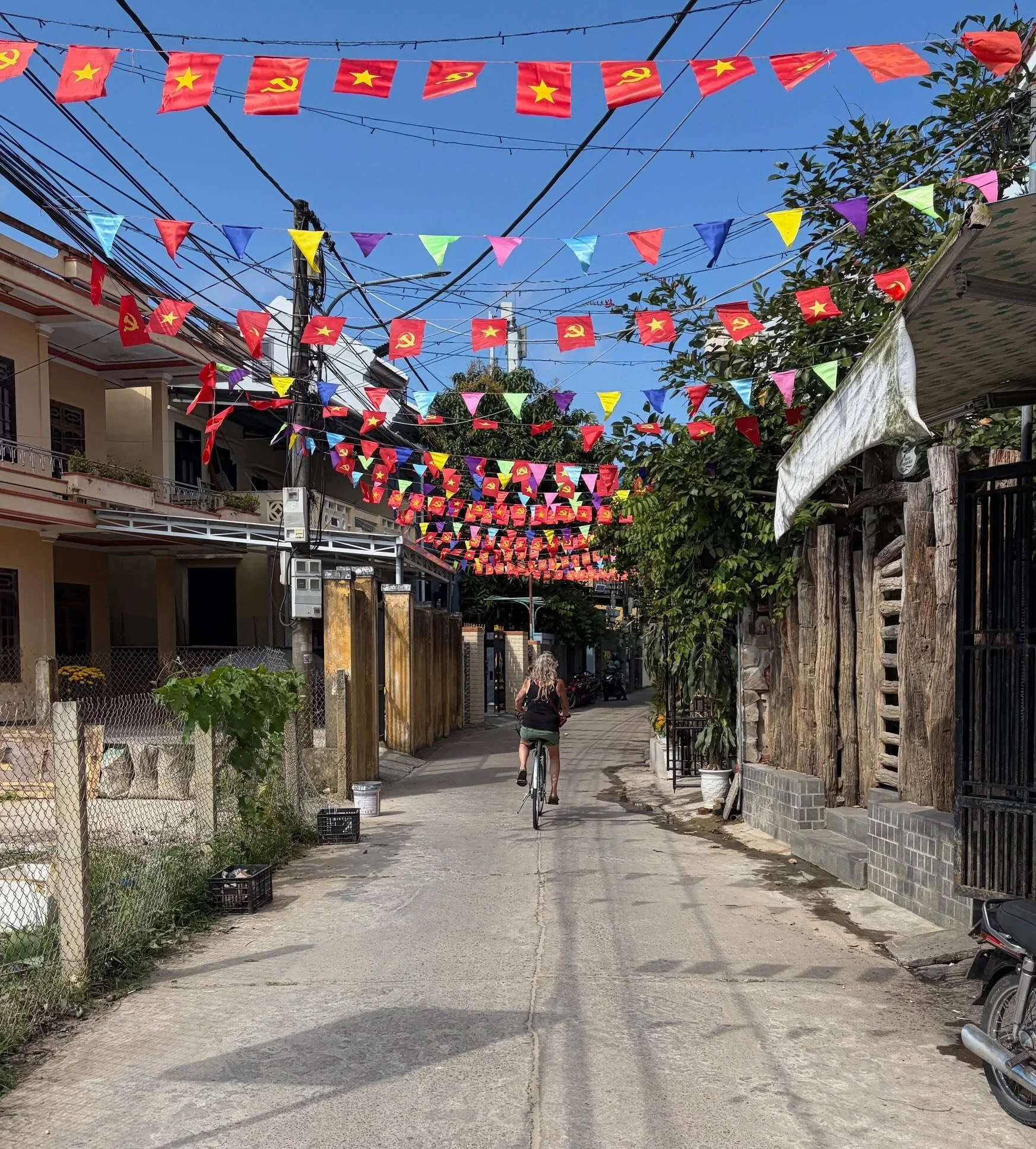
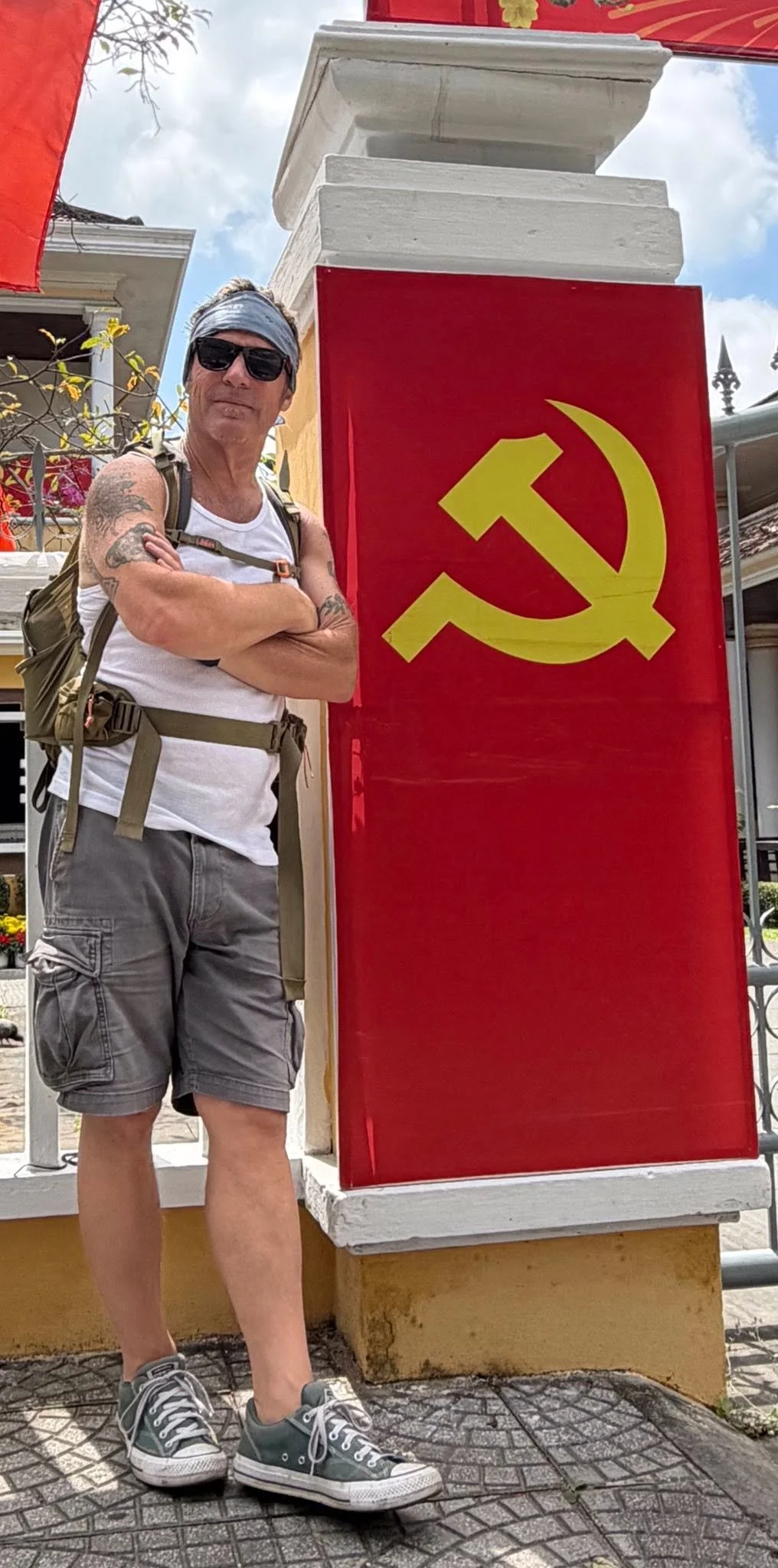
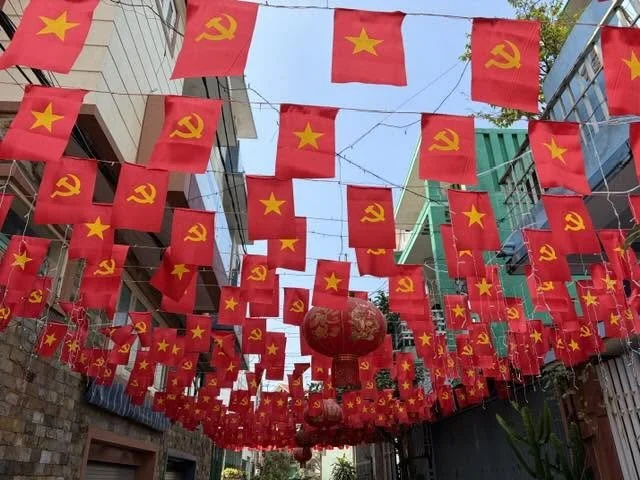
And they live in a communist country, after all. The Vietnamese don’t enjoy the sport of being all pissed off that 51% of the fools in their country elected a corrupt imbecile— because the Party tells them who is going to be in charge to begin with. The hammer & sic are everywhere, hanging side-by-side with the gold-star Vietnamese flag— companion pieces for sure. But it doesn’t appear as though there’s all that much muscle or even intent behind the logo. Our bike guides did (kind of) agree that the Party is watching you (some) and they also (sort of) allowed that some businesses (might) raise the flag or donate space in a field or on a building for a propaganda billboard. And maybe the business owner gets some points (a literal gold star!)— it’s not clear. But in general, it doesn’t seem like the Party is breathing down everyone’s neck or taxing them to ribbons. They’re certainly not shooting civilians in the street.
*********************************************************************
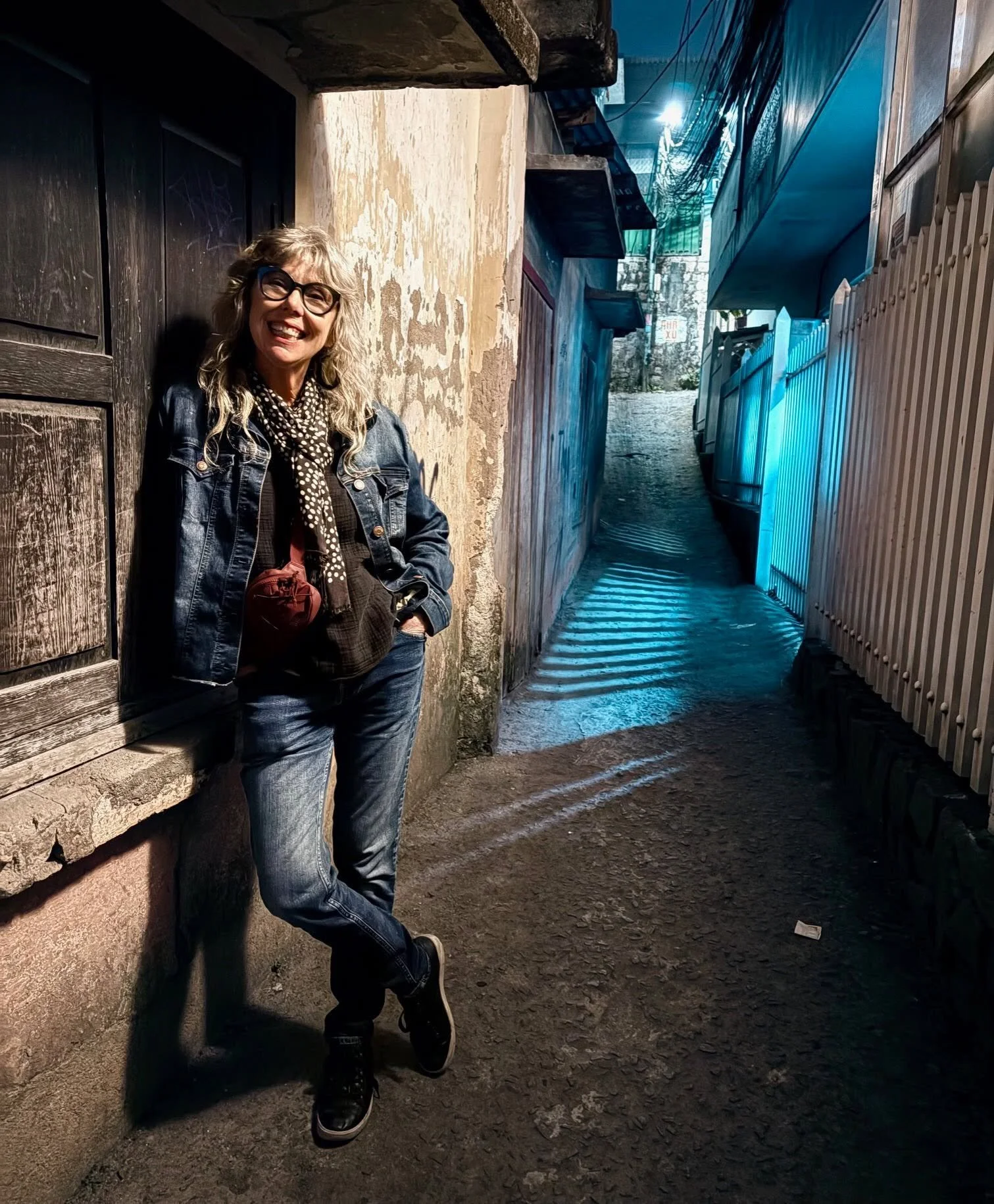
There’s a lot of French presence throughout Vietnam, but nowhere is the architectural influence on bolder display than in DaLat. The French built what makes DaLat DaLat starting in the very late 19th century and the city retains a strong European flavor, from the buildings themselves to the infrastructure with its stone-lined canals and impossibly narrow, steep, winding backstreets and alleyways. The French got forced out by the Japanese during WWII, but then those guys had to split after surrendering to the Allies in 1945. The French returned for a minute to check on their villas, but eventually were chased for good by Ho and his Viet Minh by 1954. And then of course we all know what happened after that.
The point is that DaLat was largely spared throughout all this historical conflict. Unlike less-fortunate venues like Quang Tri or even Saigon, the City of Flowers was not reduced to rubble because it was just too darned pretty. It’s kind of like Savannah that way, which Sherman spared because he had girlfriends there. Both sides— all sides— agreed informally that they’d work around DaLat, and it functioned as a holiday zone for brass of many different stripes. It still does.
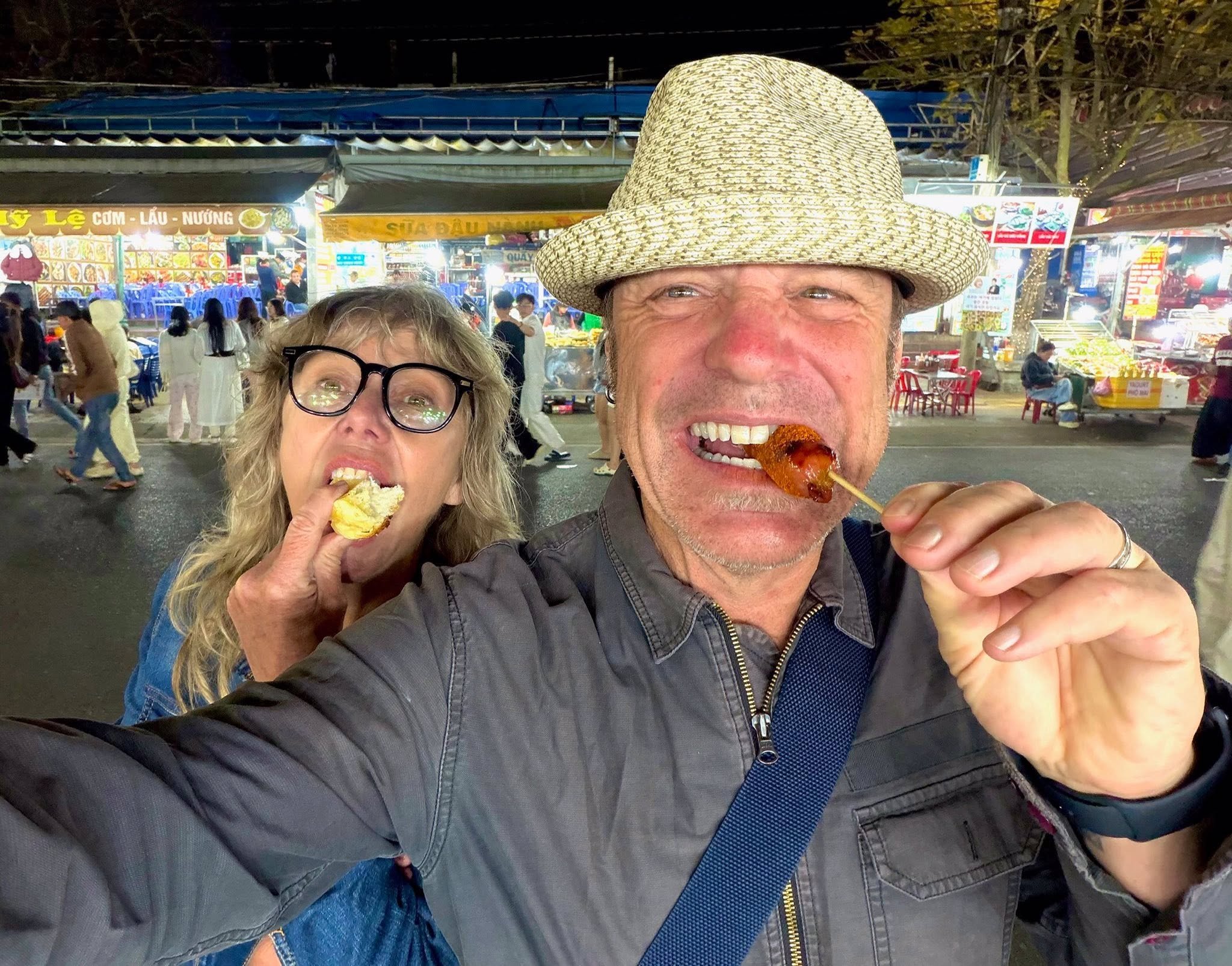
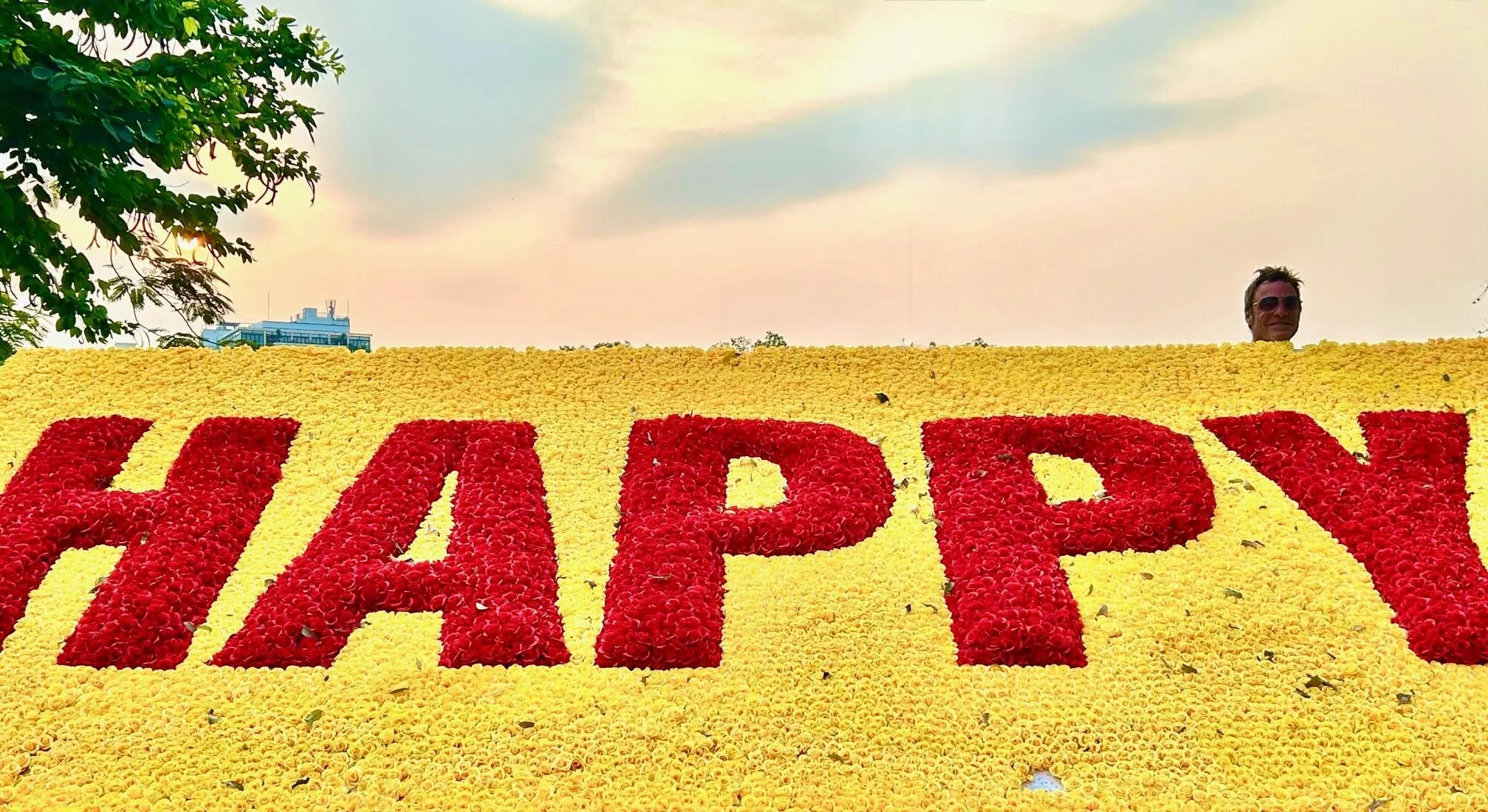
Lots of vacationing going on here. With Tet fast-approaching, there are decorating crews stringing up ornate red lanterns and unpacking great crates of red and yellow flowers. The cherry blossoms are starting to open and there is a lot of dressing up and posing for selfies.
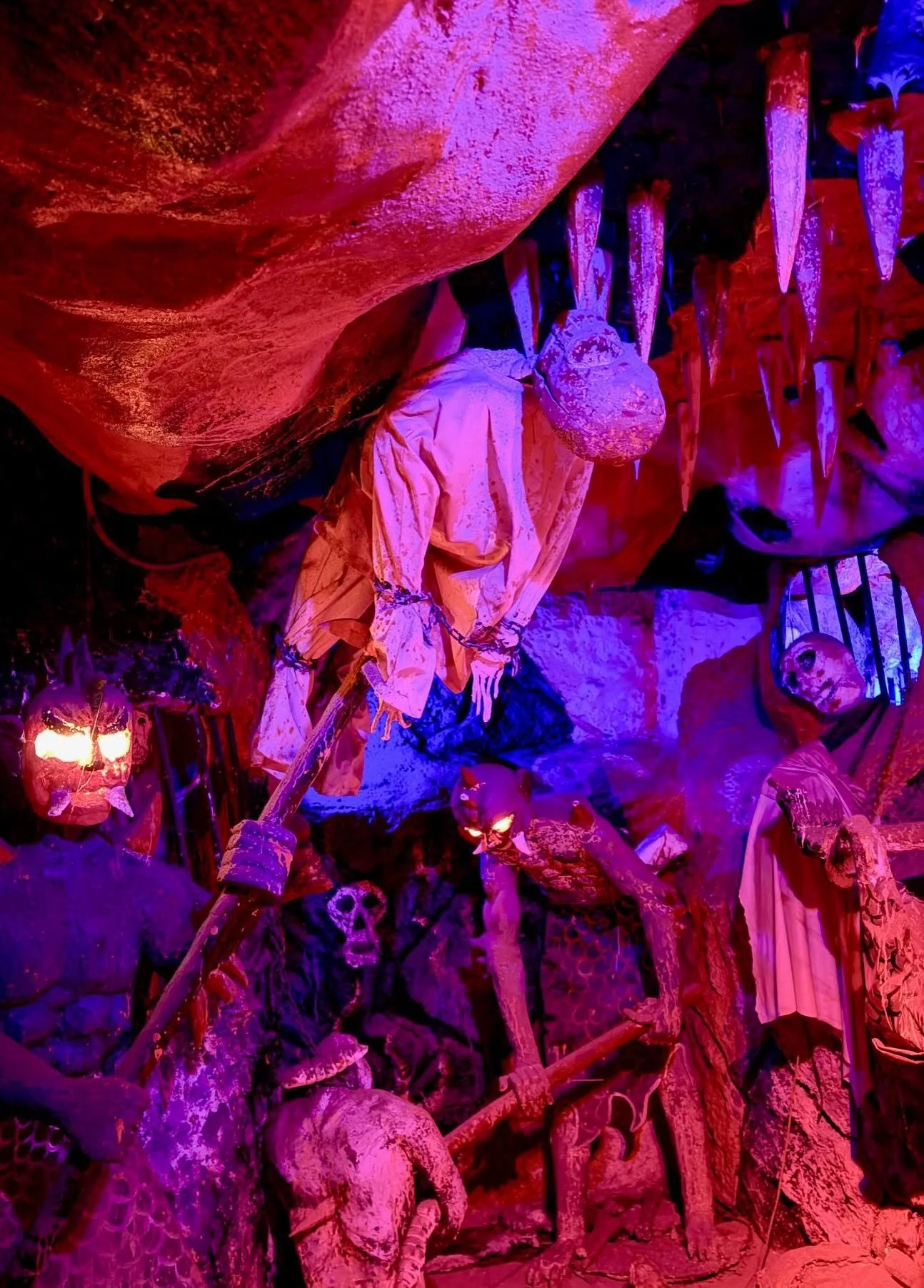
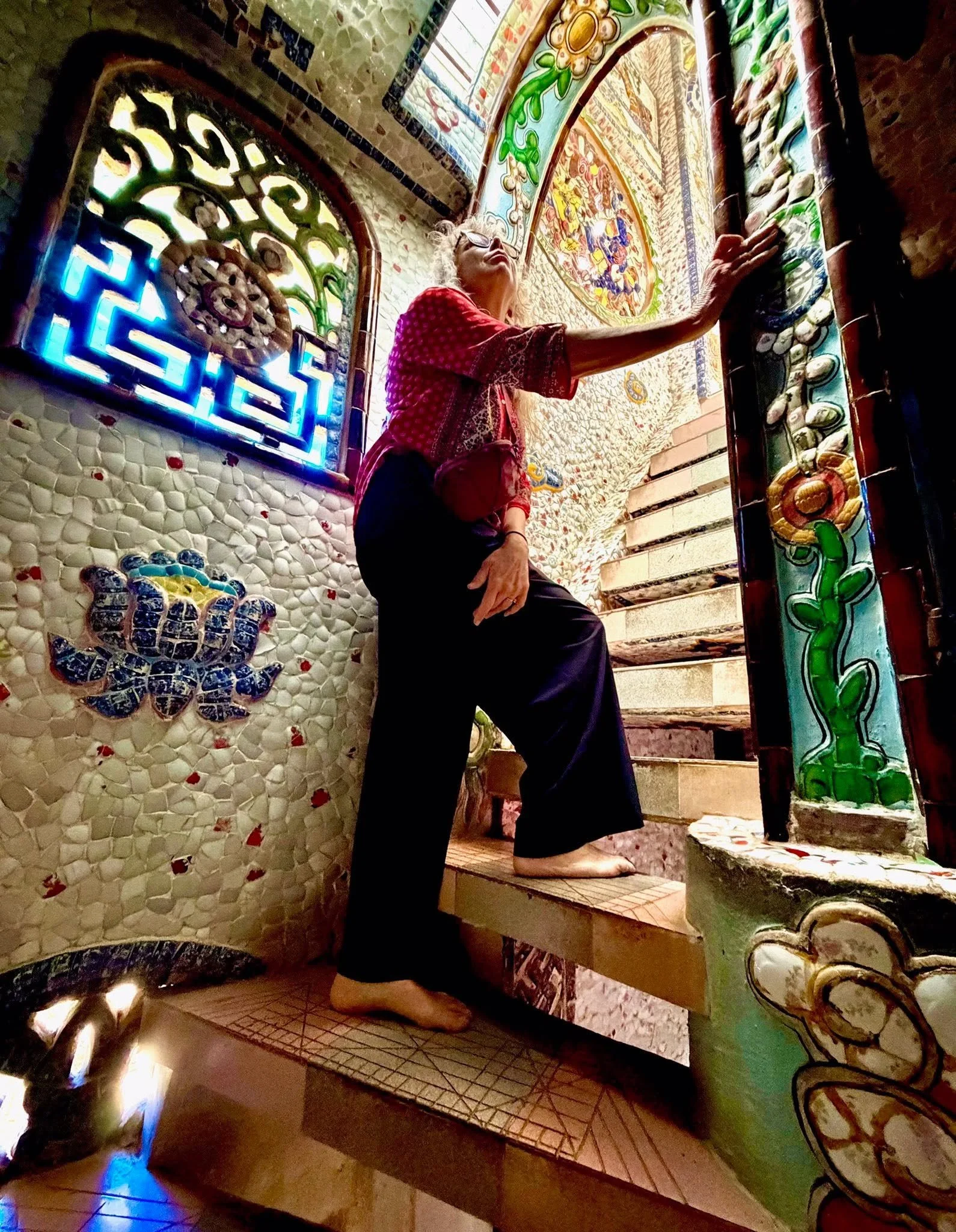
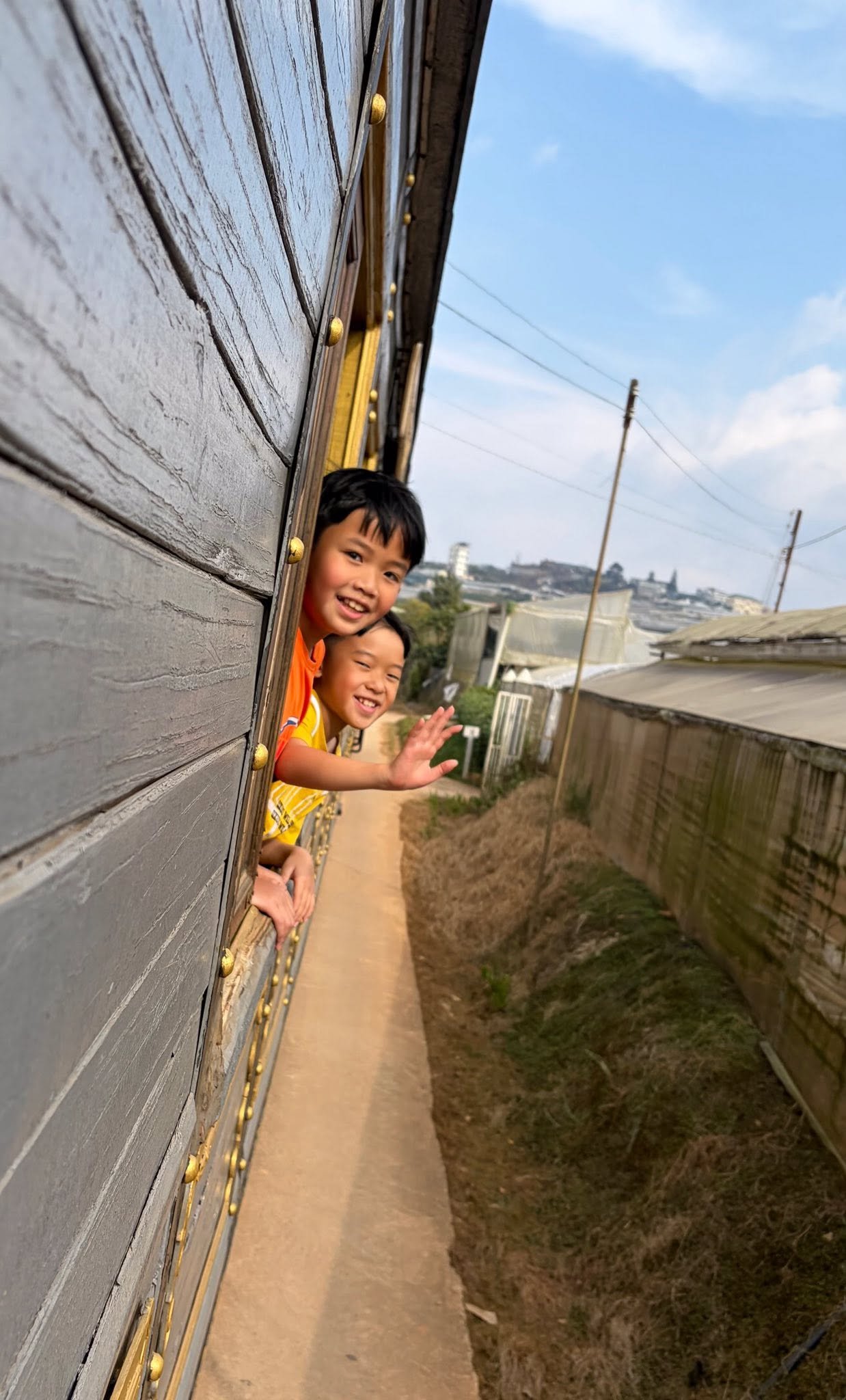
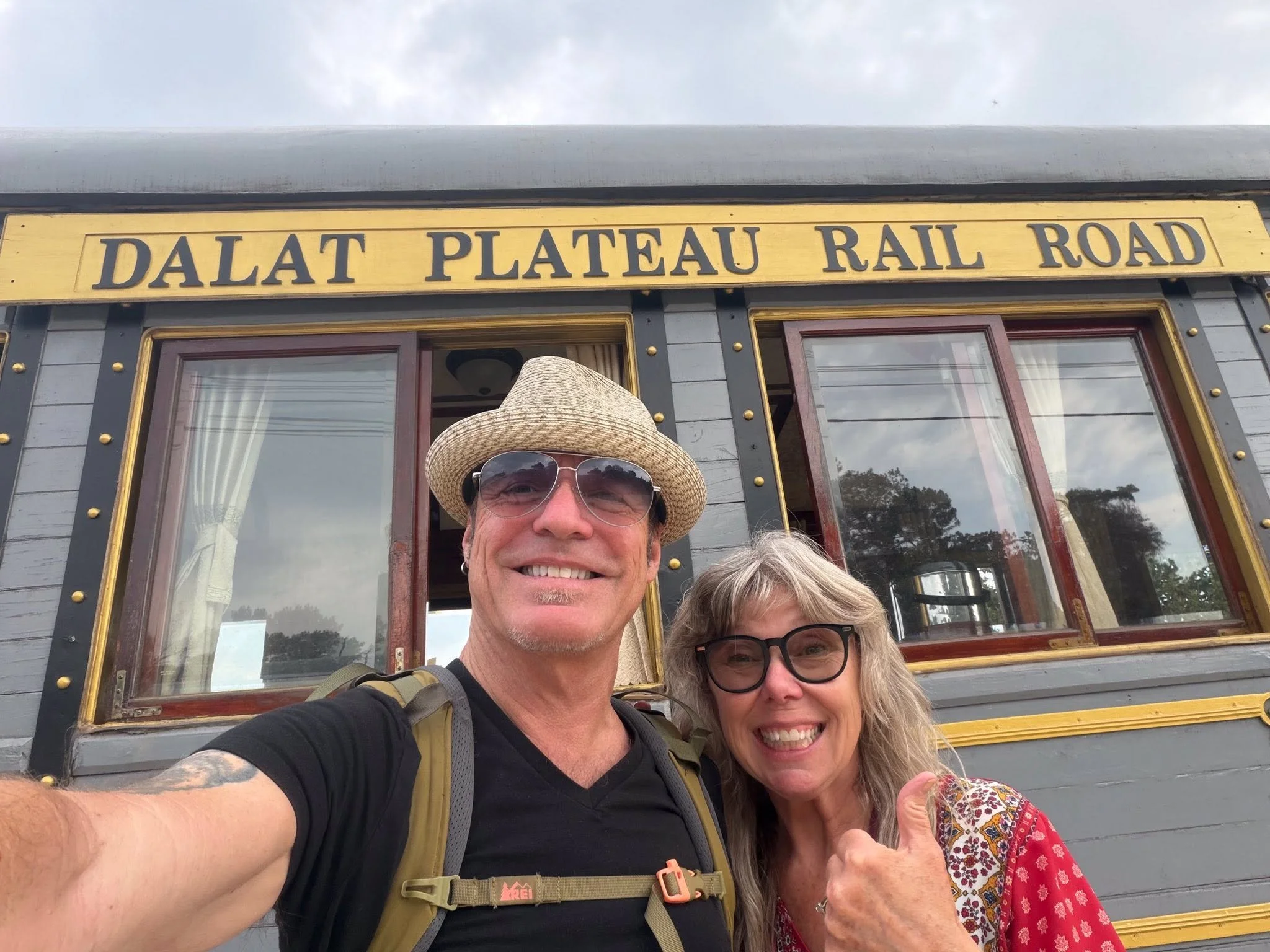
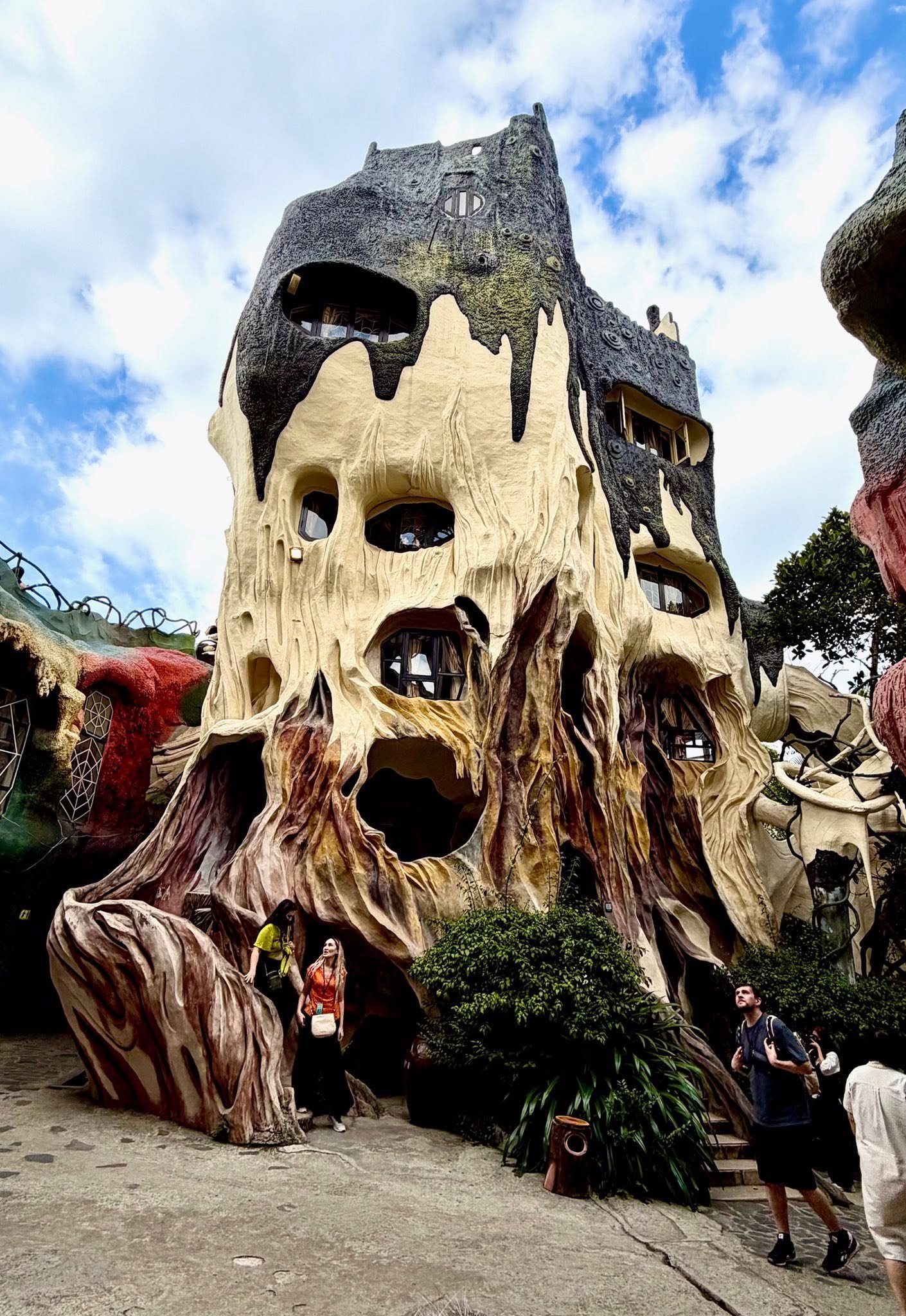
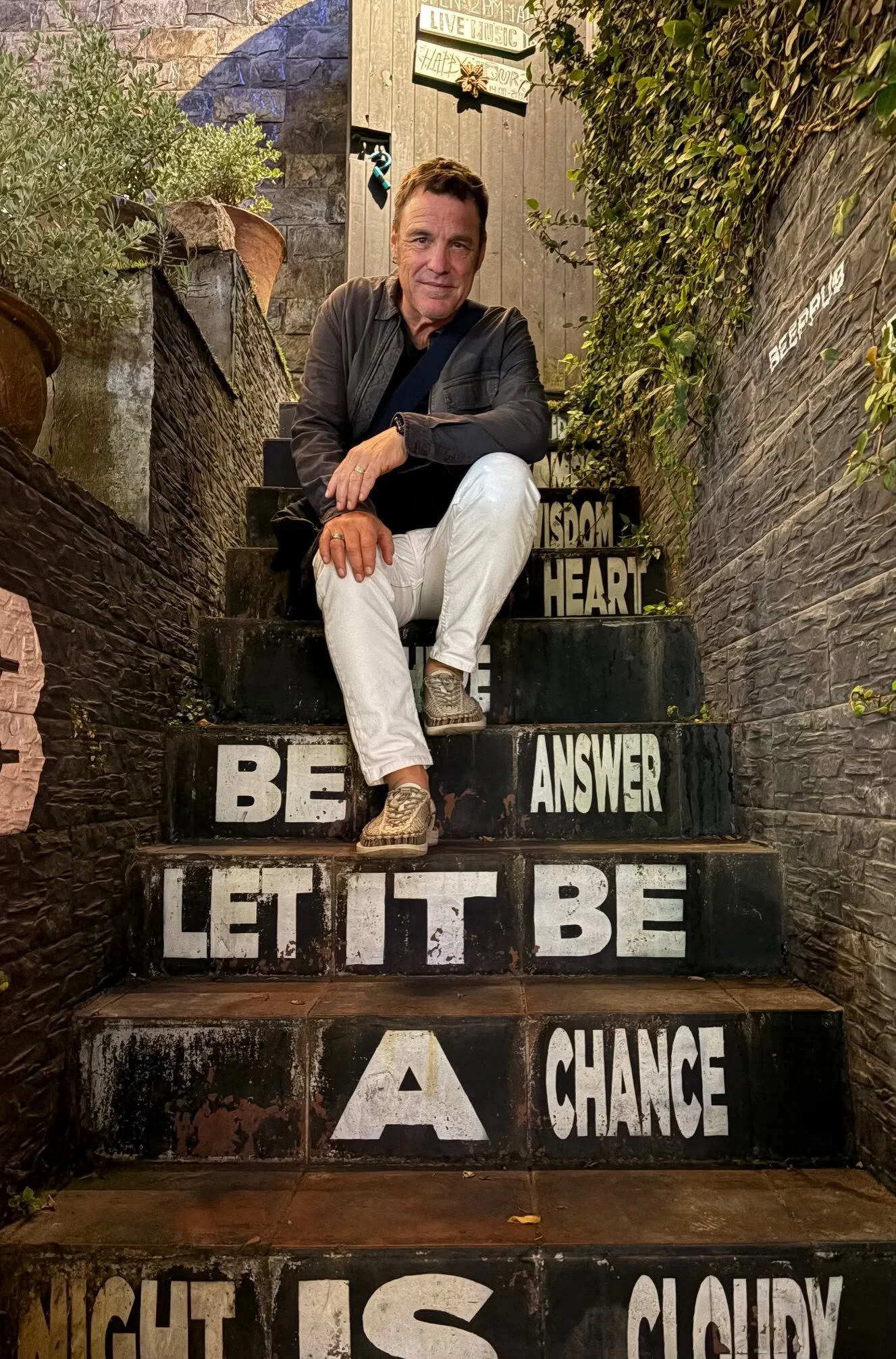
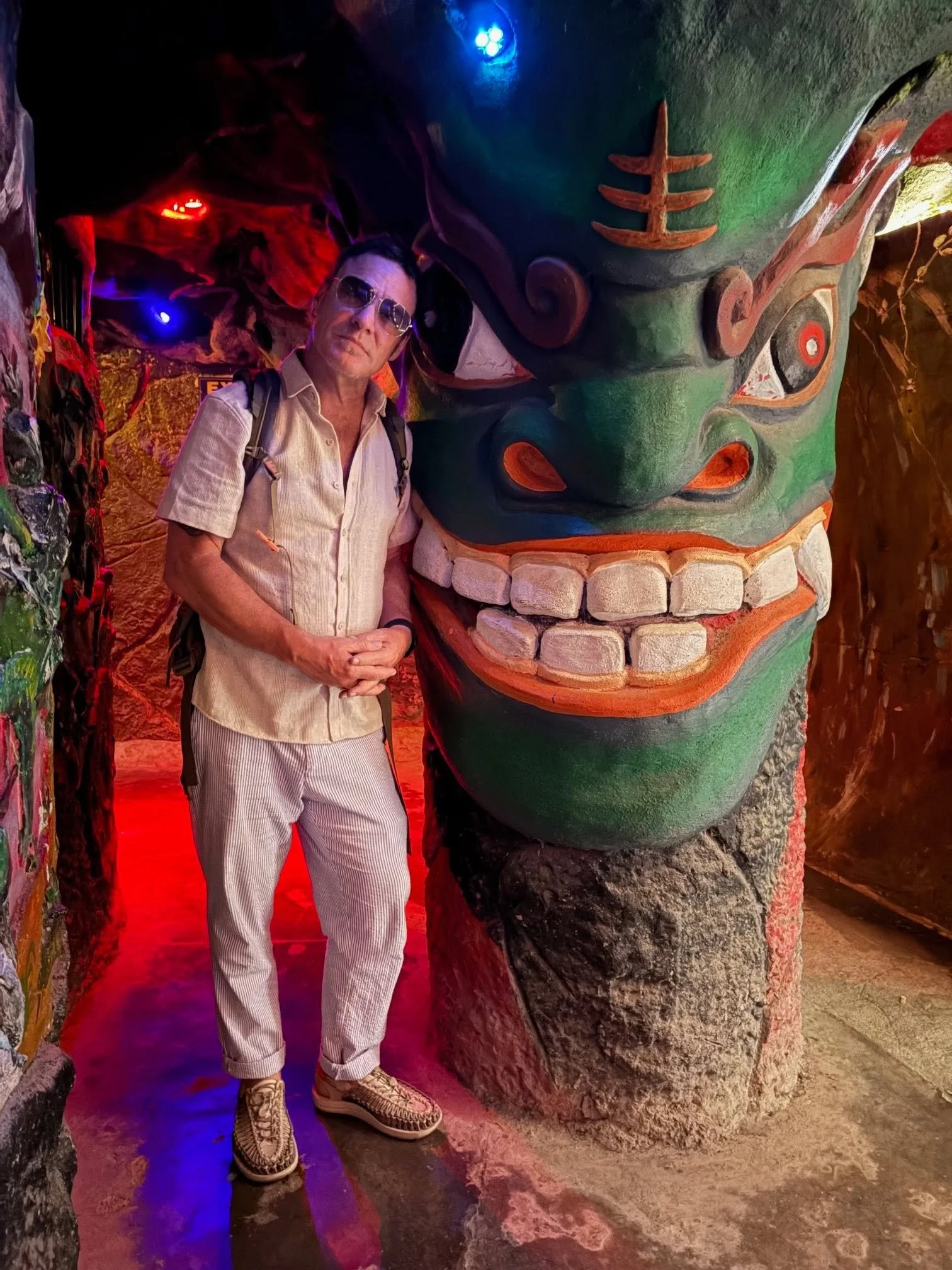
Including by Patti and I. There are some photogenic backdrops here in this colorful tourist playground. Incredibly, three of the most-popular attractions seem to have been built by the same deranged party, if hundreds of years apart and for radically different root purposes. The Hang Nga Crazy House (architectural expressionism) the Linh Phuoc Temple (straight-up Buddhist worship) and the aptly-named Maze Bar (alcohol abuse) share an unnerving architectural flavor, featuring riddlesome melting buildings, secret rooms, and ladder-like staircases climbing high into the forgotten uppermost reaches of the rafters. Borrowing heavily from Parc Guell, Casa Bonita and the Winchester Mystery House, there’s also a bit of Seuss, Dali, Tolkien and Escher tossed in to thicken the respective confounding batters. And to make the experience that much more unsafe. A vertigost’s bad dream, many passages are poorly lit and the patterned textures blend together, further limiting visibility. The ‘handrails’ on bridges several stories above the ground are at thigh-height. And at least at the Maze Bar, you are actually required to consume alcohol. You could never get insurance underwritten to operate attractions like these in the US.
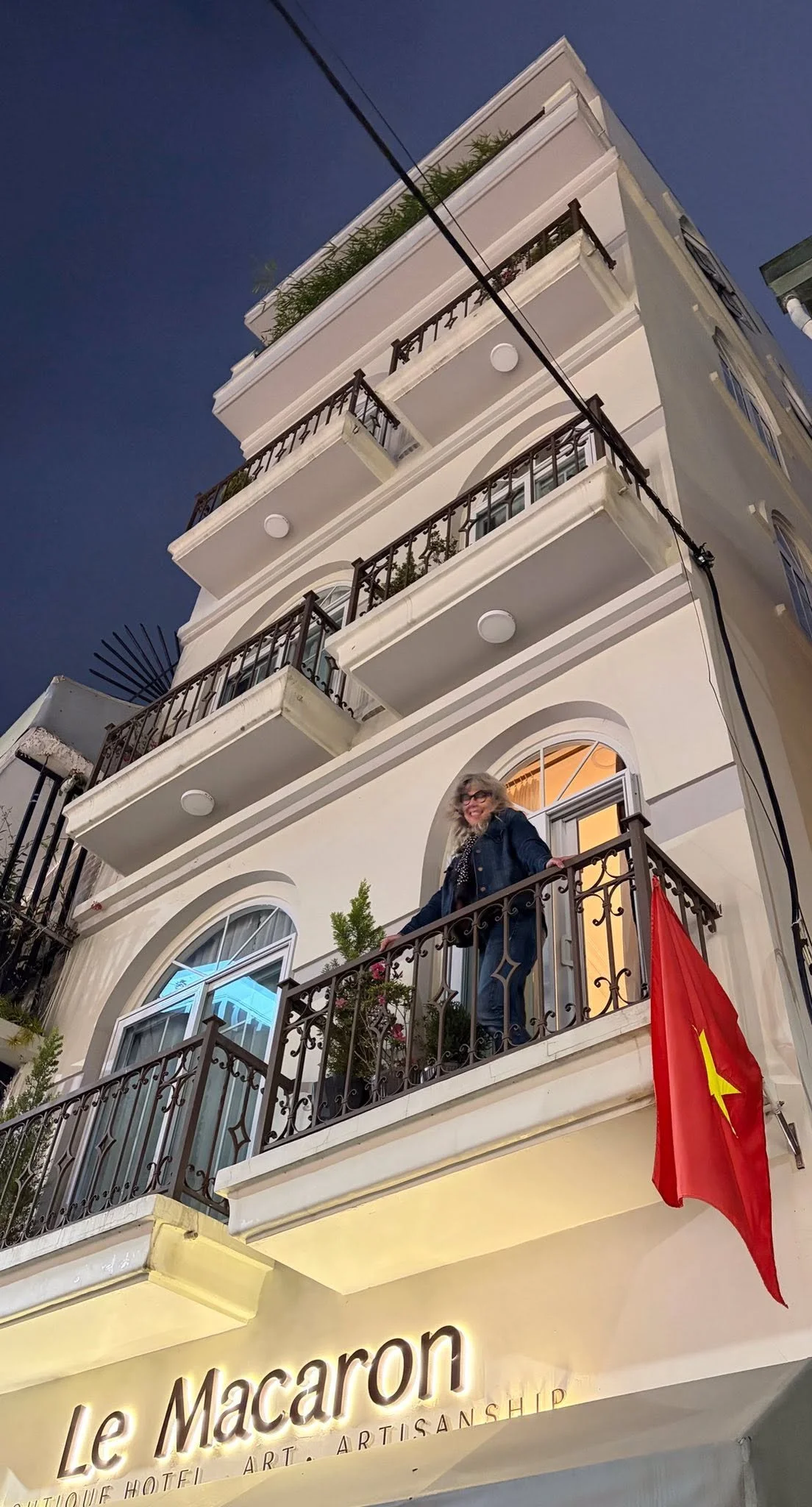
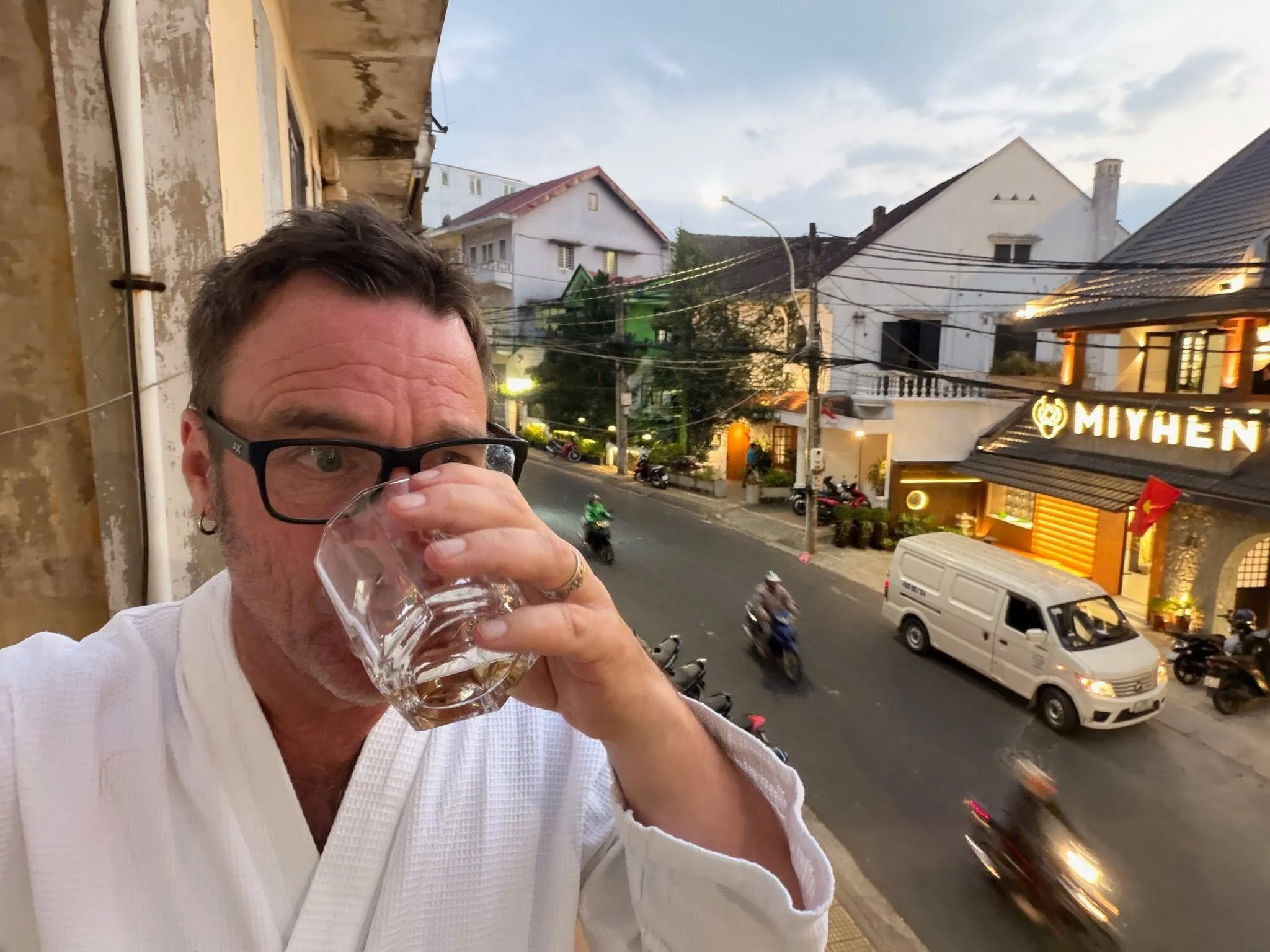
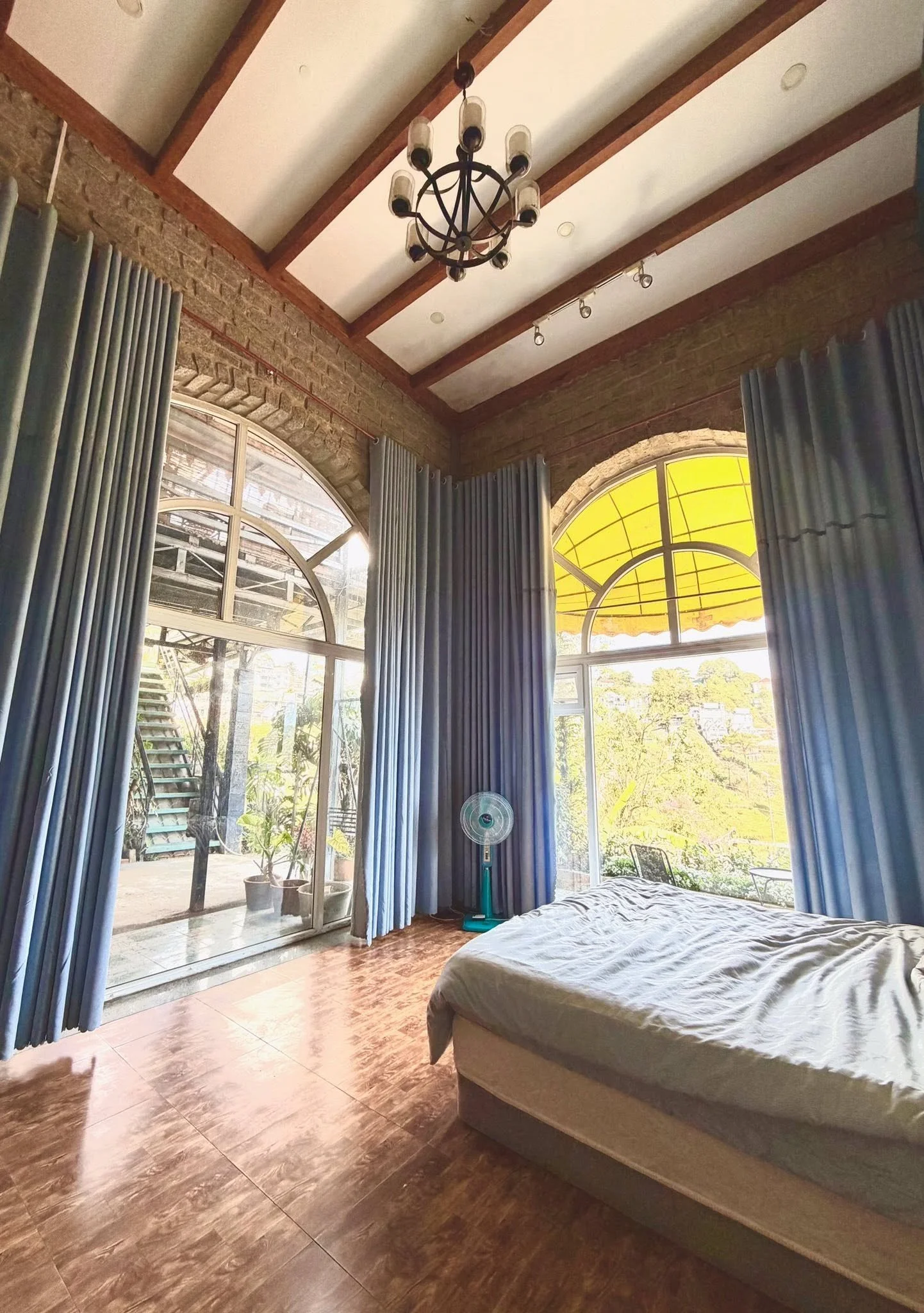
Just another of the many differences between here and home! I will say it was nice to have a hot shower with first-world water pressure in our second hotel here. Our first DaLat flop was a guest suite in the home of some friendly locals on the outskirts of town (think AirB in a 125-year-old French villa with 15’ stacked stone walls and 12’ arched windows). But checking into La Macaron downtown was like being welcomed to the 21st century with its separate stall shower and western threadcounts. After a week’s worth of loose fitting coldwater waterroom baths and lumpy beddings, Le Macaron was a delicious 36 hours of boutique luxury, a splurge at $40USD/night. We slept well, had some underpants washed, and got re-packed to fly into the sky on an airplane to the next town.
See you in Da Nang.
Vietnam 2026
Danang
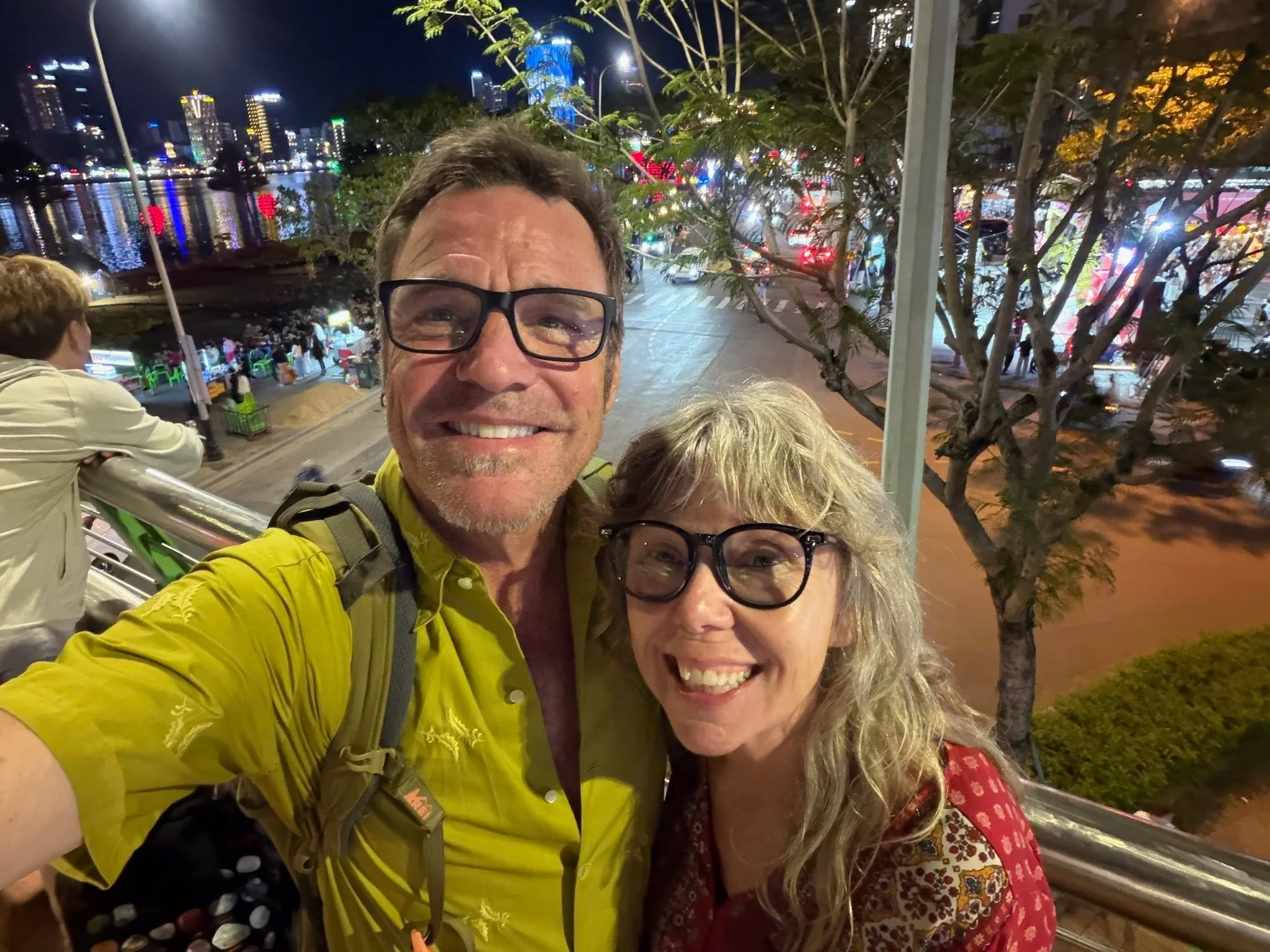
Chuc Mung Nam Moi means Happy New Year.
Patti has been offering Tet greetings to every waitress, bicycle rental agent, hotelier and Grab driver for a week. Even when they would cock their heads and regard her quizzically because she may errantly have said ‘Happy Gout Year’ or even ‘How many monkey live in you toilet now?’
But she kept wishing them Happy New Year, getting closer to perfect pronunciation with each attempt.
Language is so crazy. We all use it, though how (and how well) varies greatly. American Americans are largely monolingual, but most people in the rest of the world speak at least two languages— usually English and their own. It’s weird over-hearing Germans ordering Vietnamese coffee in English— but it’s definitely the dominant linguistic currency, not only here but in most of developed world.
It is said that learning a foreign language is the best thing you can do for your brain. And the difficulty of mastering a second language cannot be overstated. Mastering, hell— merely wishing someone a Happy New Year is hard enough. I personally am still working on THANK YOU, though I have gotten pretty good at BIA (beer). It’s like these Vietnamese have a different word for EVERYTHING…
I have apologized to our teachers at the Go Vietnamese Language School for the regrettable condition of my dried-out American brain. I am doing some version of My Best, and also breaking out my most earnest smiles, which do count for something in the classroom as well as on the street. I think the teachers believe I am trying and don’t actively dislike me even if they do probably complain to their boyfriends at night about what a dolt I am.
It’s a different story for Patti. To be fair, it is kind of her job. She has been granted a sabbatical from her position of authority at an institution of higher learning, and her calling for the quarter is to study the language and culture of Vietnam. This encompasses more than ordering those delicious seafood pancakes and wishing strangers Happy New Year. She started working on Duolingo months before our departure and is also naturally comfortable in a classroom. She studies in the evenings and is generally much more focused on her goals than I am on mine. Let’s just say she has goals…
*******************************************************************
We arrived in Da Nang on the shore of the South China Sea on a Saturday afternoon, having flown from DaLat on an airplane. At first glance, Da Nang looked even more international (white) than DaLat had, after our motorcycle trip through the strikingly Vietnamese Mekong Delta.
And that is definitely the case. Da Nang is Vietnam’s third-largest city and it fancies itself an emerging hub of tech, tourism and finance. There’s a lot of development going on here, with lots of cranes on the skyline and wheelbarrows on the sidewalks. A great example was right on the other side of the wall from our bed at the Livie Hotel, where an elderly couple was building a 4-story apartment building with a hammer and a chisel. The banging began before 8am every morning and on day 4, we told the unimaginably pleasant and accommodating Korean girls at the front desk that if they could not re-room us, we would need to check out at once. They called our bluff with a deep bow, apologizing profusely for not having any rooms available on the opposite side of the building. They promised to refund the unused balance of our pre-paid 2-week reservation. And out the door we went.
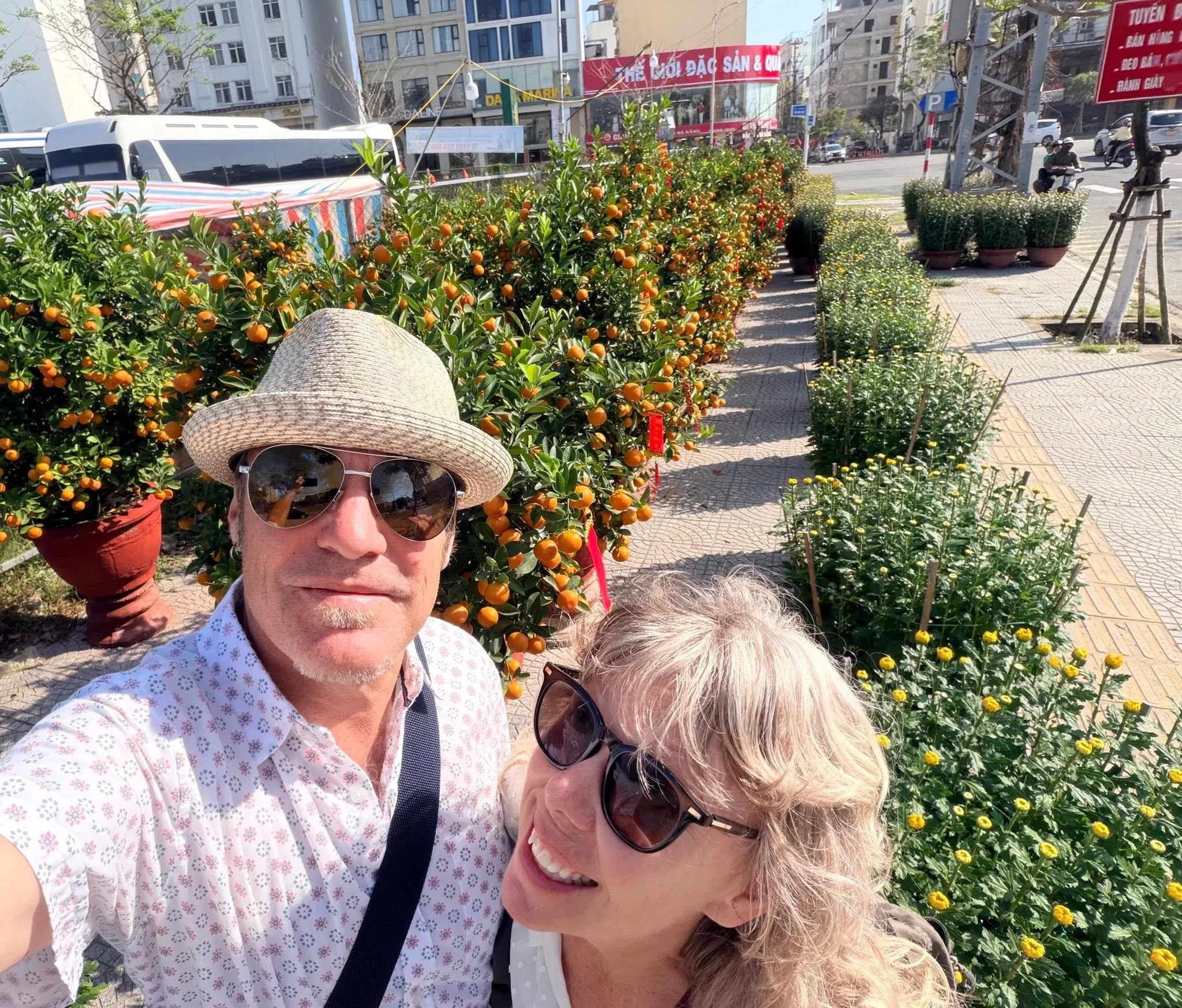
As it turned out, it was not particularly difficult to find a replacement flop. Even in a bustling vacation beach town during the week before Tet—which would be like booking a room on a day’s notice for Christmas week in Leavenworth. Or Malibu. I don’t know— I’ve totally lost track. I can’t tell where we are or what time of the year it is. It’s 78 degrees and humid but there are Christmas trees in the hotel lobbies and cumquat tree lots along the roadsides.
Tet is the Vietnamese observance of Lunar New Year. The celebration is much like the western Christmas holiday season in that it lasts a month and involves much gifting, decorating, travel, fireworks and downtime with family. Also food & drink. And karaoke.
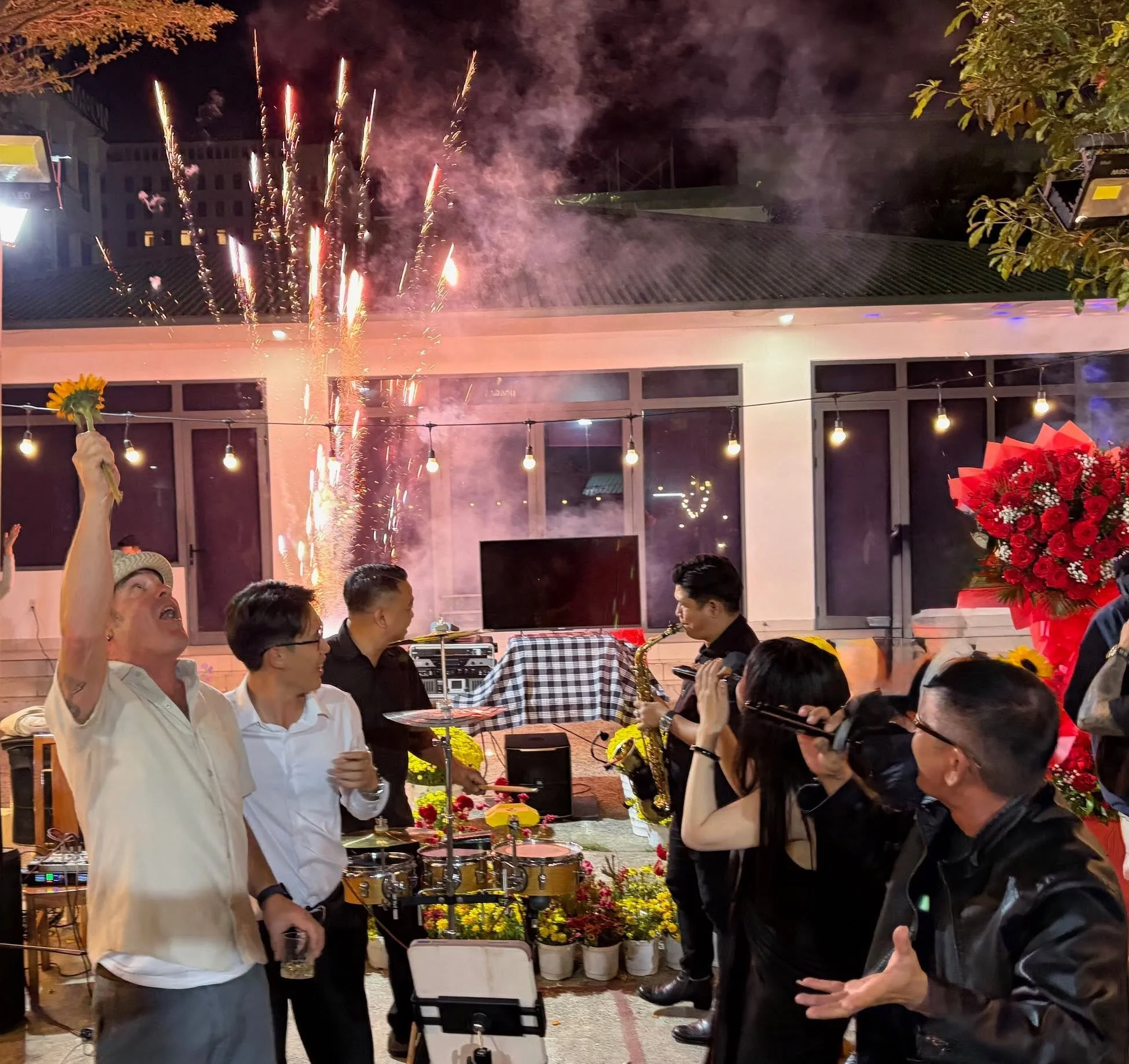
On the third night in our second Da Nang hotel (the homey Oasis Apartments further downtown from the bangin’ Livie) Patti heard music coming from the street five stories below. We’d just gotten home from dinner at Alice’s Restaurant and were stuffed and pretty much ready for beddy-go, even though it was before 9pm. We’d been hearing a lot of profoundly bad singing throughout Da Nang all week, including from a locals-only karaoke yard across the street from the Oasis, on the corner by the bus barn. But the sound that caught Patti’s ear this night was novel— it sounded like a saxophone.
There aren’t typically a lot of reeds in Vietnamese music, and this was definitely a tenor sax. Plus it sounded live. We figured we’d better check it out, so we got re-dressed and took the elevator to the street. Circling the block, we found an entrance to the large fenced lot and stepped inside the gate, sidling up to a palm tree to get a discrete look at what was going on. From a distance, the party at the center of the courtyard looked like every other pre-Tet neighborhood gathering we’d been walking past all week. Several oilcloth-covered card tables were pushed together, surrounded by plastic chairs and stools. The tables were piled high with food, drink, candles and incense and at the head of the gathering was an elder (usually male) clutching a wireless microphone in one hand and a glass of beer in the other, eyes closed and singing badly through a gigantic sound system overdriven to ribbons.
It didn’t take long for a representative of this party to notice us lurking the perimeter. He strode directly to us with a wide smile and in excellent English asked our names and invited us in. Before we could say ‘oh, we were merely curious and don’t wish to intrude’ we were seated at the table with a plate of deep-fried liver rolls & barbecued chicken feet and several beers each. As it turns out, we had stumbled onto a year-end company party for a developer planning a 36-story $300M condo tower on the site. The mostly male employees literally lined up to enthusiastically shake our hands and tell us in varying levels of English how happy they were that we had joined their party. It didn’t matter who we were or where we were from— they were simply tickled to have guests, because that’s the mood the Vietnamese are generally in this time of year.
The owner of the company insisted we join him at his table at the very front, and in the worst English of his entire crew told us repeatedly just how stoked out of his fucking mind he was that we were there.
And then of course, it was our turn to sing.
Patti and I had known this moment would arrive eventually and had agreed in advance that the most internationally-known (if not necessarily loved) popular song of all times was of course Hotel California.
The band pulled up the charts and a pair of Italians who had slithered in joined us in front for a pretty serviceable version of the punchline hit. The crowd lost its mind and no one yelled ‘fuck the Eagles’ in any language.
It was the experience we’d been waiting a month for. We’d come close in a few venues with glimpses into the shadowy interior of Vietnam, the mysterious unlit tiled rooms behind the storefronts. But until this banquet we’d only been voyeurs. Now, exchanging farewell hugs, handshakes and high-fives with our new friends for life, we felt like we’d broken through to the other side—arriving as participants. We weren’t exactly naturalized and we sure as heck were not going to be fluent by the time our Vietnamese classes ended. But we’d seen the actual vision and done more than simply entertain it as an agreeable possibility. We’d survived a company Christmas party and were ready to pop the cork on Tet.
It officially starts in the morning, and we are off to Hoi An with the light to dig it to the very fullest.
Chuc Mung Nam Moi…
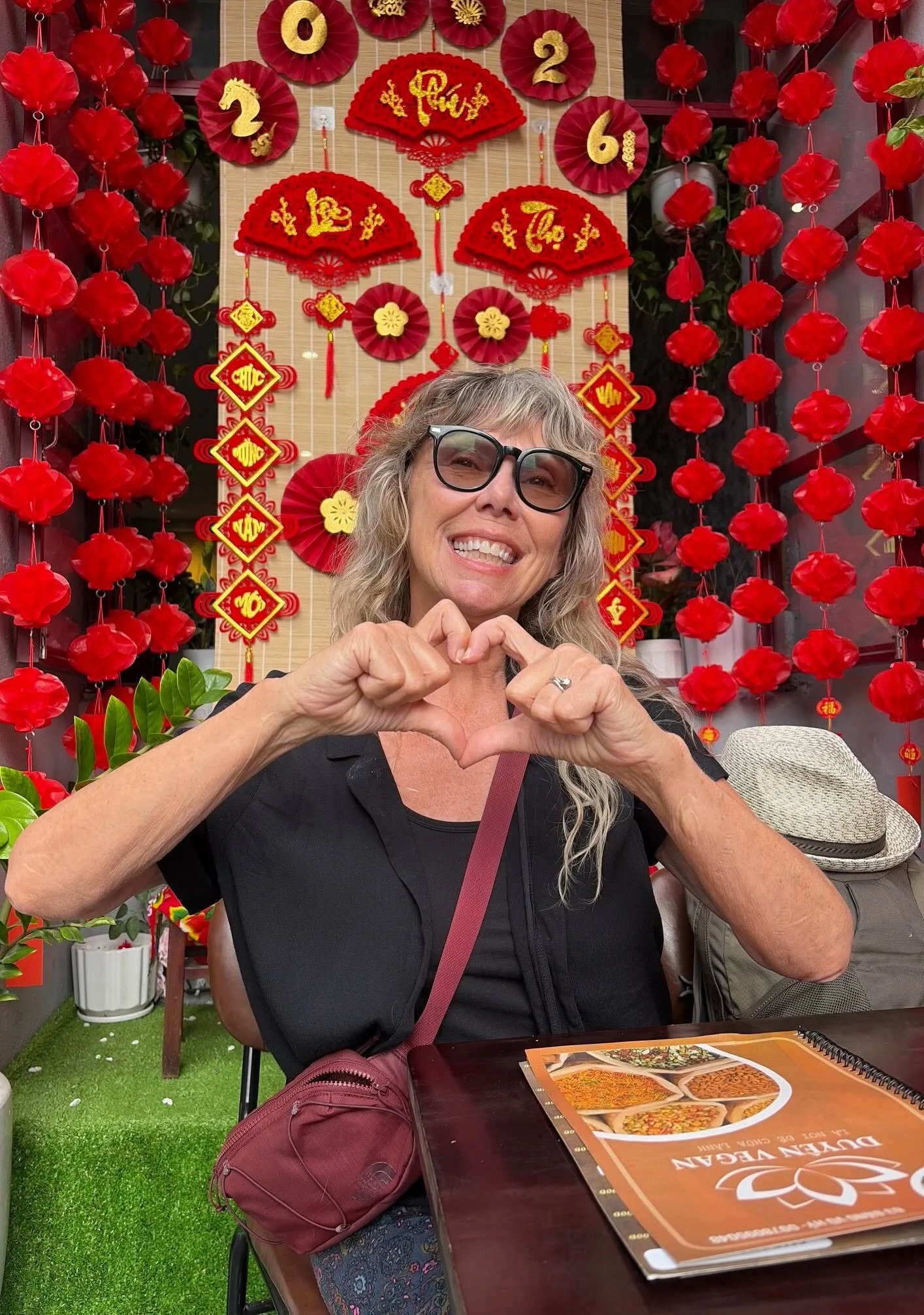

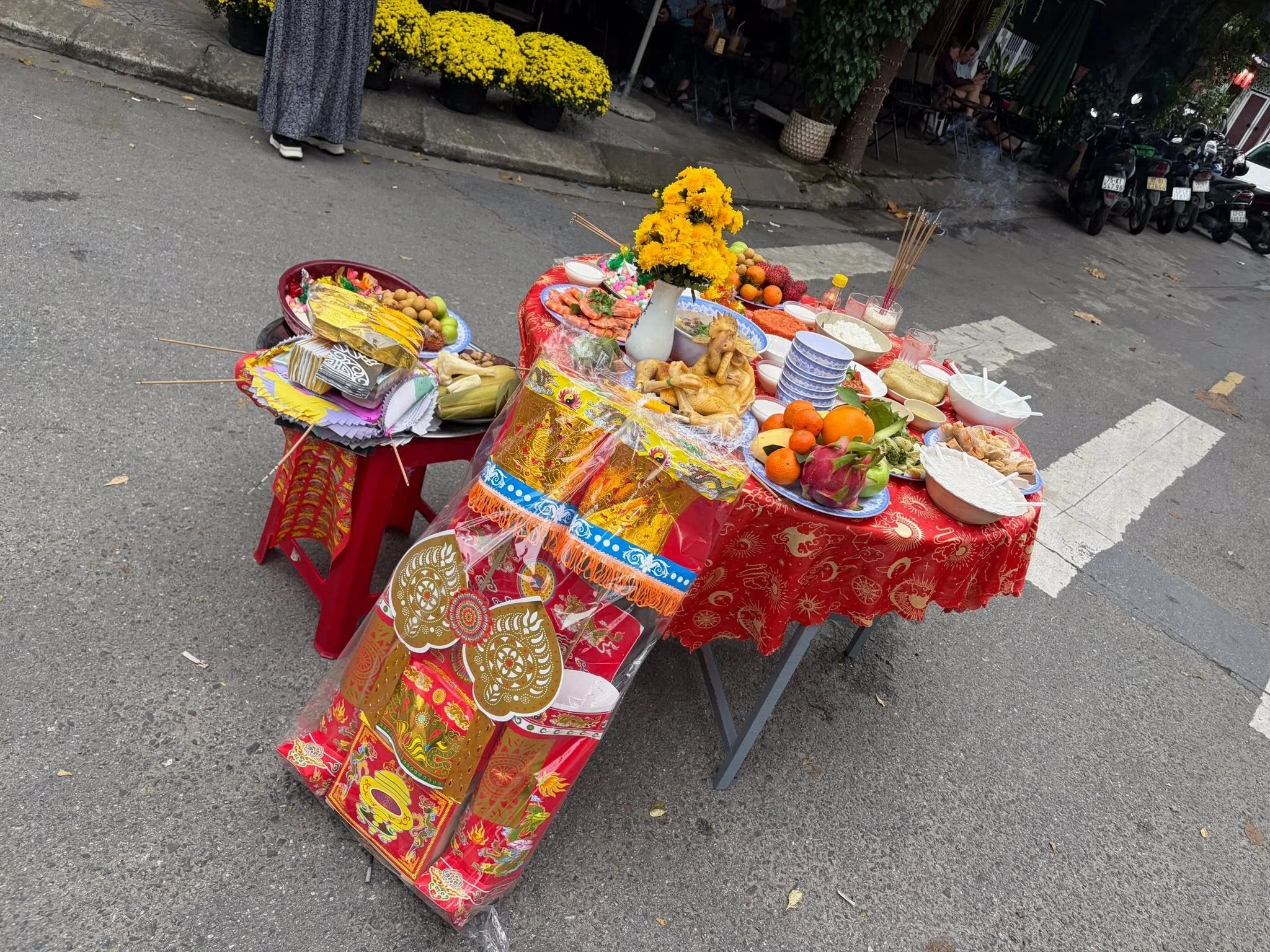
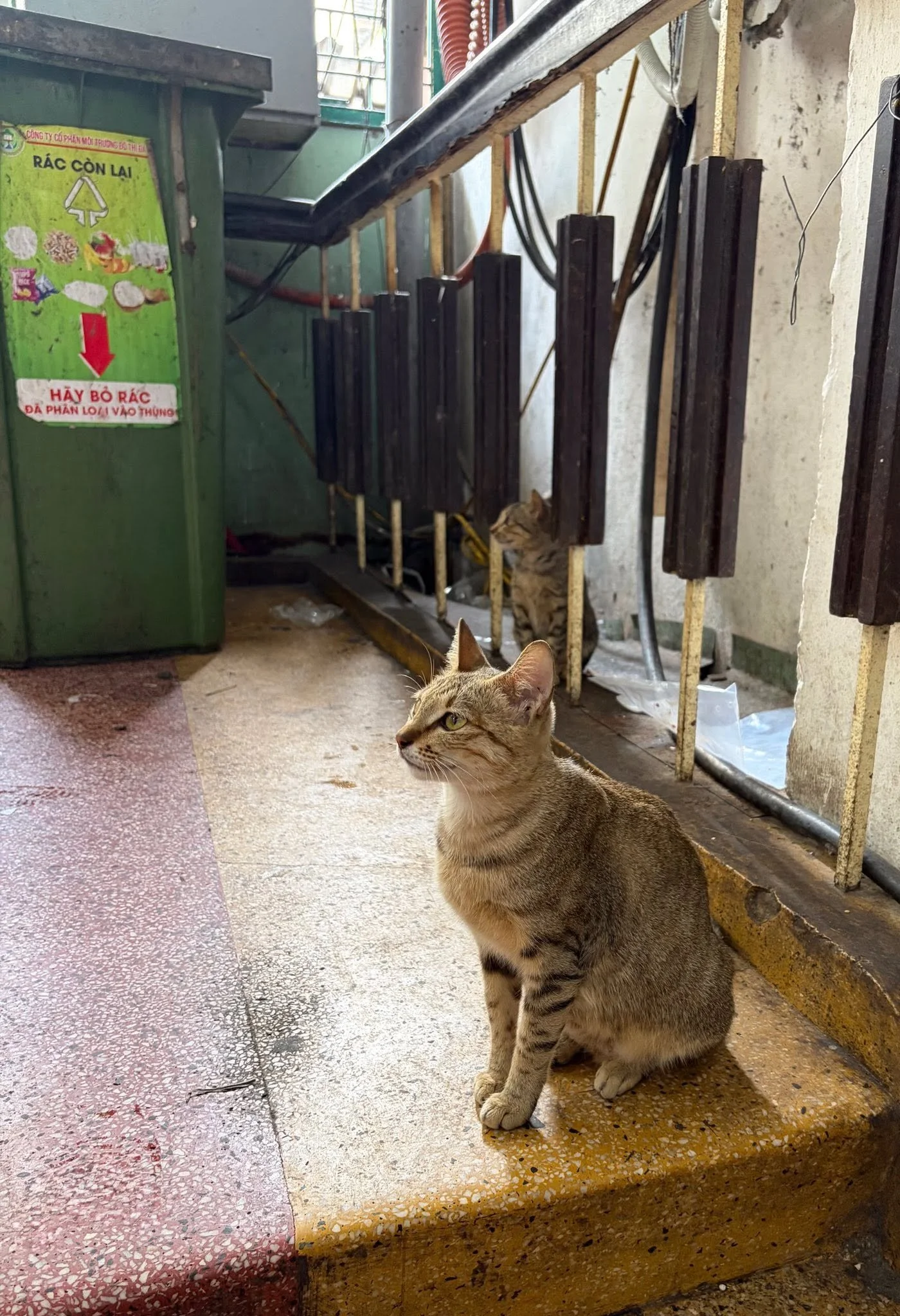
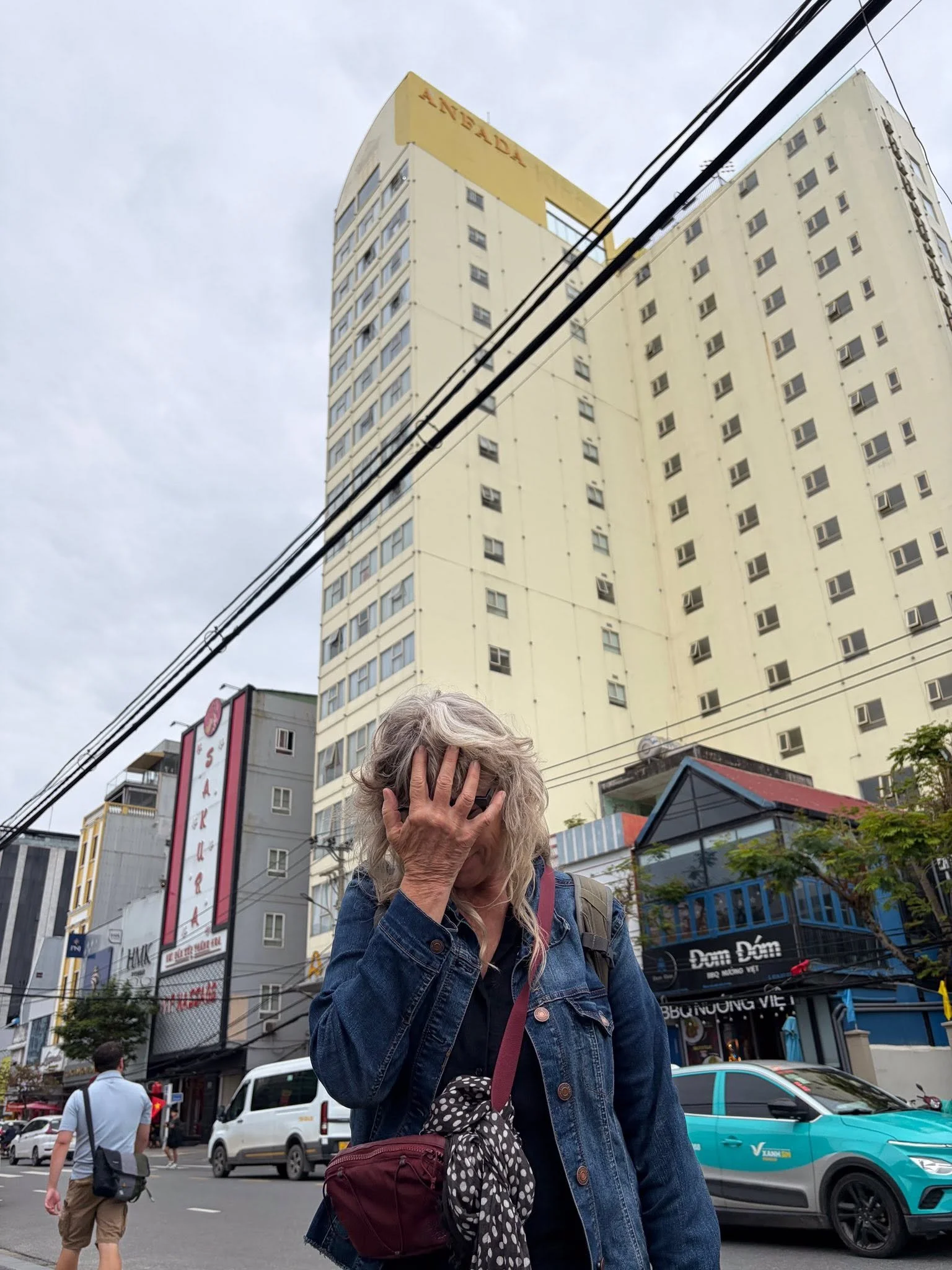
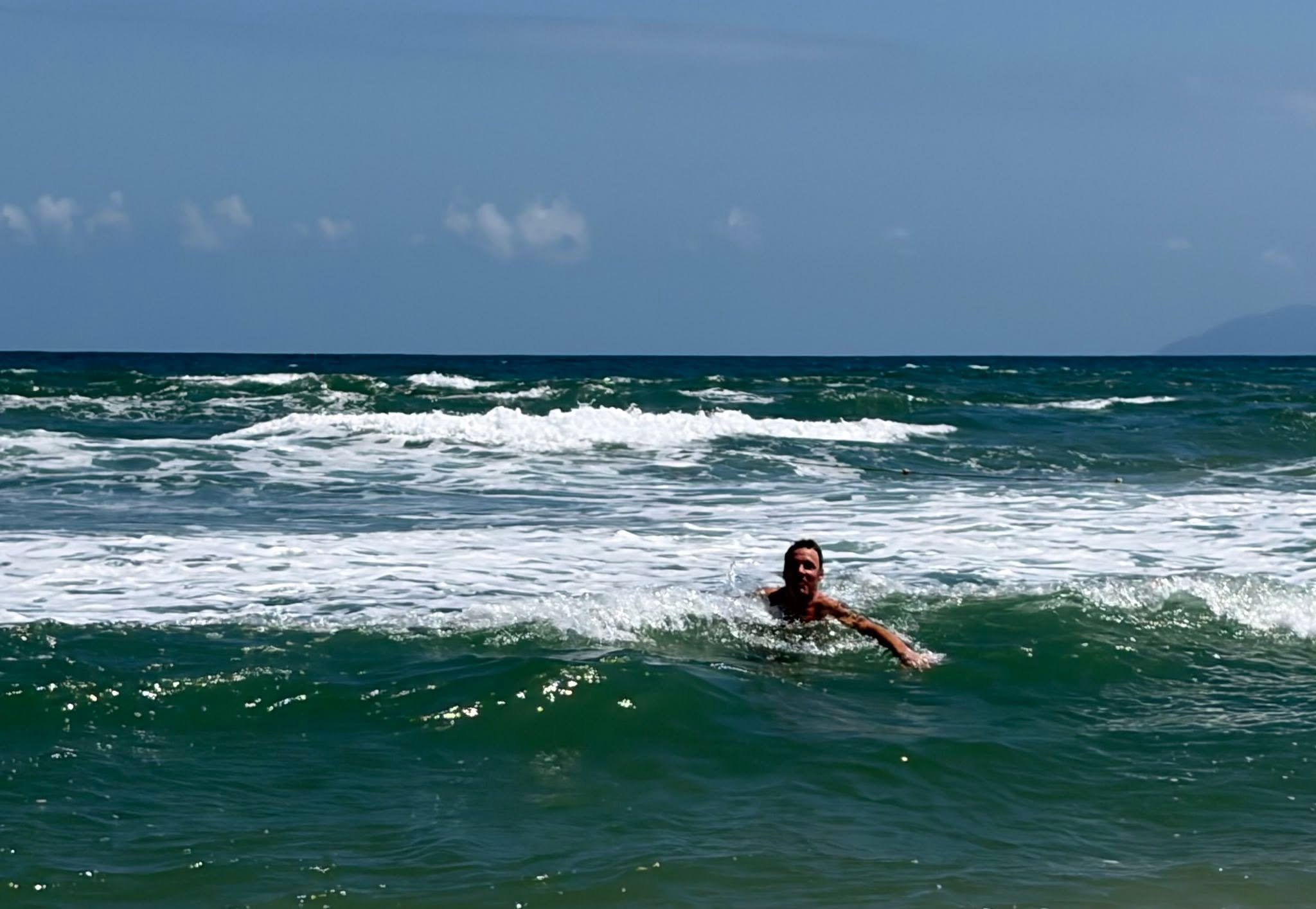
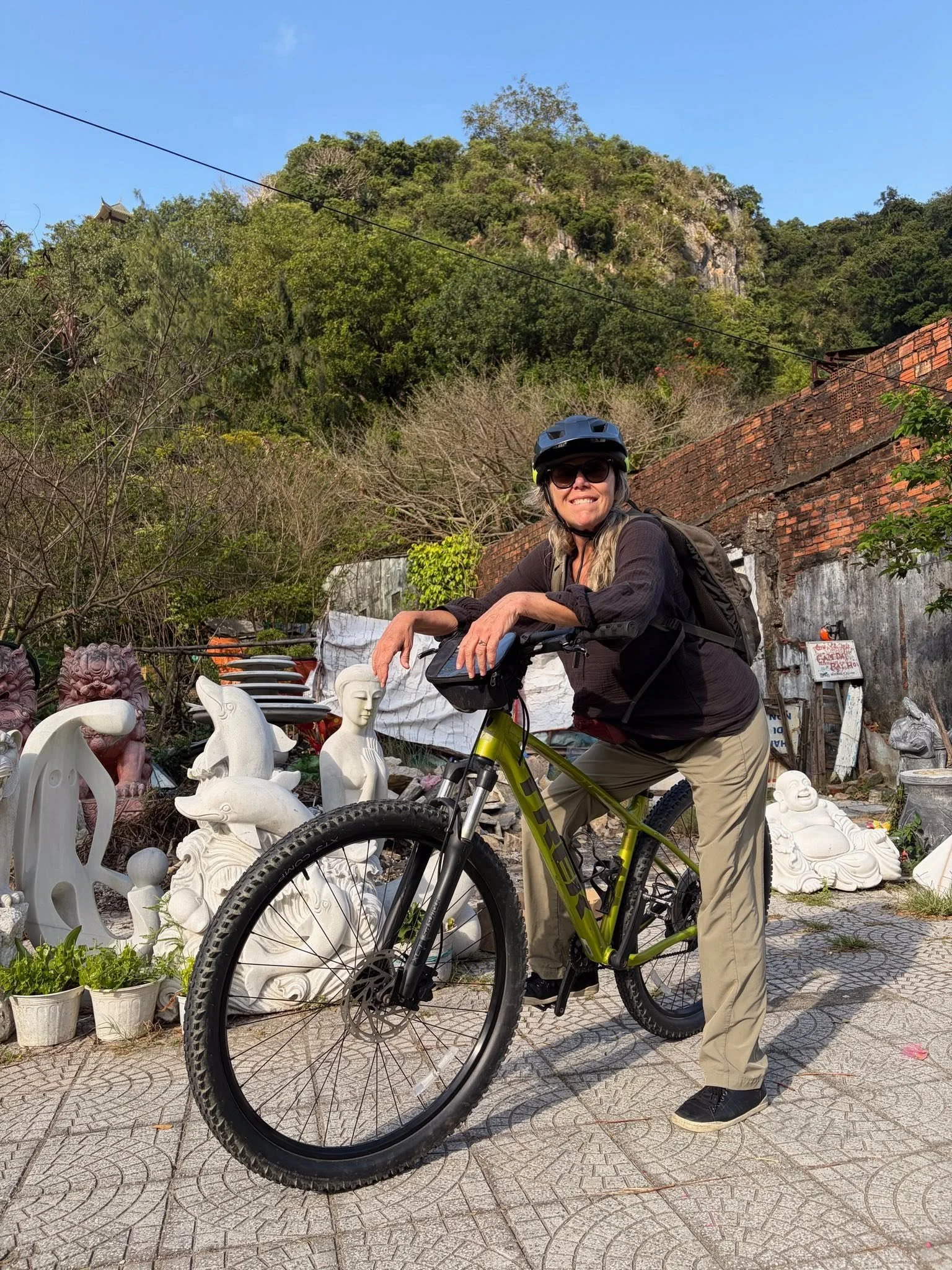
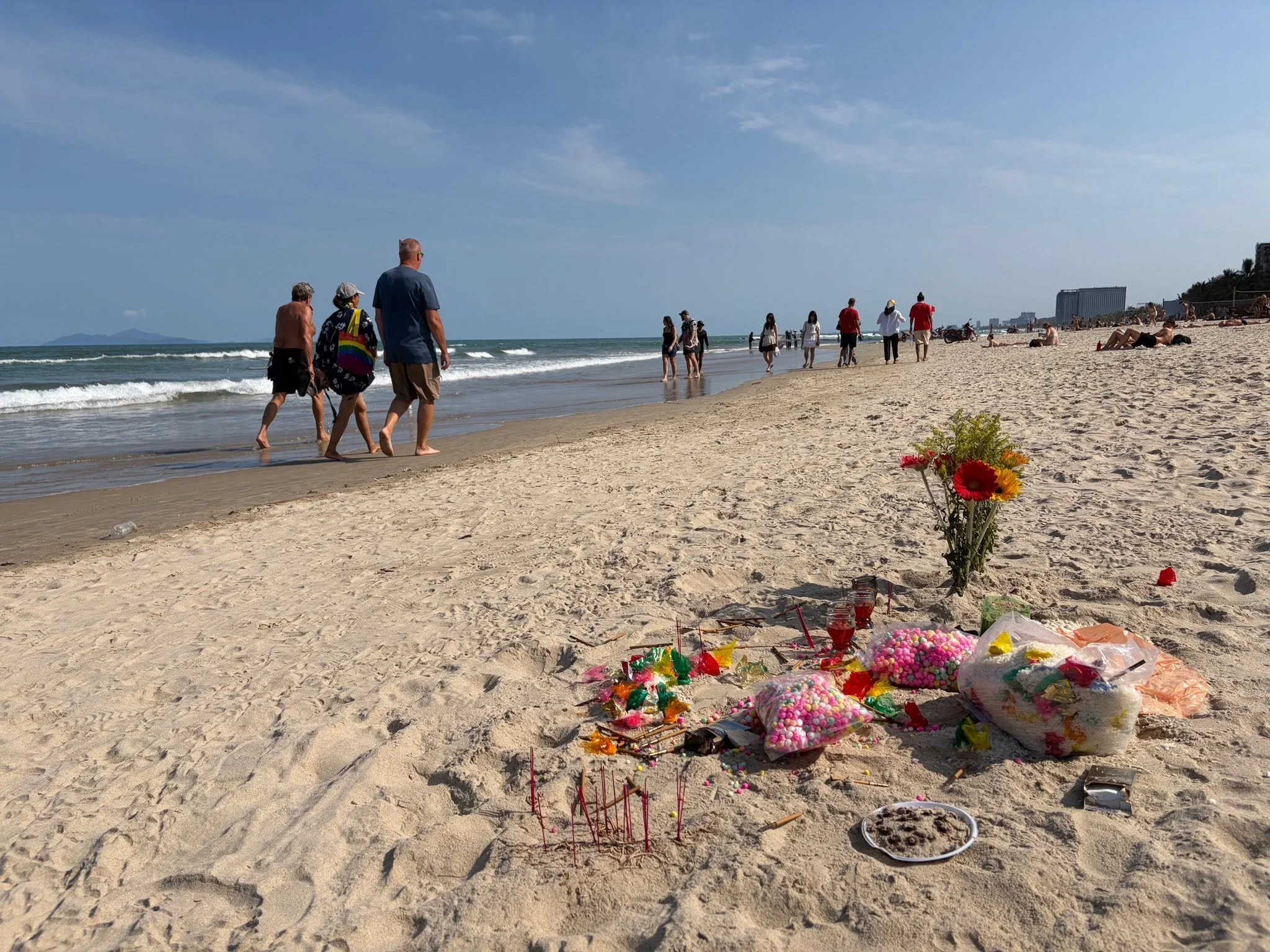
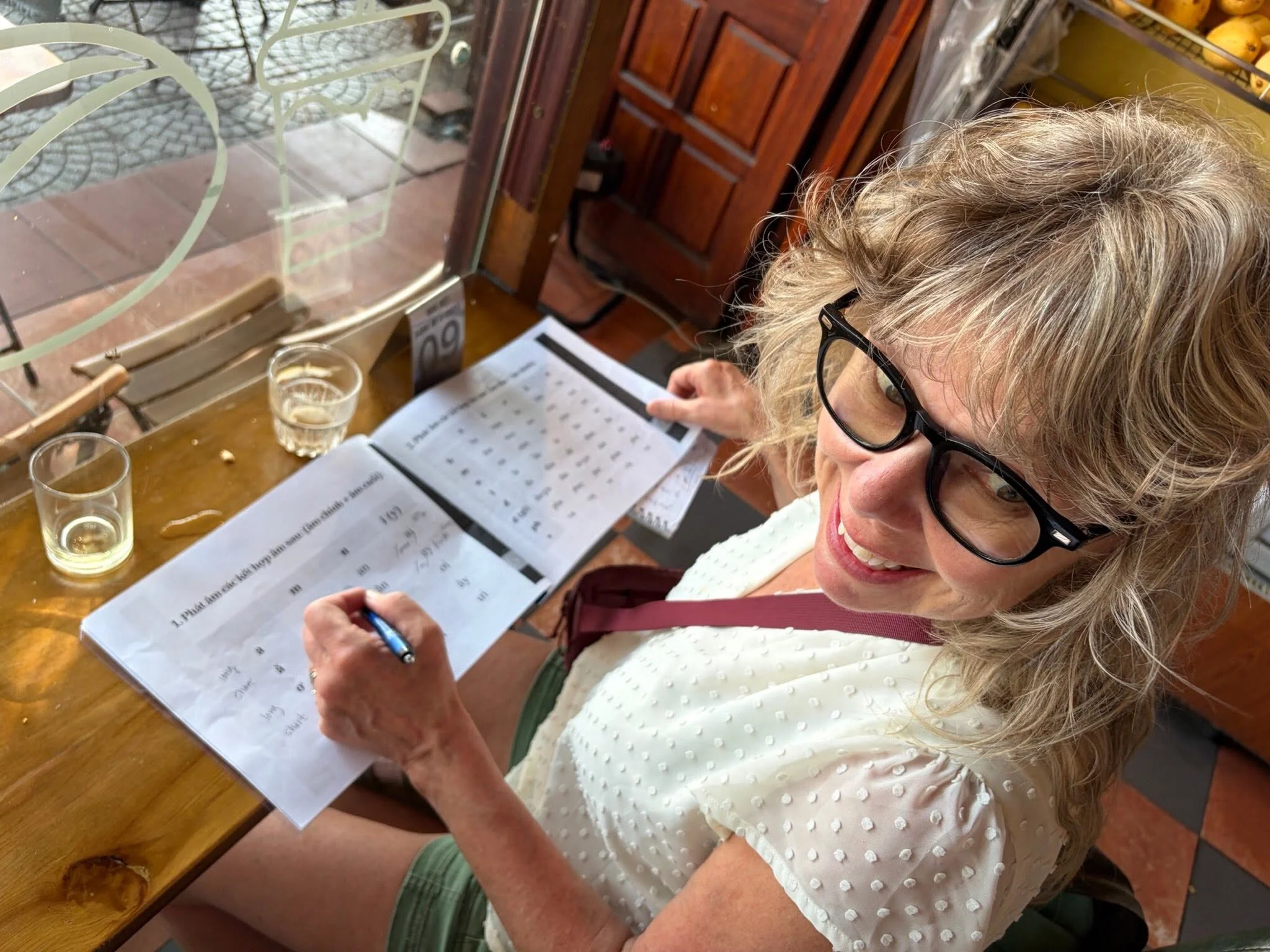
Vietnam 2026
Tet 2026
I met an Ong from Dong Hoi City and
He was headed for
Marble Mountain and some
Homemade Bun Mam Nem
From Son Doong Cave the Co’s are travelin’ down
To Hoi An’s sunny shores
From Hanoi clear down to Saigon town
The traffic it will slow you down
But there’s no place like home
for Tet…
It has been such a thrilling treat to be in Vietnam for this colorful celebration! Imagine landing in the US on December 10 without understanding why everyone has LED lights on their fences and pine trees on the tops of their cars and why the same songs seem to be playing in all the stores. A couple of bearded dudes keep showing up— one in red and the other is always barefoot and you’re not sure if they’re different spins on the same guy or if they’re rivals or what. Everyone seems busy yet happy and people keep greeting you in a code that doesn’t really translate on Google.
That’s like Tet.
It’s rich & complex, like a lot of stuff in Vietnam. We knew before coming here that Tet is like Christmas and New Years and Easter all rolled into one. We understood it to be the observance of the start of the Lunar New Year and that is lasts a month. We were prepared for a crescendo of celebration and commerce to be followed by a quiet period during which we might not be able to get a ride or a sandwich.
But as it turns out, there’s a lot more to Tet.
To grasp the concept more completely, you need to first understand the religious landscape of Vietnam. If anyone does in fact understand the religious landscape of Vietnam, I would appreciate being filled in!
With temples and pagodas and skyscraping Buddhas everywhere, you’d think that Vietnam is a very religious place. But the fact is that 4 out of 5 Vietnamese identify as atheist or at least non-religious. The Buddhisty icons and imagery (and practice) are everywhere—but the most widely-claimed organized religion is actually Christianity at less than 20% of the population.
It’s awkward. For centuries, Southeast Asia had a perfectly good Buddhist swing going, and then the French and Portuguese showed up with their bro Jesus during the 17th century and now shit’s all fucked up.
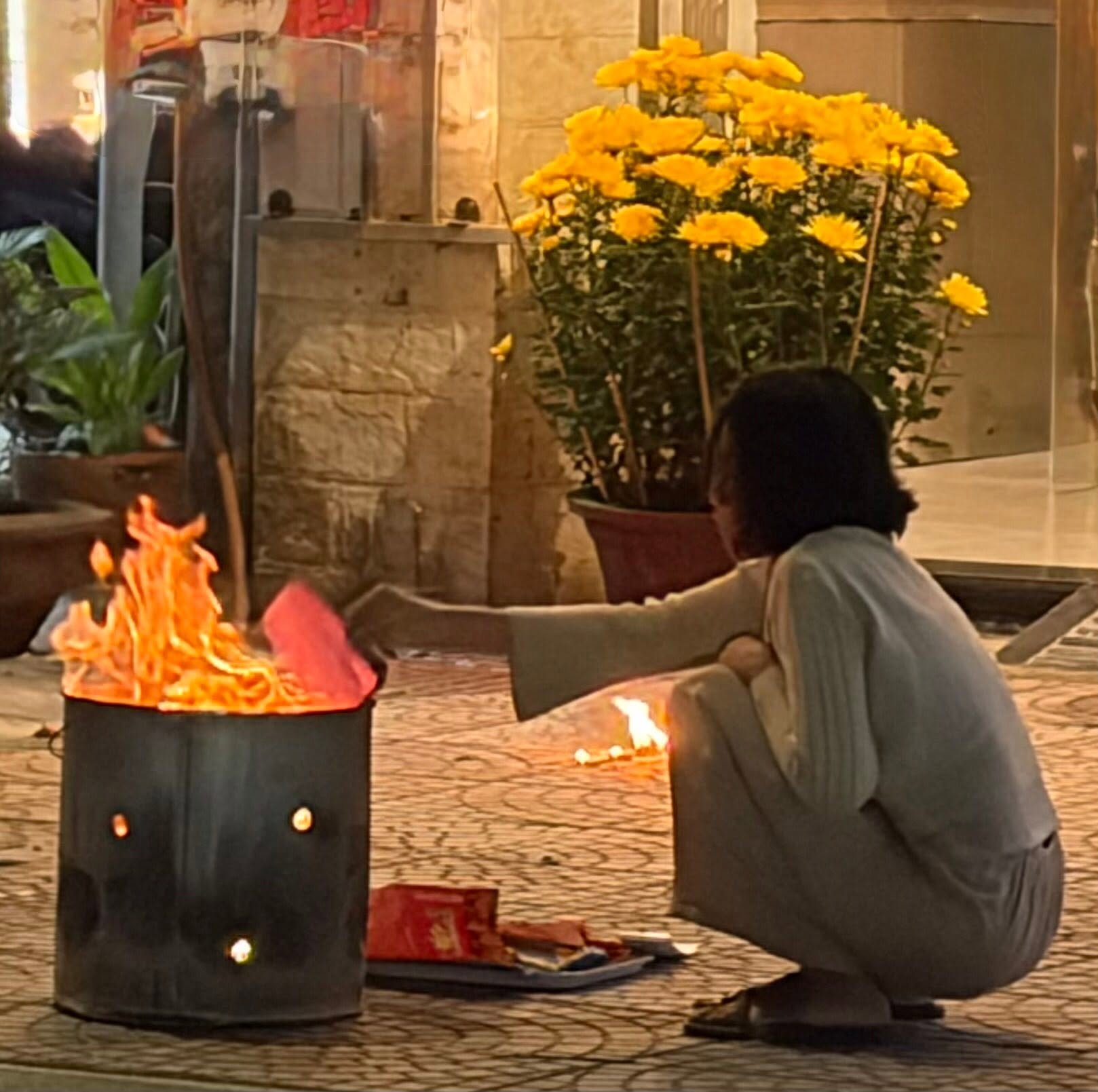
Not for the Vietnamese themselves— more just for busybody foreigner bloggers trying to figure out who’s in charge religiously. In the west, we have a very ‘my god can beat up your god’ approach to religion. Not so here. Best I can tell, folks generally worship ancestry, luck, and ceremony for ceremony’s sake. You don’t really need a proper God to burn incense or make a remembrance to your deceased grandparents. You don’t need dogma to pray for prosperity in the coming year. You just need the incense and some candles, a few energy drinks— maybe some cigarettes if grandpa smoked.
And of course he did! Every Vietnamese man over the age of 14 smokes. Not the ladies, at least not in public. But the men, they smoke tough.
******************************************************************
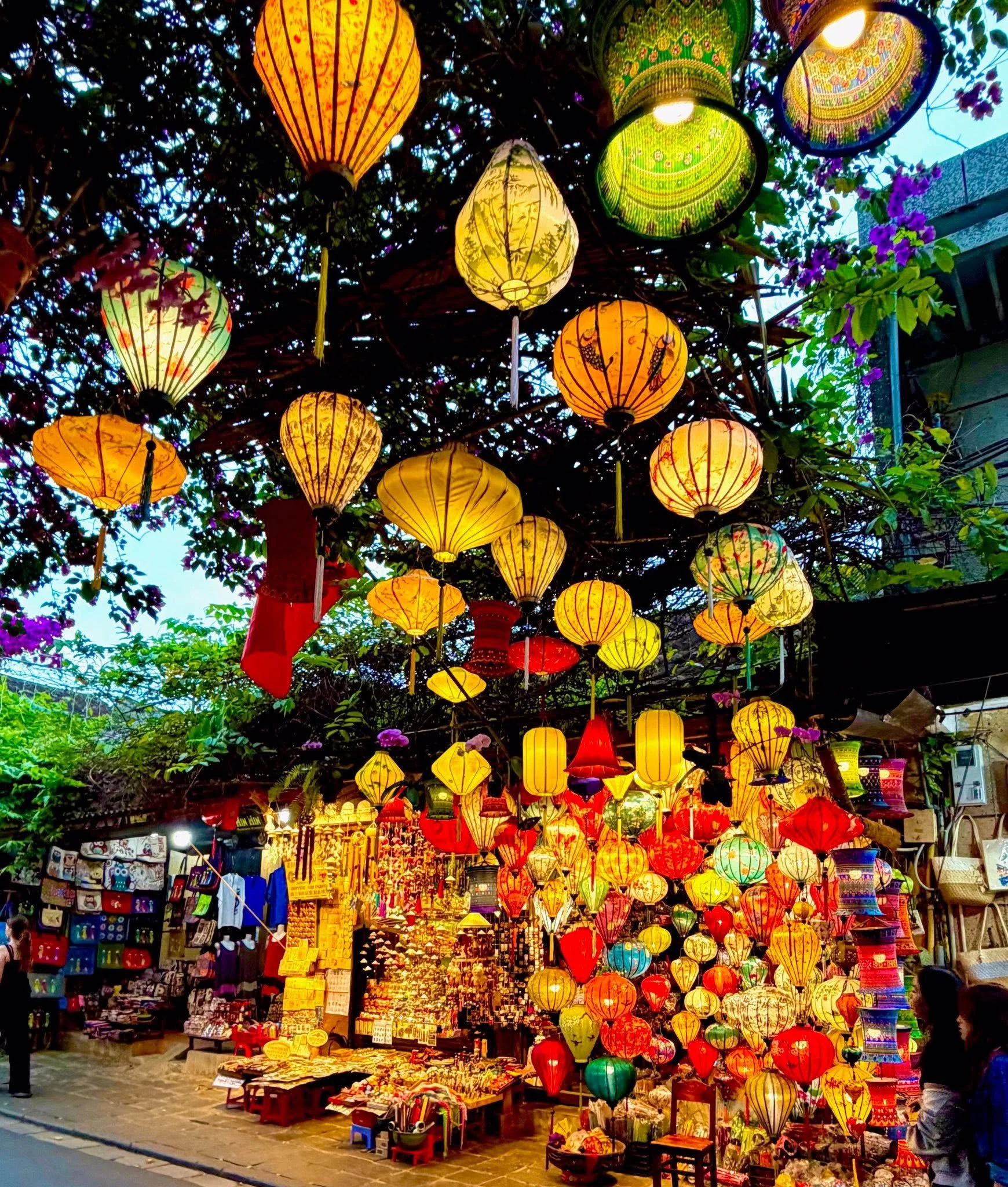
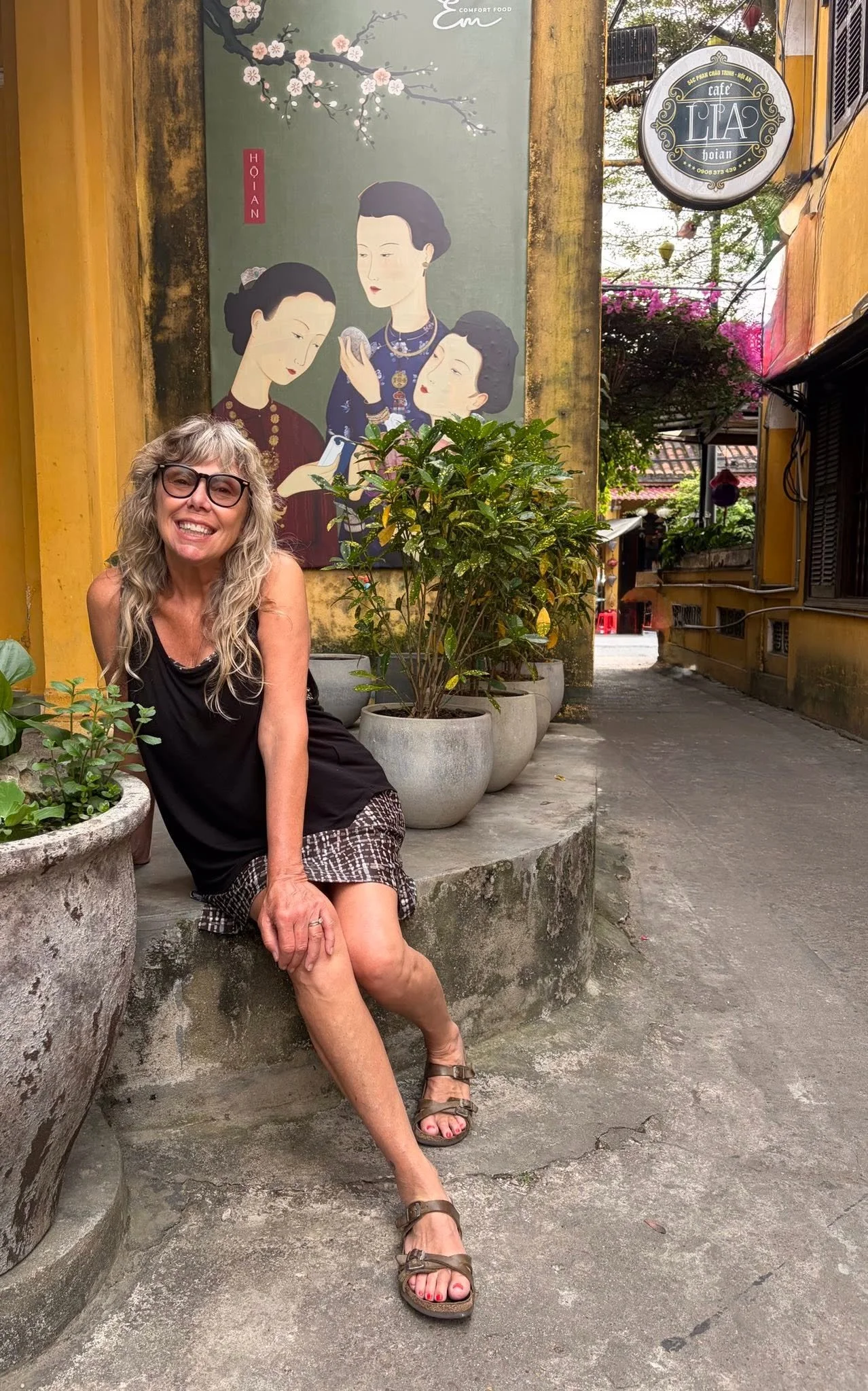
We arrived in Hoi An on Saturday afternoon via Grab ride from Da Nang. We’d heard Hoi An was ‘over-run’ with foreigners, particularly Americans. We were somewhat apprehensive about the leg, despite the fact that every driver or waitress had swooned when we said we would be in Hoi An for peak Tet. Hoi An with its ancient quarter and mad market. Hoi An with its canals and lamplit gondolas. Hoi An with its tailors and cobblers and disco beaches.
And its tourists, sure. Lots of honkies here, and Hoi An might have seemed even whiter had it not been at the climax of Tet when every native resident of Hoi An is also out, hotrodded in traditional red & gold Ao Dai dress, merrily reaching the bottoms of their Tet lists and preparing for as many as nine days off. It was like a swirling, festive holiday turf war, with the tourists staggering around all sweaty while the locals very purposefully navigated the narrow streets and alleys, busily acquiring greens and corn and rice. Herbs and a chicken. Flowers and decorations.
No last-minute trips to Fred Meyer. The Hoi An Central Market is the eye of the storm and you can get everything you need right there. WE didn’t get ANYthing there— partially because we didn’t need anything but also because it felt safer and more respectful to just stay the heck out of the way and let the professionals shred. These professionals are the aged market ladies who know their wares, how to trade with them, and how best to get from one side of the market to the other— sometimes on a motorbike or bicycle going as fast as the seething foot traffic will allow. When (if) you see them coming, you simply step aside. They are beyond reproach—the absolute top of the labor chain and an exquisite marvel to behold.
If you want souvenirs, they’re nearby— stall after stall hawking keychains and t-shirts, coasters and coffee. Beyond those stalls are the leather shops and tailors where things start to get really interesting.
Patti and I had planned on having suits made in Hoi An, known for its tailors and bespoken garments. And we’d actually stricken up a What’sApp conversation with Ms Lan from Shine Tailors, a referral from our Delta Easy Rider guide Sonny. Ms Lan had answered YES to all our questions during the previous week as we asked if her shop would be open during Tet, if she shipped to the US, if she liked music or kept any pets. We were just making conversation. We had no idea what was happening on the other end of the app or what Shine would be like once we arrived.
Grabs were already getting hard to come by on that Sunday afternoon, so we jumped on hotel bicycles at our groovy flop at the Ancient Garden Homestay a few kilometers outside the core. The traffic was terrific. Motorbikes everywhere, criss-crossing at every conceivable angle—the odd delivery van, horn blaring, forging a path of its own in what we quaintly like to refer to in the US as ‘the oncoming lane.’ The motorbikes just give as much as they need to in order to avoid collision— mere inches separating dozens of speeding projectiles made of steel, fiberglass and rubber. And then here’s me and Patti in the middle of everything, trying to make a left across the flow, ten motorbikes wide. No helmets, no lights, no brakes. It was quite insane. Riding a bicycle in inner Hoi An during Tet was definitely the most-dangerous thing I’ve ever done more than once.
And then dig Ms Lan. I don’t know what we expected. Like she was just going to be alone in her soft, quiet shop— sitting at her sewing machine, watching the door for us to walk in? We naive Americans! We would end up spending a lot of time in Shine over the course of the next three days and I don’t know if she ever connected us to the text thread with Sonny’s friends from America. There wasn’t time. From the minute you enter the shop until you emerge exhausted, it’s high-stepping fast-talking action. The shop is just like all the others on Tran Hung Dao Street, with hairless, faceless, sharp-dressed manikins on the sidewalk and flanking the tiled entrance. The interior of the shop is narrow with a series of long tables running the center and fabric shelves up and down both outer walls. There are half-dressed Swedes and Australians standing at the double-sided mirror at the back of the shop being measured, chalked and pinned by Ms Lan and her daughter. The son is scribbling down the measurements the ladies are furiously dictating in tailor’s Vietnamese. And working the front of the room is the ringmaster Chinh, the gentleman of the household.
Chinh carries on no fewer than five conversations with various groups of customers at any given moment. But when he’s talking with you, sitting sideways, left arm slung languidly over the back of the chair, you get the feeling you’re the only person of importance to him in the shop. In the whole city! There’s no hurry— no problem. He’s asking you where you’re from, what you do there, how long you’ve been in Vietnam, where you’re going next. The usual stuff, but he is such a gifted conversationalist (in his second language) that you don’t realize you’re being measured and chalked. And then seemingly in the middle of a sentence he casually rises and pivots to one the other accounts, all the time greeting new arrivals and handing out bottles of cold water.
We both overpaid for our suits (by Vietnamese economic standards) but it was an extraordinary experience and after all it WAS Tet. The garments were ready for a fitting within 24 hours and alterations were complete in another 24. Basically like on Christmas Eve they were sewing our suits, despite our objections (kind of). The work is great and the suits are in the mail now. It will be interesting to see if they do actually arrive. I don’t expect them before Memorial Day either way.
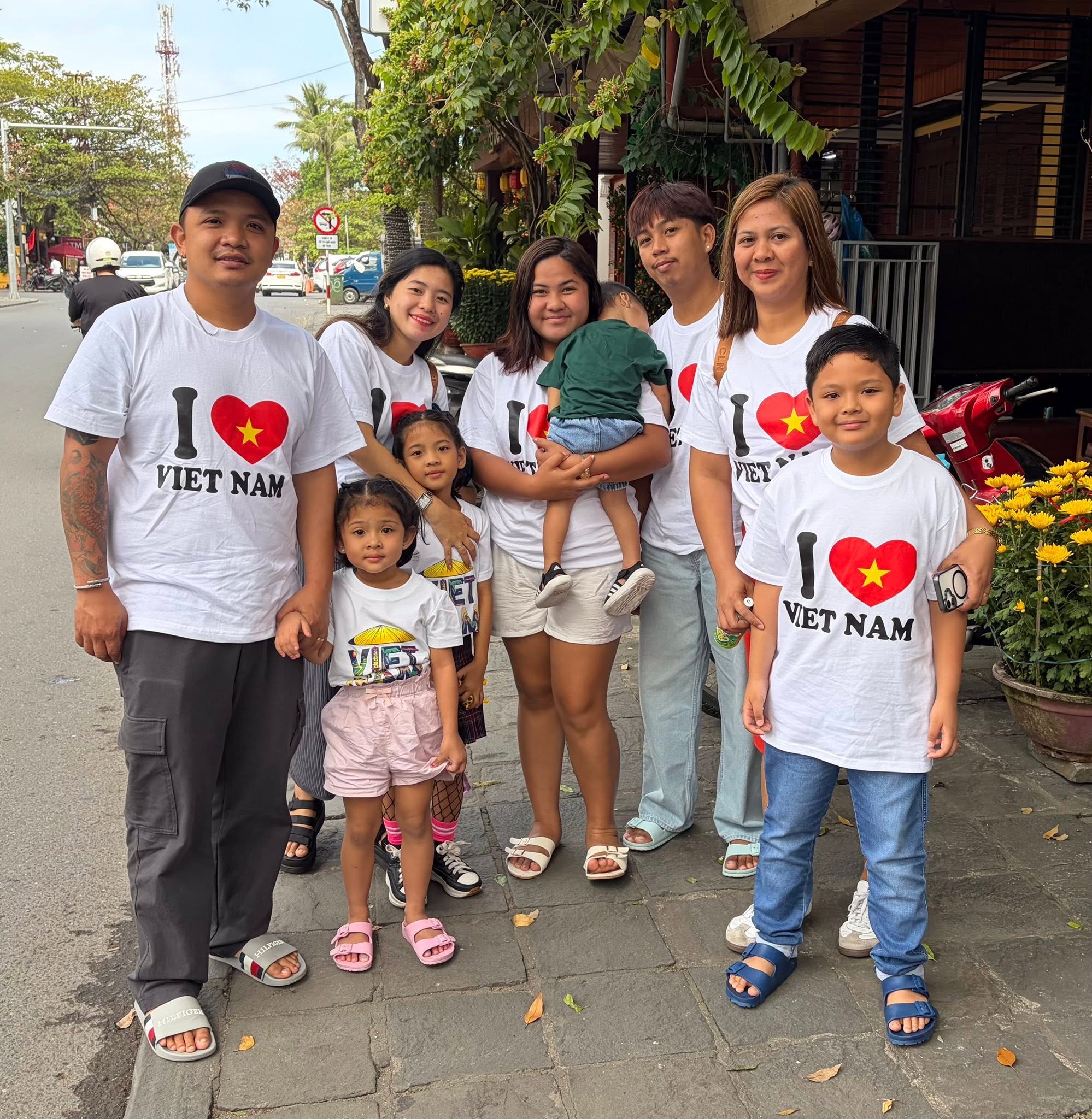
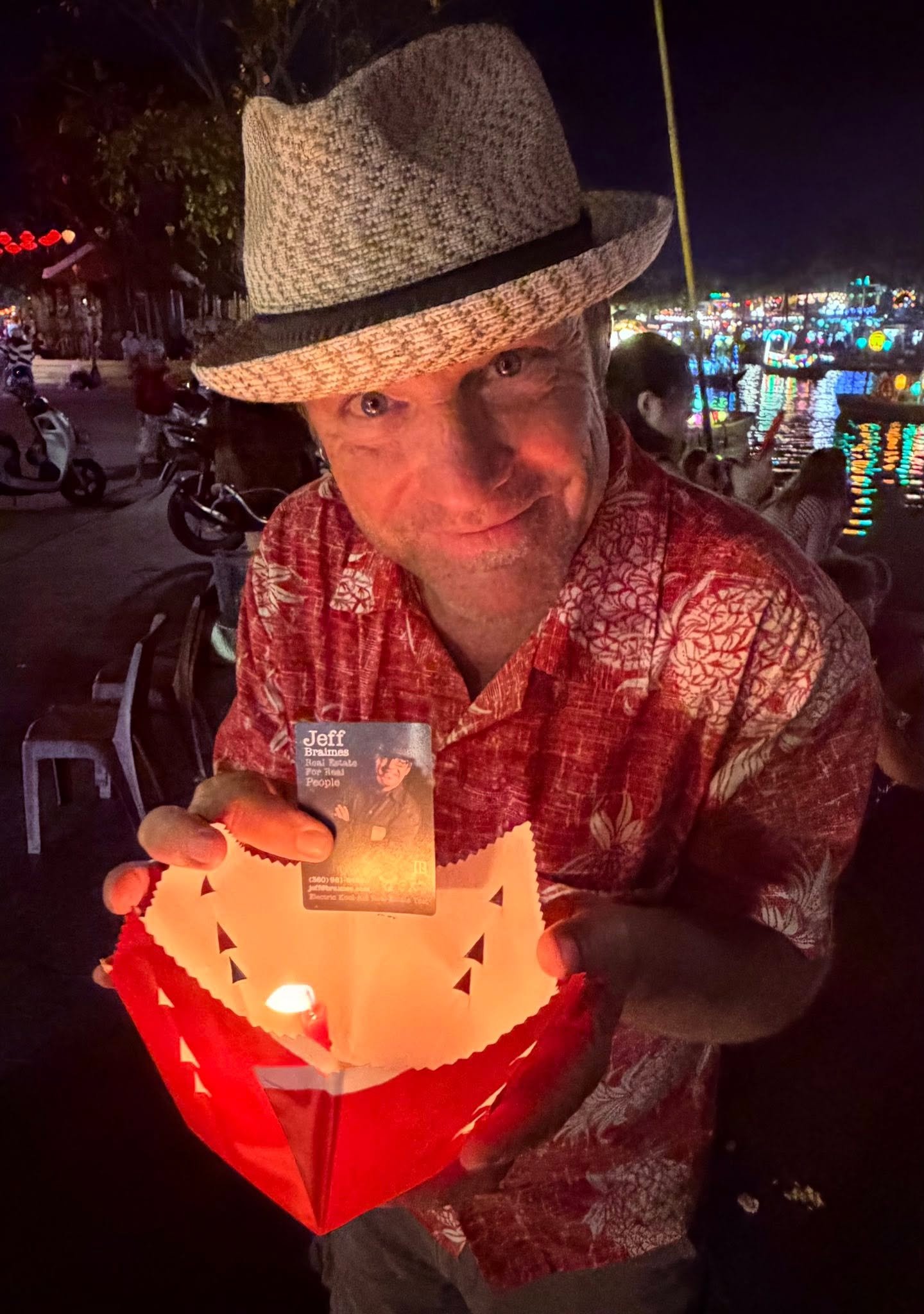
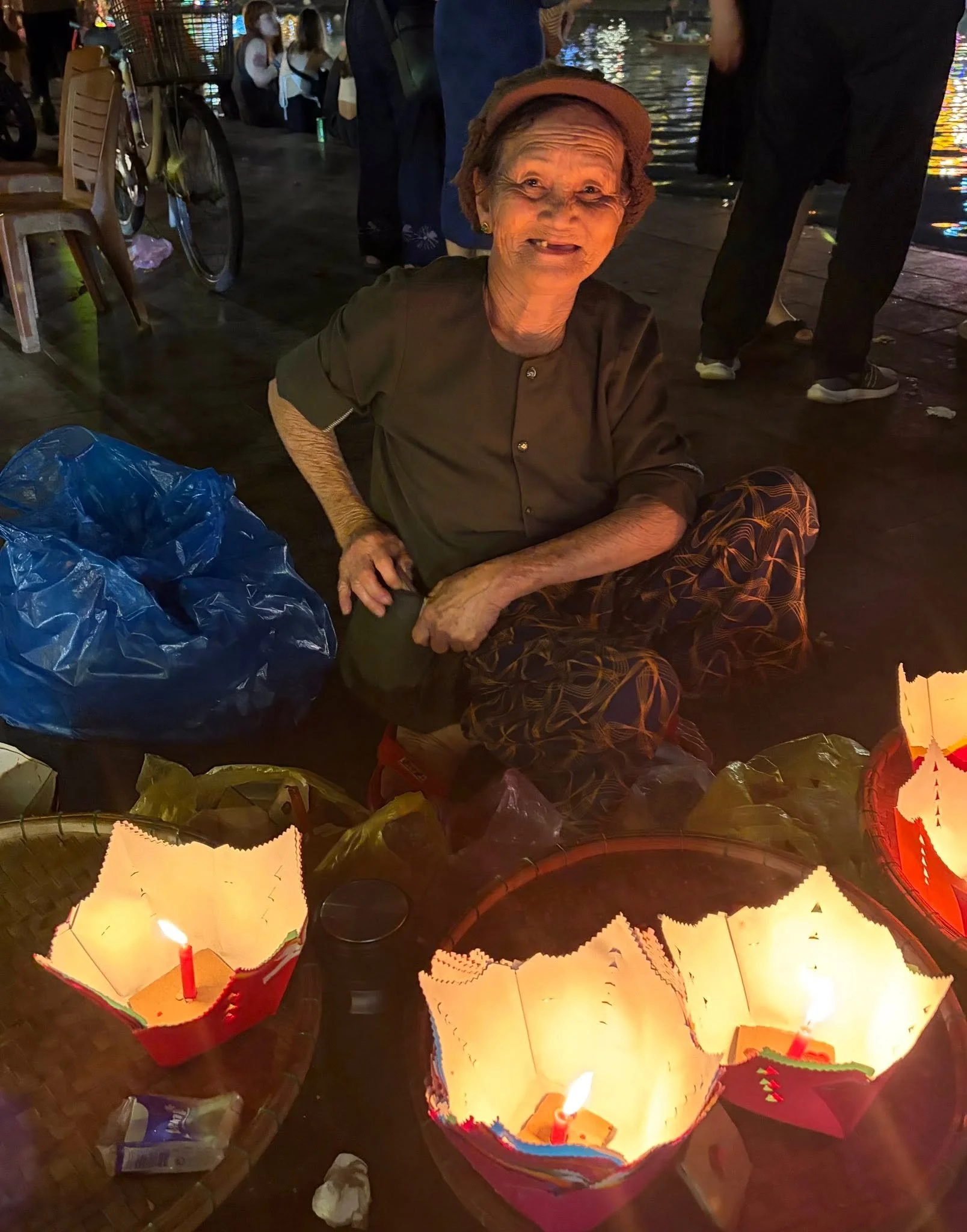
On the night of the 17th, we pedaled back to the old town around 9pm to wait for the fireworks and experience the turning of the clock on another lunar year. 2026 is the Year of the Horse and there was much optimism and toasting in the streets and along the stone-lined canals. Lots of the shops had closed by now, but there was still plenty of street food for the eating, Hudas for the drinking, and paper lanterns for the launching. We bought one each for the kids’ health and I launched one for prosperity in my business. We used the hearty grinning ba lao’s 10’ bamboo ladle to lower them into the canal and watched them float lazily down the polluted waterway toward the East Vietnam Sea. A striking, slender Vietnamese woman in a gold brocade Ao Dai and conical stepped gently onto the Cam Nam Bridge, the handlebars of a bicycle in one hand and her identically dressed 7-year-old son’s hand in the other. The crowd parted as the two made their way to the other side of the footbridge where the family Tet celebration was already underway. Big magic.
******************************************************************
With considerable regret, we bade farewell to the adoring staff at the Ancient Garden and climbed onto the backs of two Easy Rider motorcycles bound for the Imperial Capitol city of Hue. We would spend some moments fondly recalling our Delta guides Sonny & Tim, as today’s Riders simply were not as Easy. Coarse where our previous guys had been kind; pushy where the others were patient; smoking constantly where Sonny & Tim didn’t smoke— it was a different experience altogether, and we were glad it was only a day trip.
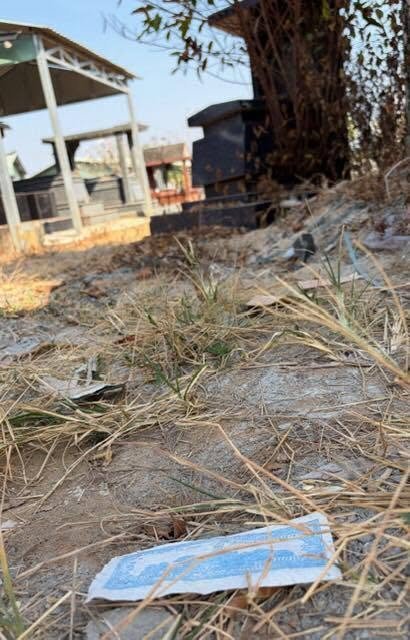
We did get to see the mind-bending City of Ghosts in An Bang, basically a 700-acre cemetery of ADU-sized tombs. Built and owned by individual families, each its own mosaic variation on a very strict theme— front entrance with staircase leading to the open central platform and ultimately to the enclosed altar in the back. Symmetry is the standard in all Vietnamese architecture, including monuments of worship and memorial. But nowhere is it more evident than in the luxury death villas at An Bang.
There was a different kind of Tet energy in Hue. Like Hoi An, there were hoards of locals out Tetting in the downtown area, but this was a much more contemporary scene. A much younger crowd, and instead of traditional dress they were wearing black and ready for clubbing. House music bounced from the larger open-air bars and it was clear that this cycle of Tet was for seeking companionship— at least for the kids in this university town. We had sushi this night and were asked by a pedi-cab driver if we were looking for the cocaine. It felt like Hong Kong.
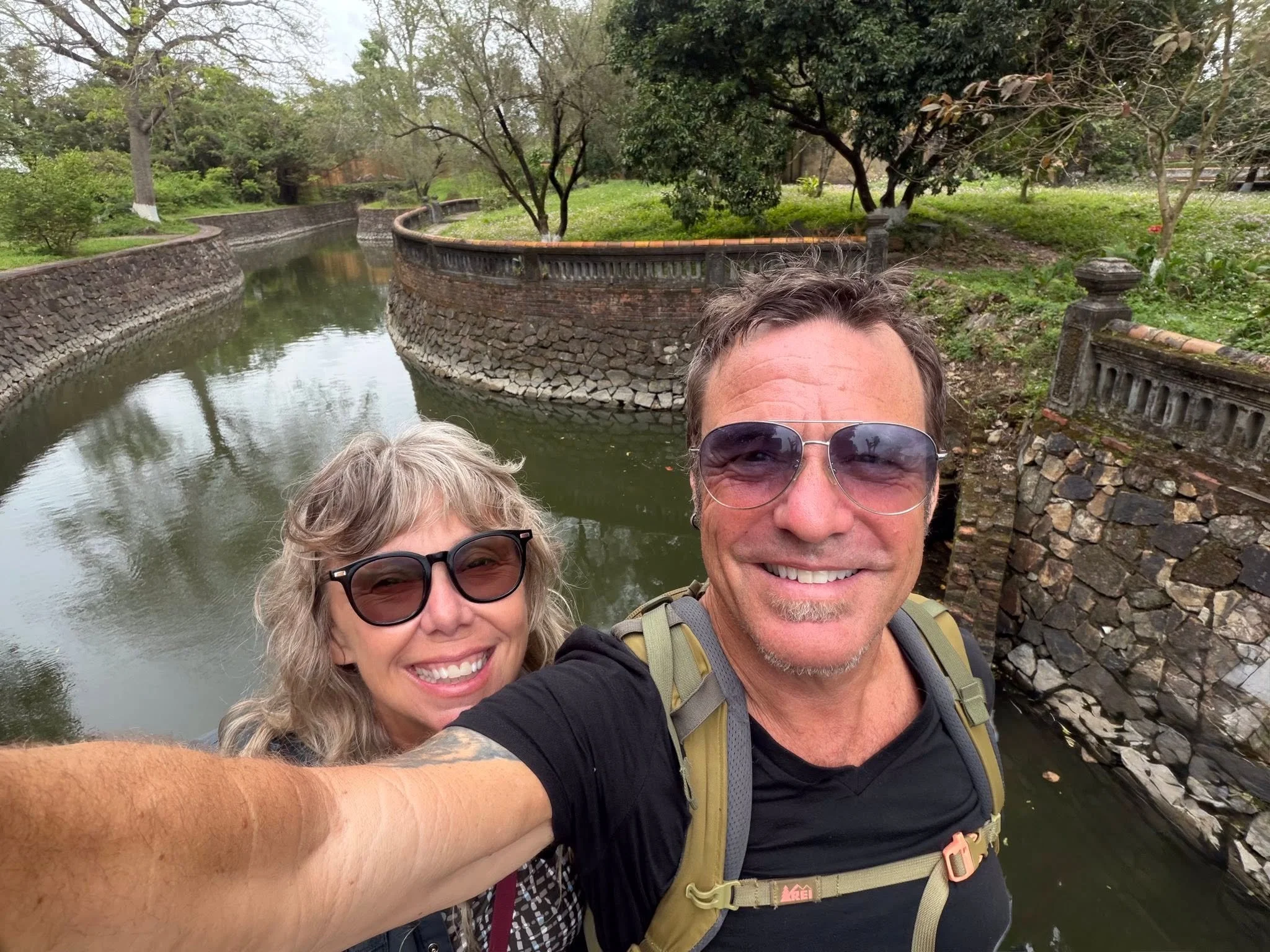
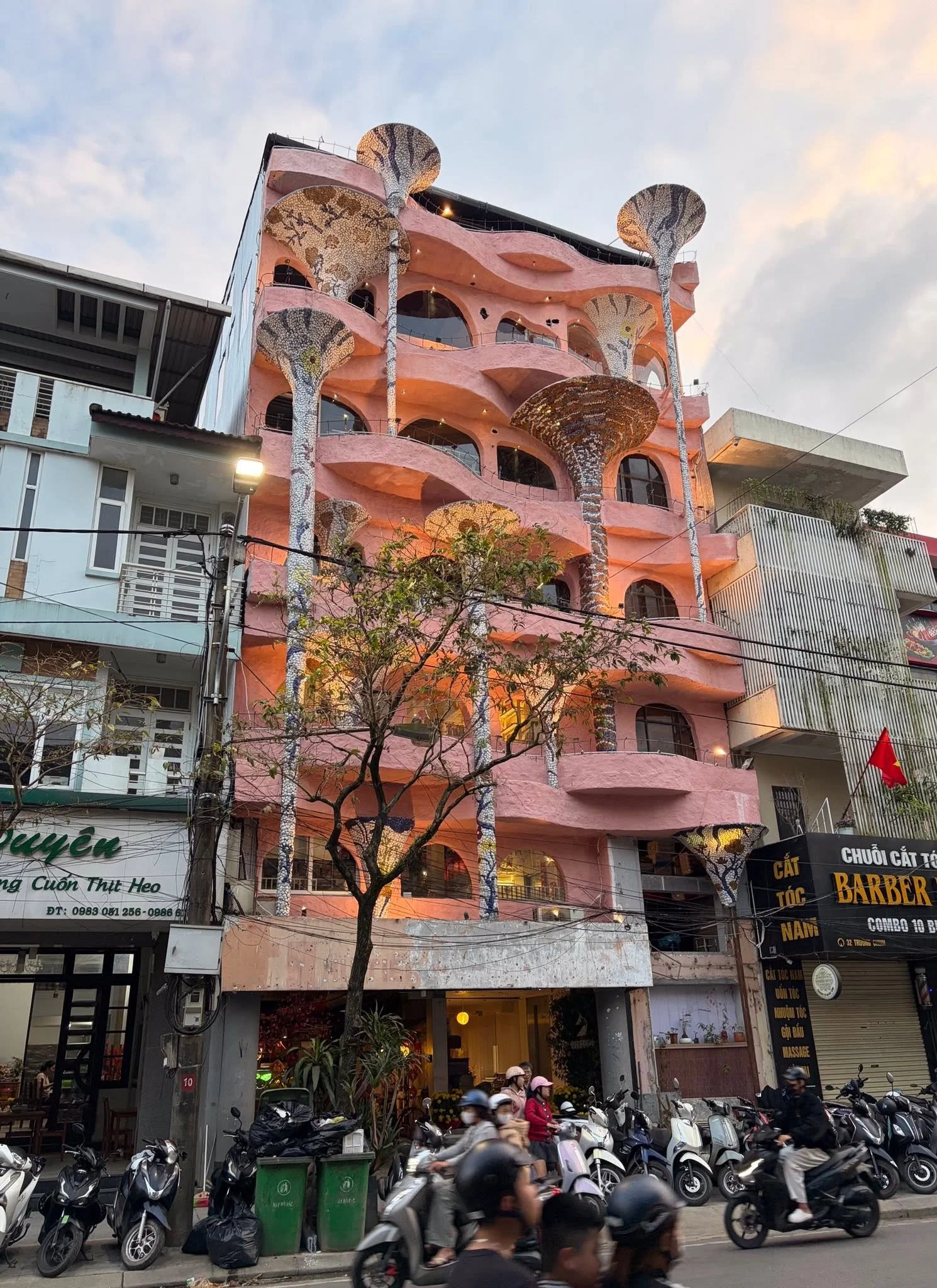
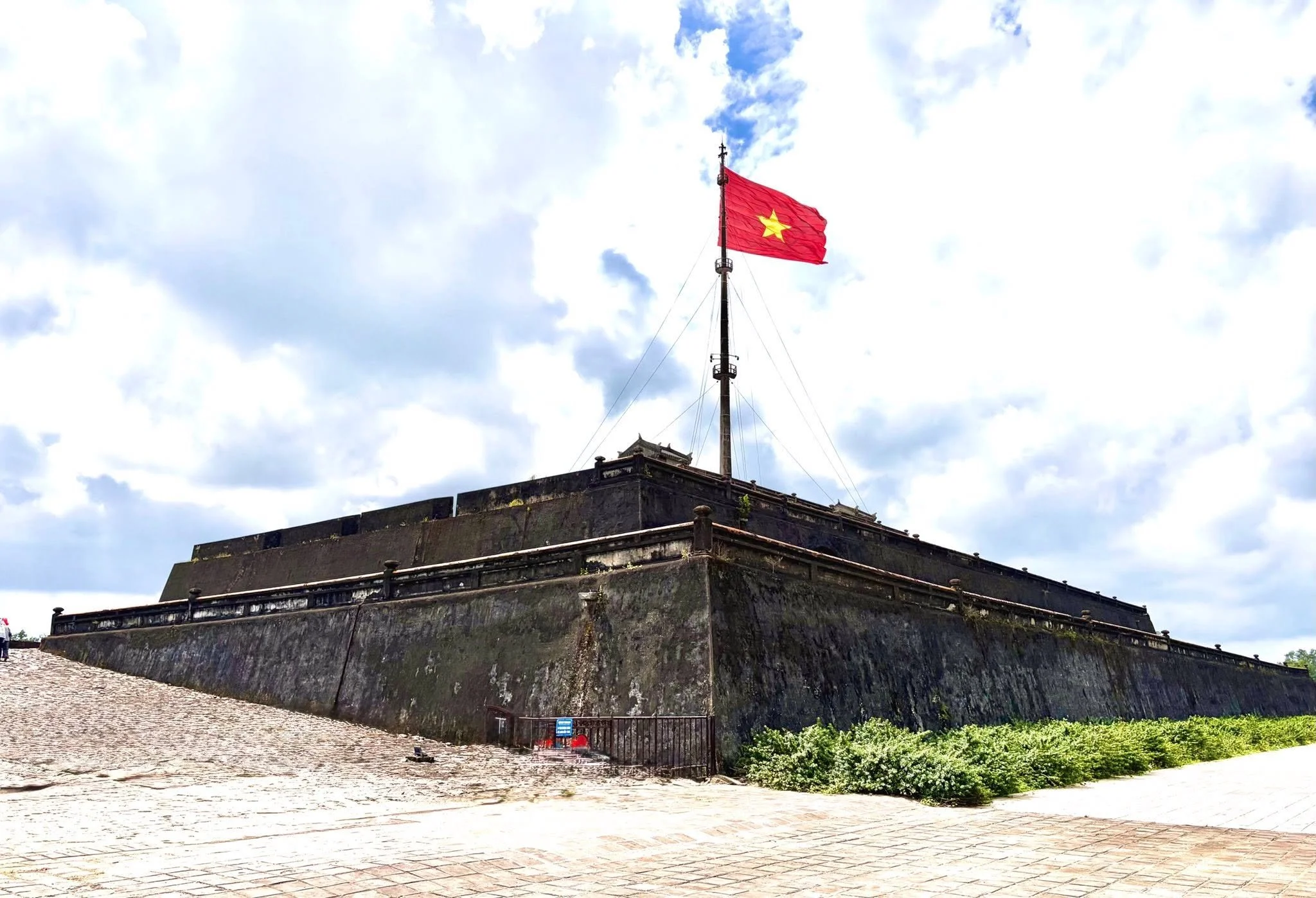
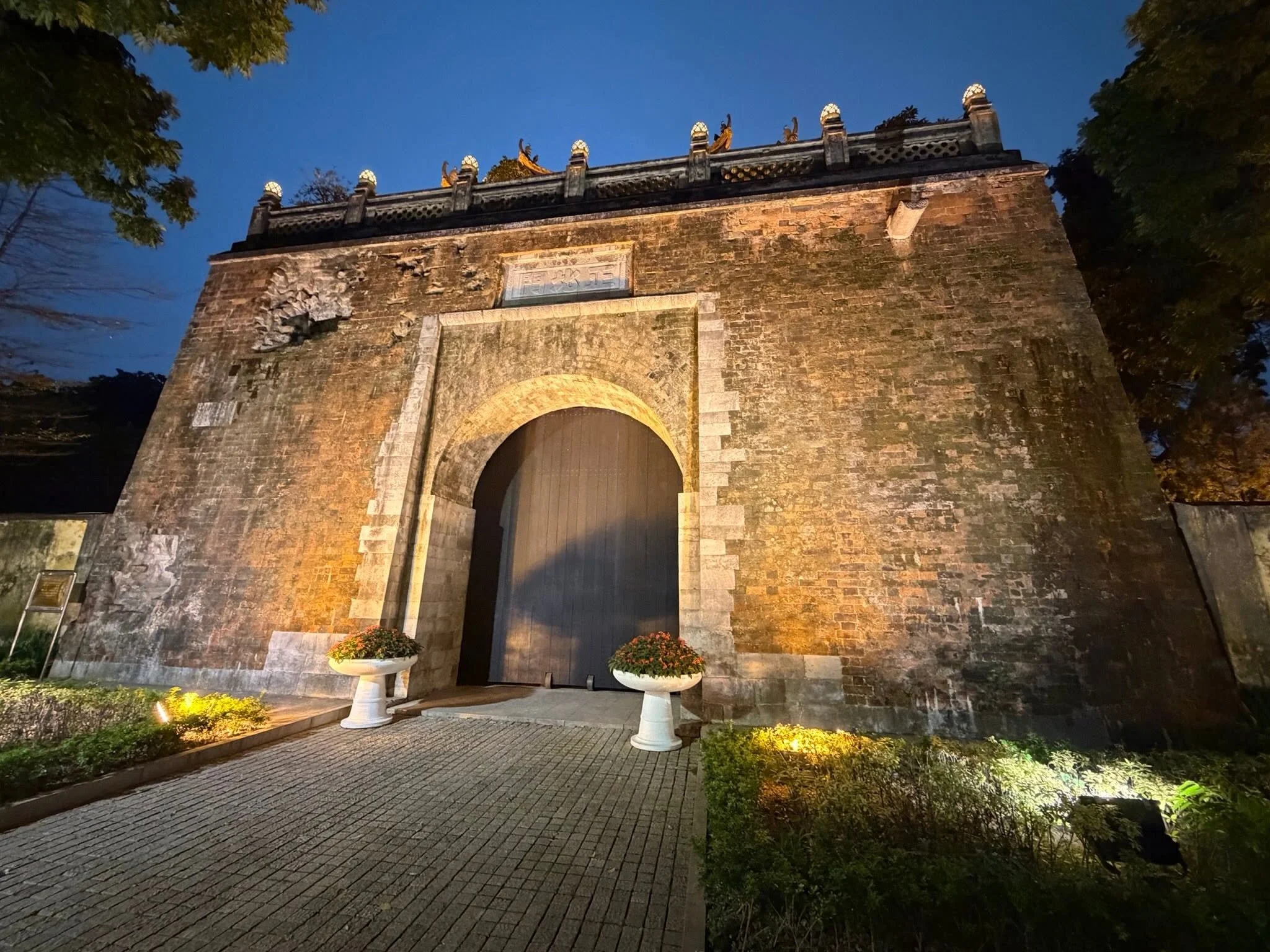
We did explore the Imperial Palace complex the next day, the walled city the Nguyen Dynasty Emperor commissioned in the 19th century. The grounds were sprawling, and the elegant main palace had been renovated in a sweeping public project during Covid. Bao Dai abdicated in 1945, handing the keys to Vietnam over to Ho and dissolving the Monarchy.
And that was all super interesting and everything else like that, but we had other stuff on our minds. We had to pack for the next morning’s sleeper bus that would take us to Dong Hoi and ultimately to Phong Nha and the world’s greatest caves
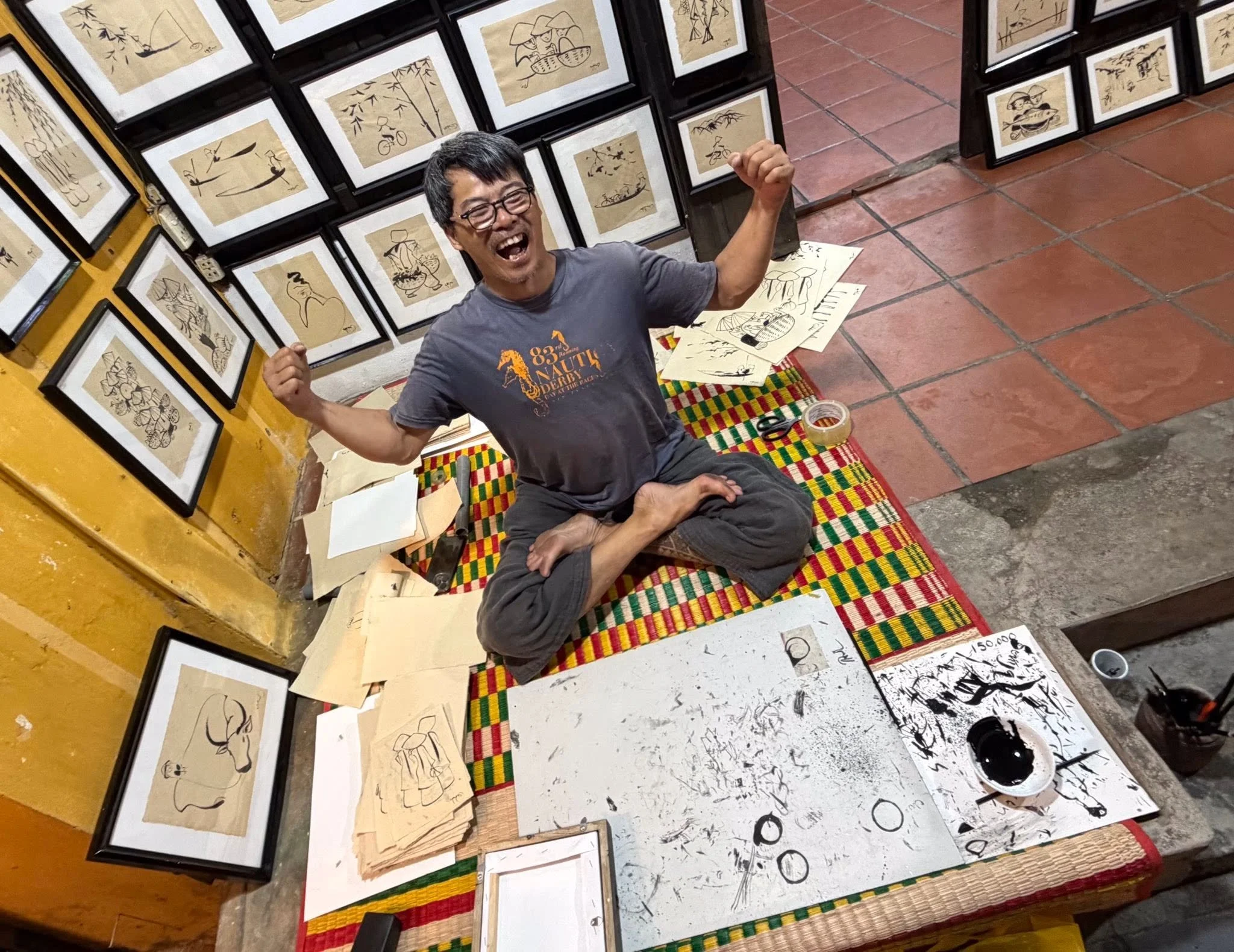
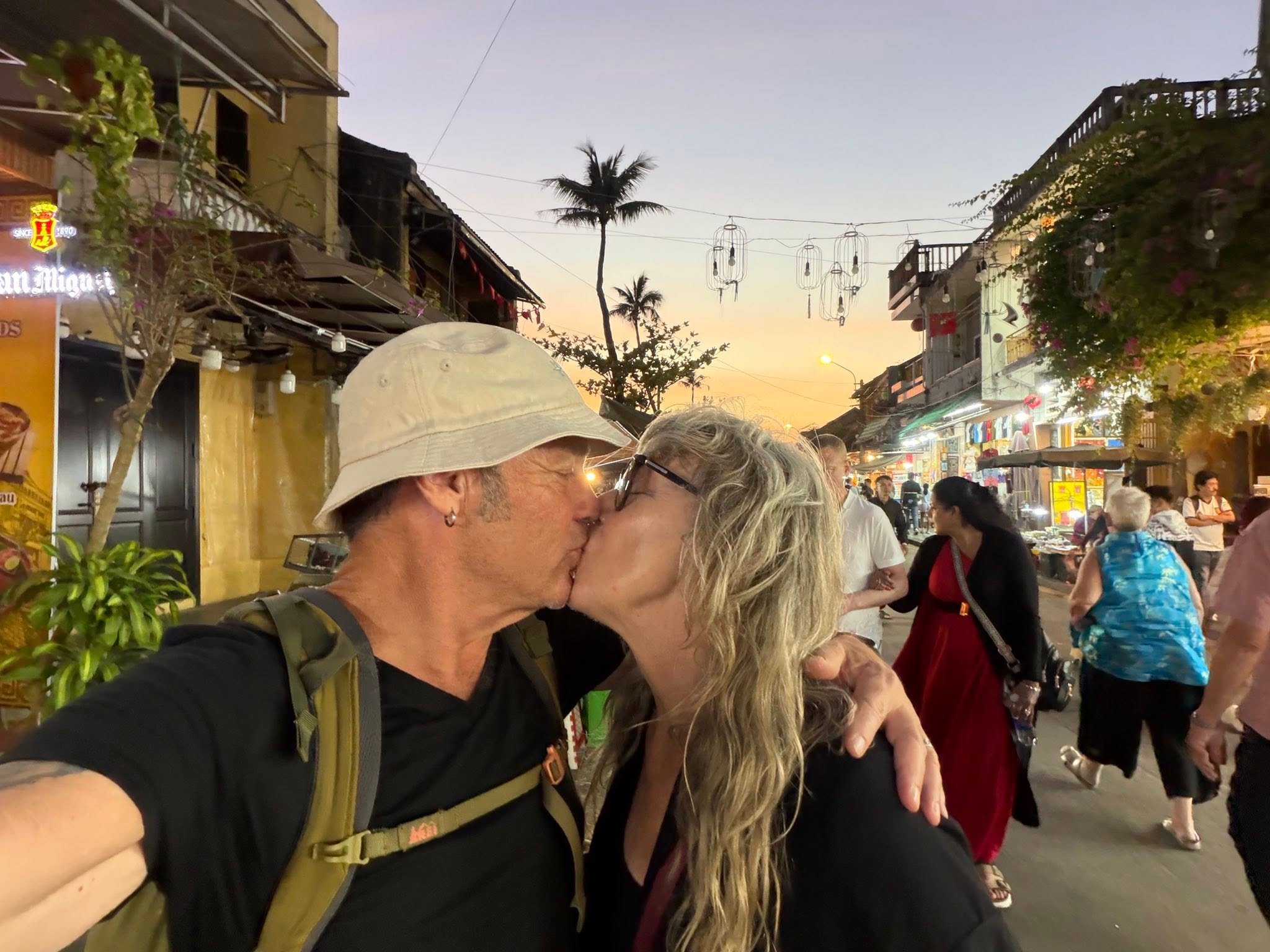
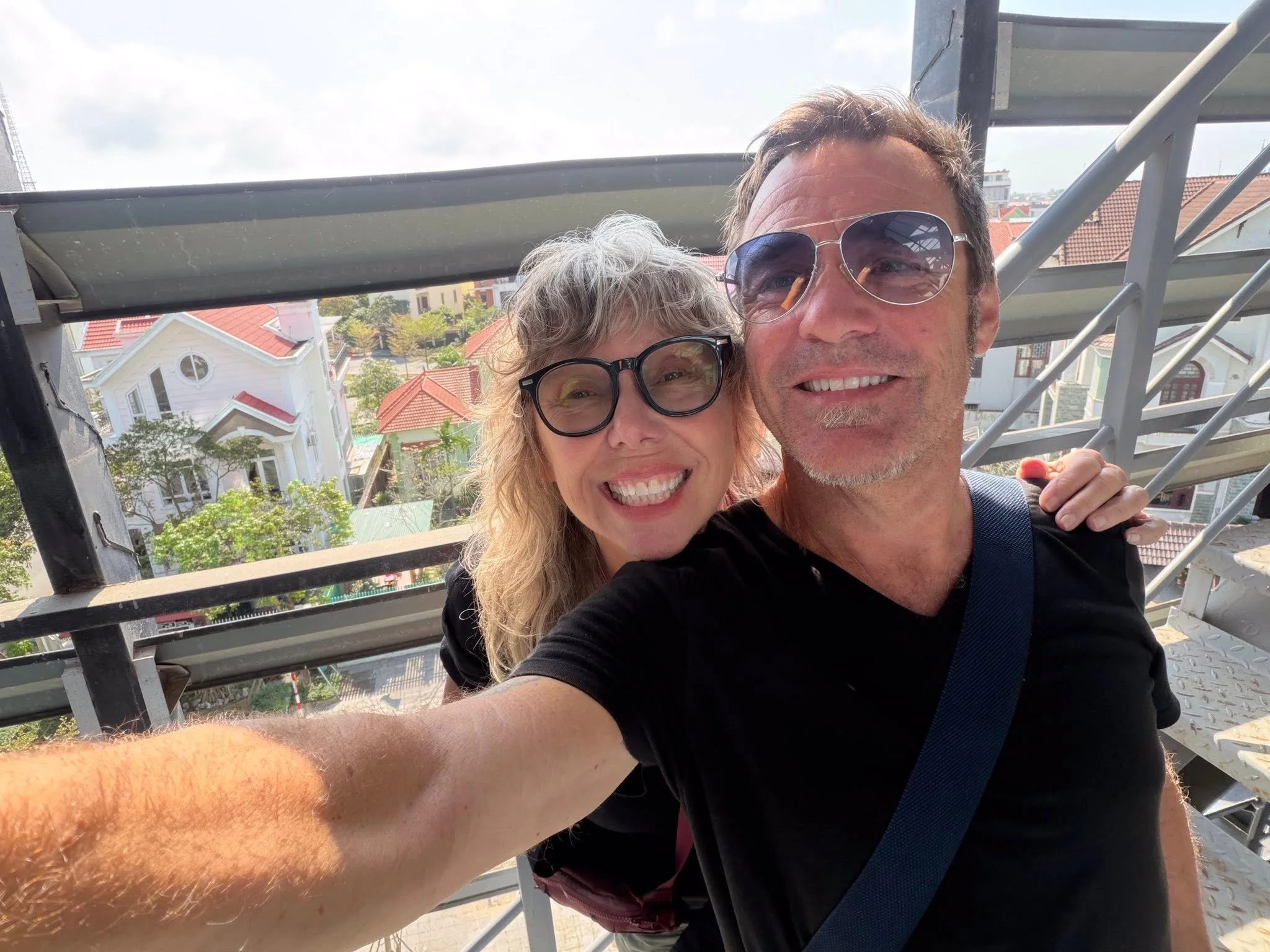
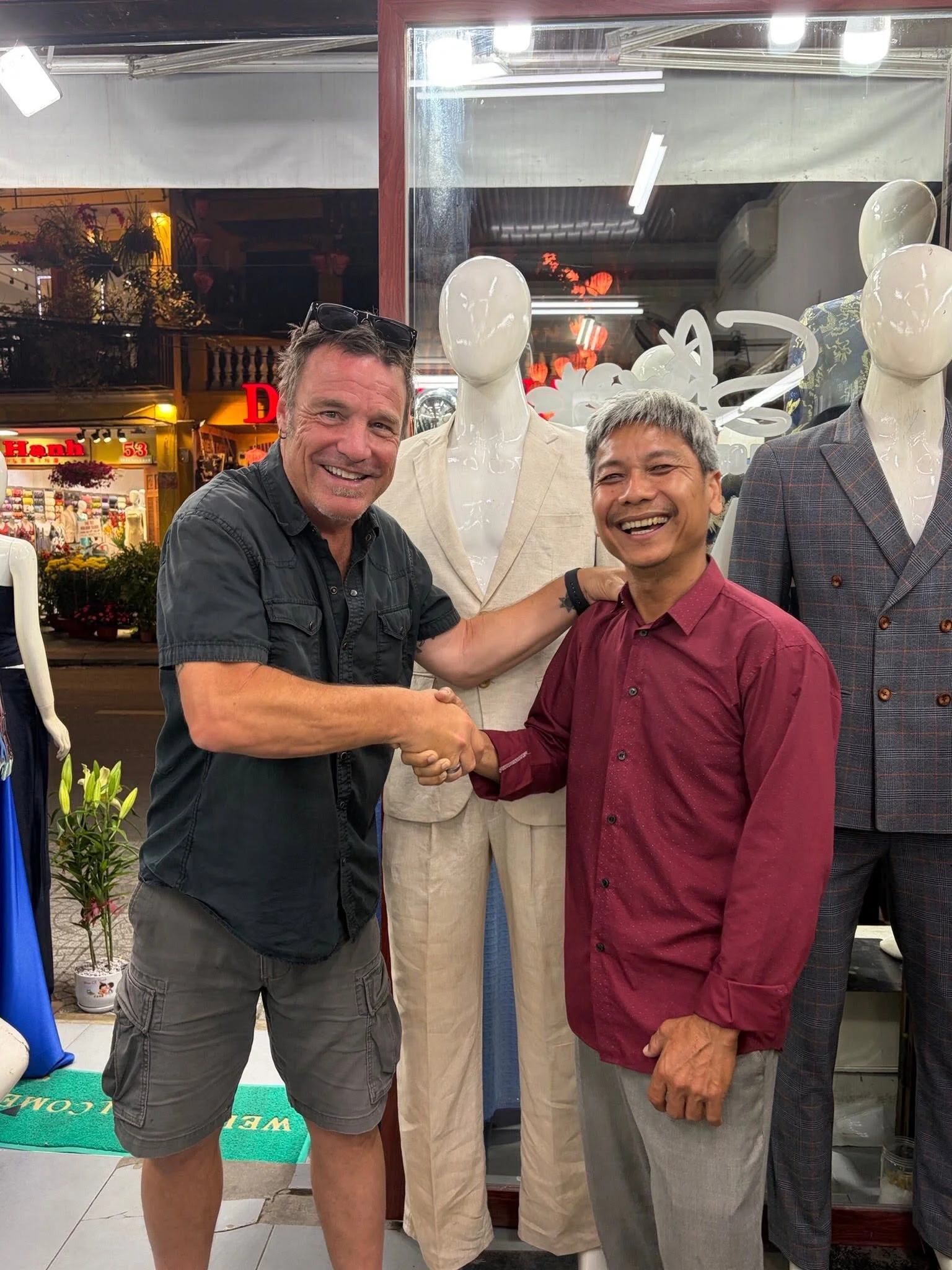
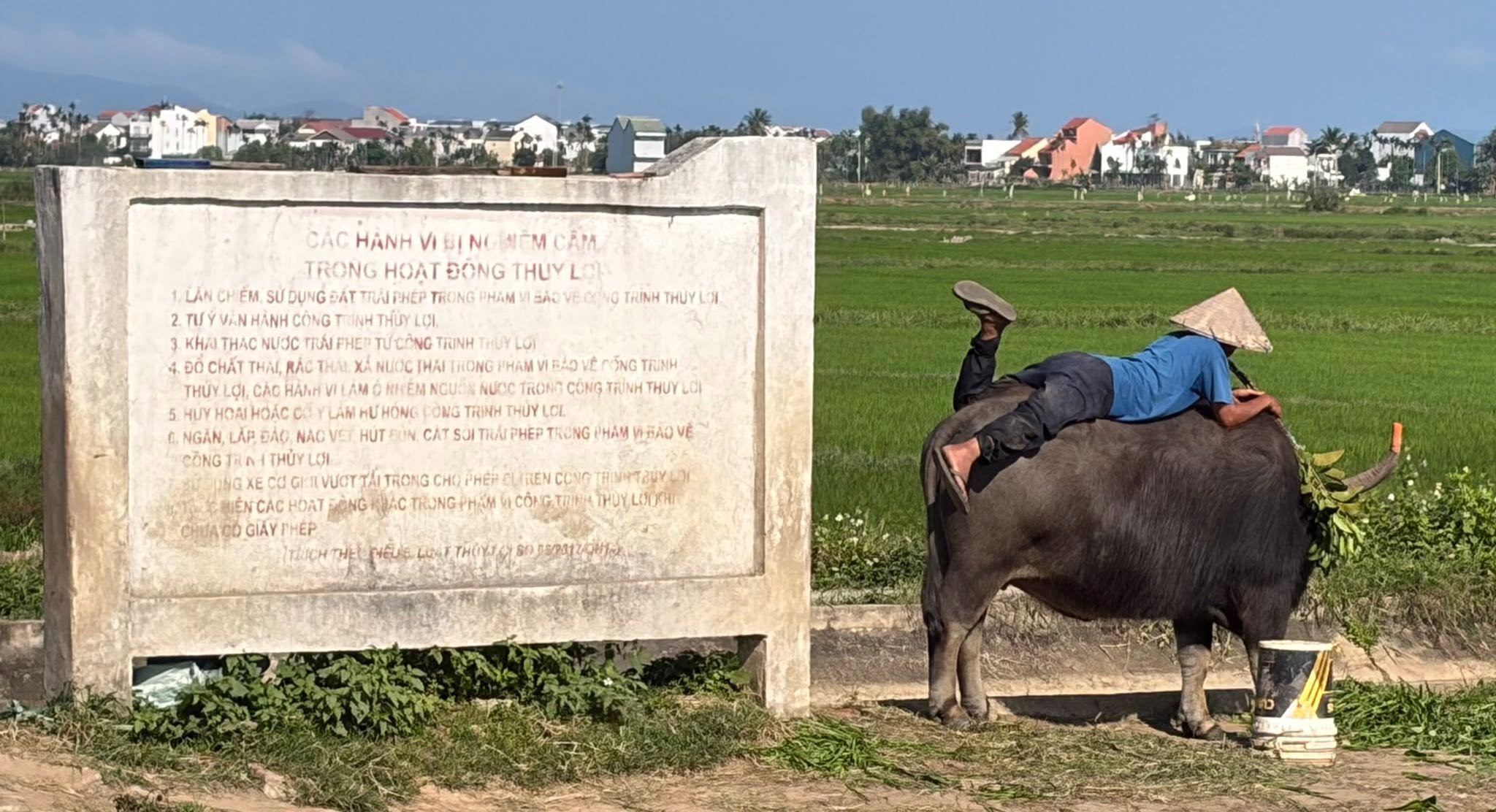
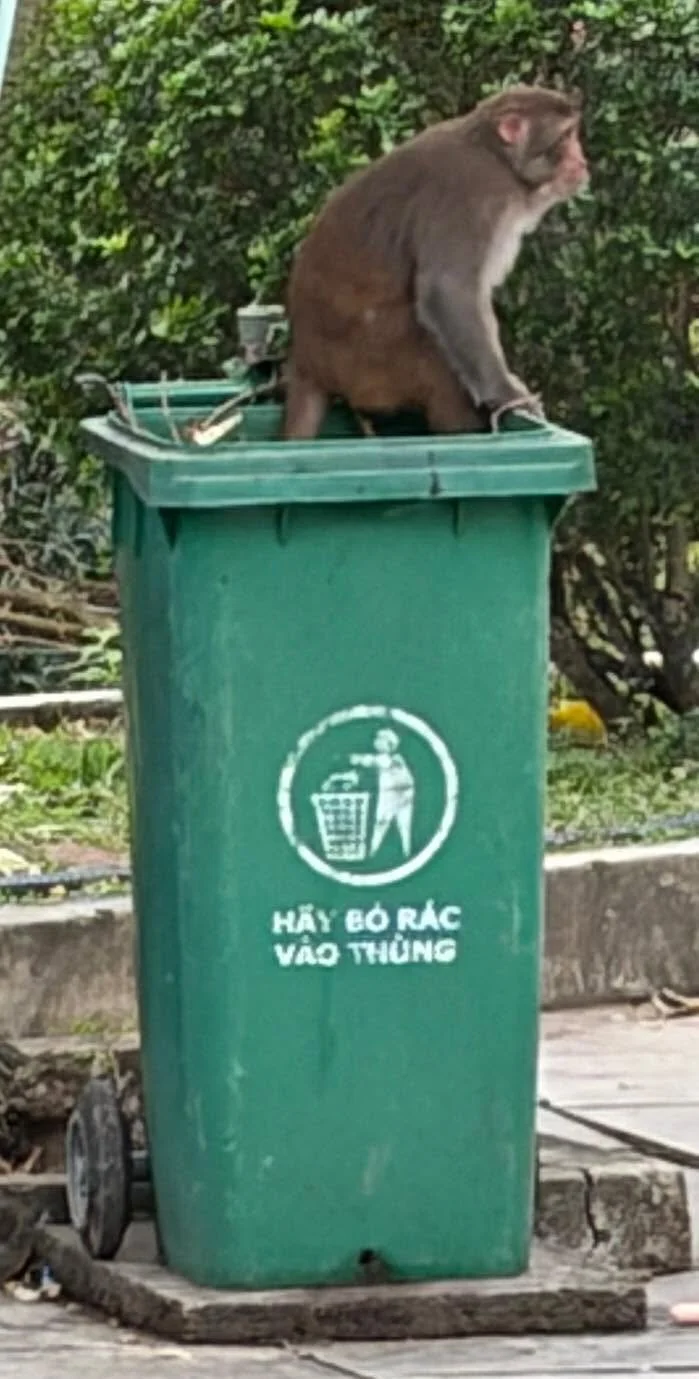
Vietnam 2026
Trains, caves and graves
I wouldn’t say I was dreading the cave trek. At least I shouldn’t have. Maybe I did, I don’t remember. But dread is a pretty heavy concept and is probably best reserved for more genuinely dreadful eventualities like— I don’t know— massive chain war, for instance.
Still, I’d be under-disclosing if I didn’t admit I’d been feeling some vague anxiety about the caving leg of our trip pretty much since the moment Patti booked the expedition with Oxalis Adventure Tours back in November. We both had.
Vietnam is home to some of the largest caves in the world and in fact THE largest by volume, the absurd Son Doong Cave which features its own jungle and a 30+ story high passage— a total of nearly 40 million cubic meters. It’s what they refer to in the caving business as a BALLER—a truly all-inclusive adventure which lasts a week.
So, we didn’t choose that one. But even our starter experience of the 3-day Hang Tien stroll had not only me but also our travel agent (Patti) feeling a little goosey. It was rated EASY unlike some of the other packages such as MODERATE, CHALLENGING, WHY DID I AGREE TO THIS and AGONIZING DEATH LIKELY. But we still had to submit a full-body shot of us working out and a detailed description of not only our daily exercise routine but also a list of any medications we take. So we sent them the most truthful lies & doctored images possible— and after some negotiation and extra layers of disclosure, Oxalis agreed to accept our deposit. We still knew we were going to have to swim in an underground river and that it was possible we would be eaten by leeches. We were warned that it was potentially dangerous and that it would be really hard physically.
We were less prepared for the emotional challenge…
*********************************************************************
We arrived in Phong Nha Saturday afternoon on the sleeper bus from Dong Hoi. Those buses are a pretty comfortable way to travel, but did you know they don’t have bathrooms on them? Neither did I!
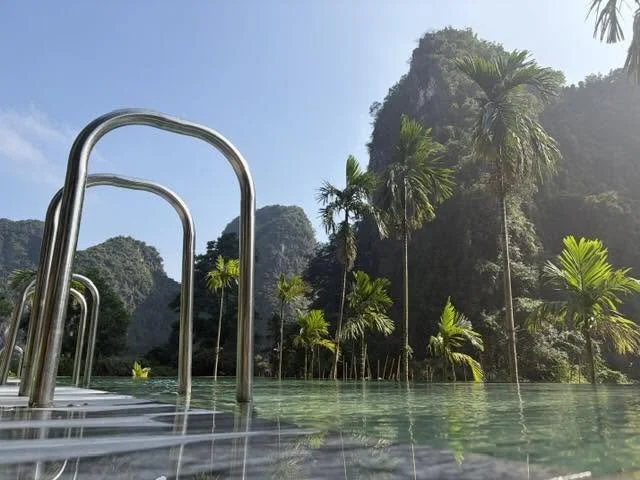
The sprawling Chay Lap Farmstay had an outdoor pool and restaurant/bar and lots of bikes and kayaks for the taking. There wasn’t much to do out there other than spelunk, and our trek didn’t start till Monday. So we opted out of the day caving and spent the two days getting lost on the remote country roads amongst the giant karsts of the Phong Nha Valley.
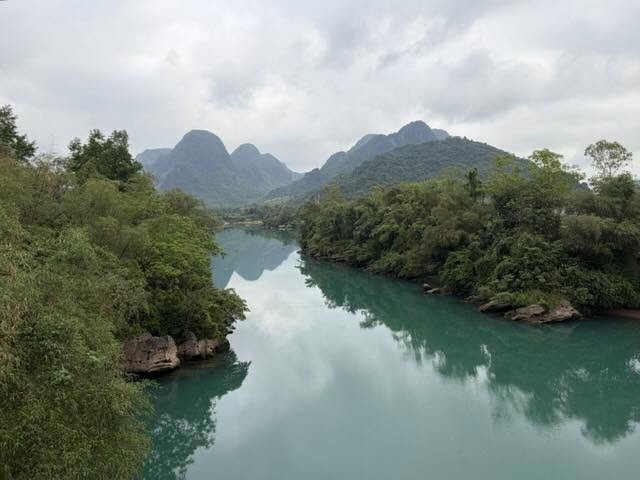
I still don’t understand the geology of these marvels. The valley is basically sea-level, only 40 flat minute’s drive inland from the beach at Dong Hoi. But very suddenly you are winding through these vine-crusted haystacks that rise like thunder from the valley floor. Hundreds of them, just plopped down seemingly wherever the gods dropped them. Some are modest in size—others colossal, like 3000’ tall. But there’re no foothills or gentle rises. You’re either flat on the floor or rising vertically, like climbing a giant incisor. And then it’s so crazy to think that half of these things are hollow and inside are thousands of caves!
From the minute the Oxalis van picked us up Monday morning until they delivered us back to Dong Hoi Wednesday afternoon, we felt exceptionally well cared for. Our guide Hui was always close by and every aspect of the experience was incredibly well curated—from booking straight through the expedition itself and to the deep parting hugs we shared at drop off.
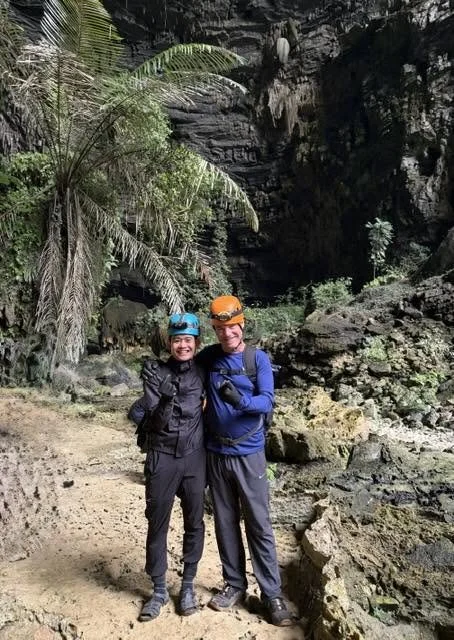
The Hang Tien tour can accommodate as many as a dozen guests, but our group had only six. In addition to Patti and me there was a woman from Germany, a dude from Poland and two childhood friends from Da Nang— one currently living in Australia and the other outside Paris. With the exception of some asides exchanged between Hui and the local kids, we communicated exclusively in English—but with a real UN menu of accents. The Europeans may have been in their early 40s; all three of the Vietnamese kids were 30. They wondered— at times aloud— if the Americans in their 60s were going to be able to keep up.
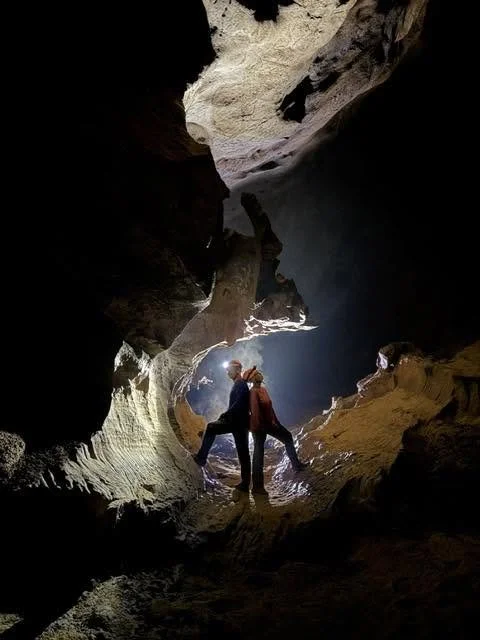
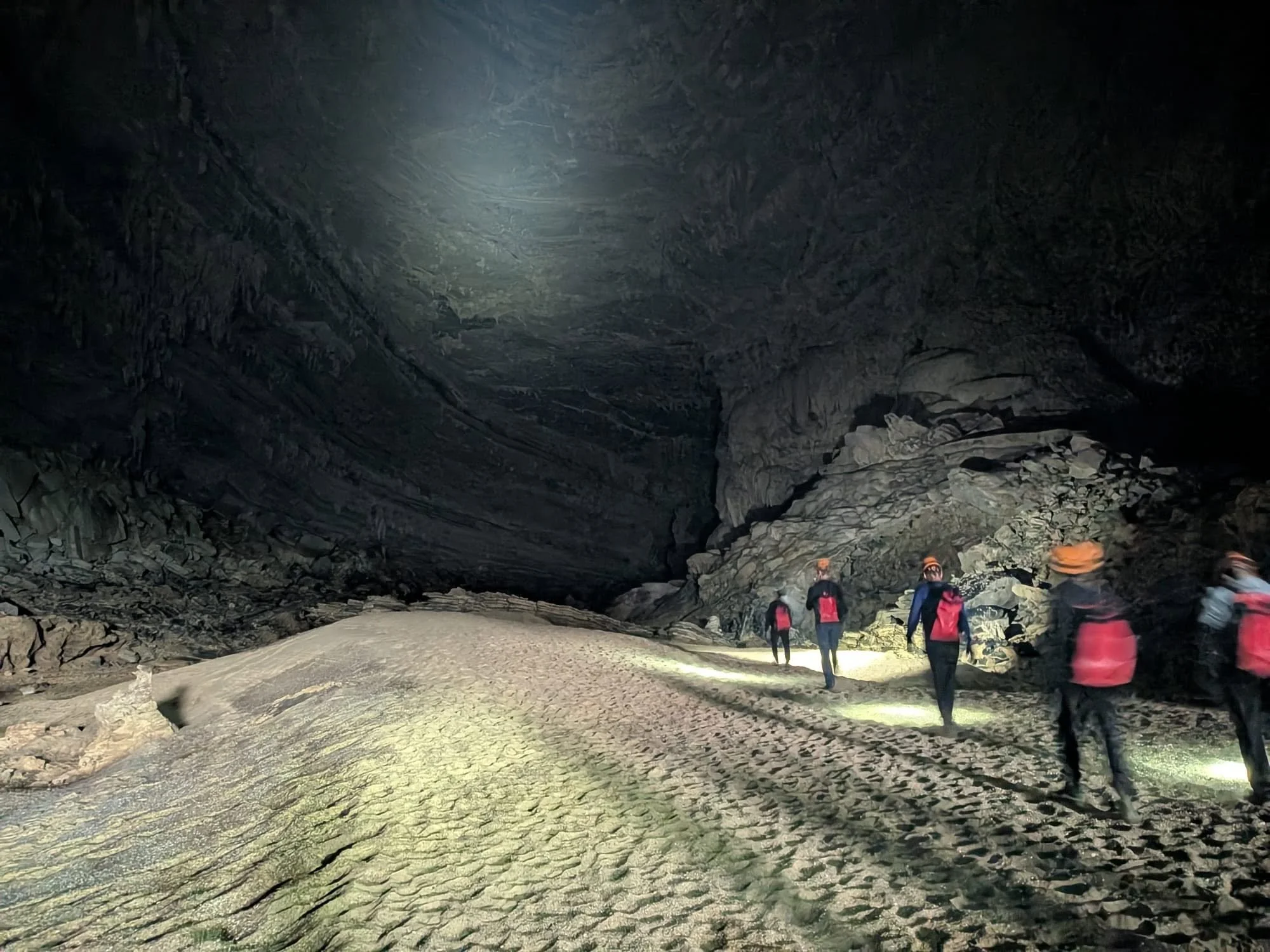
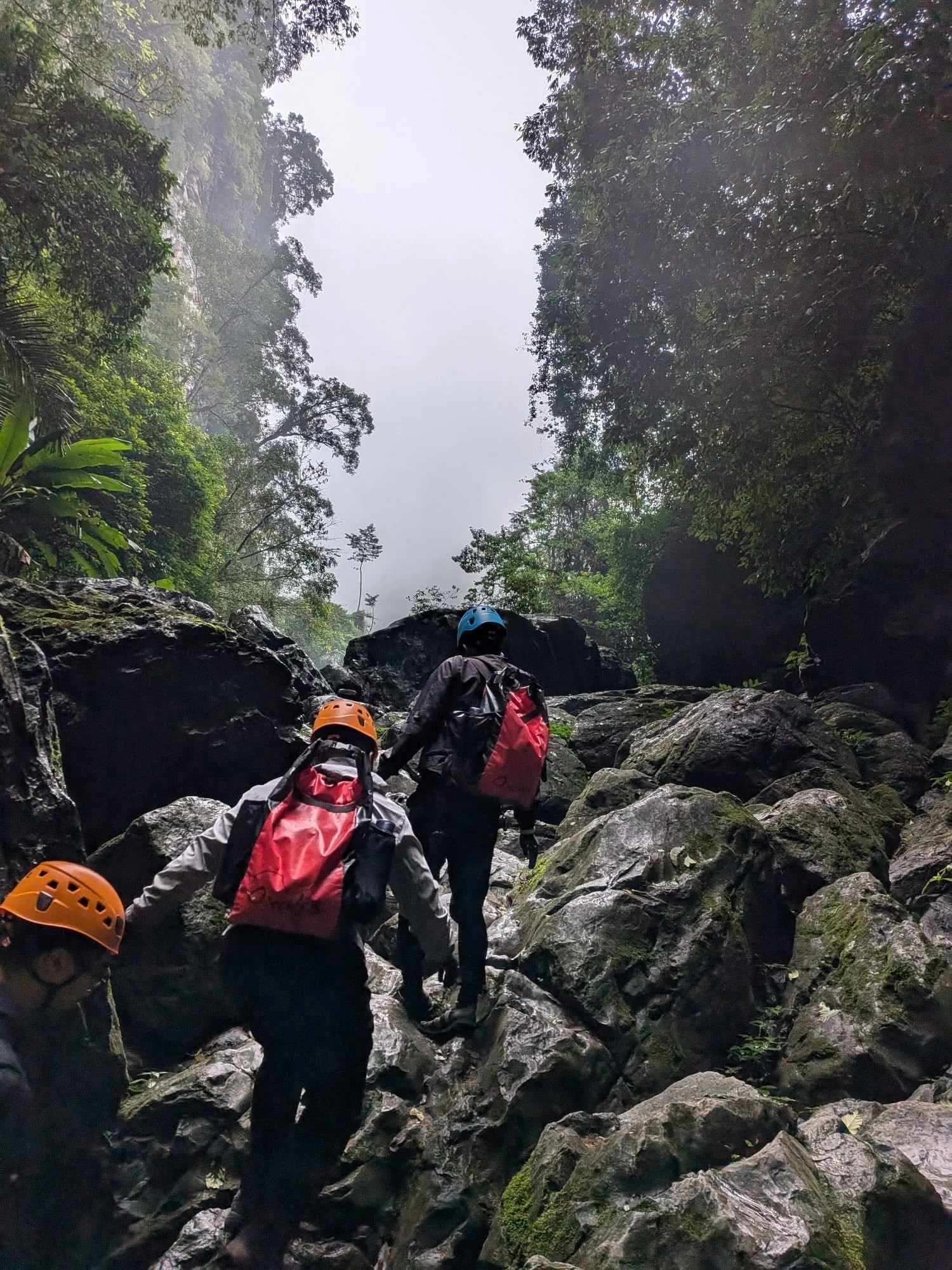
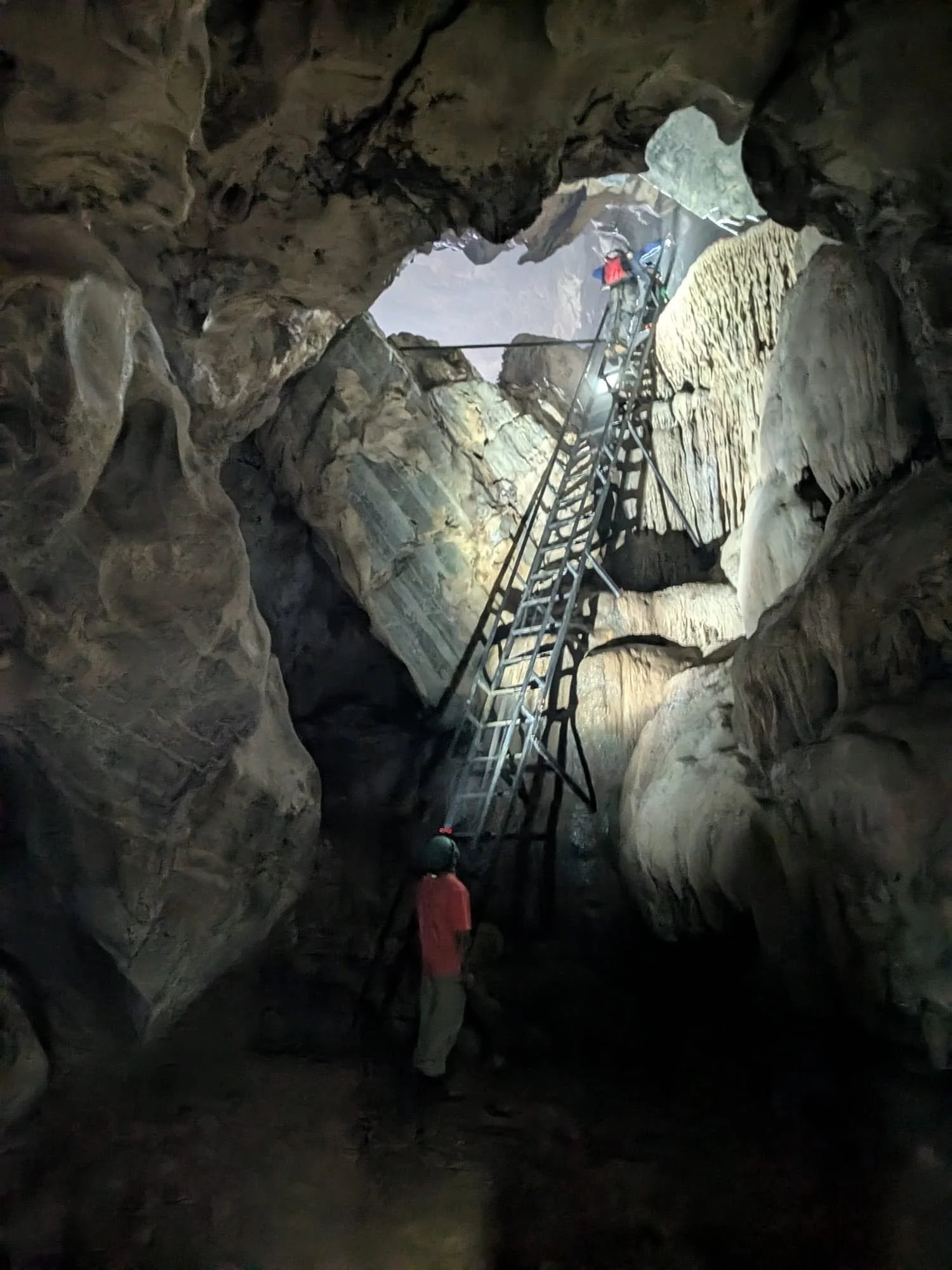
Most of the really challenging stretches were on the second day, but the first afternoon did feature the swimming segment. To comprehend the power of this experience, it’s helpful to first understand the interior of the cave itself. You can look at YouTube footage of this trek all you want, but until you’re actually there, you can’t truly understand what it’s like. What I wasn’t prepared for is how clean the cave is. Without light, nothing grows—so there’s no brush or vines or even moss. There are no witches or monsters unless you count the pigeon-sized bats or the crab-sized spiders. There’s mud, but it’s sandy and clean. And the surfaces themselves and the water are super clear. It feels fake, actually— like a theme park. Like how could this ecosystem actually exist naturally?
These welcoming conditions did make it easier to justify slowly descending from the contoured rock surface of the bank down into the underground river, the bottom of which you could eventually no longer feel beneath your feet. The water was not cold— but other than the beam of your own headlamp, it was profoundly dark. Like it’s the most consuming and absolute darkness imaginable. And you’re drifting along in a subtle current in all your clothes including your shoes plus a helmet and life jacket. The walls of the cave wind forward—or is it backward? There’s little telling. The stalactites hang down from the unseeable ceiling and pretty soon the river is narrowing and the walls are only a few feet apart and you’re scraping sideways through a crevice just wide enough to accommodate you. There’s a lot of distance between party members at this point and at times you feel a little alone.
It’s a weird high. Patti thought we might have been in the water an hour, but I don’t think it was half that. And that’s a good illustration of the vacuum effect of the cave. Floor, ceiling, walls— they’re all the same, with distance and even time kind of taking on a different form than we’re accustomed to. Like space I guess. I’ve never been.
We did two caves that first day and after a long, muddy descent we ended up at the riverside camp where our dry clothes, a reasonably dry tent (it had begun raining lightly) and dinner were waiting for us. The food prepared by Ly and his crew was delicious and plentiful throughout— another gold star for Oxalis.
Honestly, there aren’t sufficient gold stars in the review galaxy to adequately spiff Oxalis Adventures. Not only Hui & Ly but also the porters and our personal spotter who ironically went by the English tag of ‘Victory.’ The assignment for this wiley goat of a man was clearly to keep the Americans alive during the trek. And without him we might indeed not have emerged, as there were a few times when his steady hand or shoulder could very literally have been the difference between survival and permanent death.
The group pretty quickly fell into a formation of Hui in front followed by the Europeans and the Vietdudes with Patti and I bringing up the rear. Victory would hover behind us with a stabilizing hand on the dicey parts and a ‘wacho haid wacho haid’ when the tites hung far low. On the last day, during the punishing muddy ascent up the back of the last karst in 90/90 conditions (90 degrees; 90% humidity) Vic was literally fanning us from a step behind. It was a little embarrassing but also incredibly refreshing. When I handed him the half-million dong tip at the end of the trek, I asked him if we could adopt him. He had no idea what I’d said of course, but we both just laughed and laughed and I guess I kind of miss that little dude this morning, recalling him fondly in-writing.
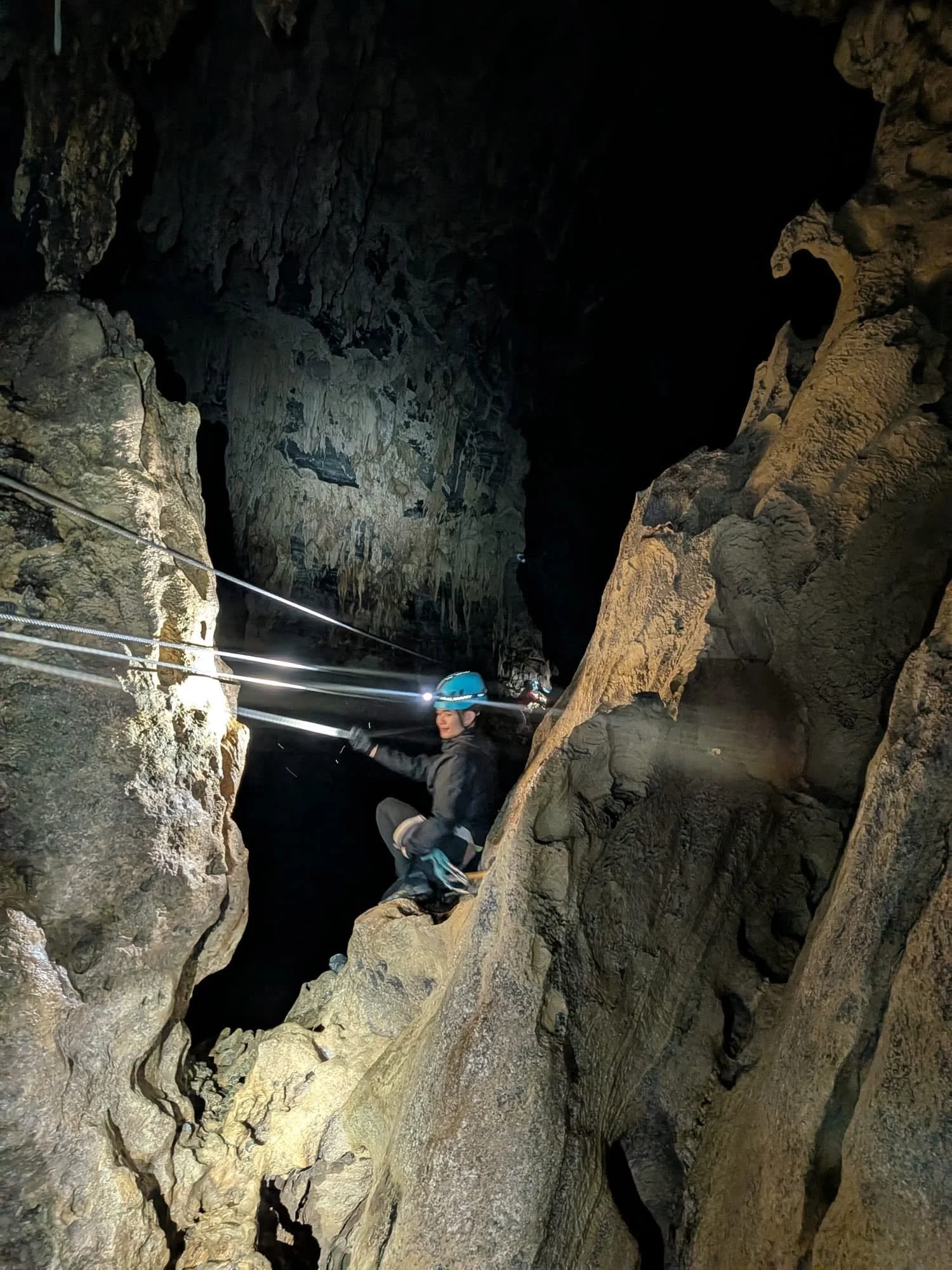
And that second day did feature some pretty hairball moments. We were prepared for styx swimming and we knew the hike out at the end was going to be hard. But we didn’t know about the rappelling or the ladder or about zip-lining across the 40’ chasm or the tightwire walk across the narrow, elevated limestone spine with no handholds in-sight (other than Victory’s). That was the part that made Patti cry. On the way in. And then we had to come back out…
But we did come back out. We made it. We reached the ice-cold shuttle bia that Hui had been promising us since hour 1. We got a wooden medal draped around our necks in an Ozlike roadside ceremony while drinking that bia. We got to convene with our little team in the home of an Oxalis villager that night to enjoy a regionally-significant meal and participate in its traditional preparation. And we got to sleep like rocks in one of the villager’s floating ADUs having faced our fears and vanquished our insecurities. I’d do it again if I had to, but I probably won’t. Have to, that is. My caving days may well be over.
*********************************************************************
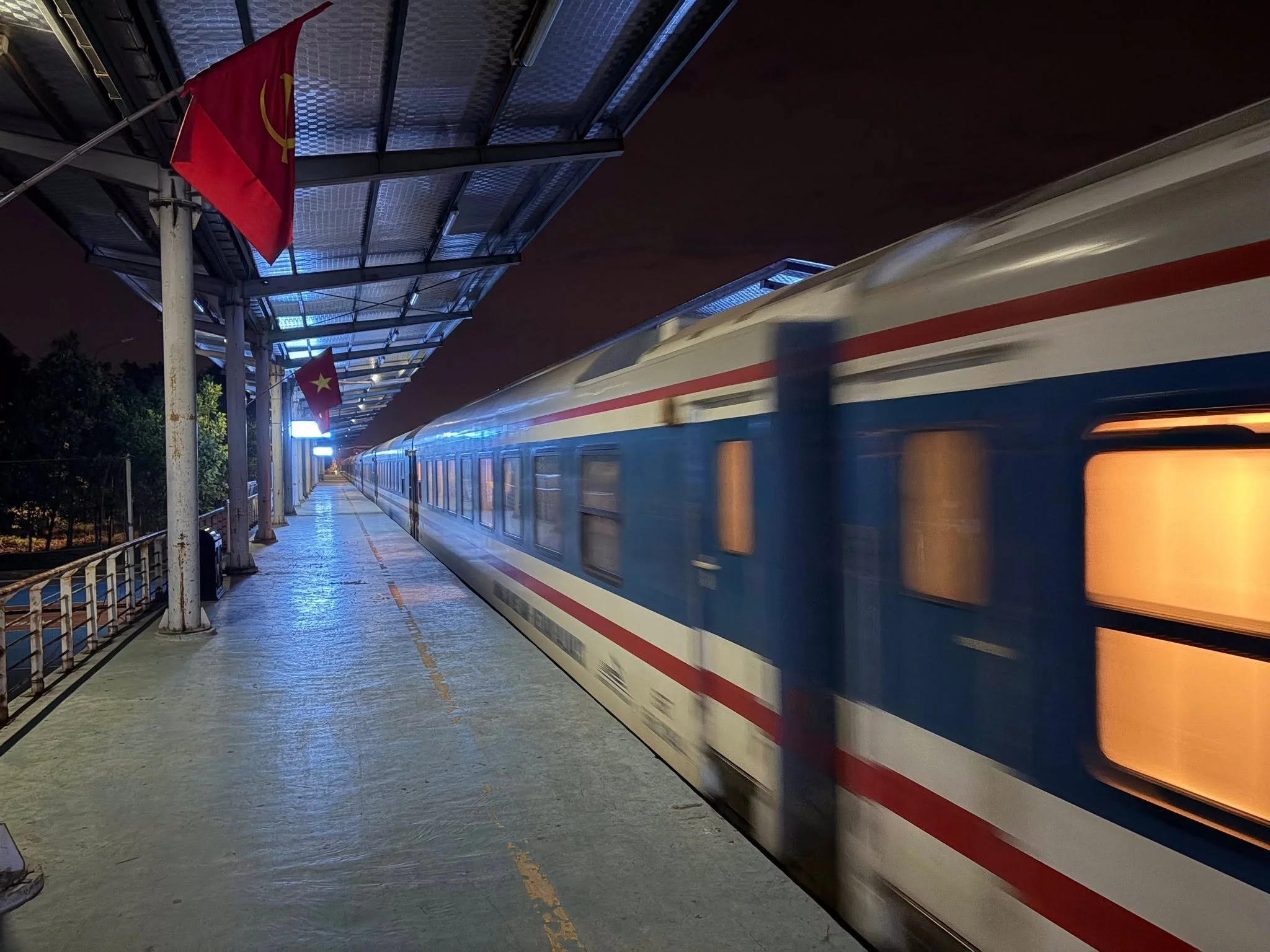
We pulled in to the Ninh Binh train station after dark on Thursday after a 9-hour train ride from Dong Hoi. Neither of us had ever taken a sleeper train before, and at $12/bunk, we splurged on the other two spots in the 4-bunk compartment so we’d have our own private space. It was a really delightful ride with reasonably comfortable bunks and a vase of plastic flowers. I wouldn’t really call it sleeping, but we ordered some bia’s at sunset and enjoyed the scenery & greenery of the Vietnam countryside.
Another 20 minutes by car got us to the Ninh Binh Valley Homestay that had looked so sexy in the photographs. Don’t they all. In true reality, the facilities at NBVH were pretty spartan, with stone floors, bamboo walls and thatch roofs. But the setting couldn’t hardly be beat, literally at the end of a long network of narrowing roads, winding amongst the karsts of Ninh Binh. These monoliths seemed to have a slightly different geological composition than their cousins in Phung Nha, 300 miles to the south. These stacks were just as dramatic, but seemed craggier. Maybe it was merely that they were covered in less vegetation, I’m not sure. But these looked rockier, and caving aint a big deal up there so maybe they haven’t been hollowed out by water and calcium and time like the ones in Phong Nha.
The Valley Homestay was a great place to decompress after the wiggy excitement of the caves. We actually lounged by the pool a little and swung gently in the hammocks on the porch of our bungalow, listening to the frogs and gazing up at the quiet giants looming on all sides of the private grounds. Pedaling home from dinner in town on the last night, the full moon was peeking out from behind the clouds as the fireflies danced above the fields next to one of the village’s many pop-up cemeteries. The karsts were silhouetted against the moonlit sky and we stopped on the dirt road and just took in the consuming nothingness of it all. I wished I could bottle it and save a taste for later, when I could use the peace of it. But that’s not how it works. You can’t take it with you. There is only the moment.
The next afternoon, we would be back in the chaos of the city, ready to rock Hanoi.
* Note: no leeches! The Oxalis website is pretty frank about the likelihood of unknowingly picking up a few of these blood-sucking hitchhikers, and we met a young couple from the Bay Area on our Saigon streetfood tour who had taken this same trek only a month earlier, and they definitely got attached. But Hui said it wasn’t peak leech season, and we were also successful in avoiding poisonous snakes and Dengue mosquitos also. For the win!

Vietnam 2026
Hanoi Rocks
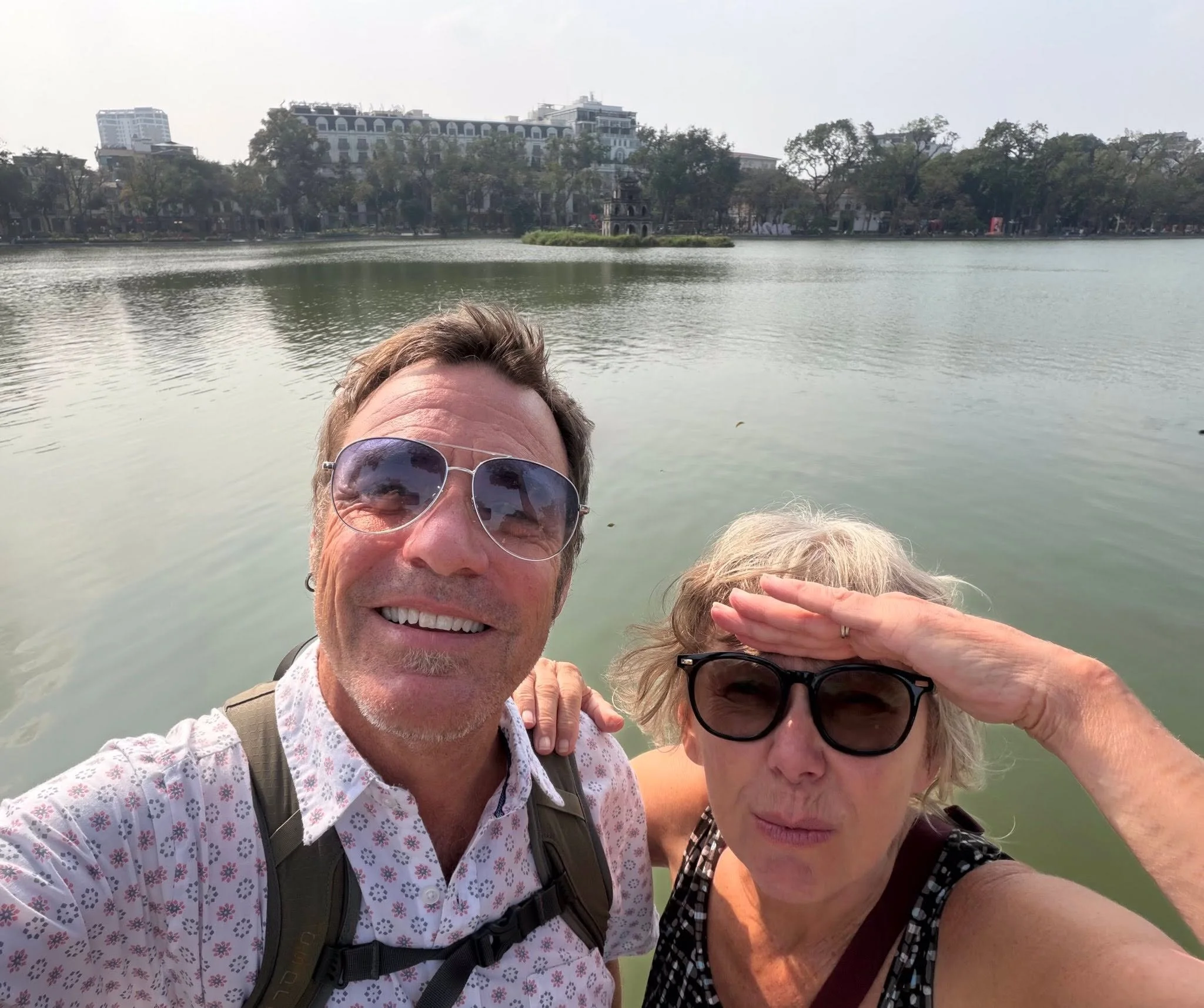
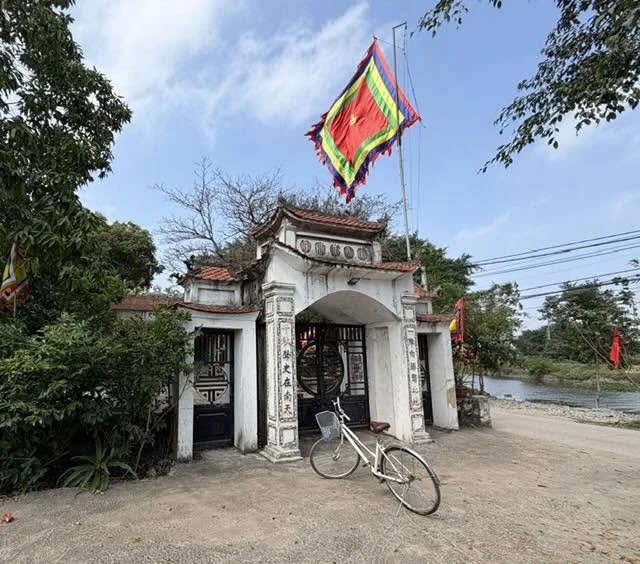
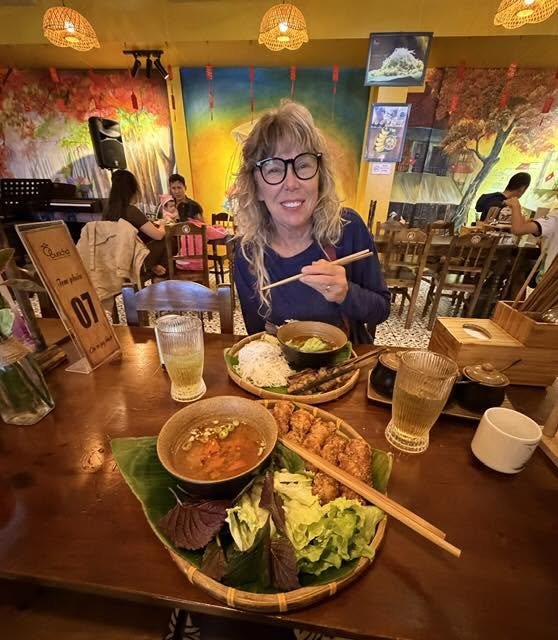
Patti and I hadn’t planned on spending a week in Hanoi. It was always our intention to take a side-trip further north and break Hanoi into two meals. But as it turned out, we ate the whole damn thing in one uninterrupted bacchanalian sitting.
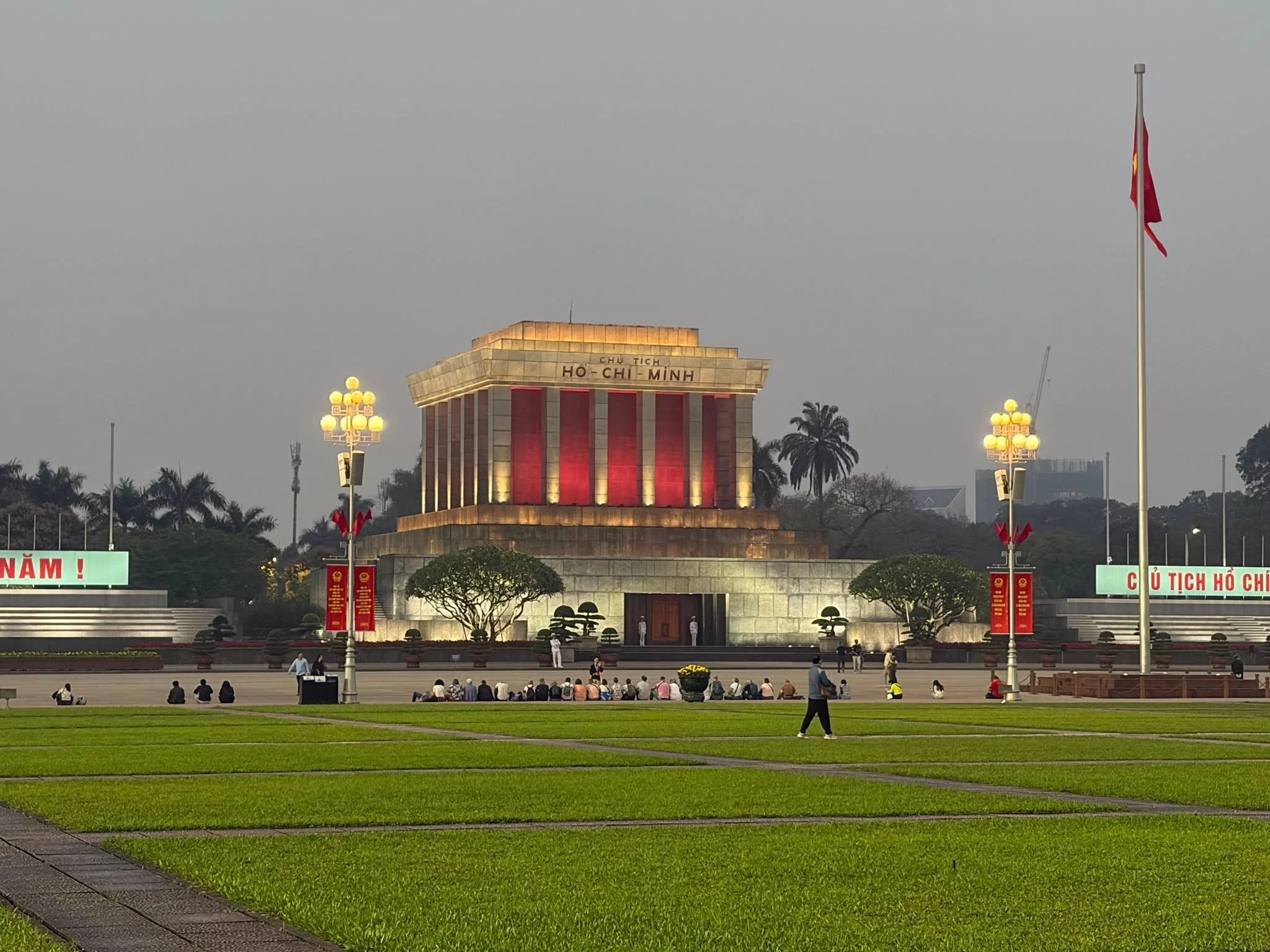
It’s a rich and filling meal, Hanoi. The capitol, the home of Uncle Ho, the spiritual center of Vietnam— a hustling, noisy, colorful, wonderful mad blast of a city.
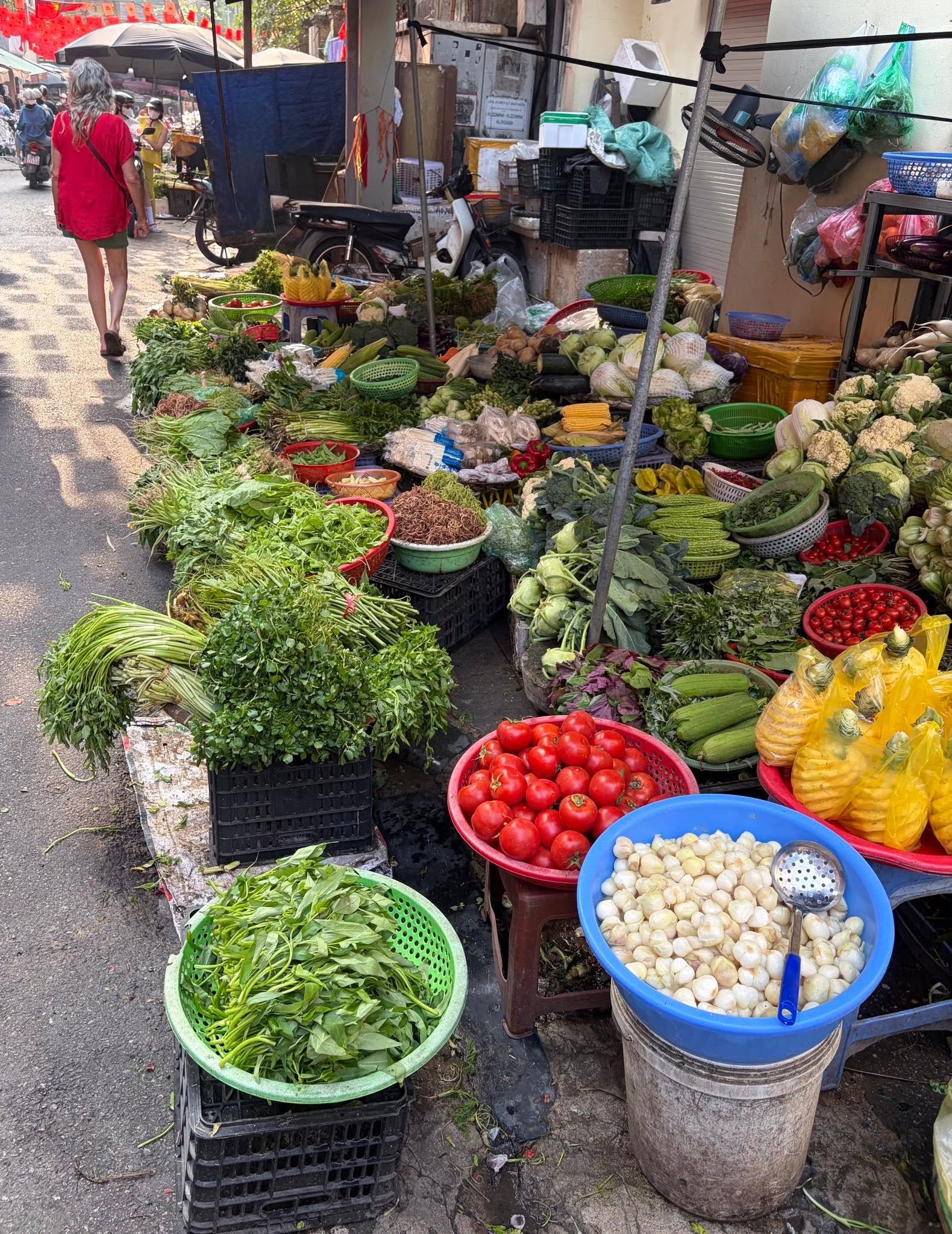
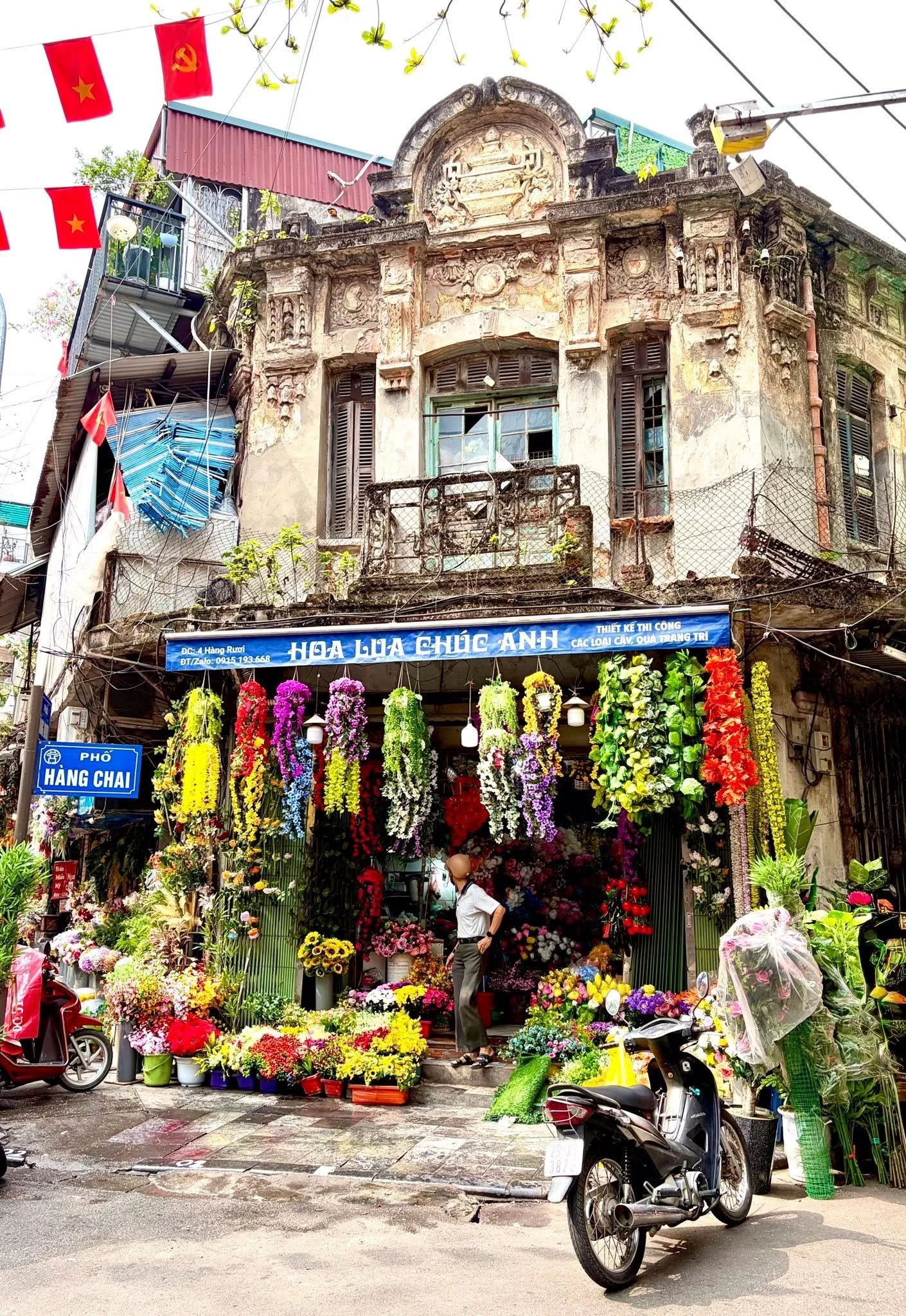
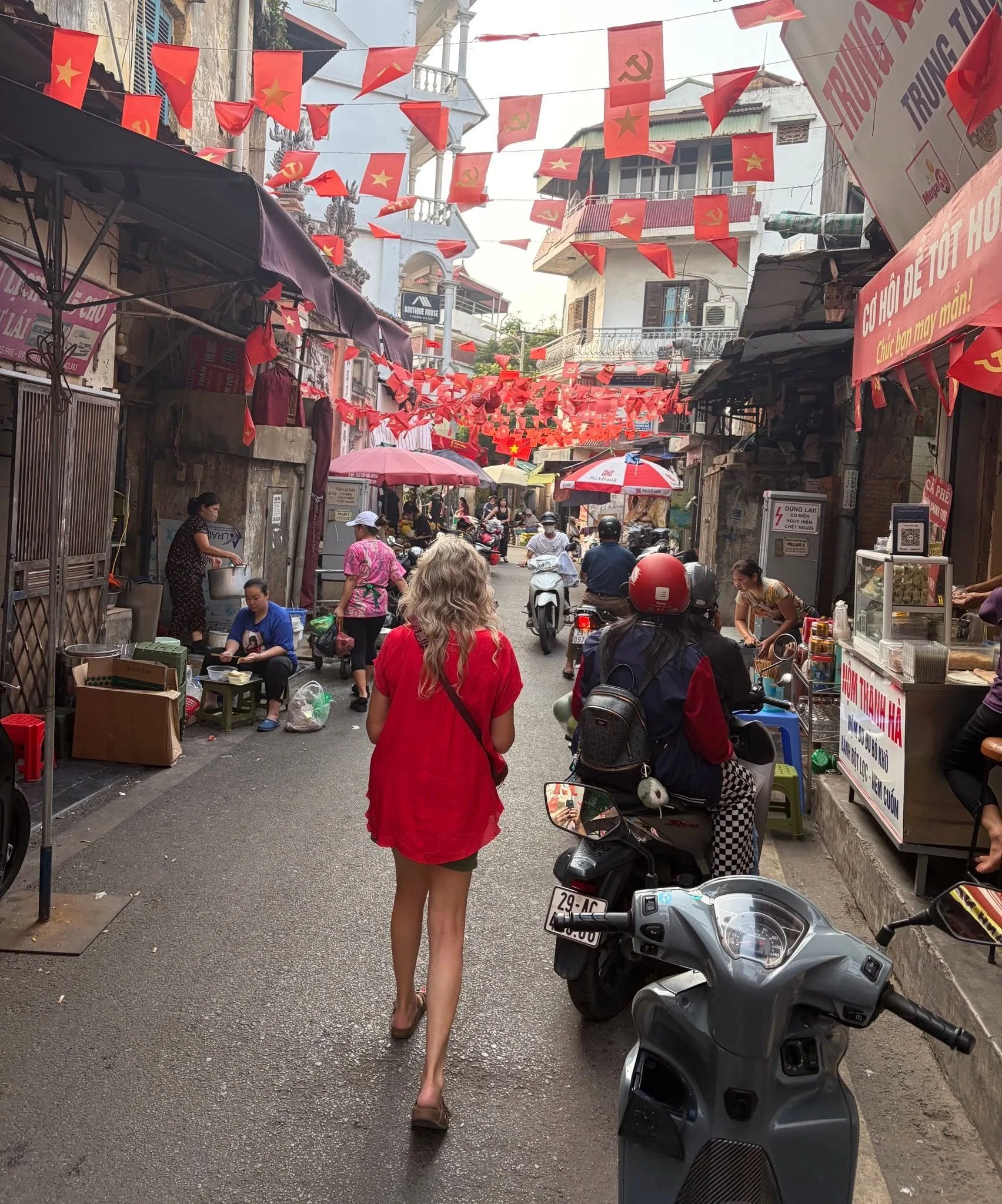
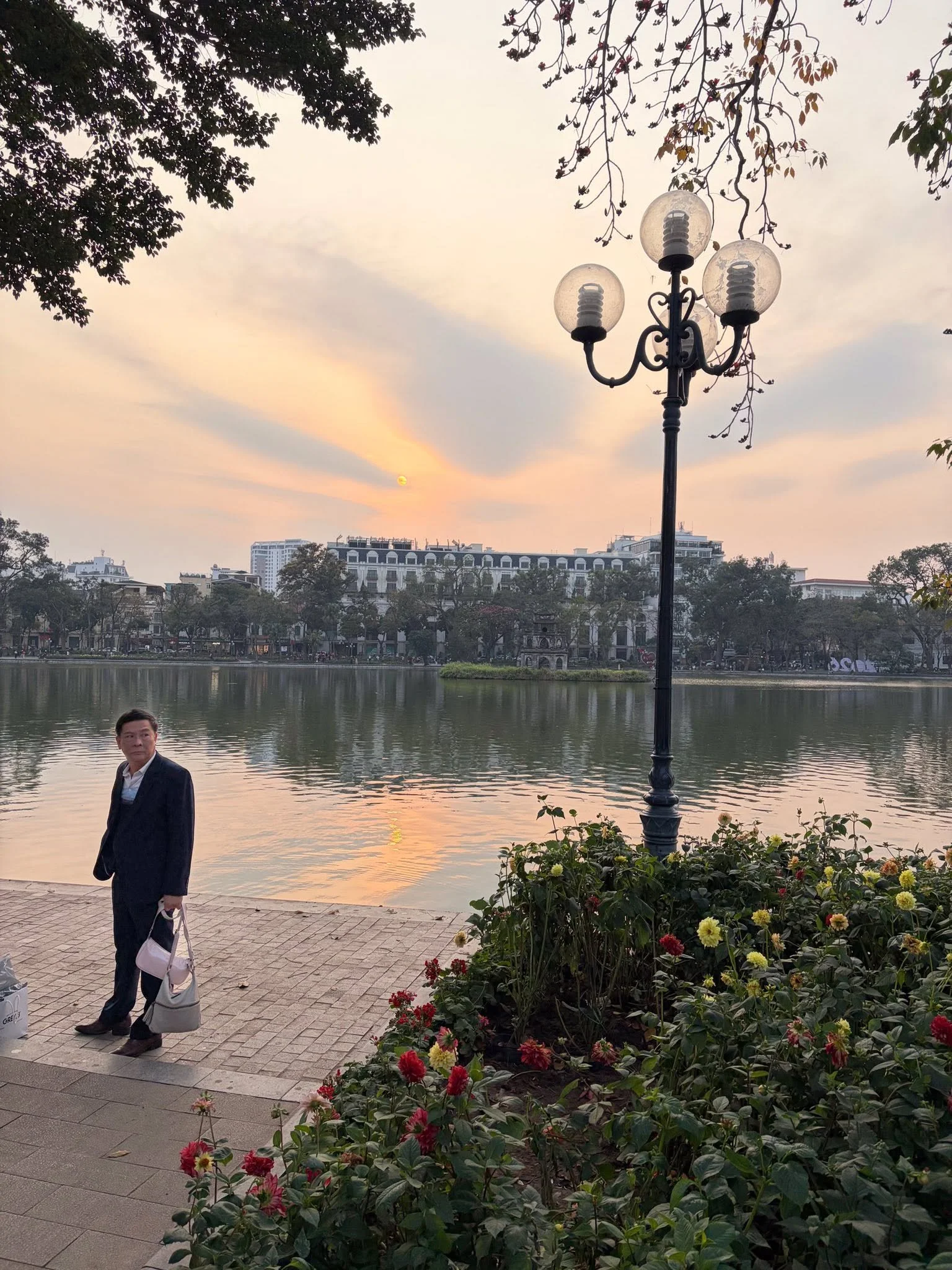
We arrived on the very comfortable 12-passenger limousine van from Ninh Binh, reasonably rested and ready to fight. From our first moments on the crooked pavers, it was evident that the Old Quarter of Hanoi was a special place with lots of secrets and that we would become good friends. With its narrow streets lined with decaying French buildings seemingly holding each other up, it reminded me immediately of San Francisco’s Chinatown except it was flat and there were no Chinese characters on the signs. Oh, there were characters alright—just not on the signs. The smell of fresh fish hung in the air, and lanterns swung gently in the afternoon breeze. Wicker bins of herbs, fruits and trinkets spilled out of storefronts on both sides of the street as tourists and residents alike squeezed by, narrowly avoiding being struck by the motorbikes speeding up and down, honking
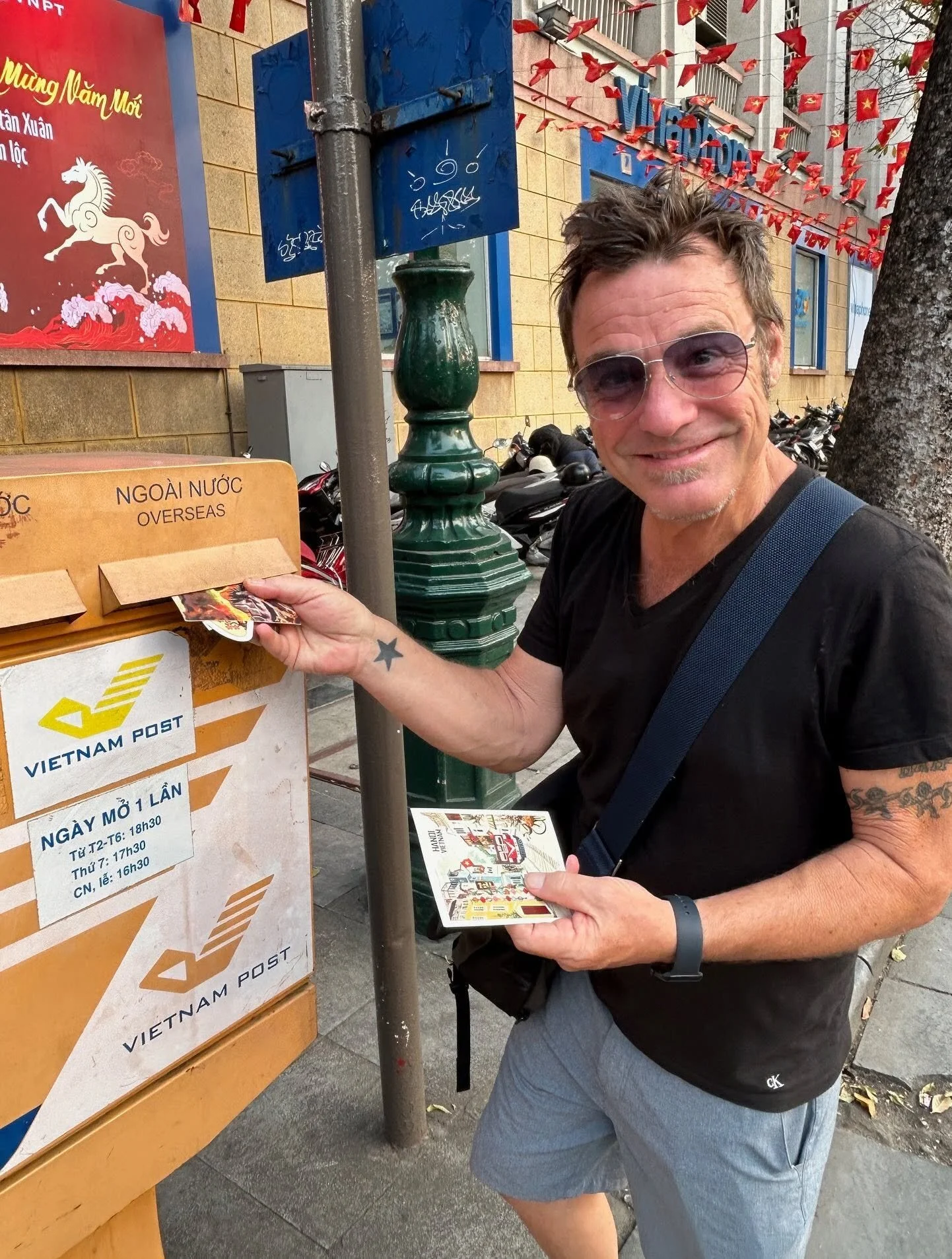
Patti and I would both be clipped by vehicles in Hanoi, actually. She by a motorbike; me by a car. No injuries of course, and neither driver even glanced let alone stopped. But it’s still unsettling to be brushed by a moving motor vehicle. I’m surprised it doesn’t happen much more, honestly—the way the traffic works. The scooters go as fast as the congestion will allow. And although that it isn’t usually very fast, they are constantly zigging for an advantage, even when that’s zagging on a sidewalk—pedestrians be damned. In reality, neither pedestrians nor scooters can use the sidewalks much, as they’re too stacked with postcard racks, Banh Mi carts, spa sandwich boards, tiny stools with low stainless steel tables and hundreds of parked motorbikes for anyone to really use them for passage. Mostly all traffic is forced to share the narrow street, which makes for some very artful dodging.
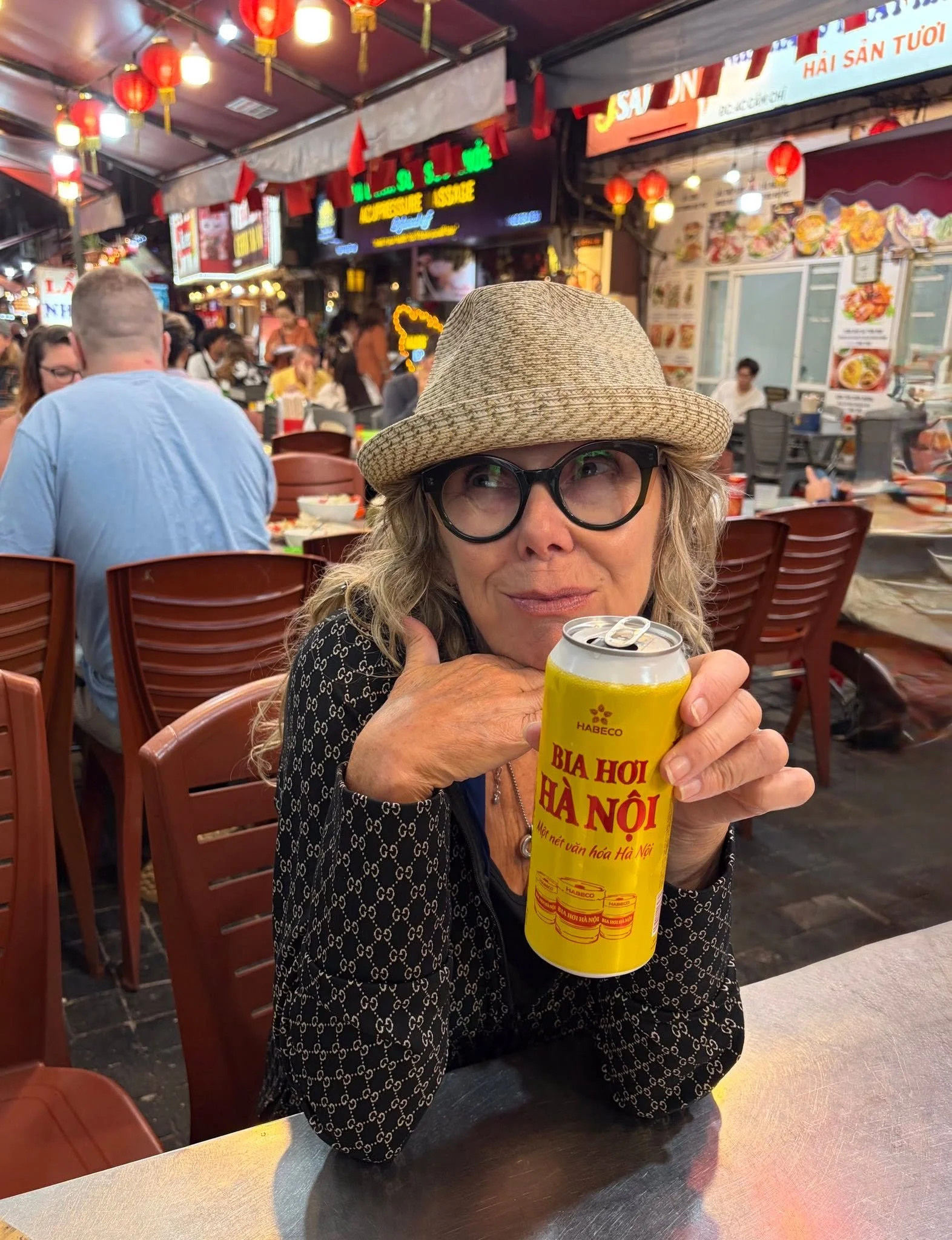
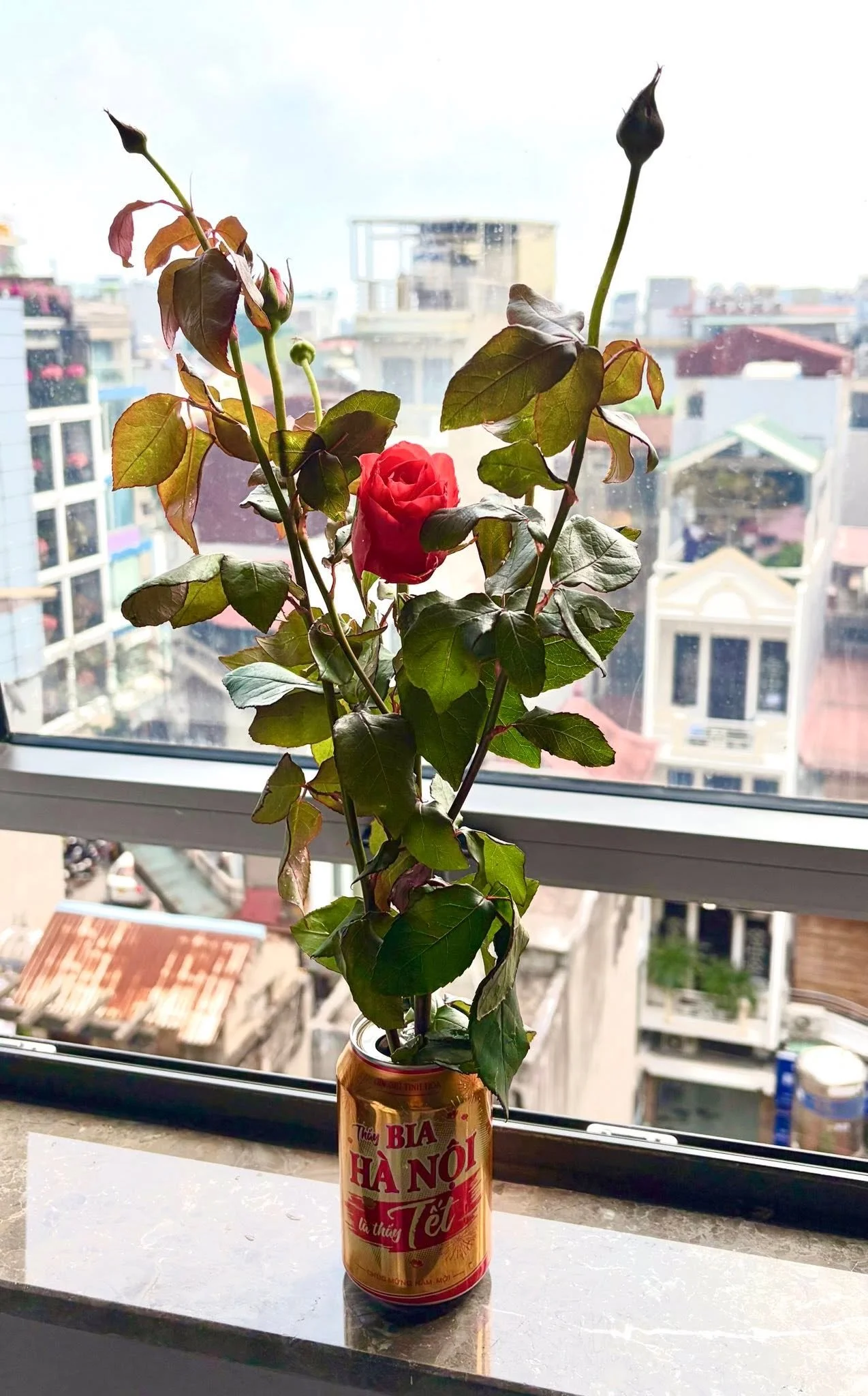
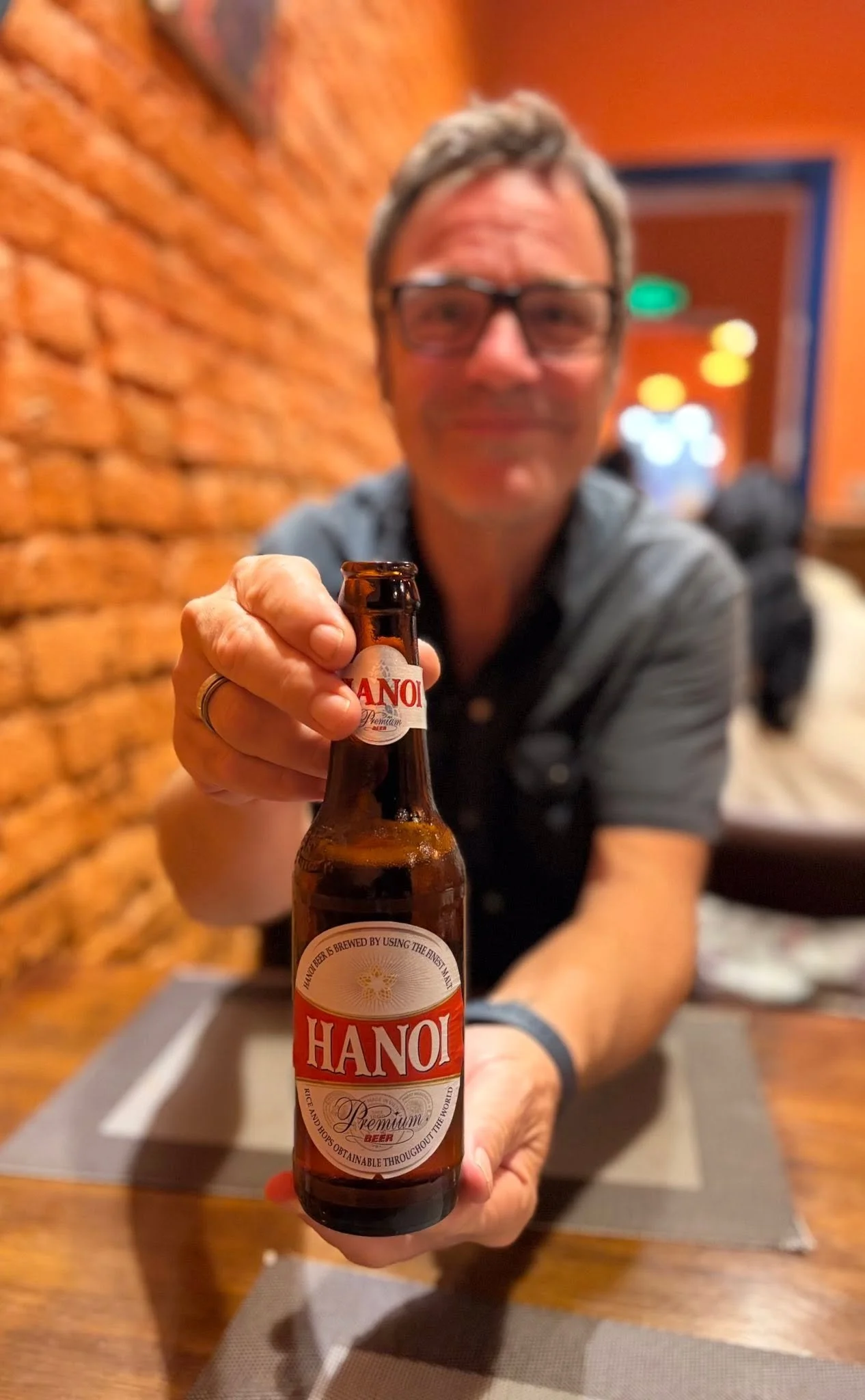
I don’t know how she did it, but Patti discovered Bia Hoi that first evening. We’d been walking around holding hands in the dying light, browsing the Sunday market and a few shops— really excited to be in a new venue. We were thinking about chasing some dinner, but figured on a beer first. I was watching for something that looked like a bar, but Patti spotted this elevated platform on the corner with a few blue resin tables inside and some Vietdudes drinking beer from plastic pint glasses. It might have been this novelty that caught her eye initially. We hadn’t been served a beer not in a bottle or can in six weeks, but these guys were drinking draft beer. It didn’t look like a bar. There was no counter or cooler, no kitchen or cash register. It was just a tiled rostrum, open to the street on two sides—more like a drinking platform.
“Let’s go in here,” Patti said without looking at me.
We stepped up into the space and approached the only empty table. Looking around we saw a girl with a tray of pints and we pointed at the table, raising an eyebrow and two fingers in the universal sign of ‘this table for two’? She shook her head no, and after setting the glasses down on one of the tables, motioned for us to follow her across the street to a smaller storefront with some chairs out on the sidewalk. She pointed to two empty ones and we sat down. There was an older man sitting on a stool pouring beers out of plastic spigot like the ones you see on Garden Street. He looked at us and I said ‘hai bia.’ He poured them and the girl brought them over.
We noticed that the 3rd corner of the 4-way intersection was also being served by this same keg. The girl and a young man were running beers in both directions, dodging motorbike traffic with trays of pints. Purely bananas. But our corner was headquarters— the source and the soul. It was an older crowd (all male, of course) and we felt honored to have been seated there. We didn’t understand why and never did learn. We visited this particular Bia Hoi (which translates to ‘fresh beer’ literally brewed that morning) two more times and were seated in one of the other two spaces by the same kids both times. The last time there, she seated us at the table we’d asked about originally, even though this time we pointed to our first seats on the hot corner. Just another of the great mysteries of Vietnam.
******************************************************************
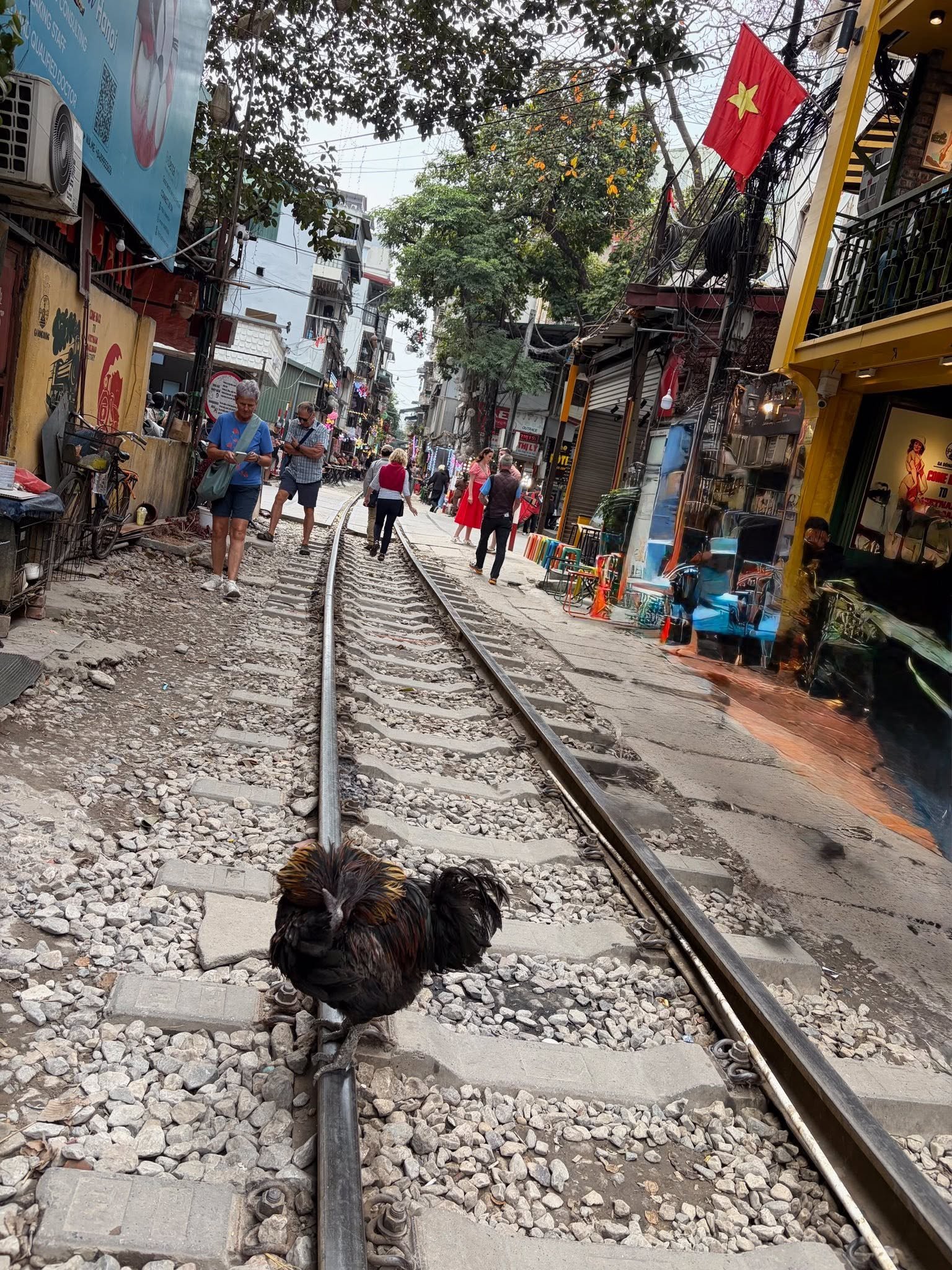
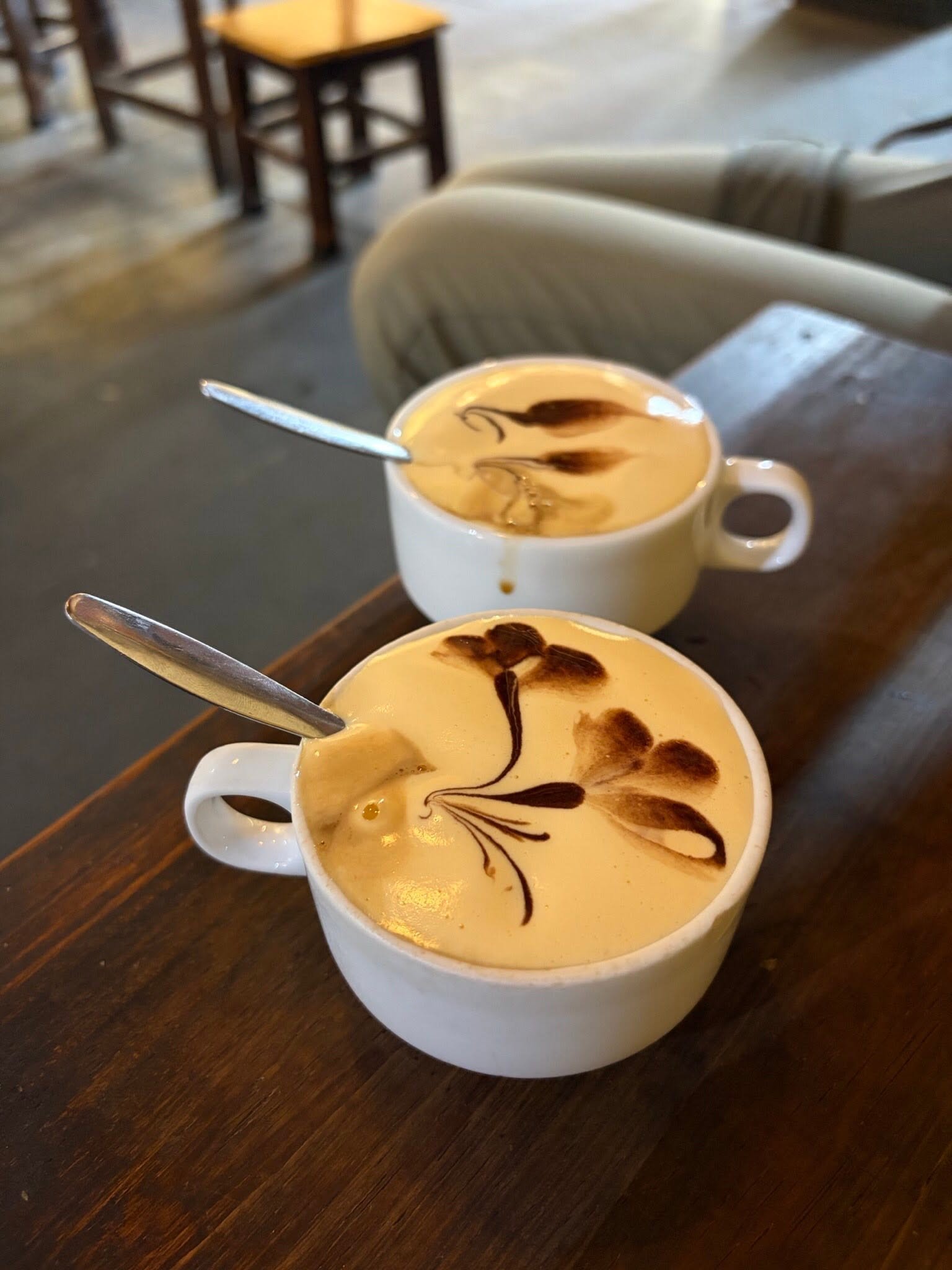
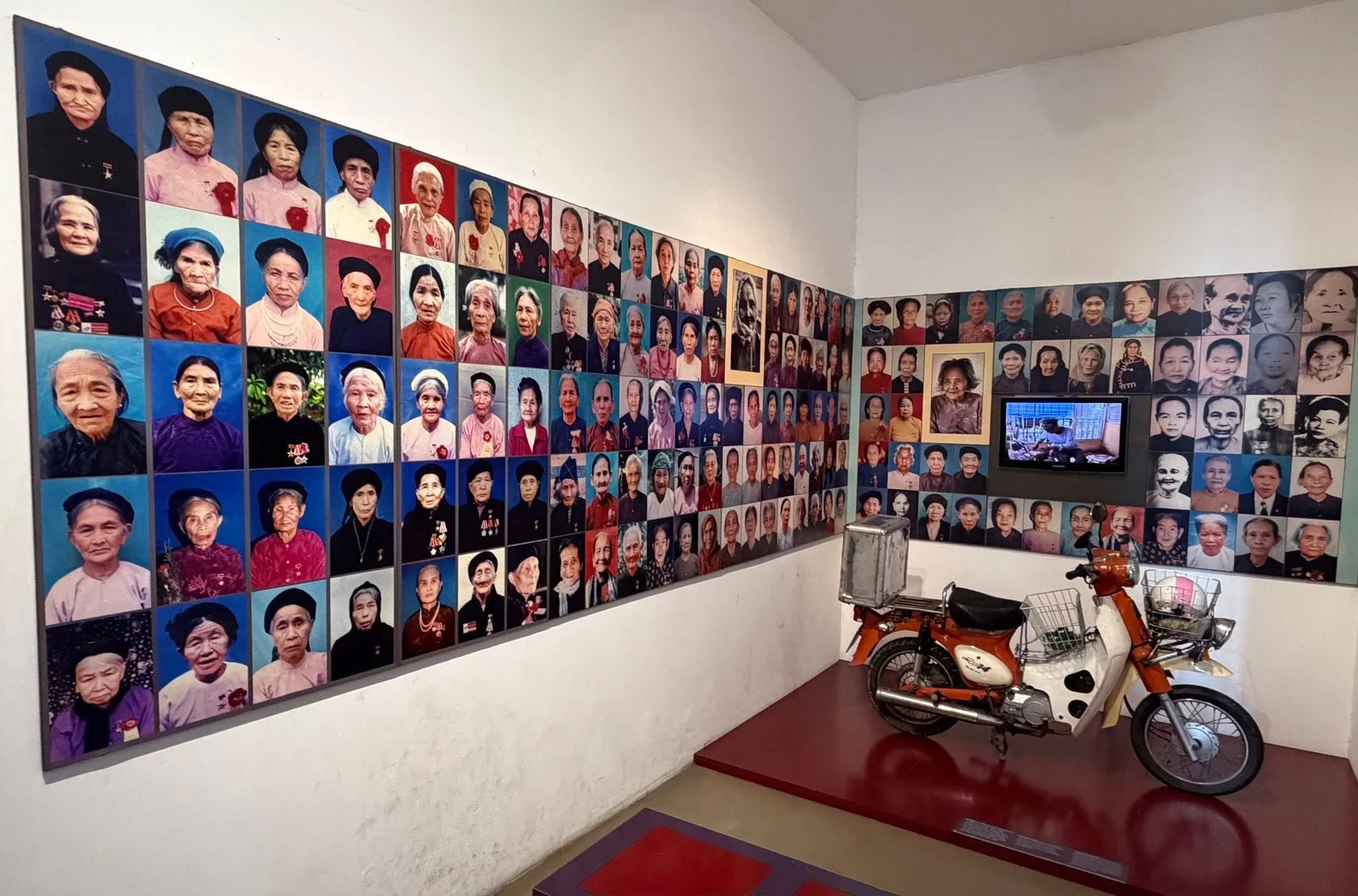
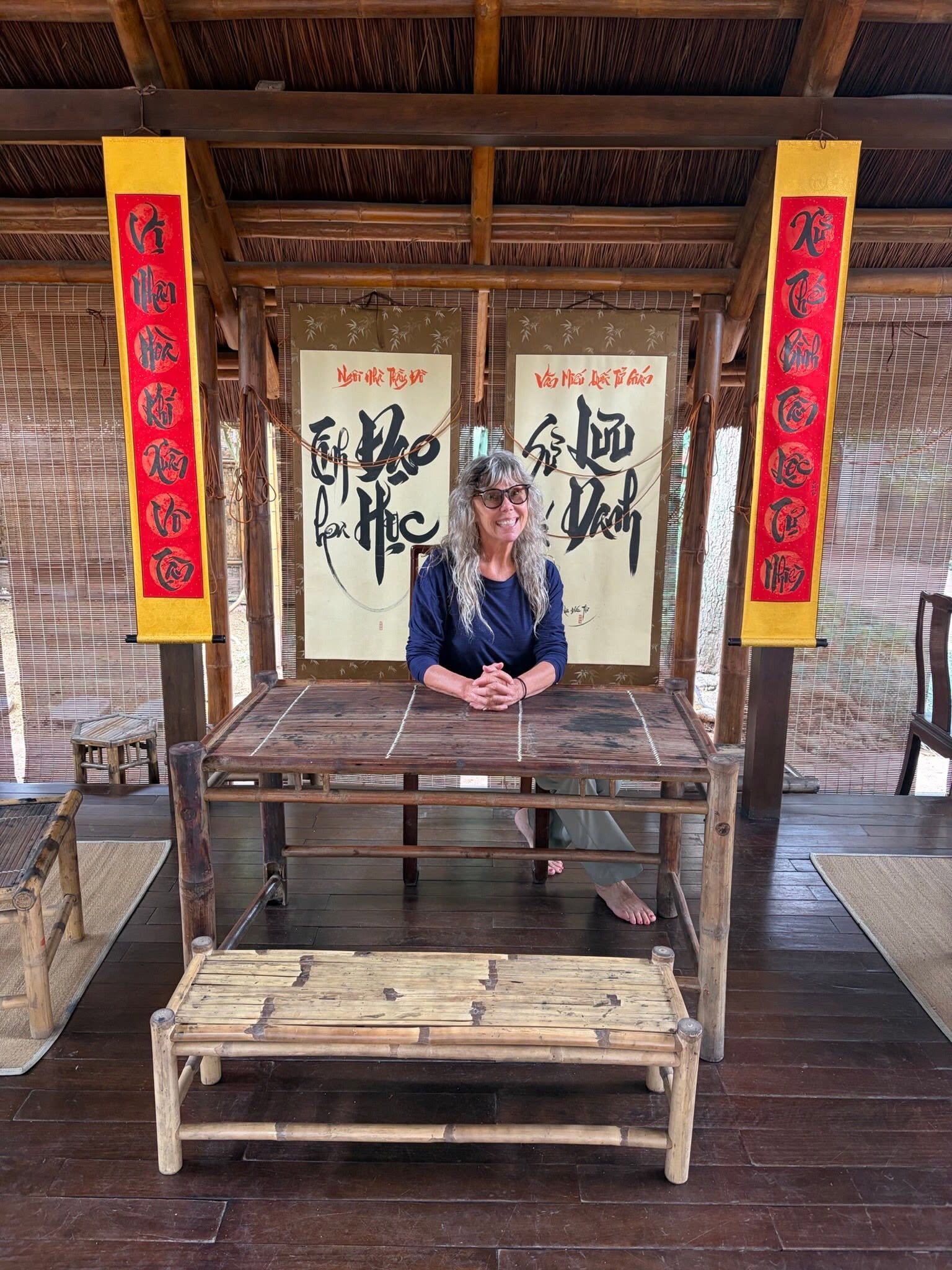
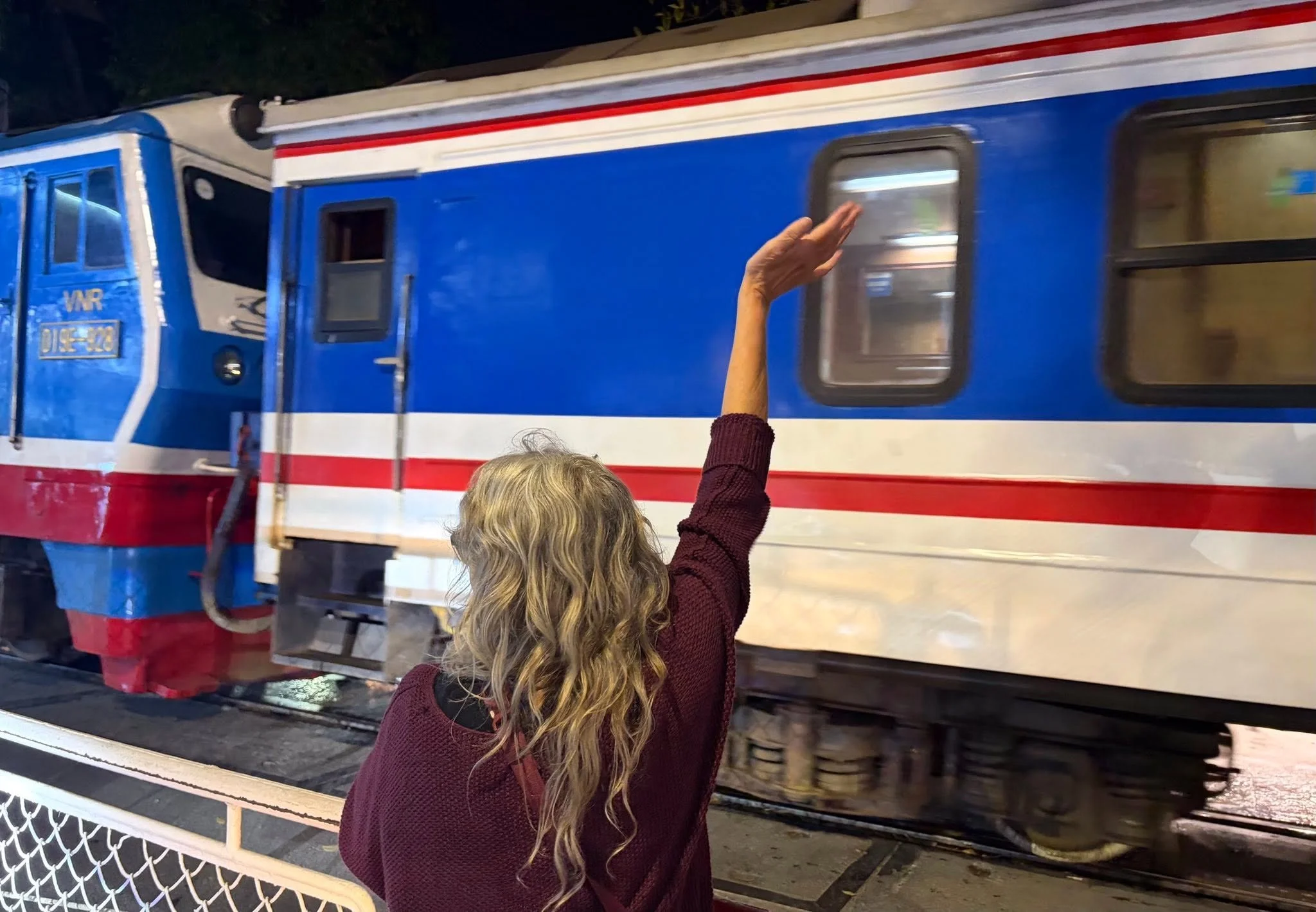
There’s plenty to do in Hanoi. We went to the Temple of Literature. We spent an afternoon at the Hanoi Fine Arts Museum. We took a coffee-making workshop. We went to the Women’s Museum. We went to Train Street and Beer Street both.
But in between cultural attractions, Hanoi was a lot of eating, drinking and shopping.
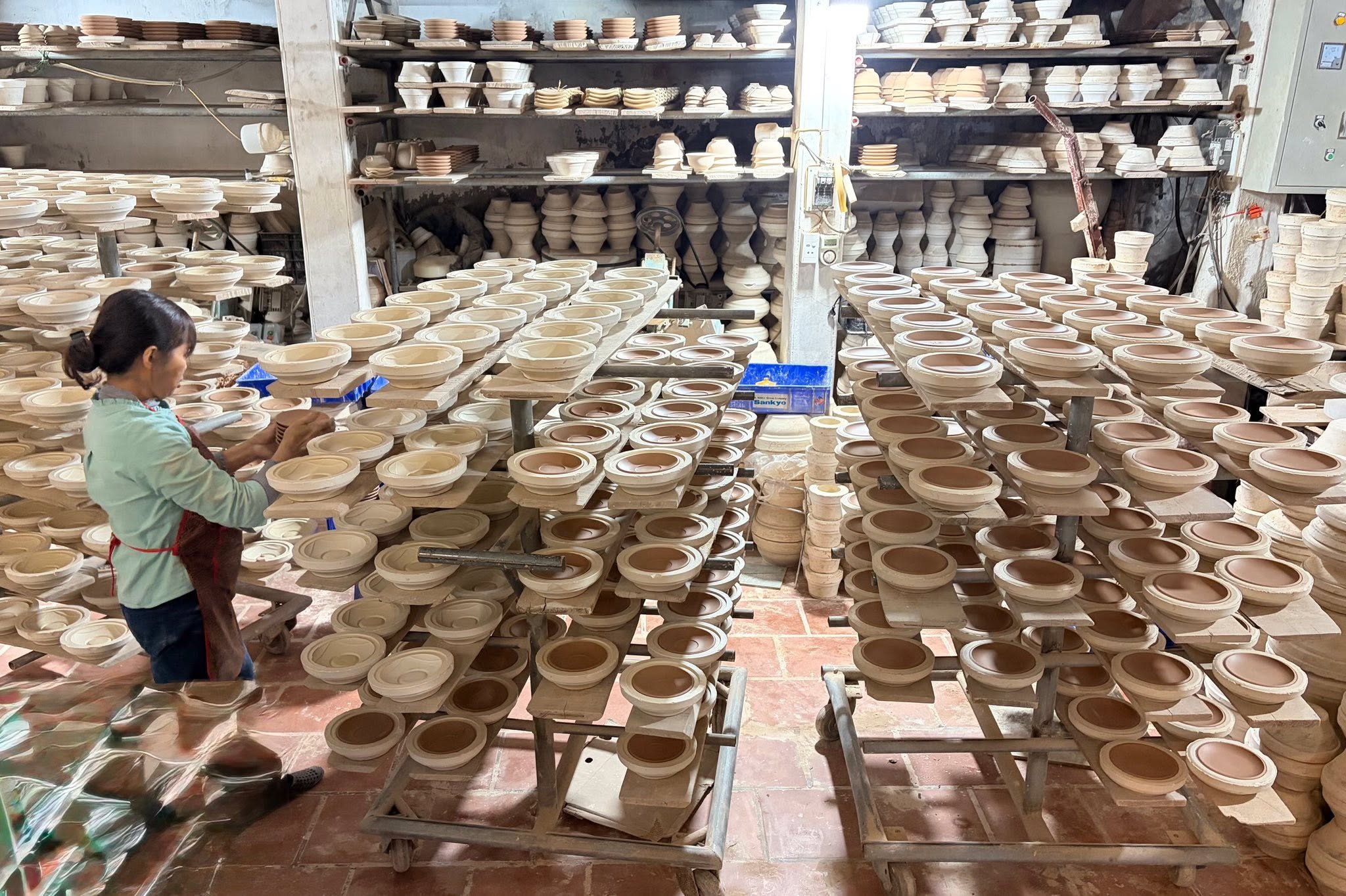
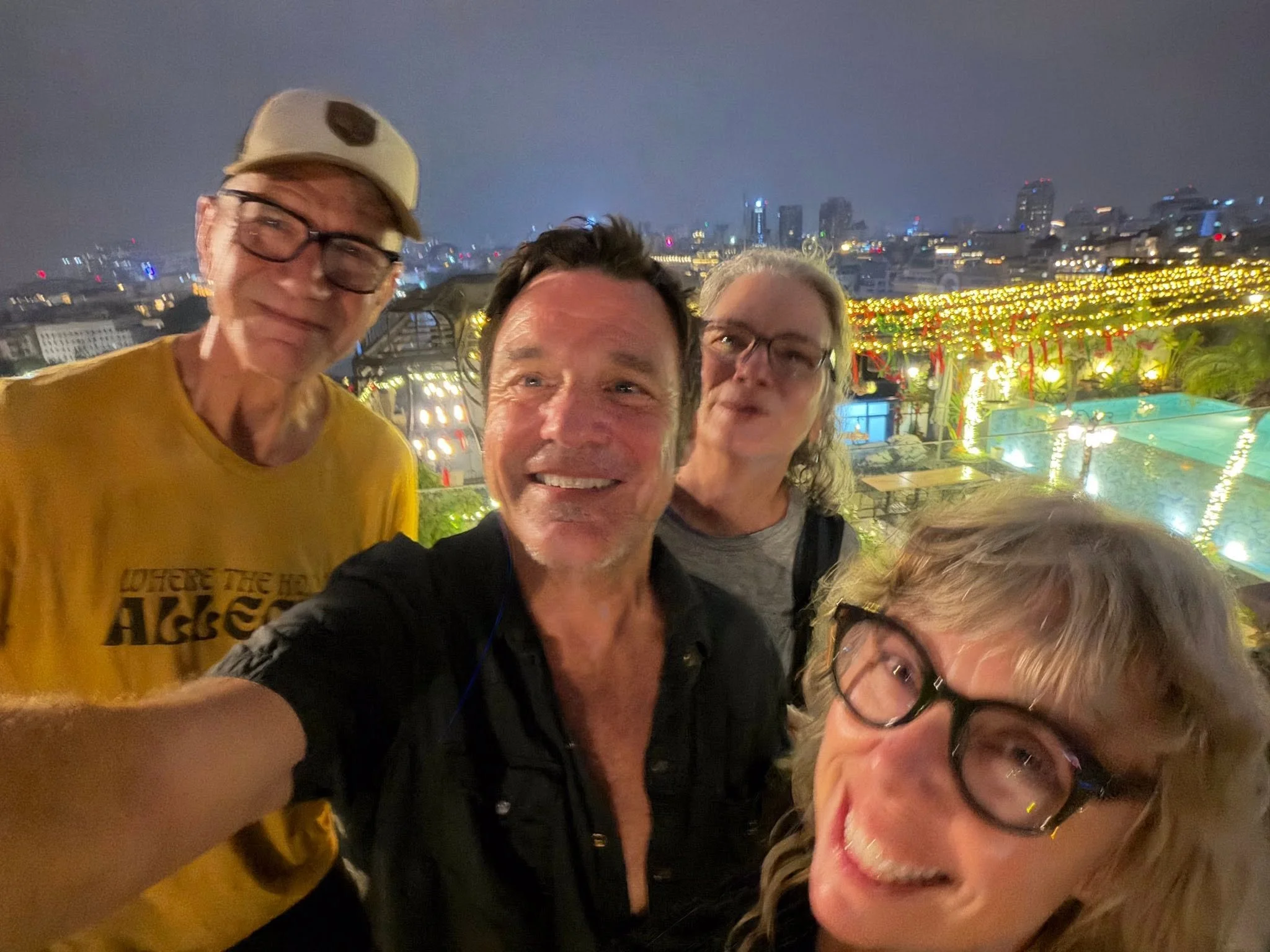
Not that it was all pho and bia hoi. You can’t have Vietnamese food every night, and we did have some very good Indian (twice), sushi, and a pretty serviceable pizza in Hanoi. We enjoyed a cocktail at the historic Metropol Hotel and frequented more than one sky bar—the first of which also featured Alice & Edlin! We shopped for pottery at the remote village of Bat Trang where you can watch the artisans throwing in large and small studios alike.
But yes— there were a few Banh Mi’s and quite a few bia hois.
Also a lot of walking. All three of our hotels were in the Old Quarter, so there were very few cars taken. Most everything we did was on-foot. One of the few things that remained un-crossed off on our list of things to do in Vietnam was to take a pedi-cab. And it’s ironic that we did not take one in Hanoi since we did walk so much and since the drivers there are so persistent. Patti thinks they targeted us because we look old, but I think it was because we looked light. Those guys are super fun and we made a game out of flashing them the international sign of ‘we’re going to walk it’ which is the first two fingers of the right hand facing down and wagging in a walking motion.
And sure: the shopping. Good Hell, the shopping. The Quarter is built on shopping, offering everything from revolting plastic souvenirs (presumably made in China) to regionally-produced incense, coffee, pottery, silk, silver, communist propaganda and bamboo bongs. It’s set up like in Latin America where all the like vendors are clustered together. So not only is there a silk street and a silver street, but also a paper street, a porcelain street, a Tet decoration street, a hat street, a scissors & knives street and a brass figurine street. Plus much more. It’s wild.
Very little of the merchandise is priced. You’re forced to ask ‘bao nhieu’ (how much?) and the shopkeep looks you over, deciding where you’re from and gives you the price for your country of origin—usually more than twice what she’ll actually accept. And then I usually say a price that’s two-thirds of what she said initially and then of course we split it again. Sometimes I just gave her the first money—and this was a genuine surprise on more than one occasion. Negotiating is kind of fun with the right vendor and I think the locals do genuinely enjoy the game. And I wouldn’t want to deprive them of that, nor did I want them to disrespect me for over-paying like a chump. But it’s also exhausting, and sometimes it felt lame trying to get something for $1.45 instead of $2.10 when I would buy it at Penny Lane for $18 at Christmas without a second thought—certainly without haggling. I don’t even know how someone can manufacture, transport and retail this thing for $2. And I’m going to walk out of the shop over sixty-five cents when she knows I pay $9 for a bagel at home and then tip two bucks on top? She has the internet, she knows how fucking rich I am.
It’s part of the whole thing, and I don’t think we ever shook the invader traveler complex entirely. Especially in a place like Vietnam that has such a regrettable history with the US. The people are very warm and it does seem like they are glad to see well-behaved American tourists because we have money. But it still feels exploitive because everything is so cheap to begin with. A beer is 90 cents. The best coffees I’ve ever had are a dollar. The banh mi is $3. Nice hotel rooms are $55 (though you can get a crummy one for $15) and a ride across town in hideous traffic is $2.75. THEN tipping is discouraged. And I’m supposed to offer them half of what they tell me the already low price is? Gross!
One thing I do love about the economics of Vietnam is that it is a cash culture. I don’t think we charged 5 transactions in 6 weeks. Even some of the hotels required cash payment. It took a while to figure the money out since there are so many zeros in the equation. Like a USD is equal to 25,000 Vietnamese dong. And there are no coins of any demonination. Just paper. The thousand dong note is four cents.
****************************************************************
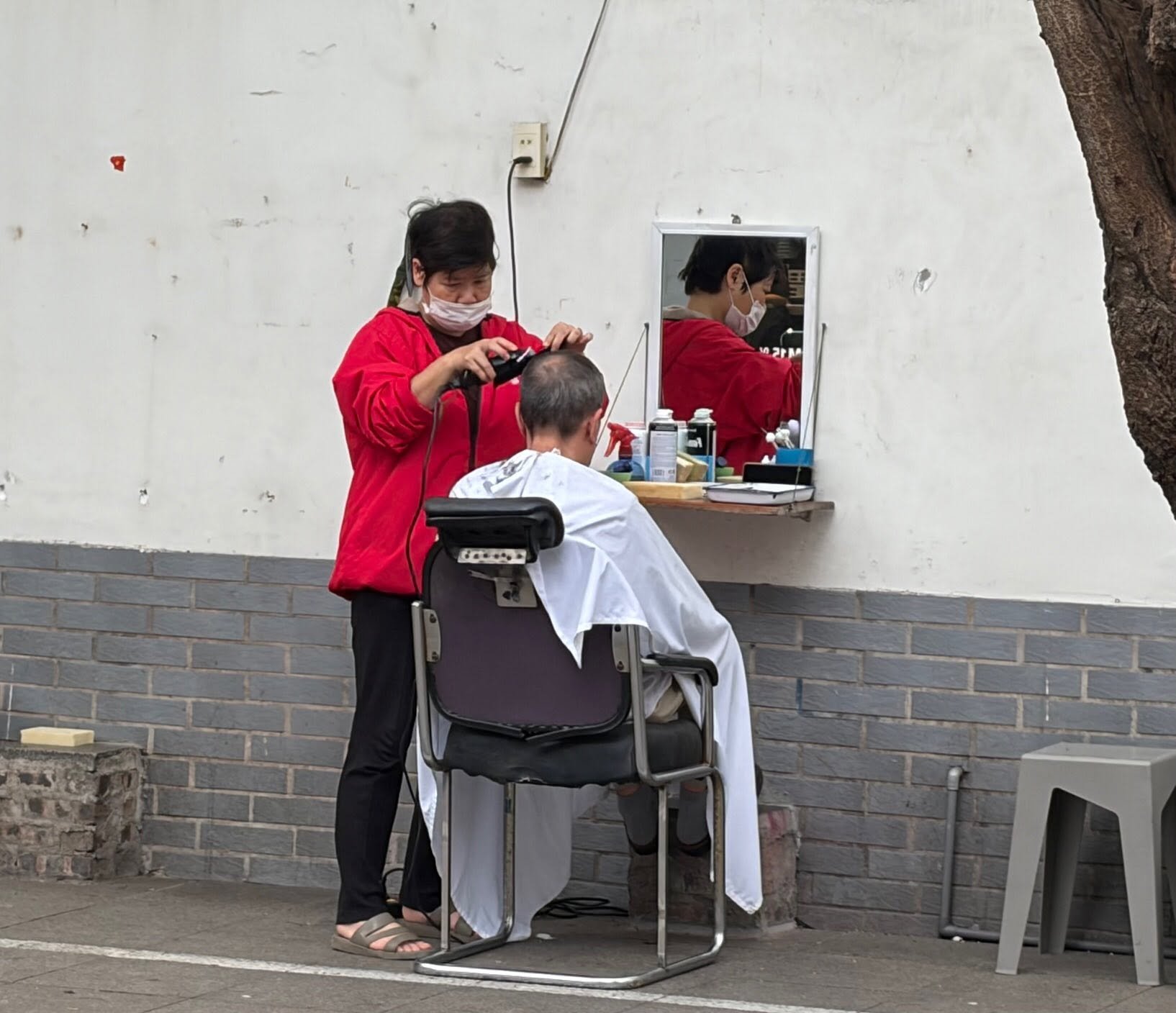
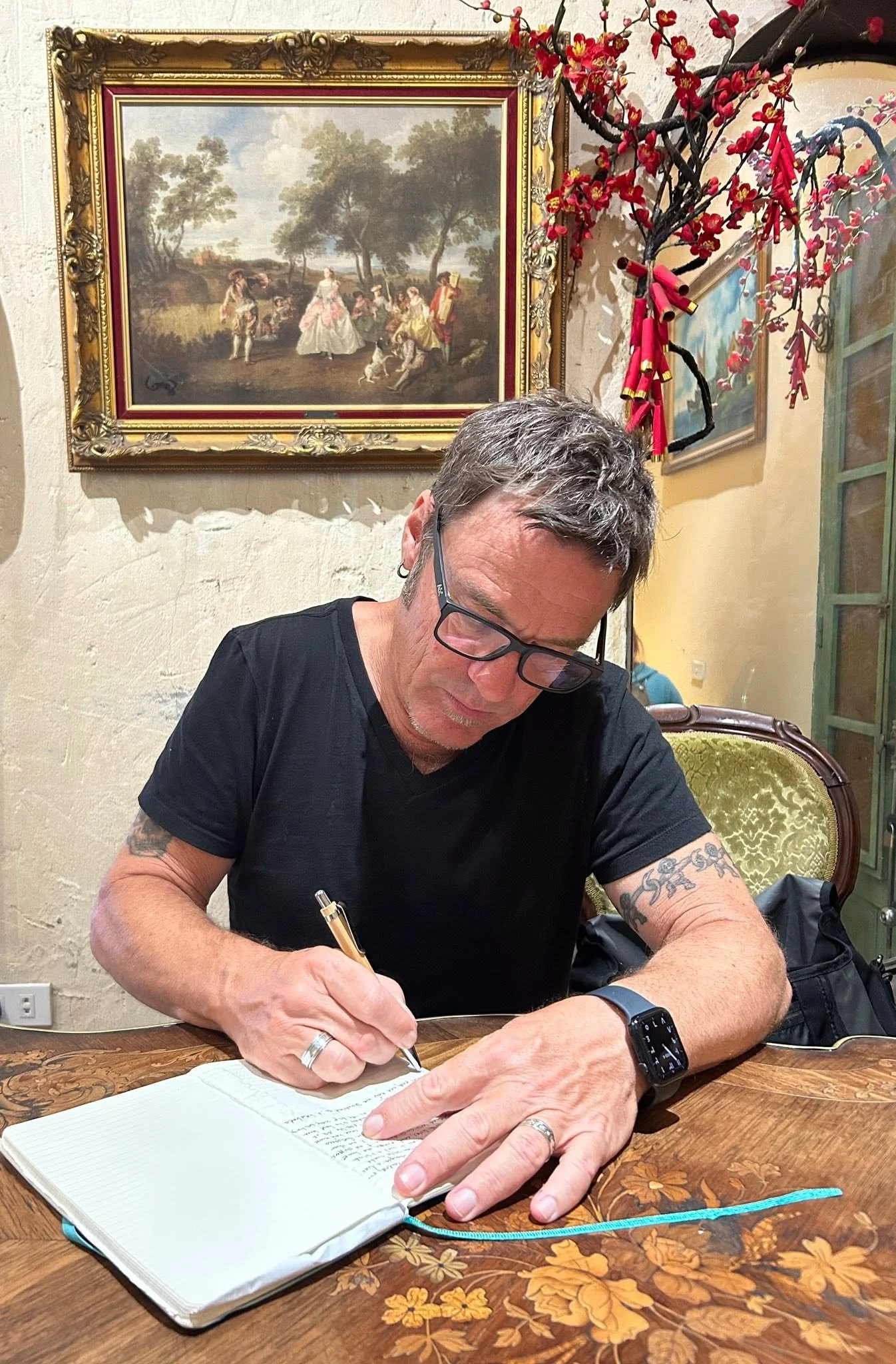
You can meet some people in nine days. Our instructor Alex from the coffee class was funny. Lan let us pet her cat. We did give some money to the old man on the corner whose panhandle tag was simply ‘money.’ (The only real asking we encountered the whole time we were in the country). But by far the best friends we made in Hanoi were at the Saturday night karaoke party. Duh.
We were strolling around the Quarter trying to decide between a nightcap and an early turn in. It might have been 10pm. We walked by a shop that had music coming from inside, and we peered in the plate glass window. There were maybe a dozen people inside— one older gent standing on a small stage with a mic in his hand a few others dancing. I thought it was a club at first and opened the door a crack. The singer smiled and motioned us in.
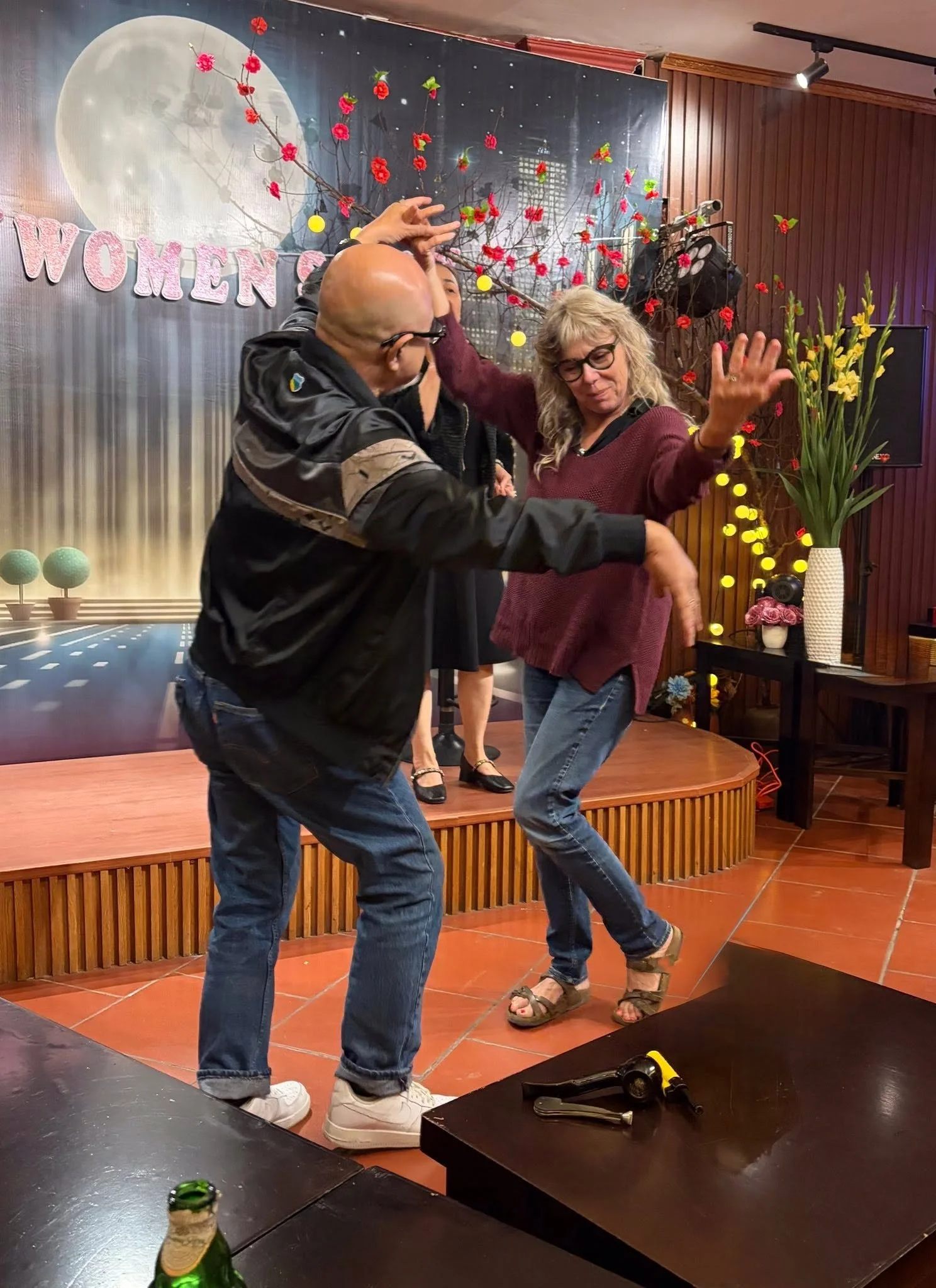
It was a private party of some sort in a space that may have been like a dance studio. There was no bar but there was plenty of bia and our sponsor brought three over immediately and showed us to a table. His name was Ha which means river in Vietnamese. He (Ha) was very happy we had joined the party and told us so repeatedly, almost constantly. He was definitely the karaoke host, and performed frequently including backing me up on a shredding version of Hotel California (of course) which ended in a pretty respectable air guitar jam with me in the middle flanked by River and Minh, age 73. Unlike the dapper Philip Seymour Hoffman lady’s man who danced with all the gals, Minh was more of a free-style soloist and could not be undersold when he felt like cutting. He did take time out from his interpretive jazz movement odyssey to spin Patti for a couple of numbers, however. There was also the lady in black who was a bit more serious about her karaoke than the fellas, who seemed like they were there mostly to drink and dance. She looked like maybe she was hoping to get discovered. And she did have a lovely voice…
We drank and sang and danced and laughed with these kooks for an hour, not really exchanging many details other than our names. But we just laughed and laughed. Riv told us how happy he was and Minh reminded us he was 73. It was a wonderful way to top off a Saturday night and we wouldn’t make such good friends again until we got to Tokyo a week later.
Tokyo 2026
It’s like these Japanese have a different word for everything
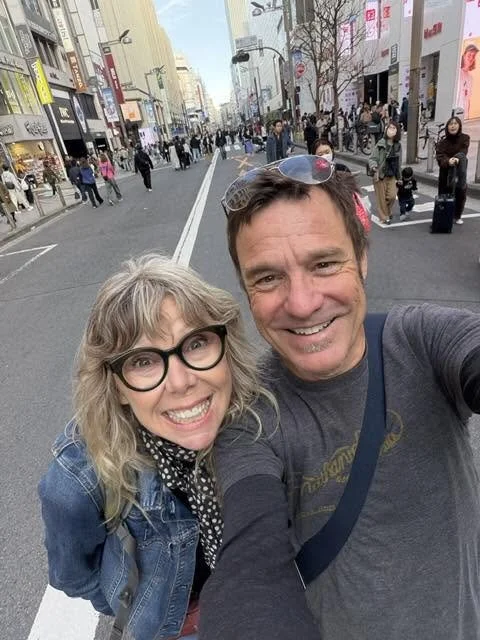
After two months in Vietnam, we were a little concerned about the whiplash culture shock of returning to the US. So what we did was, we booked a few nights in Tokyo-- thinking it would soften the transition.
This did not end up working out so hot. As it happens, we could have gone from Vietnam to about anywhere else in the universe and it would have been less of a shock than Tokyo was. Talk about your whiplash!
There are a lot of Asian people in Tokyo, but that’s about where the similarities end.
We arrived at midnight Monday on a flight from Hanoi. Customs was a breeze and we were able to make one of the last trains leaving Haneda, bound for the Shimokitazawa neighborhood via the Yamonote line. A couple of transfers got us to Higashi Station, and we stepped off the platform feeling pretty buff. We had successfully navigated the first leg of our visit on the busiest public transportation system in the world.
Strapping into our packs and walking out into Tokyo, we braced for the pulsing neon and seething humanity we’d seen on TripAdvisor. Instead, we were greeted with darkness, cold and an eerie silence.
We wondered if we’d taken a wrong turn at Hong Kong. Surely this could not be Tokyo, Japan—the world’s largest city which vibrates with movement, electricity and sublime chaos at all hours. But it was absolutely deserted. The buildings were modest, the streets spotless, and there were no vehicles or pedestrians in sight. It looked like a movie set after the best boy had gone home and turned out the lights.
We looked at each other and shrugged, starting down the empty street toward our first flop, just a few blocks away. The Mustard Hotel was tidy and quiet. A desk clerk emerged from the curtained back room rubbing his eyes and let us in to the lobby where he checked us in. The room at the Mustard felt like a community college dormitory or like a really super nice prison, with bunkbeds and a tiny high window. The room was spare, with no artwork or décor of any kind. The only things in it were two pair of gray linen pajamas and a turntable.
We thought about slipping into the jammies and borrowing a record from the bins in the lobby, but instead we searched SIGNS OF LIFE NEAR ME. Google Maps shyly suggested that Never Never Land was open just around the corner, pouring alcohols and cooking the food until 2am. We doubted it, but re-shoed and headed in that direction just to be sure.
And this is where the whole tour changed. NNL was like a different Tokyo altogether, with its dark wood furnishings, vivid art, disco ball and black lacquered piano. A jazz record played courteously on the turntable. And standing behind the bar-- like he’d been waiting for us all month-- was Ken the boy bartender.
Ken said his kitchen was cold for the night, but he poured us a glass of wine and practiced his English on us for an hour even though he told us several times he was getting ready to close up. There was no one else around. It was after 1am, to be fair. But he was incredibly sweet. We felt way welcomed and would actually pop in to the bar each of the three nights we spent in the neighborhood (the last of which even featured a quick jam with the Loudness Guy. Everyone knows Honkey Tonk Woman…).
The brilliant March sunshine showed us a different Kitazawa the next morning. Students, families and hipsters alike roamed the pedestrian-only lanes of the lower neighborhood, pausing to browse in any one of the seemingly hundreds of mouthwatering vintage clothing shops. Each boutique seemed to have its own theme and specialty: denim in this one, leather across the street-- suits, shoes, sweats, shades, scarves. Every collection was impeccably-curated and displayed: no crowded racks or clothing-by-the-pound here. It was a pageant of the retail arts. Quite unbelievable, honestly.
Tokyo was that way in general of course: alphabetized, organized, evenly spaced. It was sound, sane and sensible. Everything was clearly priced, the seats heated, and all the light switches worked. Never was it unsafe, out of order or covered in rust, grime, ten thousand motor-scooters or garbage. It was not like Vietnam very much at all.
Not that it wasn’t TOO safe and orderly. Surely it was. After being a pedestrian in the anarchy of Vietnam for two months, it was a positively surreal experience to wait in a crowd of 200 people perched on a curb all watching for the WALK sign to light up when there was not an automobile in-sight in either direction. There are no WALK signs in Vietnam-- very few traffic lights of any kind as a matter of fact.
Nor are there ‘unwritten rules’ like the ones that keep Japan functioning as smoothly as it does. Vietnam is not big on rules—it’s more of an honor system. The Vietnamese subscribe to the Viv Savage law of nature, that being ‘have a good time ALL the time.’ In Japan it’s more like ‘feel free to have a good time as long as no one else sees you doing it.’
No public exercising. No public affection. No smoking. No eating or drinking (unless it is in the approved eating or drinking area). No sitting. No talking. It was incredible to be on a crowded train where no one was talking. So quiet. As someone who likes to talk and often does, I had trouble keeping my mouth shut in these situations, almost to a tourette-like extent. I couldn’t hardly stand it.
Of course it’s great when stuff works and it’s nice when you know how much things cost without having to ask and of course it’s a relief not to worry about getting a hematoma every time you step off a curb. But there are costs to order. The social pressure is palpable and the isolation is hard to watch at times. The suicide rate in Japan is the highest in the developed world, especially among the young. And that’s a problem when you don’t have enough young people to begin with. Tokyo looks like a hard place to grow up.
*******************************************************************
My 40-year college buddy Mark lives half the year in Tokyo with his wife Yoko and we got to see those guys a couple of times. Mark came to visit me in NYC when I was there for the summer of 1986, so we have been in some wiggy towns together. Yoko is a native of Tokyo and we had a chance to visit her family’s 100-year old soba restaurant in Setagaya and meet her 90+ year old aunt who is the matriarch of the family and the boss of the business. Yoko was born next door and her cousins still live in the building. It was so cool to see that piece of her history and meet her family. Everyone was very kind and the noodles were delicious too!
Mark & Yoko were not the only acquaintances we ran down in that bottomless city. We were sitting in a tiny 2nd story bar called Kinema one night when a text landed from Crider suggesting we visit the Teengenerate bar, Poor Cow. Conveniently it was RIGHT NEXT DOOR and of course Fifi was sitting behind the flier-plastered bar when we walked in. Fink was at 3rd base and it didn’t take long to get our point across that Dave Crider had sent us and that Patti was in fact Josie P. Cat, at which point all jigoku broke loose. Much air-guitaring ensued and we were subjected to a ‘personality test’ that required us to write our ten favorite records on one side of the paper and our ten favorite songs on the other. There were no grades per se, but Fifi did put on the first Pretenders album since it appeared on both our lists. It was extremely rock and roll.
Poor Cow is like the size of the Old Spaghetti Factory compared to some of the bars in Kitazawa and Shinjuku, which we also haunted. The maniacal Golden Gai neighborhood in particular features some of the world’s smallest rooms of any kind—let alone the smallest bars. Some have only three stools and maybe a tiny table in the corner. They’re all dark and themed and unreasonably cool. If you could ever make your way through all of them I should think you’d end up alcoholic.
Of course the best of all them—the mother of all rock bars—was Mother Rock Bar. We sought it out on Matt’s recommendation-- never would have found the narrow, dank basement space on our own. It’s a little larger than some—6 stools, 2 small booths and a bench running the length of the wall opposite the bar. The mistress greets you by shining a penlight on the seat in which she recommends you sit. Or she holds up the ancient laminated sign that reads NO SEATS RIGHT NOW IS STAND OK? Meanwhile she is pouring drinks, making change, and switching the music AFTER EVERY SONG. When you order a round, she hands you a penlight and the catalog which is kind of a like a karaoke binder, but with only the bands listed. She brings you your drinks and you yell ALICE COOPER and she goes to the shelf and pulls out the whole catalog and puts the 7 CDs on the bar. When she comes back by, you point at track 2 of side 2 of Killer and pretty soon Yeah Yeah Yeah is playing at a punishing volume.
We shared a couple of tequila shots with her, and when she learned we were from Seattle, she made a space for us right up at the bar and put on some of her own Seattle selections. Between our Mudhoney & Soundgarden and her Nirvana & Pearl Jam, we had a pretty good little grunge plunge going on. The other patrons did not seem to mind. I gave her my Rock City hat on the way out and yelled that MATT SAYS HI. I’m sure she neither heard nor understood a word I said, but I think she’d have done a backflip if there’d been enough room.
*********************************************************************
In the middle of our visit, we overnighted at a traditional Japanese Inn in the Asakusa neighborhood, near Tokyo’s oldest Buddhist temple, Senso-ji. Despite the heavily-touristed location, the atmosphere inside the ryokan was serene. Our room featured the opaque papered sliding screens & tatami mats and of course the visit included a soak in the traditional ofuro communal bath. The hospitality was humbling and the experience is highly-recommended—a luxurious escape from the hustle of Tokyo.
But after that, it was totally time to hoof up to the redlight district and check in to a skanky love hotel.
Patti had served as our travel agent for this entire trip. She spent months studying the geographies, hawking for competitive airfares, researching the visa requirements, booking the excursions and perhaps most grueling of all—securing the lodging. By the time we left the ryokan on Sunday morning, we had slept in 26 rented beds over the course of the previous 8 weeks. And Patti was about out of gas.
“I think I’m burning out on travel agent,” she had said wearily. “You’re going to have to take over.”
So, after all the other rooms, and the busses, trains, shuttles and taxis plus the expeditions and workshops and tours and attractions and flights and meals, all of it—I stepped heroically in to book one final hotel room. Here I come to save the day…
There were clues that the Hotel BaliAn was in fact a love hotel. One of those clues was the repeated reference in the reviews to the place being a total love hotel. But those reviews usually also had the word ‘but’ in them and by all accounts the BaliAn was a snappy, clean, conveniently-located property with lots of free lotions and also a Suntory Whisky dispenser. What could go wrong?
I hoped nothing. A lot was riding on this selection. Patti had given me one assignment amongst the sea of her achievements and I was loathe to fuck it up. I scoured Agoda for something with style in a good location that wasn’t too expensive, and I kept coming back to the BaliAn with its Malaysian rattan motif and rose-petal bath. We lugged our bags into the lobby and looked around.
And of course it was totally a love hotel! Hourly rates and Japanese prostitutes as far as the eye could see. In fairness, however, it was also in fact clean, stylish and not too expensive. The Hotel BaliAn was the best place we stayed in Tokyo and among the best of the entire trip, seriously.
But for sure: that Kabukicho district is pretty red, as in red light. With all of the general social repression going on, we found it fascinating that these love leases were being so flagrantly settled and executed, at all hours of the day. I guess it’s only sex. And all other facets of the transactions appeared very Japanese—the girls were clean, the johns well-mannered. No one was intoxicated or loud (of course) or scuffed in any visible way. It was very civilized and we didn’t have any second thoughts about being there at all. I had booked us a killer accommodation and lifted my fist in triumph.
But it was our very last room. After two nights at the BaliAn we’d be zipping our packs up and boarding the Narita Express, saying goodbye not only to Tokyo but to our entire thrilling, immersive, perplexing, humid, fabulous Oriental adventure.
But there was still a little time. Time for yet another dizzyingly delicious sushi dinner. Time for the just plain dizzying digital teamLab Borderless exhibit in Toyosu. There was an entire afternoon for strolling the paths of the Shinjuku Gyoen National Garden looking for the signature cherry blossoms (they were shy yet—we missed them by maybe a week…). The last Tower Records store on Earth. The whiteglove shopping experience of Isetan Shinjuku and the corresponding white knuckle experience of Don Quijote. The 45th floor of the Metropolitan Government Building from which you can see for miles in all directions, with Seattle-sized neighborhoods scattered out every window.
It’s so vast. You can’t fully appreciate it from the ground. It’s not until you get up over it that you realize just how massive Tokyo is. We thought we’d had a productive and representative few days, but when you look out and see how much you didn’t see, you realize you didn’t see shit. I can’t wait to get back for some all-you-can-Tokyo, because it’s a wonder—its own unique sprawling biosphere.
I never thought I was all that interested in visiting Asia. There’s a lot of places I’ve always wanted to go, but the far east wasn’t necessarily one of them. But dang. I guess you really don’t know what you don’t know. Plus now that I’m fluent in both Vietnamese and Japanese, it will make it easier to go back.
We’re home now of course. SeaTac seemed empty and the cars on I5 looked really dirty. The armored cop outside the customs gate was holding a bazooka. And all the people on the shuttle were yelling into their cellphones on speaker. But otherwise, it didn’t feel as weird being home as we’d expected. The house was clean and warm. Lauren had the mail stacked neatly and the plants looked great. We set our bags down and slowly walked from room-to-room re-acquainting with our little place on Earth. It aint bad. But there are some pretty affordable December flights to Sri Lanka right now…
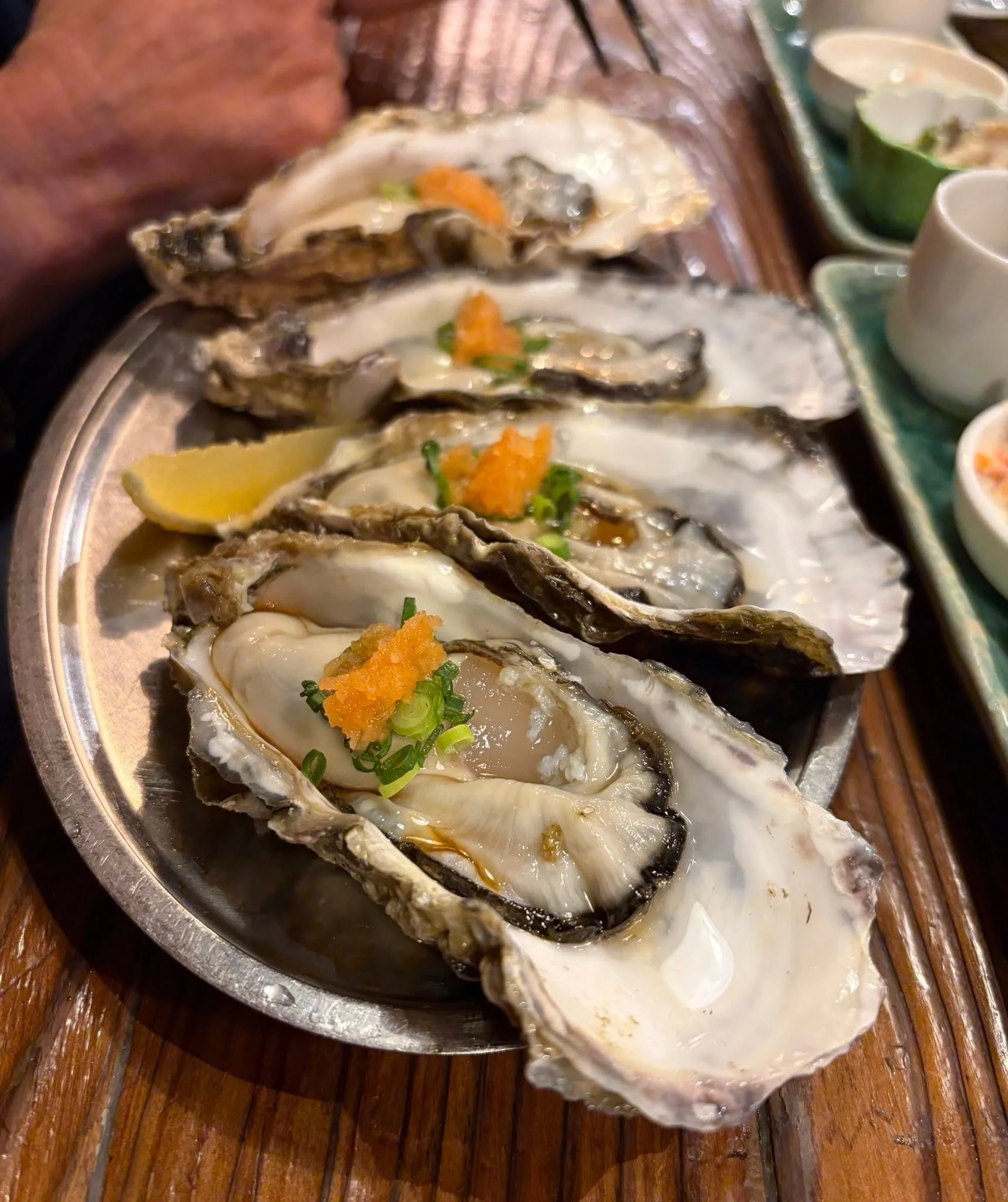
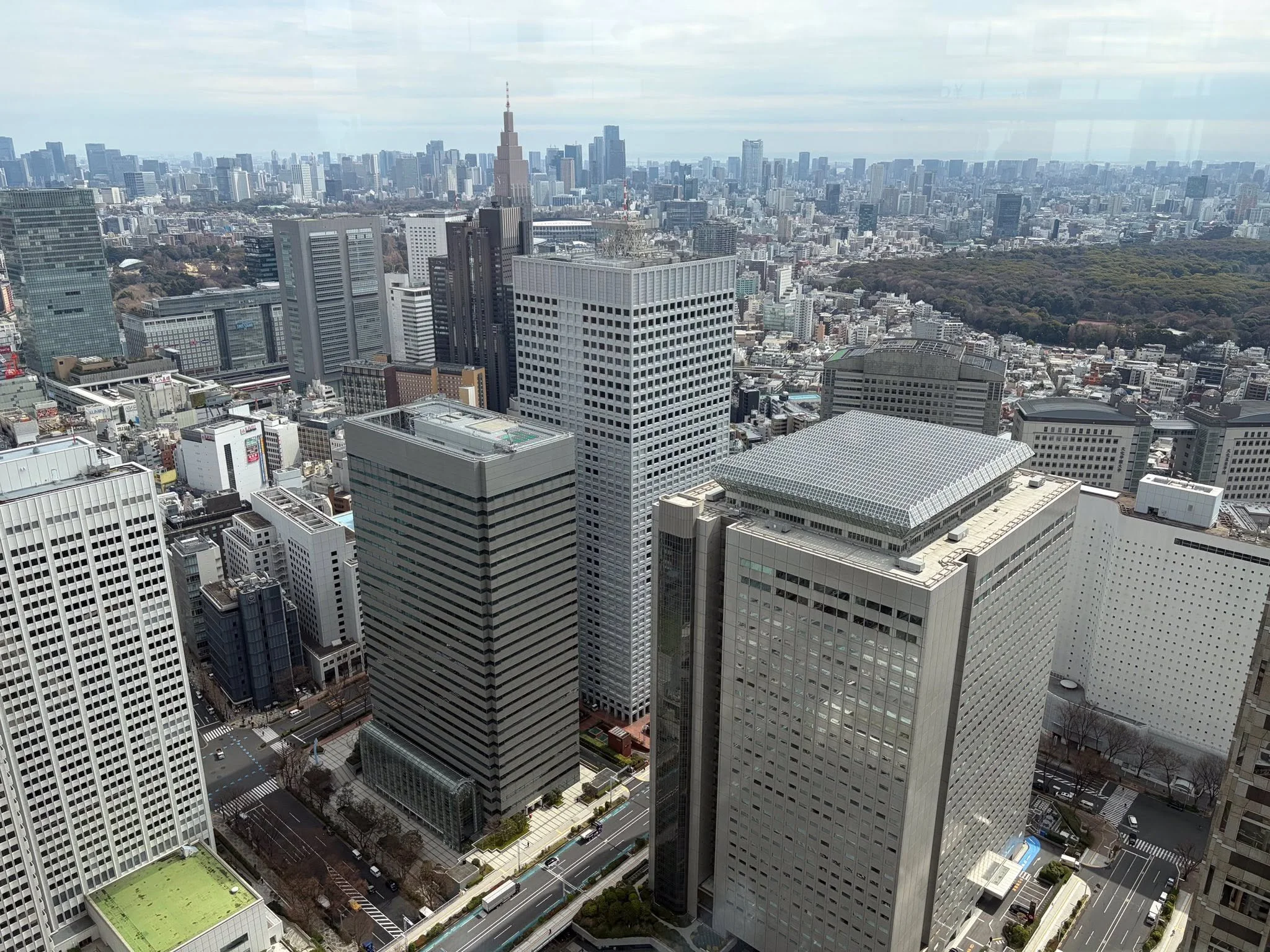
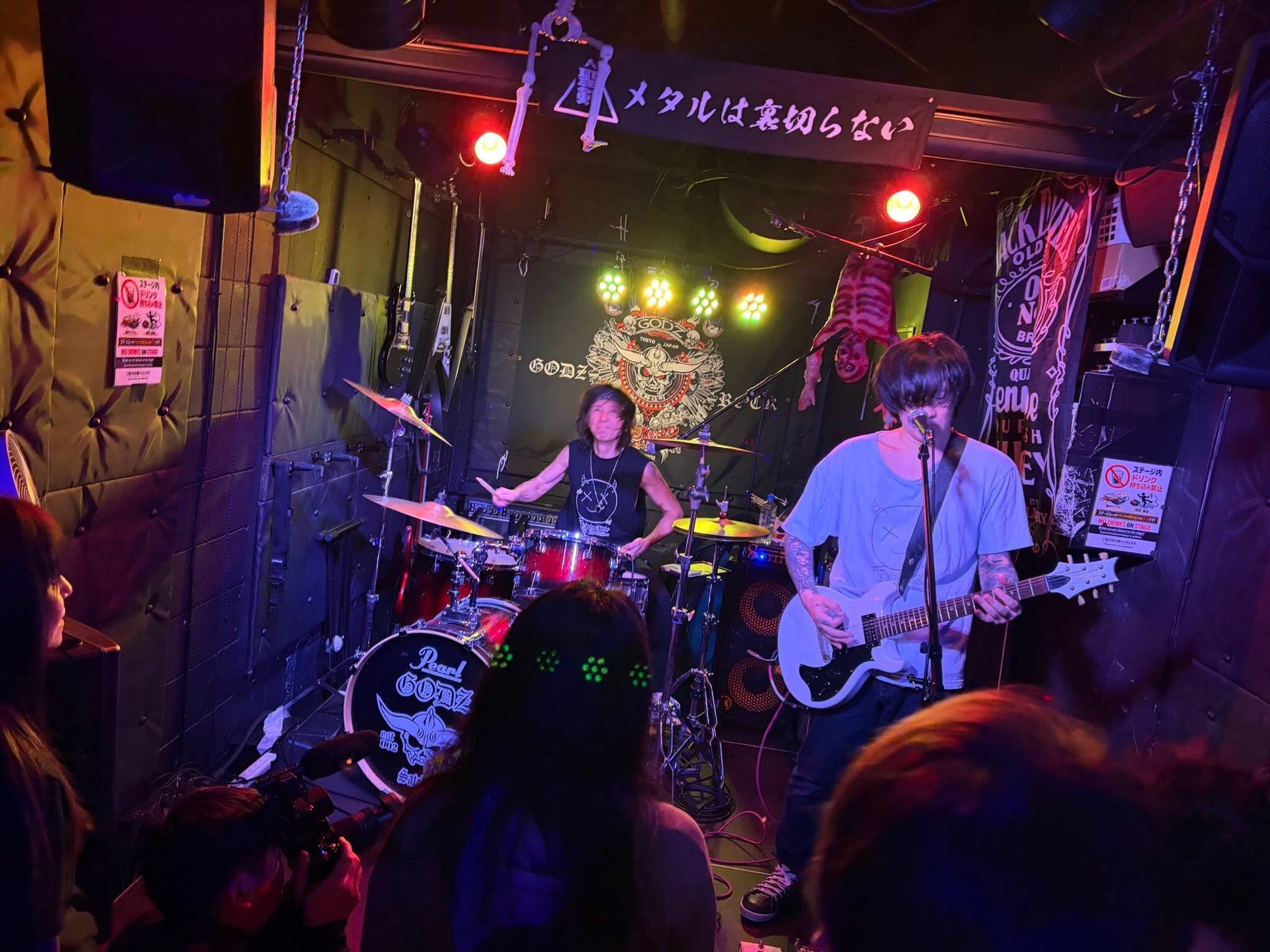
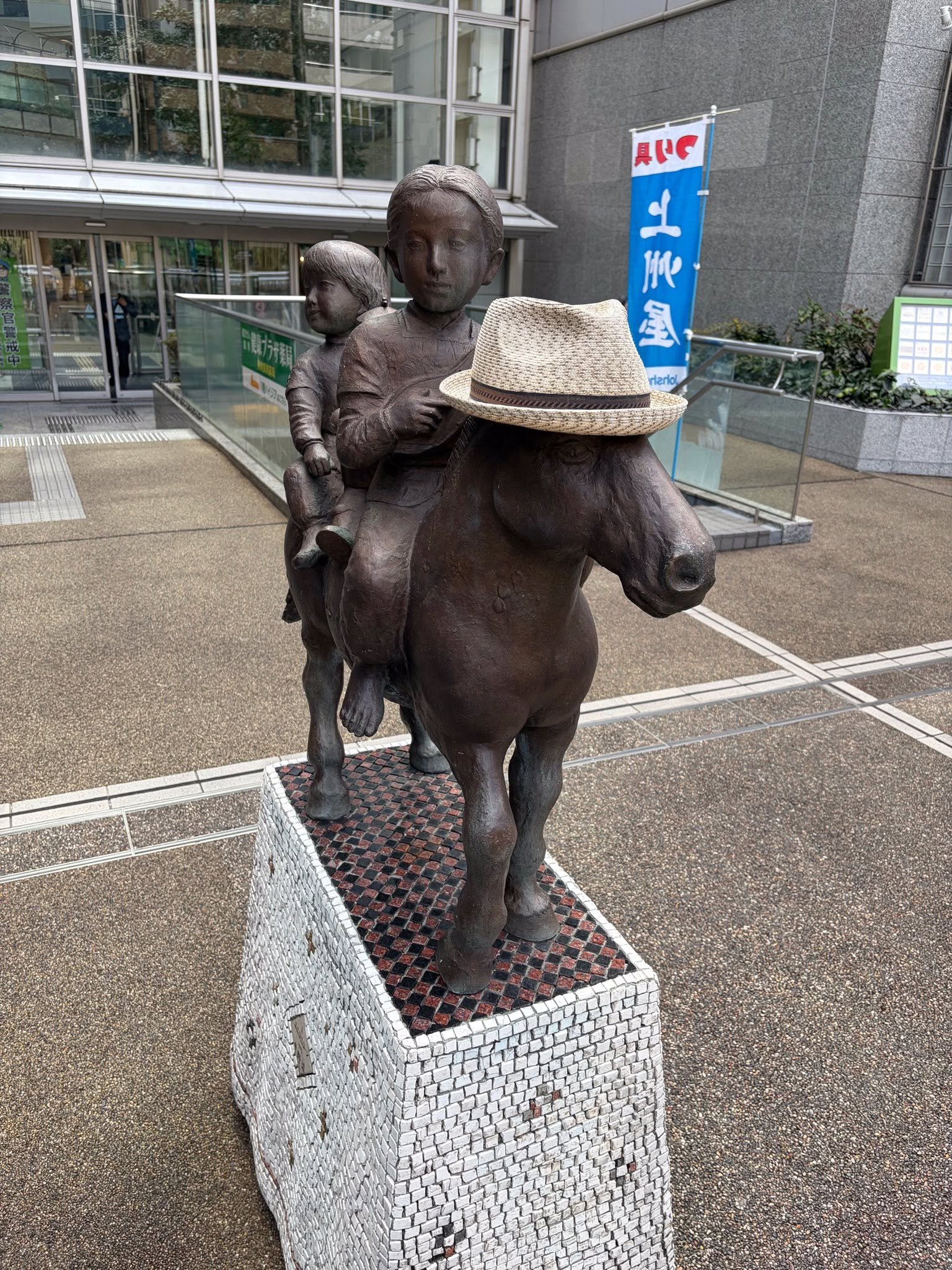
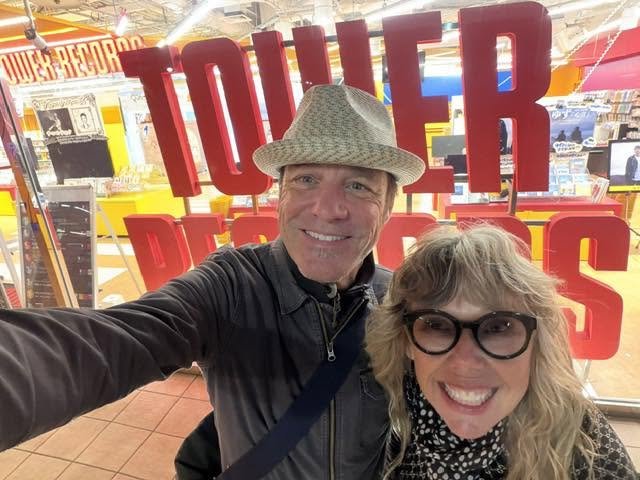
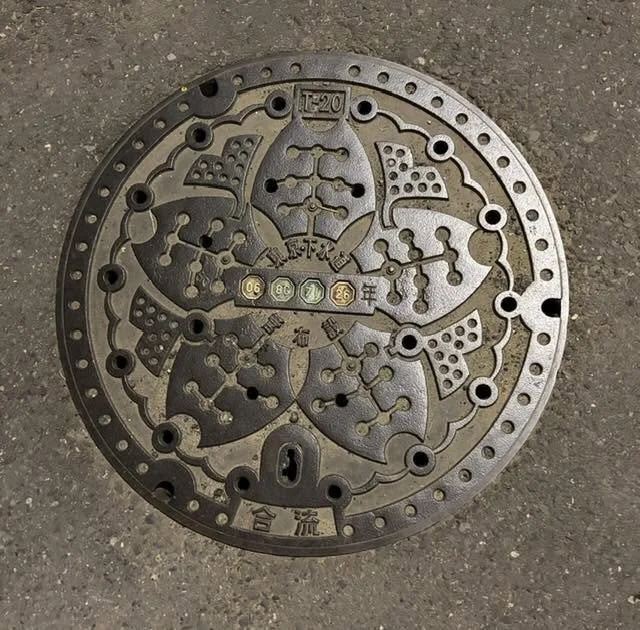
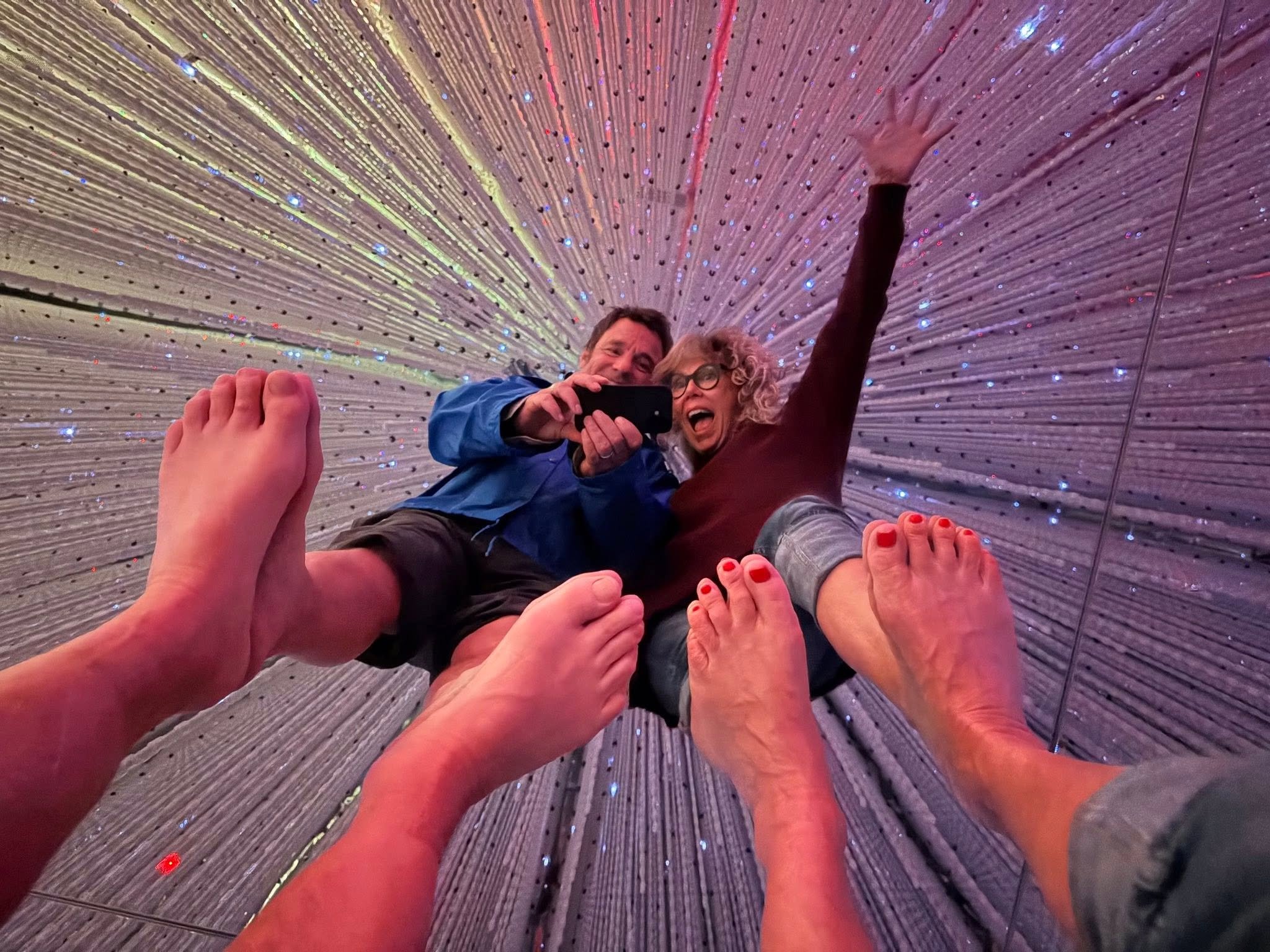
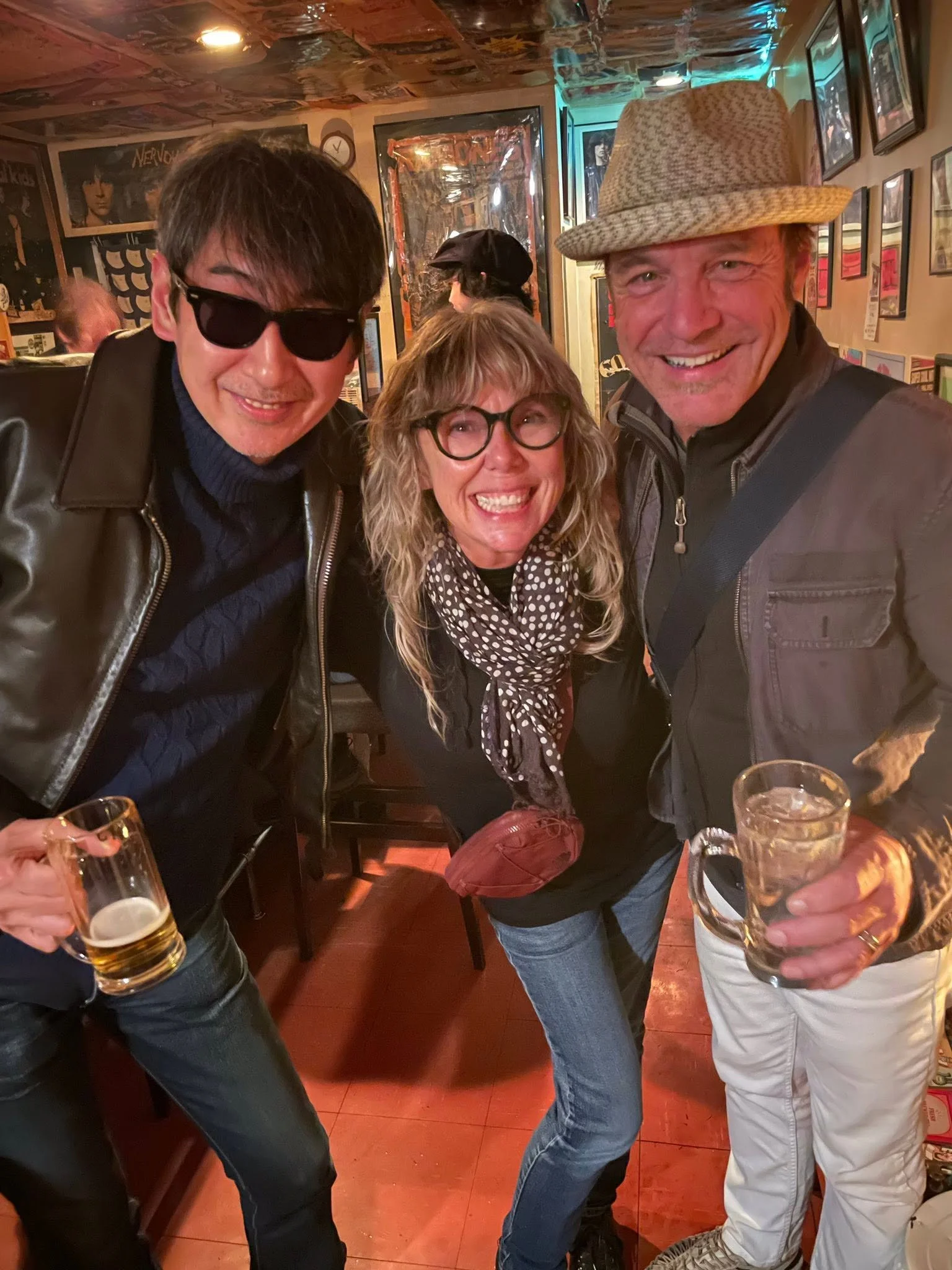
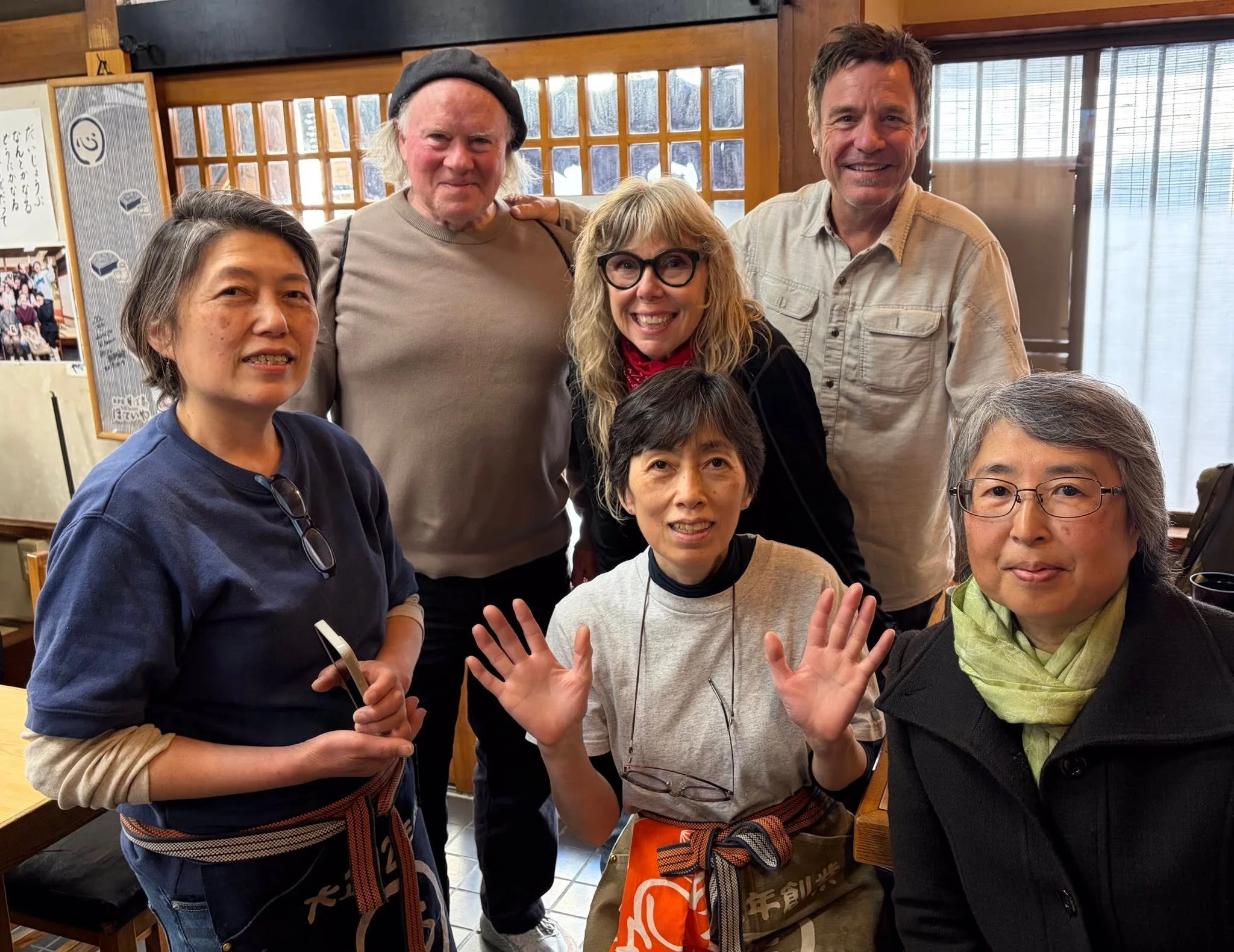
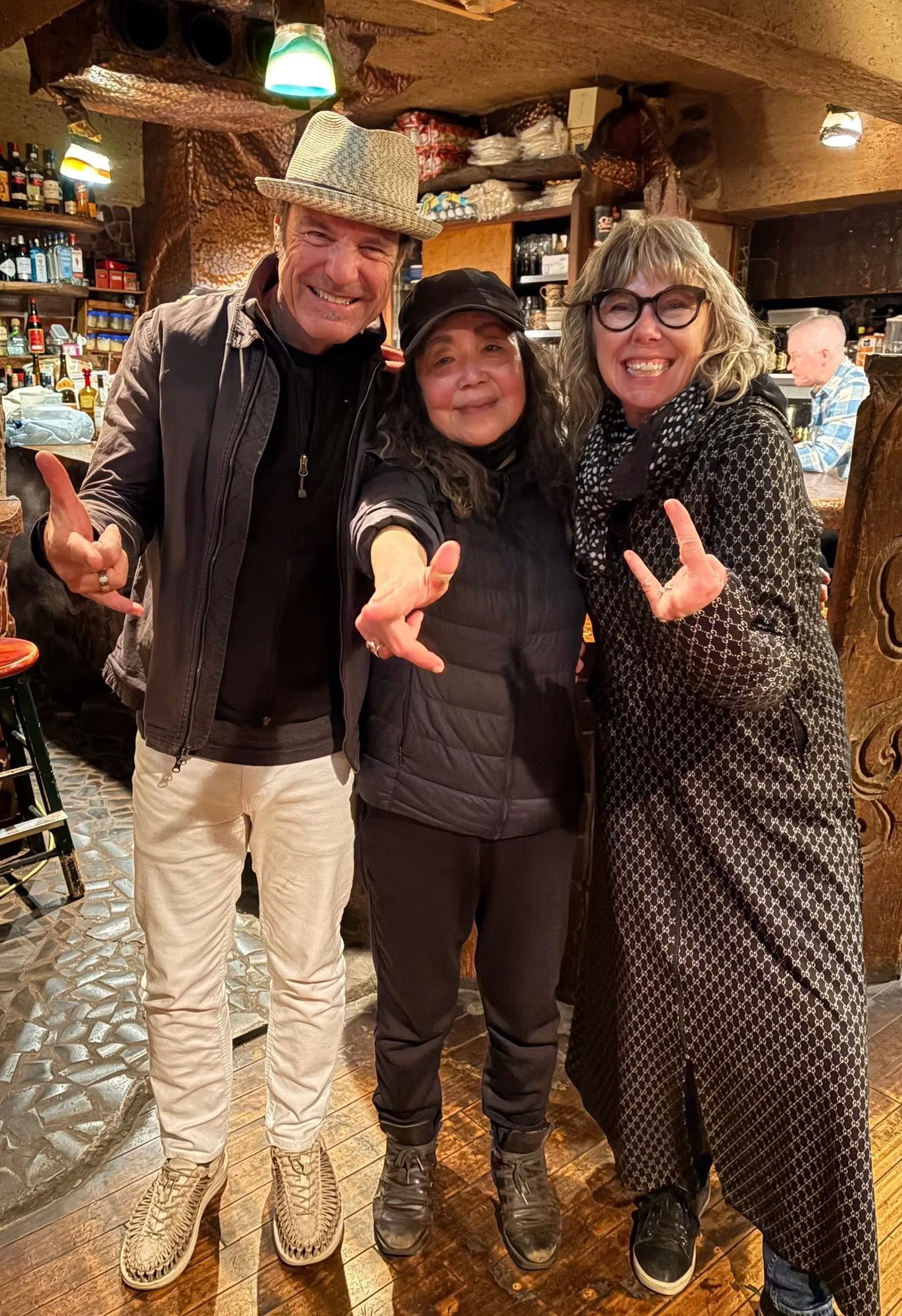
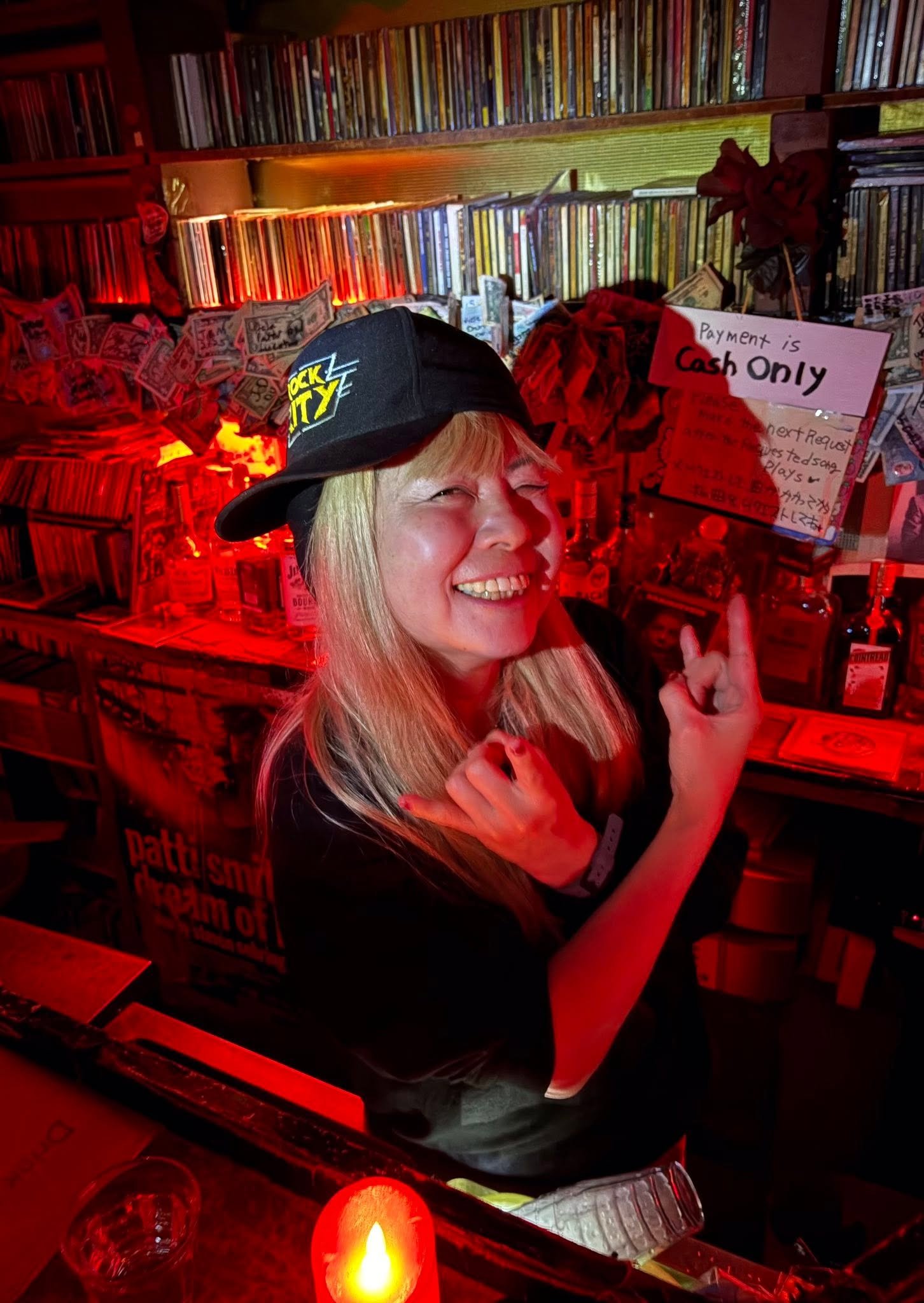
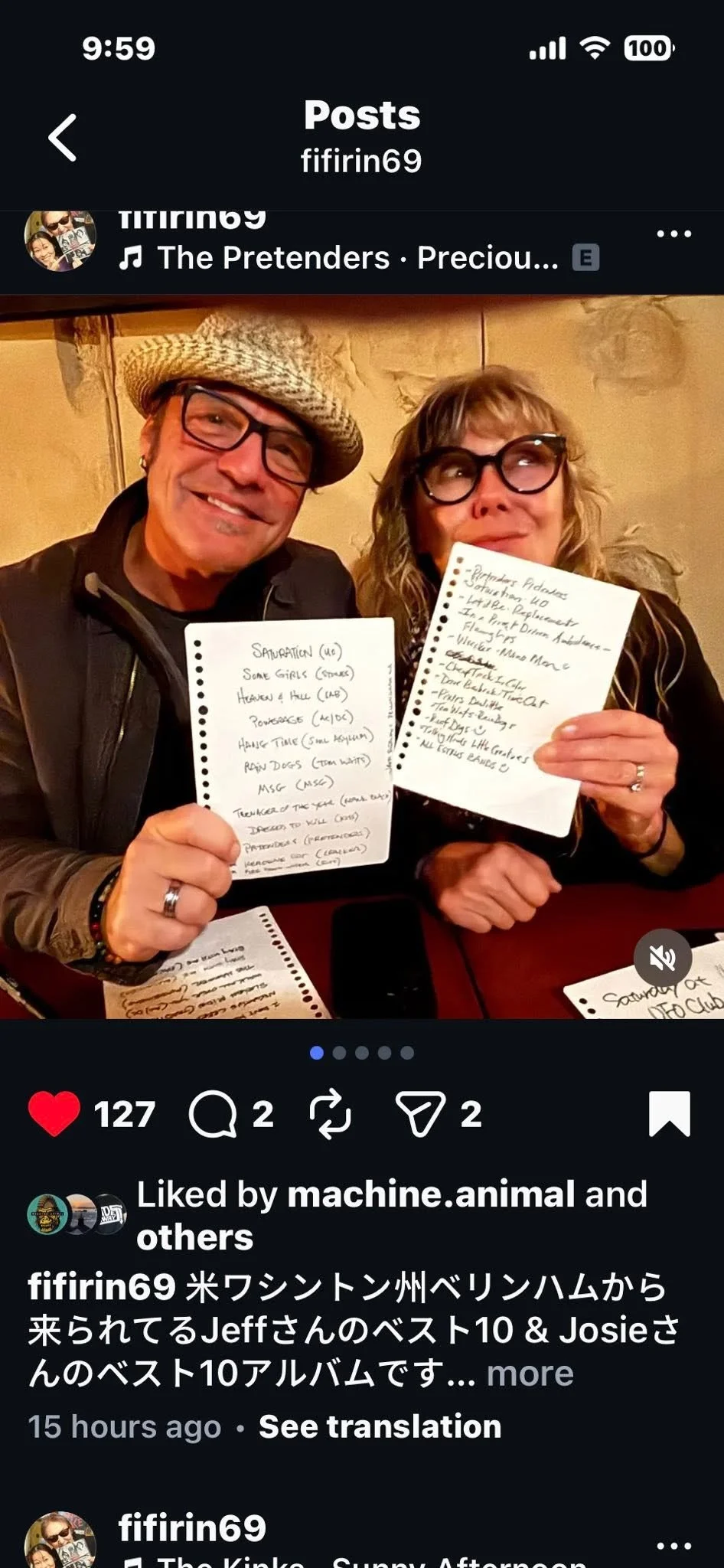
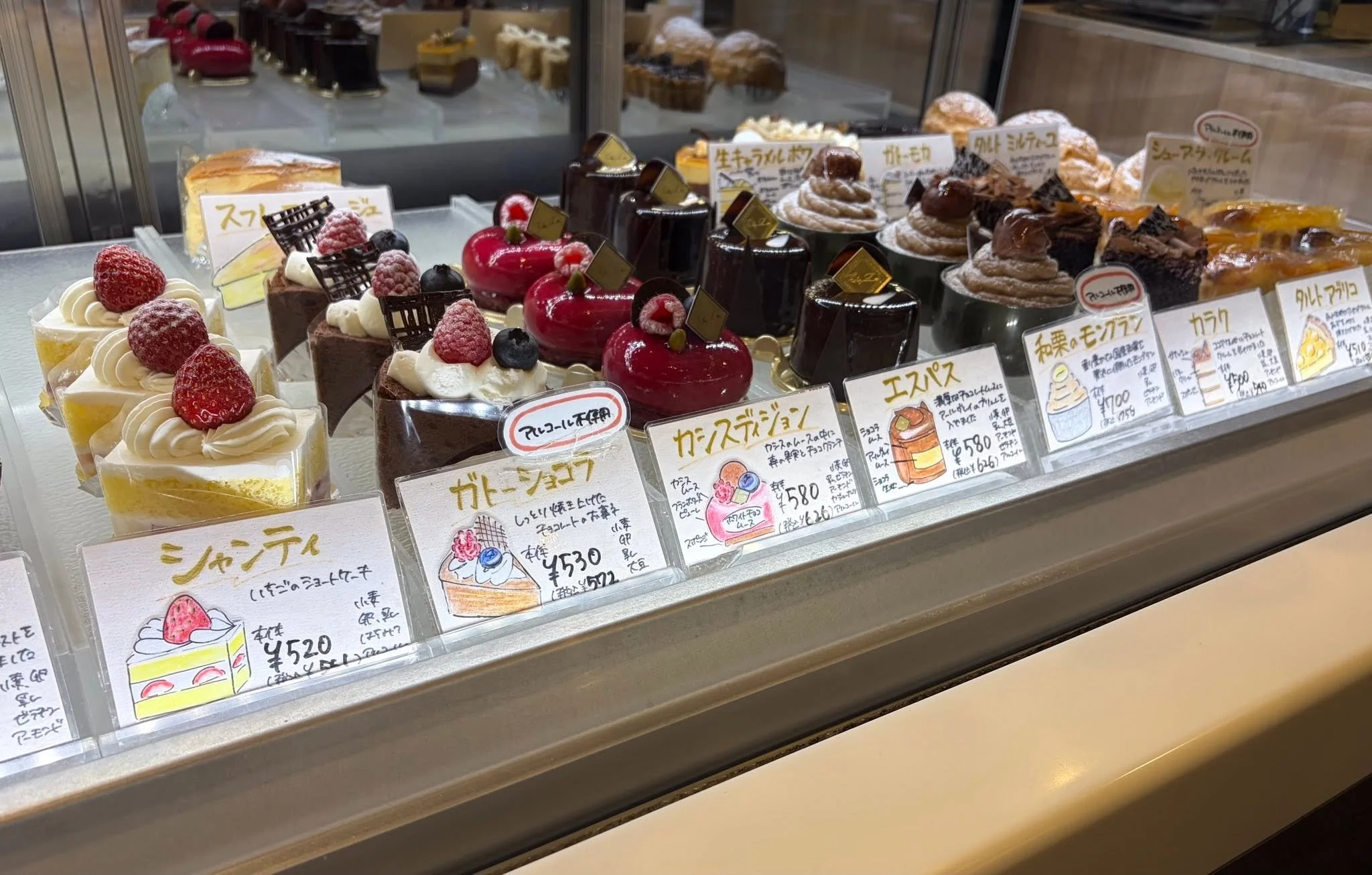
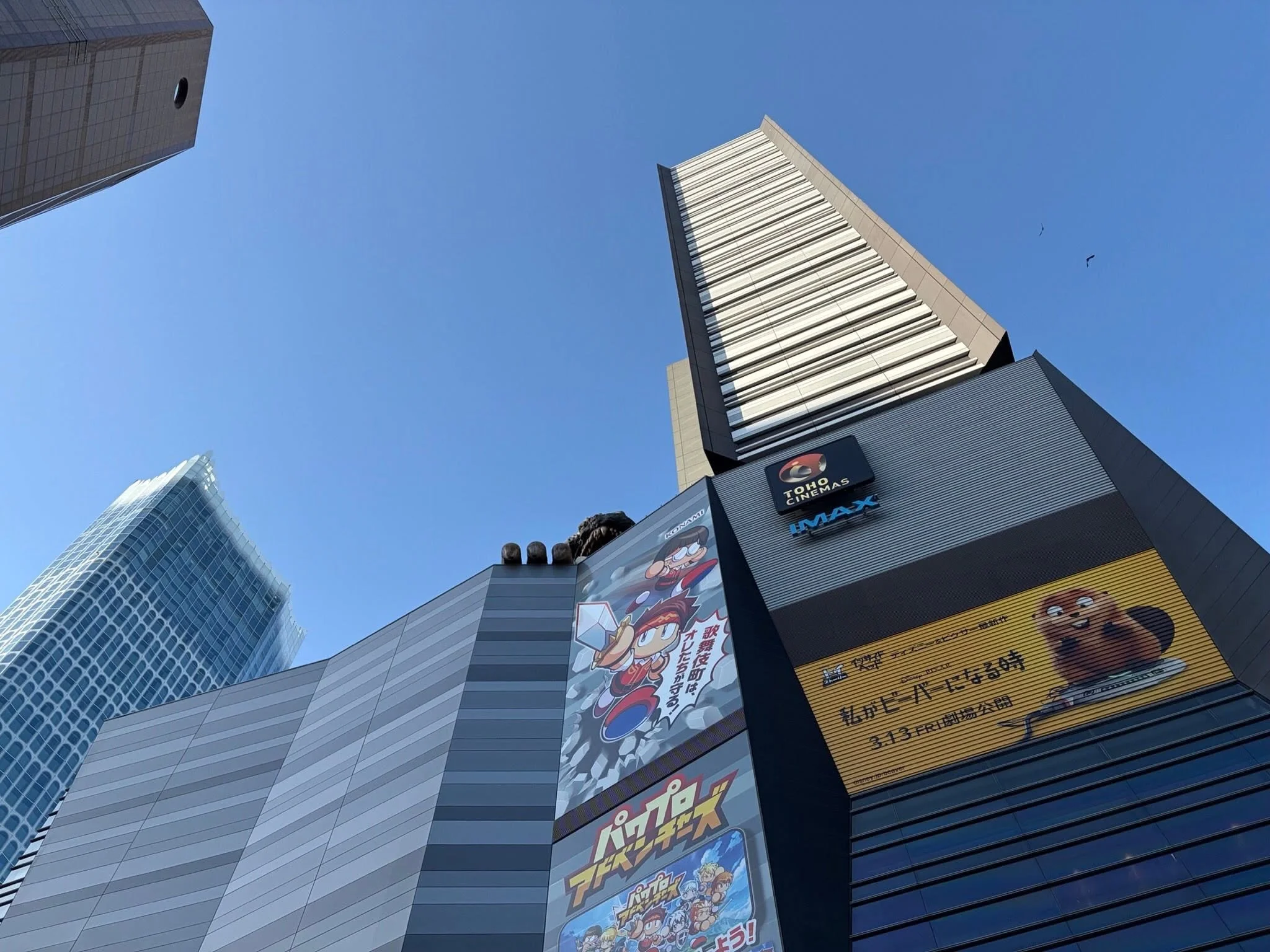
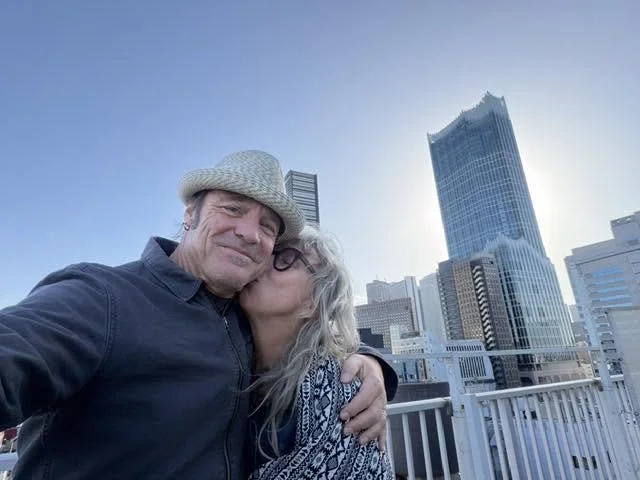
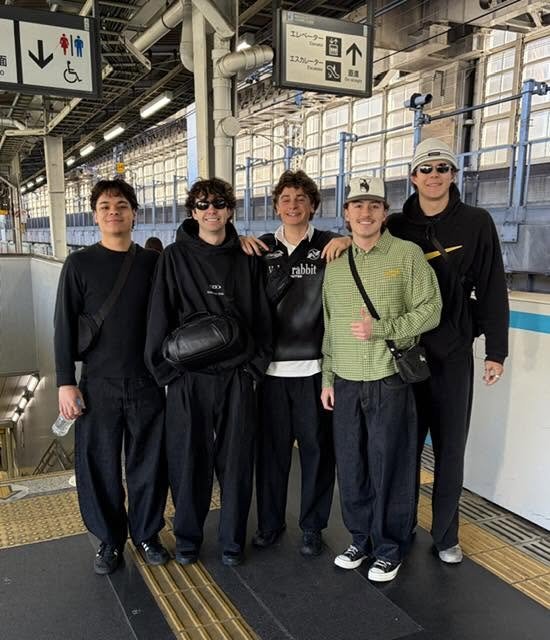
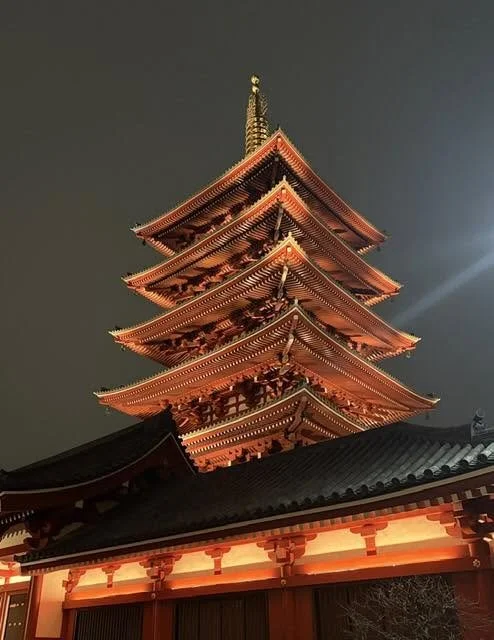
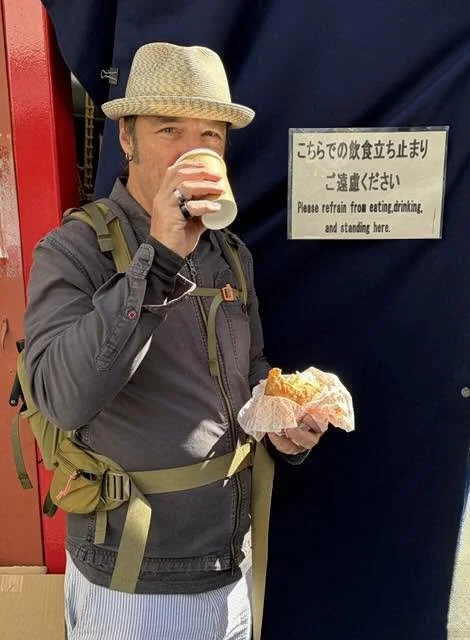
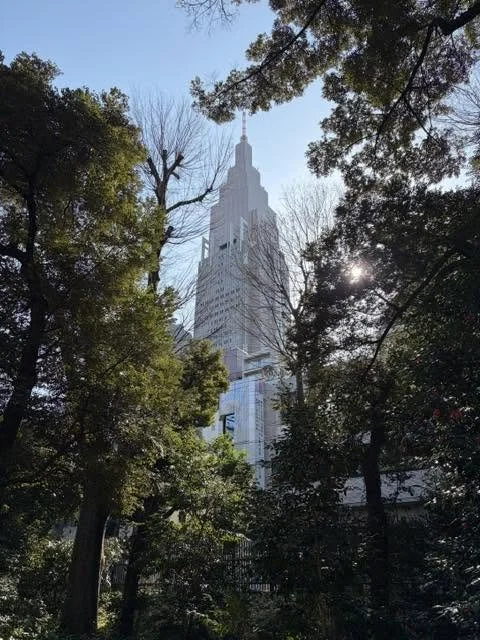
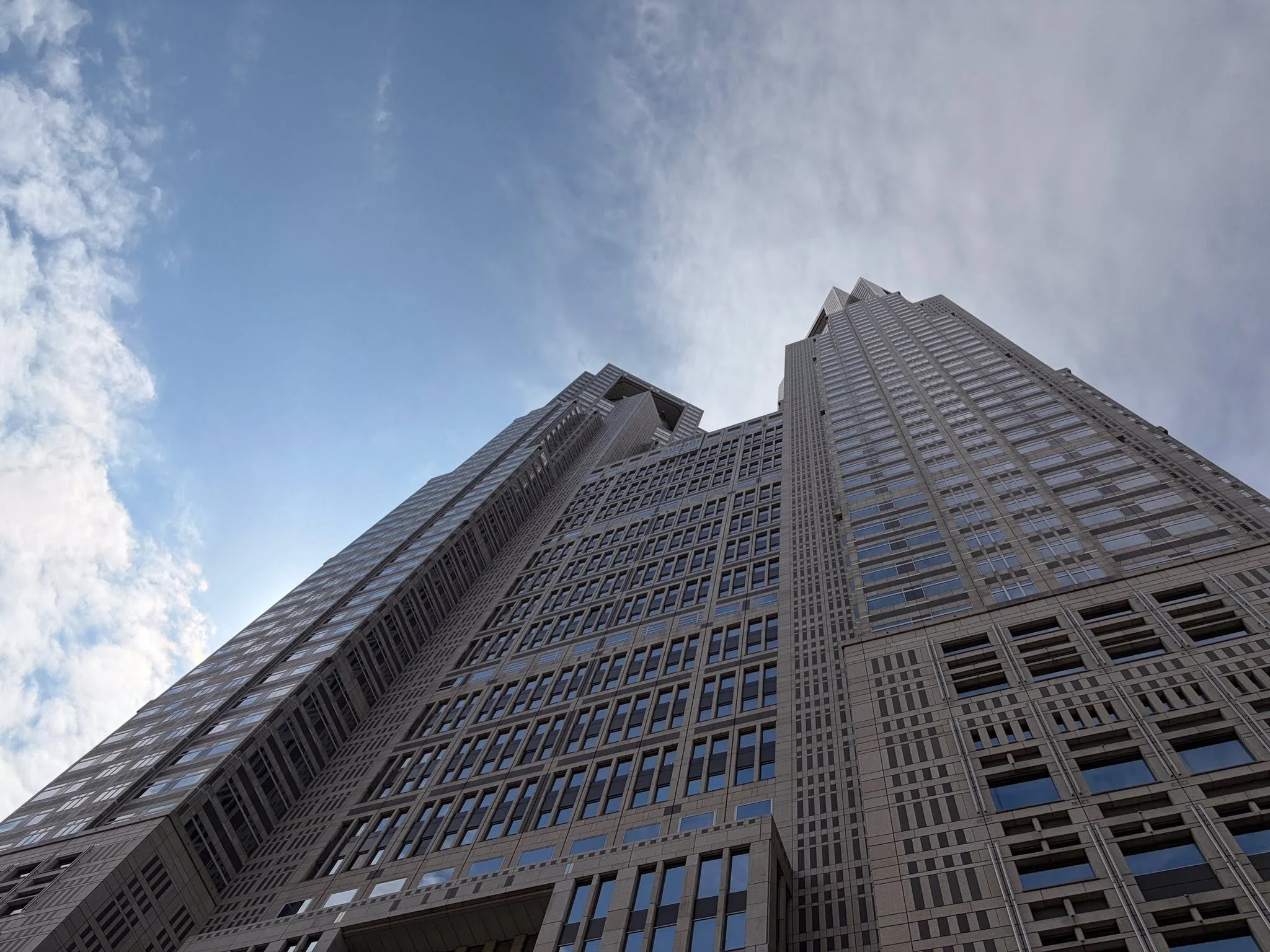

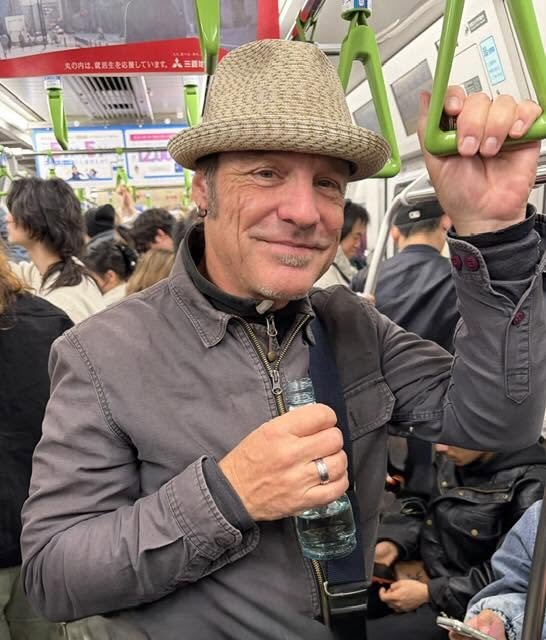

London 2019
“We’re from England!”
I woke up in the middle of the night in the guestroom of my own house with absolutely no idea where I was. Groping around the bed, I eventually felt my phone on the nightstand. Squinting, I was able to turn on the flashlight, illuminating the framed Austin Hotel photograph on the far wall. Only then did I remember I was home…
Heck, I’d only been gone 17 days.
Maybe that’s what Europe does to an American’s brain– erases it. I sighed heavy and set the phone down, falling back into the pillow. I was asleep again immediately.
To be fair, it had been a long day– starting with a subway ride to the Barcelona airport before a flight to JFK, another to SeaTac and finally the punishing drive home to Bellingham, arriving just after 2am. I tried to stay alert on the last 20 minutes of that drive by calculating what time my body really thought it was, but that only proved to make me sleepier. I eventually made it, and tiptoed into the guestroom so as not to wake Patti– only to startle awake two hours later completely disoriented.
It was a killer trip. Like a dream, really.
SeaTac-O’Hare-Heathrow seems like a long time ago now. Longer than 18 days, that’s for sure. SeaTac was like a morgue with airplanes at 11:30 Sunday night with not only no open bars but not even a Hudson News awake. Dropping in to Chicago at dawn was a different story– O’Hare felt like Mardi Gras by comparison, with people jostling through with open cocktails and goosing each other in that godawful accent, the brilliant Monday morning light pouring in through the huge east-facing windows. The SkyScraper Bar was like a neighborhood tavern, seating about a dozen. Solid spot for a 2-hour layover.
“Pretty decent night in London,” the pilot said in his pilot voice as we began our final descent into Heathrow. I wondered what that meant and found out 90 minutes later after clearing customs and catching the Heathrow Express to Paddington Station. Stepping onto Chilworth Street– my first time on European soil– I was greeted by a steady rain. “Pretty decent?” I asked aloud. “Huh…”
Didn’t matter. More authentic, if anything. I was excited to be on the ground finally, and anxious to explore Ye Olde Londontowne. It was midnight, though, and the real conquest was going to have to wait till the morning. What I could use at the moment, though, was a drink. The bars were dark, so I ducked into a small market.
“Is it possible to buy a bottle of wine?” I asked the shopkeep, not noticing any alcohol of any kind in the store.
I don’t really know exactly what he said, but I did get the gist that it was too late to buy takeaway booze and that even the rest of the pubs would be closed soon. It was my first introduction to British English and the fact that just because you technically speak the language, you’re not guaranteed to comprehend through dialect.
People around me started breaking in to a trot as I was nearing the Tube transfer to Royal Oak, and I instinctively began to run also. The last thing I needed on this first night was to be marooned after the Tube stopped running. I made it onto the empty train, though, and rode the few stops to Maida Hill, which would be my home base for the next five nights.
Nearing the AirB, I happened upon the open London Food & Wine. Couldn’t hurt to ask again, I thought, and stepped up into the small, bright shop. Like in the other one, I didn’t see any wine– but asked the Punjabi gentleman who seemed to be the boss whether it was possible to purchase a bottle.
“Wine, yes,” he said, “only for you!”
He nodded to his colleague behind the counter and colleague asked me ‘red or vite?’ I said ‘red’ and he said ‘eight euro.’ I handed him a tenner, he changed me, then raised the metal roll-up door behind the counter just high enough to pull out a bottle of Jacob’s Creek red blend. He motioned for me to open my bag and then slid the bottle in.
“What do you do?” asked the bootlegger boss.
I turned back to face him, amazed at my good fortune.
“I’m travelling,” I said.
“I can see that,” he answered, eyeing my pack. “But what do you do?”
“Oh,” I said, laughing. “I’m… a real estate agent.”
“Oh yes, very good,” he said. “Market here very down. Much worry over Brexit. Where you from?”
I was delighted to have the opportunity to deliver my rehearsed response to this question so early in my trip. Little did I know I wouldn’t be asked again for a week, and never again after that. I looked left, then right, lowered my chin and whispered conspiratorially, ‘America.’
And that was it. He wasn’t impressed one way or the other that I was from the U.S. He didn’t make a grossed-out face, or roll his eyes or say anything about Trump. He didn’t pull an American flag out of his sleeve and wave it or light a string of firecrackers. He couldn’t care one way or the other– he was just making conversation.
“My name is Gulu,” he said instead. “G-U-L-U.”
I told him I was very charmed to meet him (I was) and asked if I could give him my business card, since he had asked about my profession. He accepted it and drew a six of clubs. He seemed pleased.
I found the apartment, opened the wine, drank half a glass, and fell hard asleep.
Every day is garbage day in London. But Tuesday is the morning they drag a dumpster the approximate size of Westminster Abbey itself across the ancient cobblestone courtyard behind my Maida Hill flat at 7am. It was a sound and volume I had never heard anything like. The beeping truck accepted the contents and made its way down the lane– but by then I was awake, after a mere four hours’ sleep. I knew I wouldn’t be able to fall back. I closed my eyes and prepared to rise. Then I woke up at noon.
Oh well, I’d needed the rest. I hadn’t slept since Saturday night in Bellingham, because I don’t sleep on airplanes. I hadn’t showered since Bellingham, either, or eaten since Seattle. So I showered and made myself a cup of tea to start my first day in the UK. I turned on the telly (that’s what they call television in England!) and opened the London Times that I’d bought from Gulu. I tried the crossword but couldn’t get more than a couple of answers. Cultural bias up the ass…
Teeth brushed and a pocket full of pounds, I descended the stairs to the street. I looked down the street, then up before turning down and then left at the corner. I had no plan, and every intention of getting as lost as possible today. Edie would be arriving tomorrow afternoon from Croatia, but today was all mine. I had no agenda whatsoever.
Eventually I struggled through ordering a cup of coffee in Bayswater and, after skirting Hyde Park, some fish ‘n’ chips in Mayfair. A pint in Paddington where there was actually Cricket on the telly. It rained lightly through the mid-afternoon, but by the time I’d looped round back to Little Venice, the setting sun was peeking out and the water on the canal was sparkling, sort of. It was quite a lovely scene.
After walking six hours, I was close enough to the flat to pop in for a glass of Gulu and a few more layers for my evening adventure. I got on the Tube a few stops to Soho, where I tried running down a bar called CroBar. Never did find the damned place. I wandered a few more hours, eventually grabbing another basket of fried fish and potatoes, not terribly much better than the first.
If it sounds like a fairly dull and uneventful first day in Europe, hardly worth writing down let alone reading through, that’s because it was. I had held high hopes for this day, unique in that I’d be solo and free to go where my whims took me. Unfortunately, my whims weren’t very skilled at navigating Google Maps and were generally unlucky when guessing in which direction to turn. Inevitably when emerging from a tube station, I would turn left only to discover later that the cool stuff I’d have hoped to stumble upon was mere meters to the right. This left/right guessing game would in fact be a theme for the entire trip.
So after more than 38,000 steps, I had little to show for my first day in London. Luckily every single other day of the entire trip was wikked awesome…
I didn’t sleep nearly as well that second night, but still rose optimistic about day 2. I’d be seeing Edie in a matter of hours after two months apart. She’d been having her own bitchin’ adventure: two weeks in Ireland, two in Northern Italy during Carnival, three on the Island of Sardinia working on a farm, and a week in Croatia. I wondered whether I’d even recognize my little girl after all her worldly experiences.
As I waited in the cavernous Victoria Station for Edie’s arrival, a lone busker worked over a menu of melancholy classics creating a perfectly bittersweet traveling soundtrack. “Stand by Me” on any day brings a tear to my eye, but on this particular occasion, in a strange land, preparing to meet my wandering daughter, maybe still a little sleep-deprived/jetlagged– the lone tear brought along its mates and I had a pretty decent little mid-day cry, standing alone in a bustling London train station, travelers whizzzing past me dragging luggage and looking down at their phones. When dude got to the call on me brother breakdown in “Lean on Me” I heard myself clapping in the right spot and I enjoyed a discrete giggle only an inside joke can bring.
Eventually Edie & found each other outside the station, and when I saw her I started running– almost getting creamed by a red double-decker. “The red ones don’t stop!” I shouted as I finally reacher her, and we shared a series of deep hugs with tears on both sides. She looked radiant– maybe a little sunburnt. Her voice was hoarse and she actually seemed taller. Her shoes were trashed. She’d been on the road…
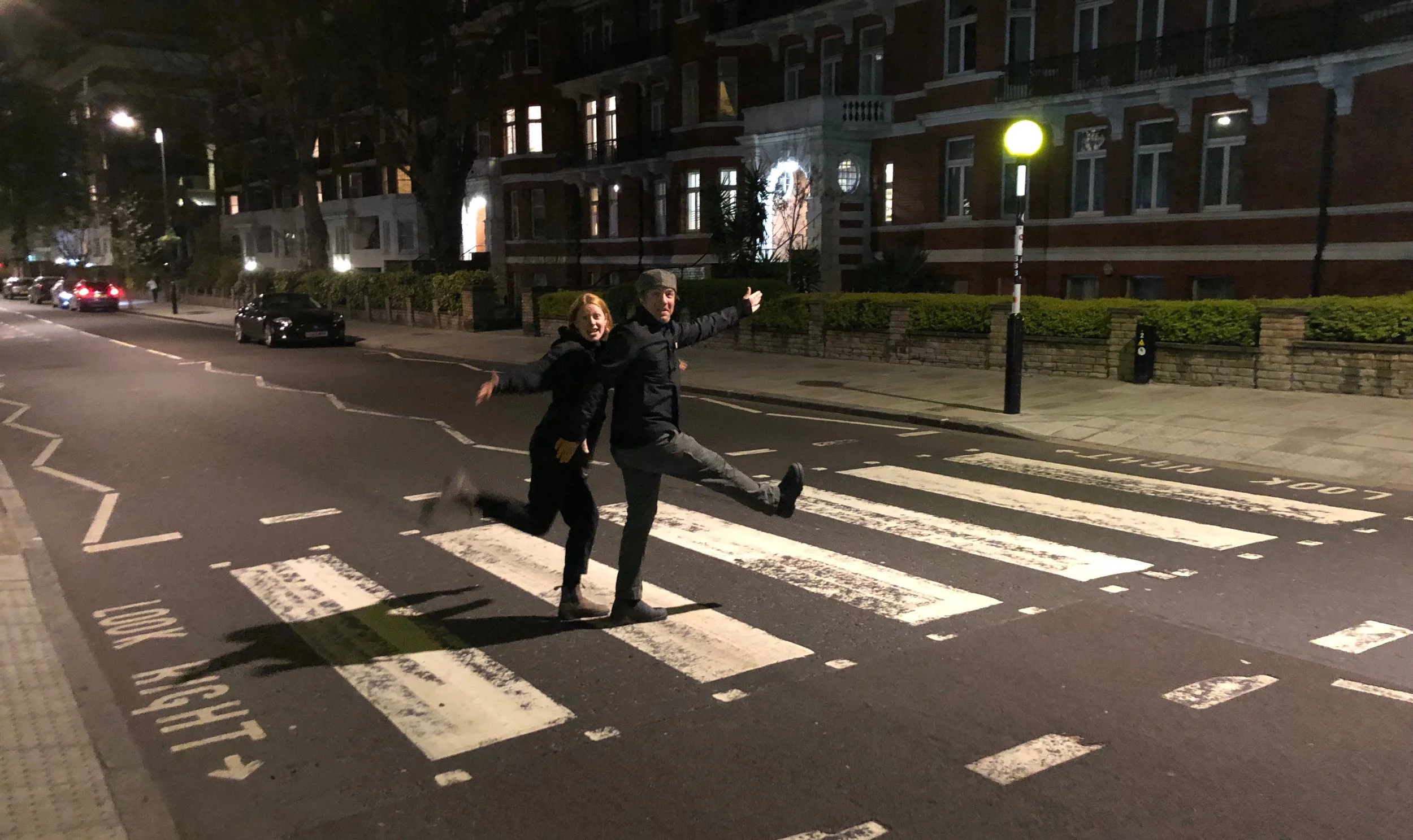
Abbey Road
I shouldered her pack and we wandered toward Chelsea, starting up a lively, tangential conversation that did not let up until we parted in Barcelona two weeks later. On this first afternoon, though, we both just wanted something to eat, maybe a glass. A number of places were closed for that British siesta between lunch and dinner, so we eventually just slipped into one of London’s one beelion pubs and had a perfectly serviceable meal that fully took backseat to our animated discourse. After some browsing, we Tubed back to headquarters where I introduced Edie to her couch. She showered and though she was tired, I convinced her to rally for one more outing. It was a pretty long walk to Abbey Road, but totally worth it. We had the most famous crosswalk in history all to ourselves.
On the way back to the flat, we picked up some supplies and saw a fox. A real honest-to-goodness urban fox. Who’d have thought? I did not know London foxes were a thing.
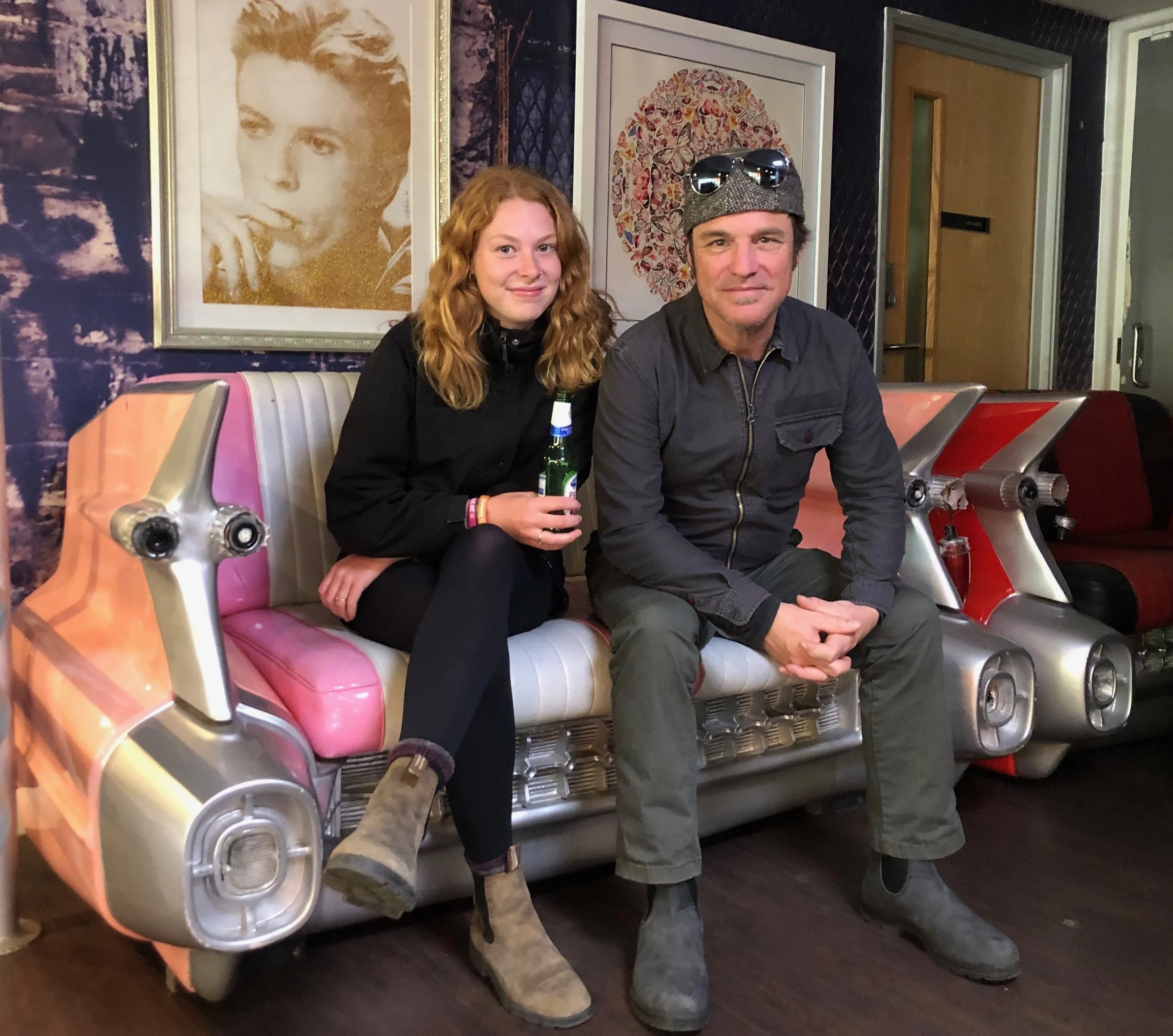
Portobello Road
Quality sleep for both of us that night, and we got a decent start the next morning toward Portobello Road. Saturday is the big day on the Road, of course, but there are ample vintage shops on any old Thursday morning, plus the mind-bending Red Lion antique mall. We had a quaint brunch experience and eventually grabbed the front top seat on a double-decker bus to the British Museum in Bloomsbury. There was some cool scale historical art in there– huge, noseless Greek sculptures and Egyptian sarcophagus’ plus the Rosetta Stone and an interesting exhibit of ancient money.
We were pretty thirsty after that hibrow shit, so we walked up to King’s Cross in search of a refresco. The pubs in this neighborhood were overflowing with white-collar Londoners just getting off work. It was a completely mad scene, with punters (that’s what they call people drinking in a pub in England!) spilling into the streets– cigarette in one hand, pint in the other. Pub after pub, block after block. We’d been on our feet most of the day and at this point wanted to sit a spell. So we settled on a Mexican place which was also super busy but that did have two seats at the corner of the bar. Absolutely perfect.
Londoners:
smoke
drink beer
when not drinking beer generally prefer gin to vodka and scotch to bourbon
wear black
… except the businessmen who wear high ‘n’ tight navy blue suits with brown shoes
prefer cricket to baseball of course, but when supporting baseball they prefer the Red Sox to the Yankees
really do say “cheers, mate” at every conceivable opportunity and sometimes even when it’s not seemingly appropriate
don’t generally smile at strangers
Of course the main thing in London is not getting hit by a car. It seems simple to remind oneself ‘they drive on the other side of the street’ but until you’ve walked 23 miles in two days, you don’t realize how deep your American bias really is and that it absolutely does endanger you as a pedestrian. I’m a jaywalker. I generally cross any street at any point if there’s not a car coming. But in England, your instincts can deceive you– especially if you’re jetlagged or maybe a little drunk. The streets are narrow and heavily parked and everyone drives a thousand KpH. I am actually very surprised more foreigners aren’t hit and dragged by tiny British cars more frequently. At first I thought it was kind of silly that painted on the ground at each intersection were the words LOOK RIGHT or LOOK LEFT. But, you know– that stuff did actually turn out to be useful…
Lots of Indian food in Mayfair, so we headed back down there after our Modello’s for some dinner. It was alright. London has not been traditionally known for its food, though it seems that’s changing. It is known for its healthy Indian population of course, and the curry houses that come with. There are tons of excellent Indian restaurants in London, apparently– we just didn’t choose one of them this night. We didn’t eat great in London in general, to be honest. The best meal I had was a bowl of Bulgogi from a street vendor in Soho on my way to Victoria Station to pick up Edie. Walking around that neighborhood on a sunny weekday morning, the delivery trucks double-parked and merchants jockeying for position was a very cool experience. Plus Bulgogi!
Edie pumping down the volume in Brixton
Almost any community looks diverse (less white) when compared with Bellingham. Most of the people vacuuming SeaTac Airport after hours on Sunday night were brown. Likewise the mix in Chicago was deeper than what I am accustomed to at home. And even the most-touristy neighborhoods in Northwest London feature startling diversity, not even including Chinatown or Golders Green.
But then we went to Brixton.
Emerging from the tube station stairs, it was if if we’d travelled to another country altogether. Though more than 100 languages are commonly spoken in Brixton, it is definitely the Caribbean capitol of London, with lots of reggae, lots of dreadlock tams, and lots of da kine. We had a delicious brunch at a jerk joint and wandered through Brixton Village and Market Row, a rich omni-cultural outdoor marketplace not seemingly expecting many tourists. Brixton Village featured small eateries, merchants of every kind, and a range of food markets including fruit stands, spice carts and live butchers selling still-dripping chickens. The browsers were shopping for dinner here, not souvenirs.
But we couldn’t hang around Brixton all day. We had to beat it back north of the river and check out the MEGA motorcycle rally in the shadow of Westminster Abbey!
To be fair, we didn’t realize that’s what we were walking in to. But clearing the doors of that Westminster Station, with Big Ben looming just outside, we were overwhelmed by the roar of motorcycles echoing through the corridor. Parliament was expected to again extend the Brexit decision that very day, and this rally– best we could tell– was a Veterans-for-Brexit motorcycle parade, with literally thousands of two-wheeled vehicles of every kind, from 50cc Italian scooters to Japanese crotch rockets to American Harleys. They were all cruising across the River Thames from the south, revving up their engines past Ben, curling around Abbey and through St. James’s Park. The route was lined with flag-wavers who looked vaguely familiar. Elizabeth Tower, which houses Big Ben, was entirely covered in scaffolding, undergoing four years of restoration work, and we weren’t going to wait in-queue (that’s what they call ‘waiting in line’ in England!) to go inside Westminster Abbey. So we decided to flee the red hat scene and make it down to the Ecuadorian Embassy to see if Julian Assange was home. We thought he was always home– that was exactly the point! But as it turned out, we’d just missed him…
If Londoners were very concerned about Brexit, it wasn’t obvious. Of course, the longest conversation I had during the whole visit was the one with Gulu after I’d been in-town for 45 minutes, and he did actually mention it. So maybe I just didn’t go deep enough with people. Most bartenders didn’t broach the subject in the course of pouring me a drink, and the red bus drivers were generally pretty busy driving the big red busses. I really had hoped to get into some conversations while in London, but the truth is that unless you strike one up, you’re not likely to get there. I’m generally a pretty good at chatting up strangers, but London seemed indifferent unless I really wanted to be that guy, which I didn’t.
London is cool. You certainly can’t do everything in four days. But the Tube works so great– it really helps to make a big city smaller. The weather wasn’t bad for us once Edie got there, and actually the lilacs and cherry blossoms on-display were the nicest blooms we’d see the whole trip. Crowds weren’t bad, and with the exception of the larger-profile tourist attractions, we didn’t wait in a queue the whole time. And other than a handfull of peace-keepers at the bike rally (real live Bobbies!) there was almost no police presence, which was quite refreshing.
I don’t know where London keeps its homeless, but they were not visible in the neighborhoods we were in. We didn’t go everywhere, of course, and we were certainly in some touristy locations– though not exclusively. But London’s core is a mix of commercial and residential uses. I don’t know if there is such a thing as ‘zoning.’ There are no vast commercial blocks without residences, and likewise there are no dense residential areas without commercial. It’s all very finely integrated. You can’t be more than a block from a corner market or a pub– it’s impossible, at least in the core. We saw a tent here and there and there was some old-school begging (different from American panhandling) but not much. In a want/want-not capitalist economy similar to what we have in the U.S., there’s got to be some people outdoors. But they’re not hanging around downtown…
On Saturday morning, we packed up and caught the Tube to St. Pancras Station to make our chunnel train to Paris. In the movies, it seems like Americans always board trains in Europe at the last minute, running down a platform and jumping onto a moving coach– blowing kisses to some weeping Euro Strange, waving from the platform. In reality it’s as gummy and chaotic as any American airport and we missed our train by a mile. No matter– there was another one 90 minutes later for a 30-Euro penalty. Paris has been there a long time. It will wait for us another 90 minutes. See you there…
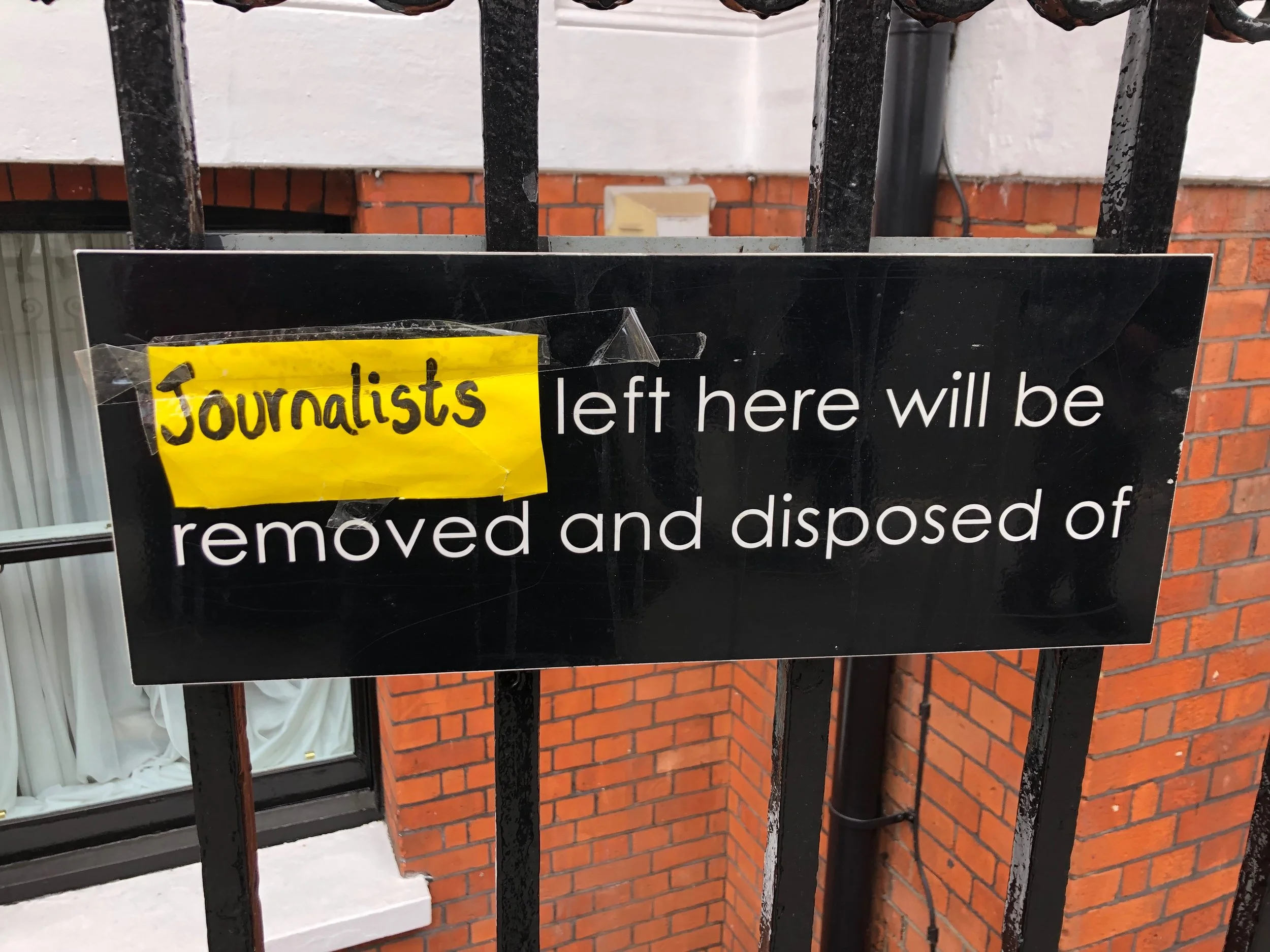
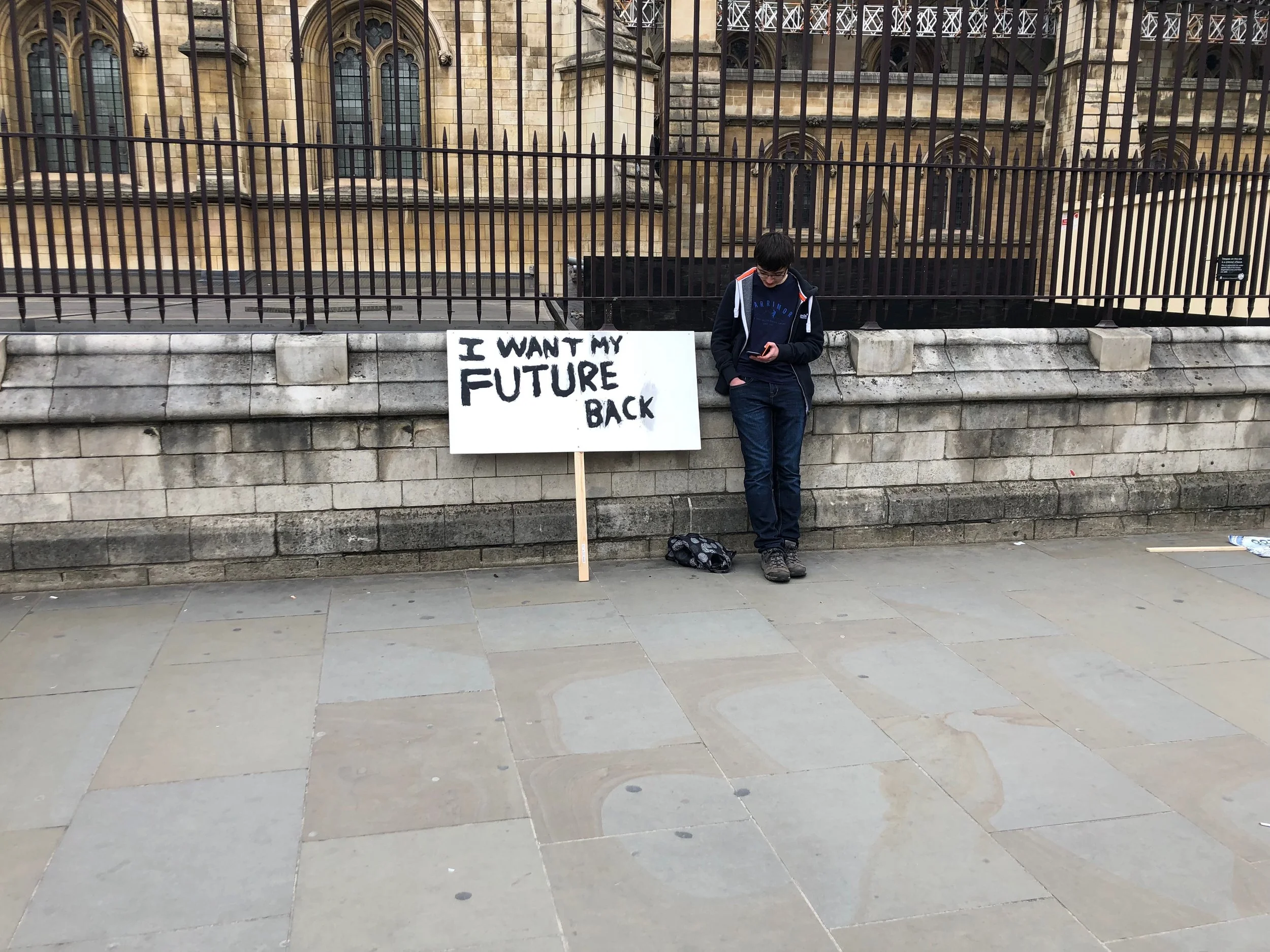
France 2019
Of course I’m French, why do you think I have this outrageous accent?!
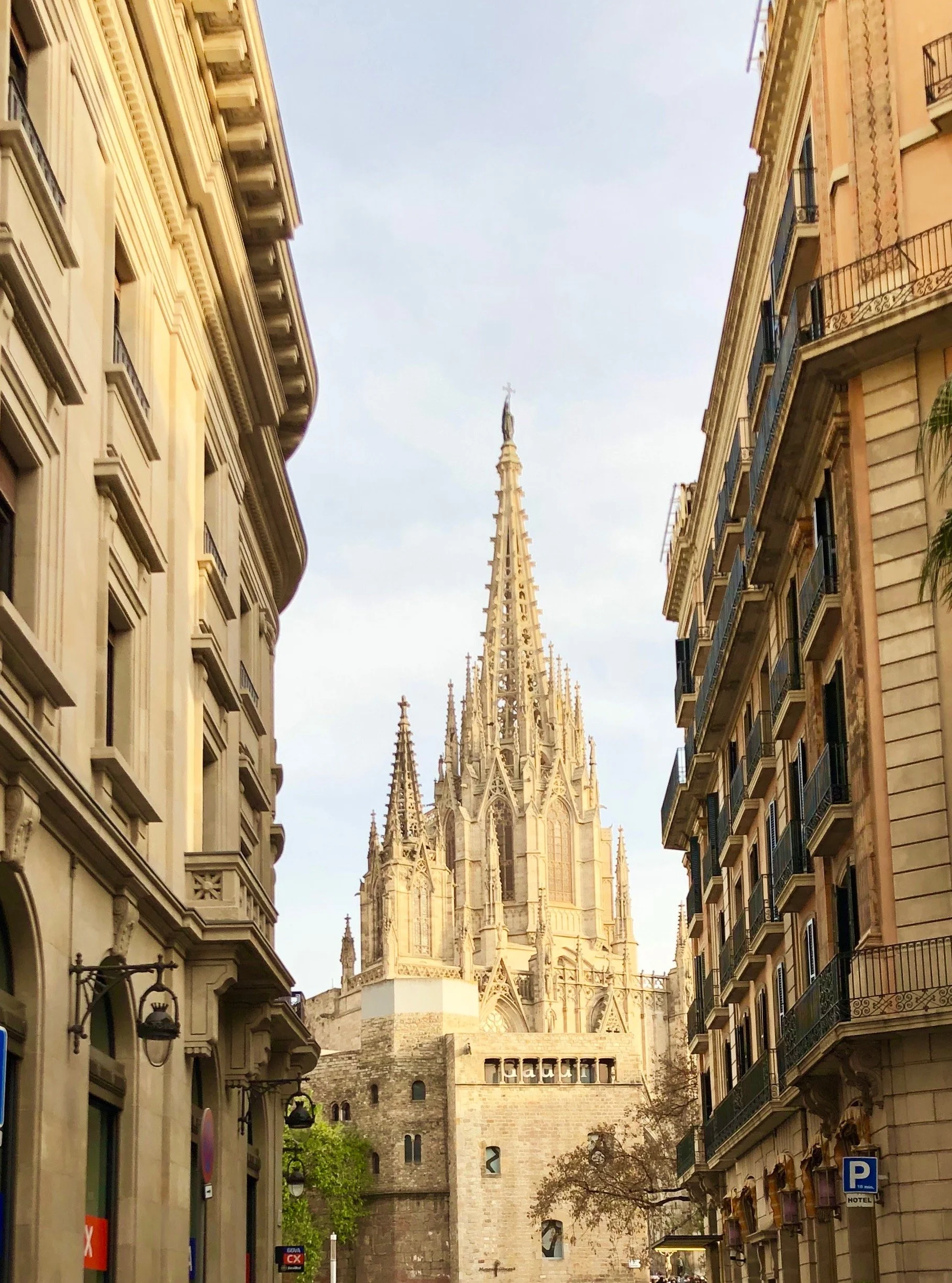
Notre Dame
It’s impossible (pronounced impossible) to say whether I’d be a total dick if I were French. But I recently met every French person living in France and they were all total dicks.
Well, I guess that’s not entirely true. I really only met about six French people, and half of them were actually pretty nice. The other half were at least fair. But I saw a lot of French people being total dicks. Tons of them!
Shucks. To be honest, I probably would be a mass dick if I were French. I’d be slender and fashionable and I’d hold my cigarette just so. I’d be drinking a champagne cocktail and clutching my perfect baguette, even though I would be out of hands by now. The afternoon sun would cast a fanciful glow around me and my highly-evolved crew at our sidewalk table as a blind accordion player in striped shirt and pencil-thin mustache squeezed sublimely nearby.
And then I’d speak…
It wouldn’t matter what I said. I could say ‘come with me to the Casbah’ or even merely ‘I just saved a ton of money on my car insurance by switching toGeico‘– andit would sound the same. French is such a moist, lyrical language– you just sound more fashionable and sexy speaking it. Read the phonebook. Please, read it again. Je taime…
We arrived in Paris at that golden hour late Saturday afternoon from our chunnel journey from London. The train had been a very pleasant and civilized experience with WiFi and a bar. It’s possible my guard was down a notch as we emerged from the soaring Gare du Nord station into the lap of Paris.
That light. Those smells. The tension and magic. The chaos of Paris!
Edie whirled a whirl and we high-fived our being in Paris. I remember that we were standing still and that everything else was moving fluidly around us, as if animated.
Edie punched up our destination.
We learned in London that I was a useless navigator and a generally more agreeable traveling companion if my phone was deep in my bag and my credit card was near the top. We had efficiently crafted an arrangement that enabled us move about without me having to switch from wifi to data to google maps to translation. Sunglasses off, readers on. Battery half-charged. Where are my safety pins?!
It was definitely in Paris that I decided my phone was at half-full battery, not half empty. The ability to read a Lonely Planet guide book or negotiate a paper map has been evolved out of us. But we don’t have to let reliance on our devices define or distract us! I felt after two days in London that my deference to my phone as travel agent was fouling my experience. So I put it away. Of course by that time, my 19-year-old daughter was there to navigate and empty my drool buckets.
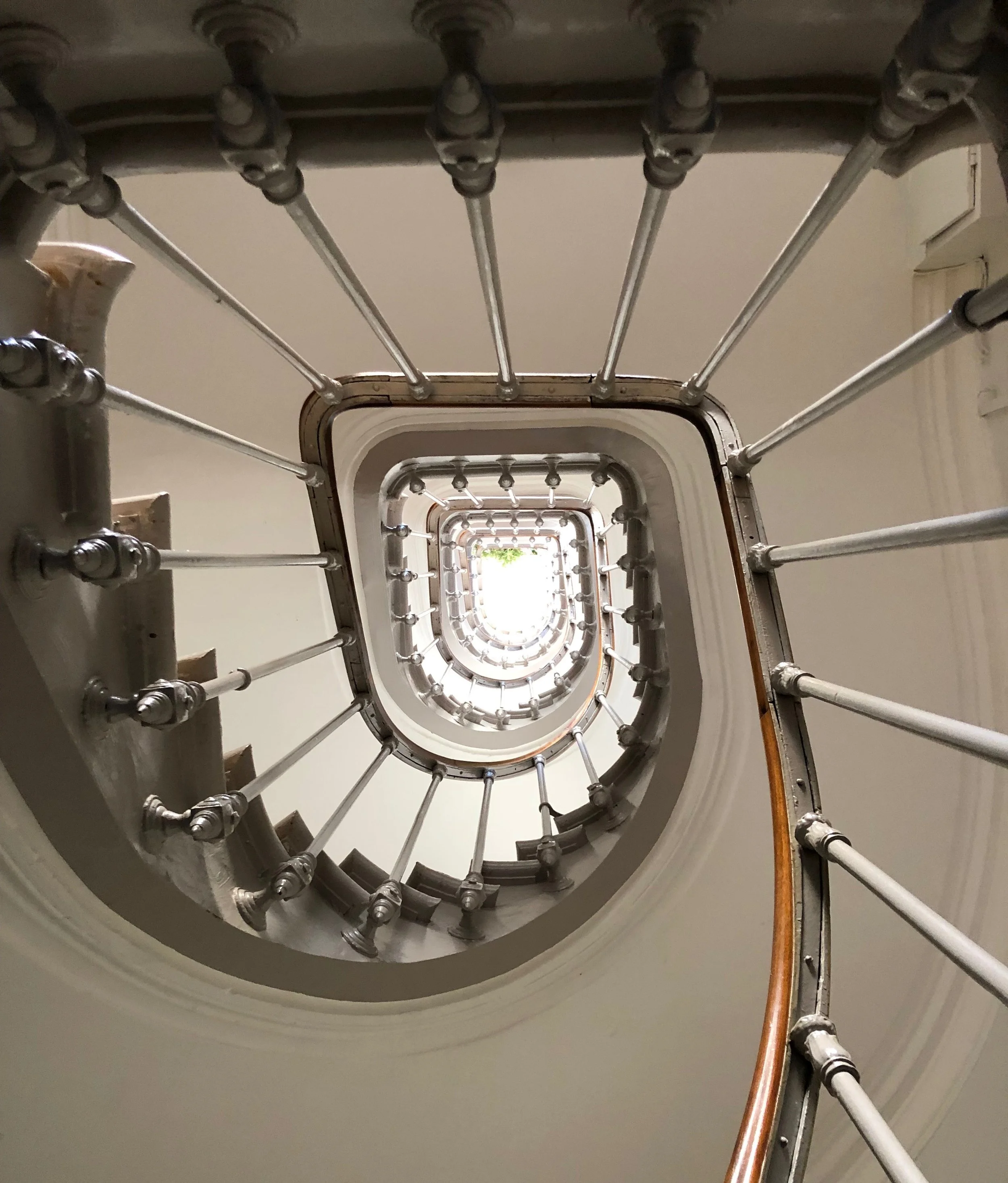
Edie deftly guided us to our AirB and we cracked the code of the front door. We ascended the 107 spiralling steps to our top-floor apartment overlooking the magnificent Church of Saint-Bernard de la Chapelle to the east. The apartment had a sufficiently-appointed kitchenette and a brilliant library of European coffee table books & American classics translated to French. The linens were soft and there were plenty of pillows. But there wasn’t a square of toilet paper in the place!
No matter. We hadn’t come all the way to Paris, France to hang out inside. We hit the streets looking for soul food.
The lower Pigalle- Saint-Georges’ district was alive and buzzing with Parisians smoking, drinking and French kissing. Cafe after cafe was swamped with beautiful young people socializing on a pleasant early spring Saturday at dusk, spilling out of the doors and onto the patios. We were hungry– but the idea of having to order a meal in a crowded bistro in our broken French at the top of our lungs kept us moving along until we found a quieter little sushi place with an empty table. Hamachi in French is Hamachi; sake means sake.
Strolling back toward the pad afterward showed us more colorful doorways, more ornate wrought iron rails and more handsome locals. We were able to purchase toilet paper instead of paper towels (no bolsa) and we lucked into a very French experience in the tiny Rouge Bar only a few blocks away from our home base. A dozen regulars were seated around a large table in the back, singing folk songs and banging on various percussion instruments. One guy was plucking away on a kind of 1-string washtub bass type thing, and the group was taking turns on verses, joining in on the choruses. We had no idea whatsoever what the songs were about, of course– but we enjoyed a glass and the good vibes before collecting our TP and climbing the stairs to the apartment.
I’m not a great sleeper. Never have been. And when I get into a groove of insomnia, not much can wreck my flow. I had had some luck in London, and the bed in our Paris AirB was comfortable and the apartment quiet. I was exhausted. But still– sleep would not show itself to me on that first night.
At 4, I offered Edie the bed and took to the couch. I figured one of us might as well get some quality rest. At 6, I quietly dressed and slipped out into the hall. Shoes in-hand, I tiptoed down the winding oak staircase so as not to wake the neighbors.
Dawn was just starting to stir as I hit the sidewalk, turning north. The only sound was the gentle cooing of the pigeons, possibly startled to see me. It was clear and cold. (I’d checked the weather on my phone before leaving the 6th floor and learned it was 35 degrees on the street). Perfect weather for a morning hike in Paris. For some reason, “Looking Glass” by the La’s was playing in my head.
It was a fairly surreal experience to be alone in a city as normally abuzz as Paris: just me, my gradually shortening shadow and last night’s barf & piss. The cafes and bar tabacs were buttoned up tight. No busses. After 20 minutes I finally saw a garbage truck, but it didn’t seem to be picking up any garbage. Rather it was just kind of cruising as if casing the garbage. Eventually the peoples began to emerge– jogging, gymming, walking the dog. Texting at the wheel. All the same stuff Americans do in the morning…
I wandered north then west, slowly climbing higher into the picturesque Montmartre neighborhood. The peaks of the iconic Sacre’-Coeur came into view and I turned in their general direction, winding up and down cobblestone lanes lined with arched doorways draped in wysteria.
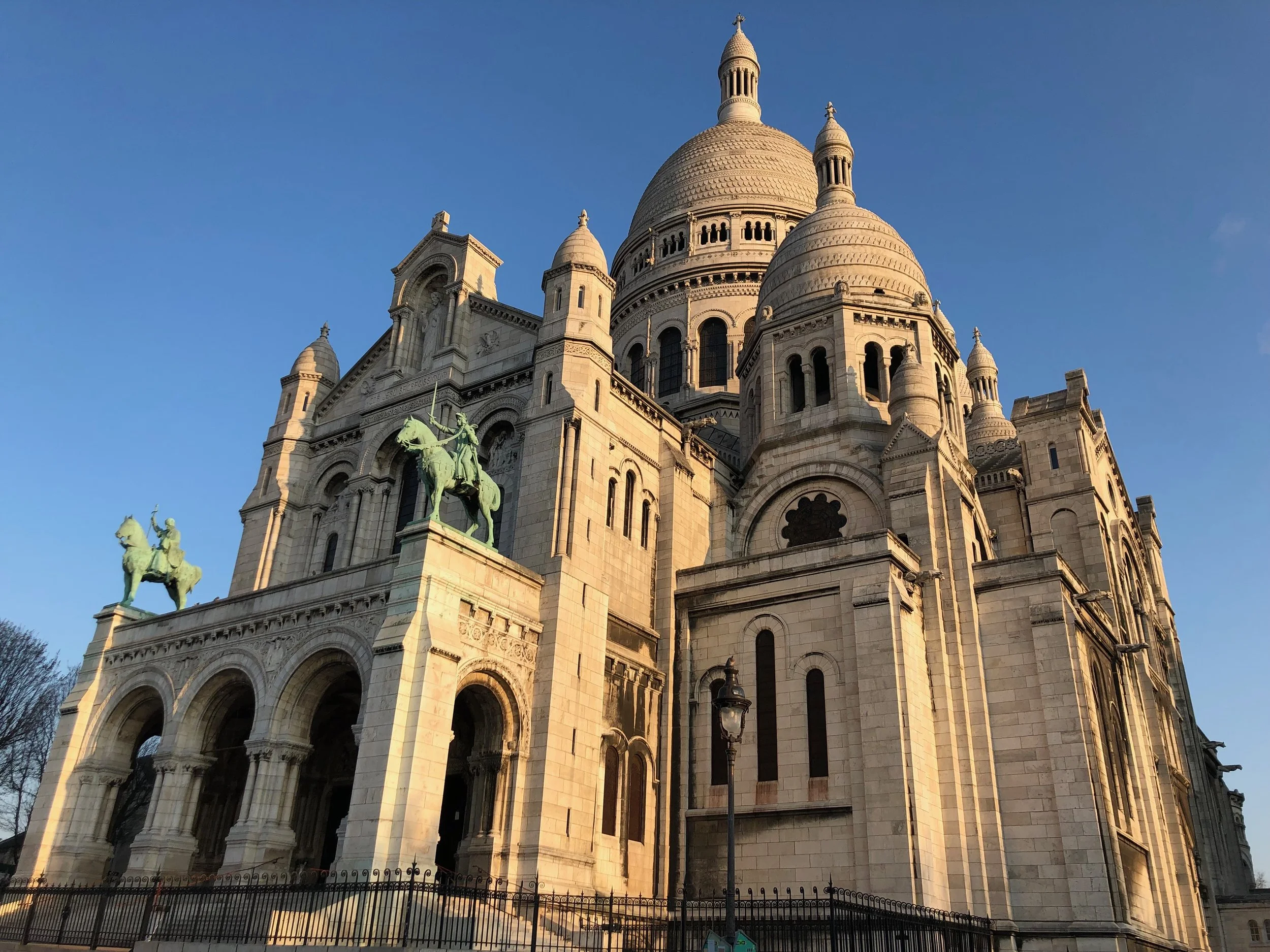
the Basilica of the Sacred Heart of Paris at sunrise
Upon reaching the travertine plaza of the Basilica– the highest point in Paris– all the air was sucked from my lungs by the breathtaking setting and view. The glow of the rising sun coming from the east illuminated the perfect domes of the temple, and the rest of Paris lay sprawled out to the south– ready for another busy day. There were a half-dozen other people out there also gawking, though most of them were paired up. It was a pretty romantic setting, after all. Suddenly I missed Patti and remembered her telling of her first experience in Paris where she’d felt a little gypped to be stag. The only other unmatched person up there was a bearded guy who positioned himself squarely in the center of the courtyard and proceeded to jump rope. It was odd…
On the way down the hill, I passed along a street with a number of butchers who were just opening shop. Cured and fresh meats were being unwrapped and hung out for display. Ice bins were being filled, sidewalks hosed down. On the curb in front of one shop was a metal shopping cart filled to the very top with huge bones (beef femurs?). It was the deepest collection of the biggest bones I had ever seen. I slowed and discreetly slipped my phone from my bag and snapped a photo from waste level.
It wasn’t discreet enough…
A butcher emerged from the shop as I started to walk away. He was agitated and confronted me, blocking my path.
“Supprime-le,” he said sternly. “Supprime-le!”
Of course I had no idea what he was saying. I shrugged out a no Francias and a perdon for good measure, but he just kept repeating ‘supprime-le.’ Eventually he mixed in some clarifying language which I guessed was none too flattering. But he always returned to ‘supprime-le.’
It’s painfully obvious now of course that he was demanding I delete the photograph from my phone. Supprime-le = delete it. But at the time I just didn’t get it, and at one point actually thought he might have been offering to snap a photo of me posing with the bonecart using my camera– for a fee. Can you even imagine?
Eventually, he was able to mime my phone out of my bag and point to the delete icon on the screen. I was quite embarrassed when I finally realized what he was getting at and of course deleted the image immediately. Supprime-le, my advisor…
It’s ironic that I said to him “I’m sorry” in English as he turned to go back into his tiny shop. I’d been walking around all morning practicing the phrase I expected to get the most use out of while in Paris, that being ‘Je suis de’sole’ or I’m sorry. I’d been wandering around this beautiful neighborhood whispering I’m sorry to myself for hours, and when the perfect opportunity presented itself for me to show off my French, I totally dorked out and made a bad situation worse by apologizing in English.
Probably just as well. I learned at the end of our stay in France that in my attempt to shorten the phrase from what I understood to mean ‘I’m sorry’ to simply ‘sorry,’ I had lopped off the wrong half. So in Paris and through the south, I had been sheepishly saying ‘I am‘ when mixing salt into a cappuccino or fumbling with the money. De’sole = I am. Je-Suis = sorry. Sheesh…
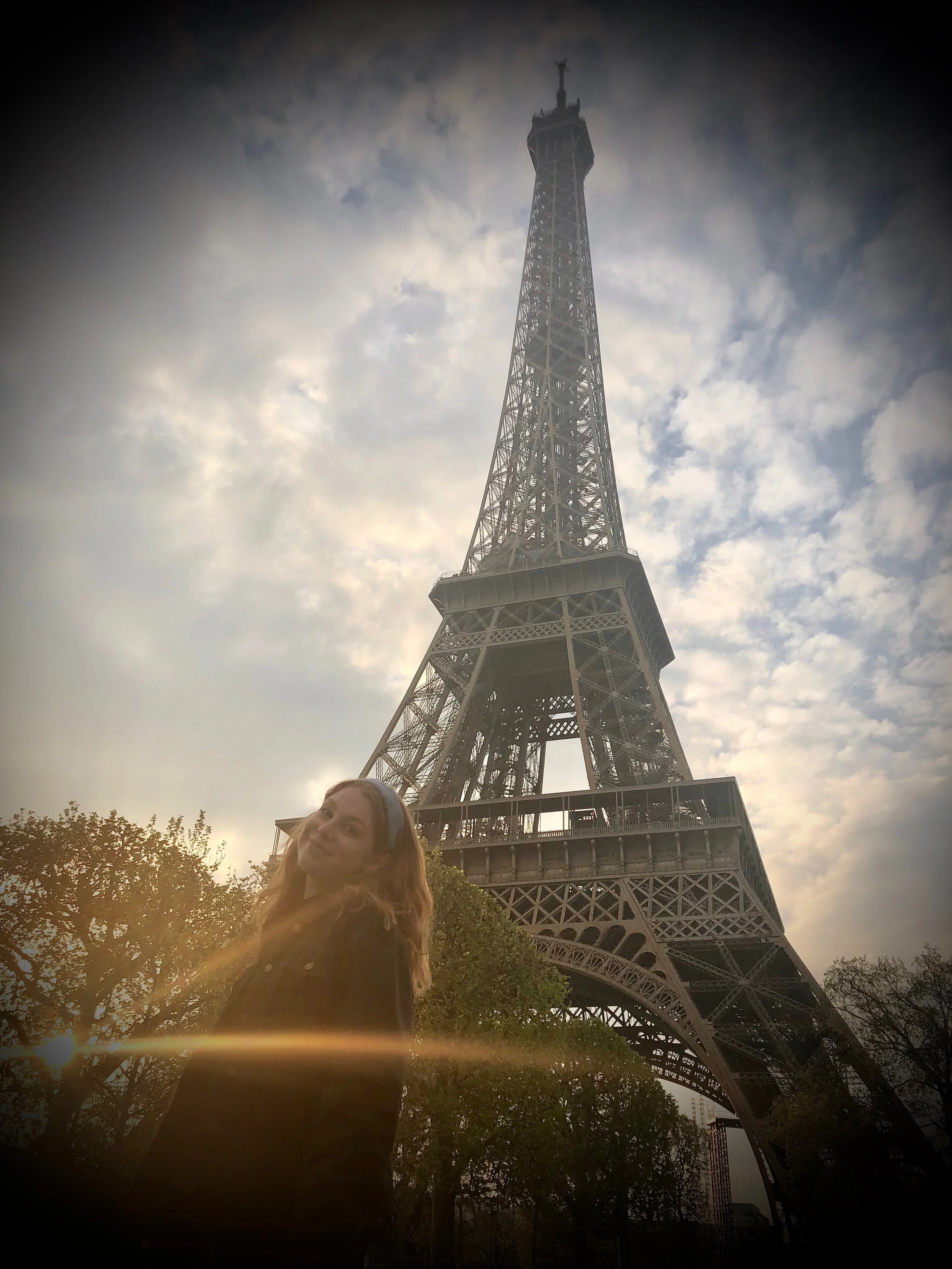
I don’t blame the French for being resentful of foreigners. They have a pretty bitchin’ culture which they’ve been forced to share with the rest of the world for centuries. We’re learning in our modern age that it’s awkward to refuse immigrants and not economically feasible to discourage tourism. Any western joker with a thousand Euro and a passport can spend a week in Paris, displacing locals by soaking up AirB’s, clogging the narrow sidewalks and strangling the language. All the natives can do is roll their eyes and say supprime-le. Kinda hard to fault them…
I picked up some beautiful little pastries at a real live French bakery and some fruits at a sidewalk market and returned to the apartment to wake Edie who was still sleeping at 9:30. We got cleaned up and boogied to the insane Marché aux Puces de Vanves flea market. Row after row of overpriced old world relics waited on folding tables along the sidewalk. I wanted all of it, but settled for a short stack of souvenir 45s and a heaping platter of sauteed mussels. We made the very photogenic Canal St-Martin neighborhood next on our way to the you-know-what. You can’t go to Paris without visiting the Eiffel Tower, and it was of course very spectacular. The late Sunday afternoon sun was setting over the Seine as we strolled amongst our fellow tourists, gazing up at the 1000′ icon. The grounds there are very nice and you can buy a little mobile party if you are so inclined. Eiffel Tower: check! Oh, the Arc de Triomphe, too: check!
not Notre Dame
Monday morning brought vintage shopping in Le Marais en route to the Centre Pompidou. We’d been dissuaded from chasing the Louvre by more than one well-meaning domestic friend, and if you’re in Paris for 2.5 days, you can’t really justify spending one in the Louvre. At least I can’t. Three hours in the Pompidou was plenty. All the AC/DC and Thin Lizzy was on the 5th floor, which was where I hung out. The view from the rooftop terrace was spectacular, too, and actually proved a useful perspective in the planning the rest of our afternoon.
not Notre Dame
not Notre Dame
We exited through the giftshop and headed in the general direction of Notre Dame. It was well-past the lunch hour by this time, and we were feeling a little rummy with fabulousness overload in this picturesque neighborhood. Possibly a bit low on bloodsugar. Every corner we turned brought us face-to-face with a new architectural marvel and we would stand reverently in its shadow, gazing up and shaking our heads. “Wow,” we’d whisper. “Notre Fucking Dame…”
And it wouldn’t even be Notre Dame! There are just so many ridiculous buildings down there that you can mistake any one of them for Notre Dame if you haven’t been holding up a picture of Notre Dame with one hand for most of your life. The Paris City Hall is wikked cool! But yeah– it’s not Notre Dame…
By the time we actually did get to Notre Dame, we were just about wetting our pants laughing about all the buildings we’d mistaken for it. So we felt pretty bad when it burned down two hours later.
not Notre Dame
We saw no sign of the Yellowvests in Paris, and–as in London–observed very little sign of economic angst or presence of the unsheltered. There was the occasional sidewalk tent, and actually Paris did have what seemed like a fairly civilized network of doorway mattresses, almost like the Lime bikes and scooters. There was no apparent ownership– rather if you needed a place to sleep, you just flopped on an available mattress. Once you woke up, you moved on– freeing up the bed for the next weary Parisian down on luck.
We did not have time to venture deep into the Left Bank. Our host neighborhood was described as Montmartre on Airbnb, but it was quickly obvious that this was fairly wishful marketing. Our neighborhood was literally on the other side of the tracks from the Montmartre in a neighborhood we later learned was informally known as Little Algeria. It bordered a bustling Bangladeshi neighborhood along the Rue Marx Dormoy where there were very few women visible at all, particularly after dark when the street vendors took over the sidewalks. On our last night there, we encountered a burgeoning race riot outside a grocery store that looked a little too much like Do the Right Thing with a large crowd of unhappy young men pushing up against the metal accordion fence of a small grocery. The shopkeep appeared to be evicting a representative of the crowd whose shirt was ripped and there was a lot of spitting and shouting. We totally valued being in an authentic neighborhood not seemingly catering to tourists. But this particular moment also seemed like a pretty good time to cross the street.
not even the Arc de Triomphe
We had ventured to the Republique’ neighborhood earlier that night, enjoying a drink in a Greek place and some snappy tappas at a little Spanish joint. It was late when we got back to the apartment and I turned my attention to confirming a roof for us for the following night in Lyon. We weren’t exactly walking into towns with our backpacks and looking for a place to sleep like in the ’90s. But booking this stuff only one night in-advance was an exercise in agility nonetheless. Edie & I had agreed not to over-plan, and short-notice reservations were part of this agreement. We’d done well in Paris booking this apartment from London and we fully expected to get as lucky in Lyon. But booking trains at the last minute can be limiting– and the only cheap seats left bound for Lyon the next morning were on the 5:50. We’d need to get up at 4 in order to make the train. So of course I didn’t sleep.
We got loose of the pad (at 4:20!) and down to the street to meet the only Uber we’d take the whole trip– as the Metro didn’t start running till 5am. Before I knew it, we were chugging gently through the rolling green fields of the French countryside– dotted with herds of sheep, tiny villages (always with a tall church steeple in the middle), and the occasional medieval castle on the hill. The coach rocked side-to-side as I watched Edie sleep from across the tiny train table.
Lyon is a cool town. But arriving at 8 o’clock on a rainy Tuesday morning, it didn’t seem like the locals were really all that mass stoked. Commuters trudged up and down the slick platforms, their umbrellas up and the corners of their mouths down. I hadn’t slept on the train and my eyes burned like fire. The toilets in the station cost .80 Euro, which I couldn’t manage to count. My left hip clicked with each step.
Edie punched up our destination.
We marched across the square in a steady rain and up into a network of narrow cobblestone lanes rising steeply out of the downtown. Five minutes later we were inside our building and climbing a limestone staircase open to the interior courtyard of the building, up toward the 4th floor flat. At this rate, by the time we reached Barcelona, we’d be on the ground floor! The key to the apartment was where it was supposed to be and it actually unlocked the door. I am always amazed when this stuff works.
This apartment was our host’s home. Her bills were on the desk, her laundry in the hamper. She was probably staying with her sister on the 2nd floor while I slept in her bed. We had just booked the place 9 hours ago. And not only was she willing to cut out on short notice, but she actually was kind enough to let us check in early. I would not have inquired about a mercy checkin if I’d known this was someone’s home. A lot of these places are vacant, like a sock waiting to be used*. But not always…
We rid our packs and took off our shoes and immediately fell asleep side-by-side on the couch. All I wanted to do right then was dormir, but I knew if I stayed down more than about an hour I probably wouldn’t sleep again for the rest of the trip. So I made myself get up after 90 minutes and put my shoes back on. I dropped back into the downtown and ordered a cafe creme’ deporto at a coffee shop in which I would become a 2-day regular. The rain had stopped and the sun was beginning to peak out. I sat on the stone steps of yet another fantastic unnamed church and pulled out my journal and pen. Good day, Lyon!
Large Sraight, Lyon
I woke Edie up at 2pm, this time with a bottle of white wine and some cookies. She’d had a solid nap and was ready to rock, as was I. We rolled a quick game of Yahtzee (I had packed dice) before cleaning up and getting back on the street. Edie’s Sunnyland homie Nick had just landed in Lyon the week before, beginning a similar study abroad experience to the one Edie had last year in Barcelona. We were meeting him at 6, so we had some time to kill cruising Lyon’s canals and crossing the quaint footbridges over them. There were statues built into caves on the other side and a huge cathedral looming on the hill. Our accompaniment for this segment was “Yeah Yeah Yeah” by Alice Cooper– a brilliant afternoon!
It was great seeing Nick. He’s one of my favorites of Edie’s buddies from home and he seems to really be digging his experience in France so far. We strolled around through the old town catching up, eventually selecting a Fine French Restaurant for dinner. In some foodist cultures, it is an honor to be seated by the kitchen. In this situation, we were merely being seated at the back of the restaurant. The 4-course experience involved much pointing at the menu. It was OK– not necessarily what I’d call fine…
Unlike England, France is kind of known for its food. But much like England, our culinary experiences were not super fine. My general distrust for the internet makes it hard for me to shop for restaurants online. “Look, Edie– this one has quatre e’toiles. Only 80 more blocks!” I am much more-inclined to eat when I’m hungry and drink when I’m dry. Just like Bob Dylan. Sometimes the place that presents itself at the right time is killer; other times less. But Yelping our way around Europe is not what I had in-mind and Edie was fully in agreement. Whatever. We didn’t starve.
Speaking of Dylan, we missed him in Paris by two days. I don’t know whether I would have efforted to see Bob Dylan in Paris if our paths had crossed. But they didn’t. We also narrowly missed Teenage Fanclub and Lake Street Dive. And in London I missed UFO by three days! I definitely would have done whatever necessary to make that show had the dates aligned. And then Paul Raymond died eight days later. Timing– it’s universal…
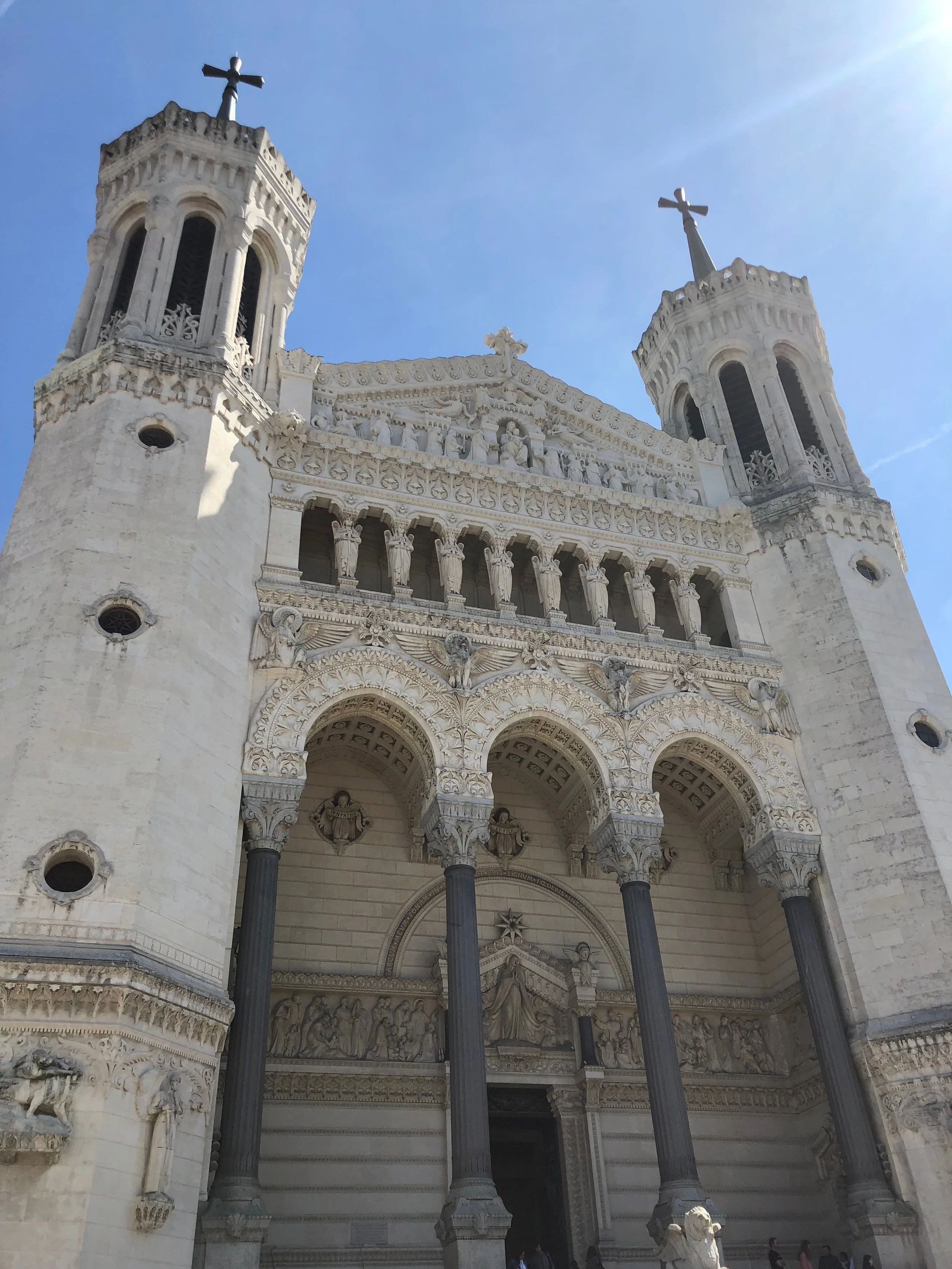
Paris is known for its gothic cathedrals, its majestic river and quaint cafes. Lyon has all that stuff too, but without the mountains of garbage that you have to climb over in Paris. How anyone could think about dropping as much as a gum wrapper in that holy place is hard to figure– but I don’t think I’ve been in a dirtier town. I like a gritty city, but Paris is just plain littered and shat upon and that’s less romantic no matter how you look at it or in what language you describe it.
Being a less-common destination, Lyon may even be a skosh Frencher than Paris and we found it very usable. Divided by the Rhone River to the east, the Saone River in the center and the hilltop Fourvière to the west, Lyon is the 3rd largest city in France at a half-million people. Posing patiently above the old town is the sultry Basilique de Fourvière. It isn’t ancient– the current version was completed only in the very late 19th century. But it is architecturally stunning and the view over the city from the grounds is dizzying. We climbed up there on the sunny second afternoon in town, and Edie left from there to go meet Nick and his friend from school. I went inside the sanctuary and sat for a long time, staring up at the coved, tiled ceiling. I dislike organized religion in general and Christianity in particular. Catholicism perhaps most of all. But dang– those guys sure do know how to build a churchhouse.
I don’t think anyone was on-duty in the confessional by the front door, but I paused on my way out and considered spilling a gut anyway just the same. I wasn’t carrying anything particularly heavy. But I was sensing the impending mortality of this adventure, being at about the halfway point that day– England behind, Spain ahead. Struggling to be in the moment every moment isn’t really a conventional sin, but it is a hangup. And I thought that maybe if I could admit to a stranger that I was even thinking about the end of a trip from its middle, it might help me stay in the present more completely. I stood at the threshhold of the booth for a minute, pondering. Eventually I crossed the street to the gift shop and bought a postcard instead. They were playing Judy Garland and Gene Kelly’s “Ballin’ the Jack” in the shop, which made me feel a little better since it didn’t seem to have anything to do with France, Christ or redemption. I scaled back down the 800 stairs (yes, I counted) into downtown and got a glass of whisky at a cafe overlooking the river, feeling great. I addressed the postcard to myself and placed an Airmail stamp into the upper right corner.
The French don’t:
Give a good goddamn about much of anything other than the French
Wear berets
… or any hats for that matter, except Yankees caps. Certainly no widebrim hats in any venue in Europe. That fashion phase has either not hit yet or else has well faded (probably the latter, huh?)
not smoke
keep cats
busk
Very few street performers of any kind in France, actually, other than the occasional strolling accordionist outside the cafe– like the Mariachi’s in Mexico. I did happen upon the French version of the Dy Young Combo on the last night in Lyon, at a small wine bar in the old town. A pretty lady with her hair in a scarf was singing and dragging on a guero, accompanied by an electric guitar and percussionist. As soon as I sat down they launched into “The Girl From Ipanema” and I wondered if it was the first time they’d played it that set. Seemed kind of obvious…
On my way back up to the apartment, I peered into a doorway that had bar sounds coming from within it. There was no sign outside, but ducking down into the tiny, dark room below street level I discovered it was indeed a dank little bar full of wasted locals. French hardcore music was blasting from a small Sonos speaker in the corner and there was one vacant stool at the bar. I slid in and smiled at the bartender.
“Vin Rouge,” I said confidently, trying to be clearly heard by him but not overheard by the entire bar.
“I am sorry,” he said, in English of course and loud enough for everyone at the bar to hear. “I do not have any wine.”
“Oh,” I said, abandoning my attempt to French out. I noticed a chalkboard menu with Absinte halfway down. “Absinthe?”
“Sure,” he said, and poured me the cutest little shot along with a glass of water. “Three Euro-fifty.”
The place looked like the belly of a boat, where bearded slaves shackled together might sit and row to the beat of a whip-cracking coxswain. It smelled like it too. In the back corner, a thick sleeveless woman in her 30s was pouring beer on the heads of the others at her table. Two younger men jumped up and grabbed an arm each, returning the gesture. She shrieked in delight and sprawled across the table, toppling glasses and bottles. The men sat back down laughing and the entire ritual repeated. I had one more shot, but I don’t think that was the place I was supposed to be. I returned to the apartment, packed, and confirmed the AirB for the following night in Montpellier.
If Lyon seemed 15% Frencher than Paris, Montpellier might as well have been Gaul. It looked more Spanish than the other cities, with more palm trees and more white iron– like what I imagine Havana looks like (never been). But it was apparent immediately upon deboarding the train that we would struggle more with integration here. We were hungry so we muscled through ordering a ‘pizza.’ Meanwhile, Edie attempted to punch up our accommodations.
“This downtown area is showing up,” she said looking around before re-puzzling over Google Maps. “But the place isn’t…”
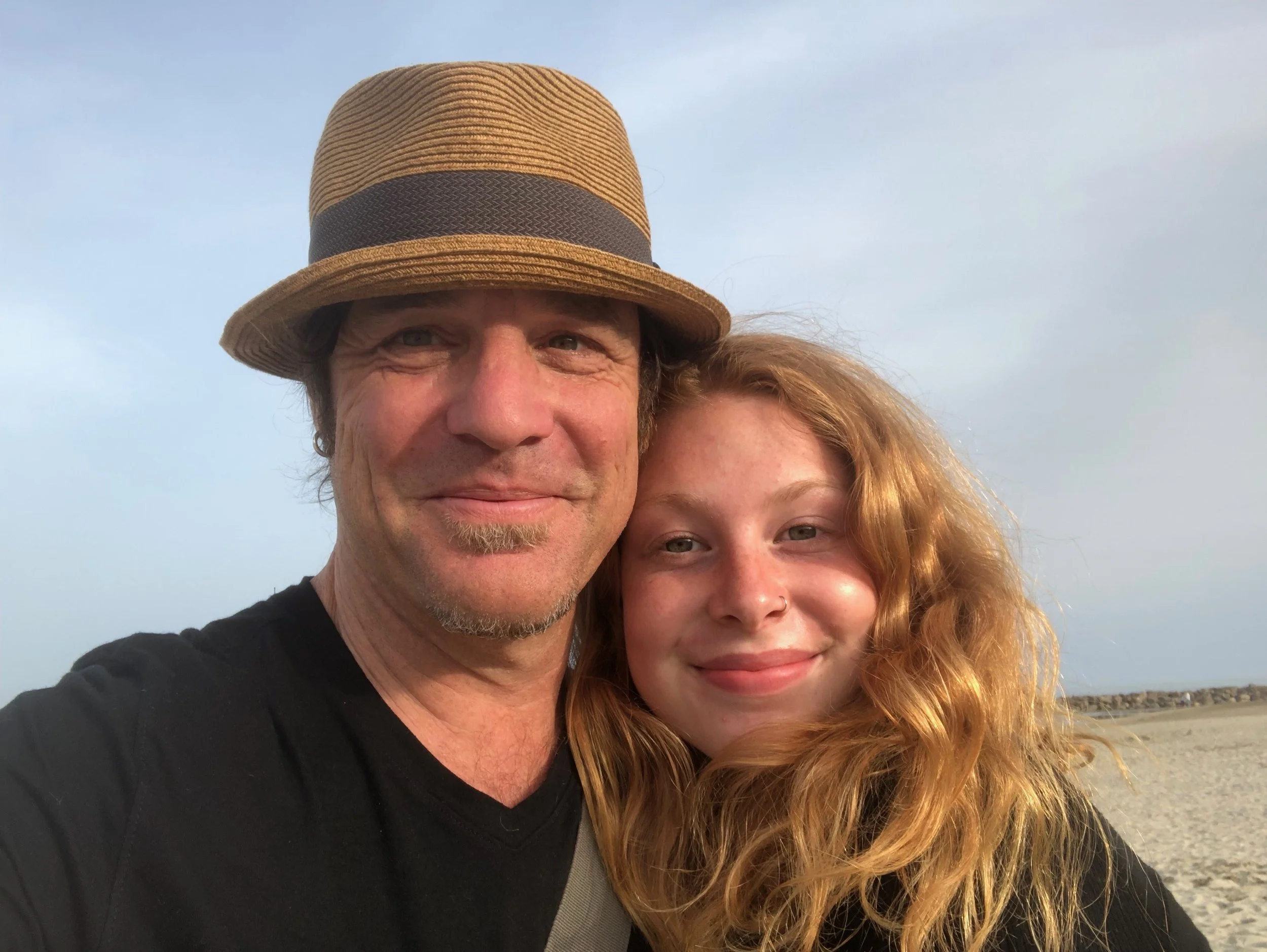
Life’s a Beach and then you smile– Carnon
As it turned out, the AirB was 20 kilometers away in a small seaside resort called Carnon. It was too remote to get any directions through Google Maps. We had an address and a general direction. So we got on a tram that looked like it might take us to Knott’s Berry Farm.
After some eventual third-guessing, we transferred to a bus then walked on our feet a mile and finally got into range where Google Maps would recognize us. The lovely & adorable host at our AirB was there to greet us even though we were three hours late, and she gave us a very detailed orientation of every system & appliance in the apartment– in French of course. We wouldn’t use anything other than the key and the beds, but it was nice to hear some more French spoken as we’d be leaving for Spain in the morning. Plus she gave us the total French cheek peck– un, deux, trois— which we had not yet observed being administered in the larger venues. So we got to cross that off our list…
Carnon also had a pleasant little sandy beach that we went out and sat on for a while. I was stoked to finally behold the storied Mediterranean Sea until I was reminded that it wasn’t the Mediterranean at all really, but actually the Golfe d’aigues-Mortes which was actually more contiguous to the Balearic Sea than the Mediterranean, yo. In any event, it was a sandy beach and there were a couple of guys kind of surfing out beyond the breakwater and neither Edie nor myself had had an aneurysm or even so much as a canker sore– so I guess I was feeling pretty alright about France as I scooped up handfulls of the fine white sand and let it run slowly through my fingers.
Carnon was a little like Ocean Shores and it closed up pretty early. Just as well. I needed to book a bus to Spain and a room once there, so my full attention came in handy. The next morning was Friday and not just any Friday. We shouldered our packs and retraced our path back to the Montpellier train station where we caught the 3:30 to Barcelona where Good Friday observances were already in full swing…


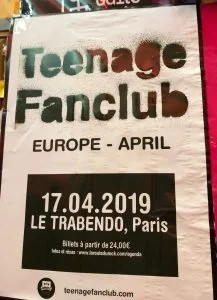

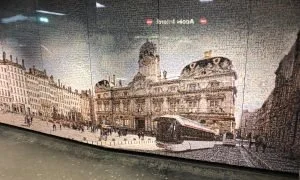
Brazil 2003
Part II
Following is the second in correspondent Callous French’s chronicling of WATTS’s two-week pratfall across Brazil. When we last saw our heroes, they were dragging ass off the last in a grueling series of flights and into the loving arms of their sponsor, Fabricio Nobre, in the city of Goiania.
“Mayn,” said Fabricio laughing, kind of. “What happened?”
He was referring, of course, to why we hadn’t gotten off the first plane he’d arrived to greet that day, six hours earlier. We had accidentally disembarked that flight at a layover, costing us six extra hours, and there had been no way to notify Fabricio.
Naturally, we all started answering at once, simultaneously inquiring about whether the guitars had arrived while lighting cigarettes, excited to be in yet another airport where we could smoke. I could see in the eyes of Fabricio Nobre that he wasn’t hearing anything we were saying, rather that he was caught up in wondering exactly what he’d gotten himself into here. He’d been working his ass off for six months putting this trip together—hounding advertisers, booking venues & hotels, negotiating at every turn. He was familiar with the Mono Men-- of course-- and Estrus & (king of America) Dave Crider. But this WATTS monster was a relatively unknown entity. He liked the record enough to release it in Brazil, but it was three years old by now. The band hadn’t toured extensively. For all he knew, he could have brought down DustBlair, and with the way he’d had to promote this thing in advance, a poor showing could easily cost him his reputation, if not his life. I watched as Fabricio Nobre contemplated this.
We were, after all, a collective fucking mess-- excited to be here, finally, but very wrinkled & greasy, three-quarters drunk and otherwise rummy from 40 hours with only the fleeting travel nap.
Fabricio seemed to be in control of this situation like he would for the duration of the trip. Tall & plump (“I am a vatt bastard!”) and in his 20s, he was dressed in jeans and a tight red t-shirt baring the name of his own band, MQN. It had been easy to identify him as we’d stepped off the plane, because he was the first rock ‘n’ roller we’d seen in any of the several Brazilian airports we’d been in thus far. He was accompanied by Marco, the monkey-like leader of Thee Butcher’s Orchestra, another band with whom we would play often and bond perpetually. We followed our guides to the TAM Airlines office, smoking and asking for the name of the cow, to claim our luggage.
It was obvious from the first moments in the hotel that They were expecting us. Goiania is 800 miles to the interior of Brazil, 800 miles from the attractions of Rio or Sao Paulo, and it’s not every day that Van Halen comes through town. The event in Goiania was the annual three-day festival of La Bananada, which Fabricio had coordinated. Most of the bands were staying at the hotel, and WATTS was the only non-Brazilian band on the bill. It is true, in fact, that we would not see another American for the entirety of our stay in the country, but rolling into the Villa Rica Hotel at 10 o’clock Friday night, we did not expect to be such a novelty.
Lounging in the lobby were all manner of Brazilian hipsters, and it didn’t take Dog & fuckin’Braimes.com long to strike up a crippled conversation with a few and hail a cab to the site of the festival. As tempting as my own twin bed and game3 of the Kings/Mavericks series was (major American sporting events via ESPN were common, but SportsCenter was generally pre-empted by soccer), I jumped in the taxi.
The festival was being held in an old reservoir which had two beautiful, round, contemporary theatres on-site. While one band performed in one theater, the next would soundcheck, and the kids would race back-and-forth in between. Others lingered in the treed concrete courtyard eating & drinking or shopping for CDs & merchandise from the dozens of vendors set up around the grounds. The weather was warm and the atmosphere was quite pleasant.
Again, it was obvious They were expecting us. The crowd didn’t look all that ‘Brazilian’ to us, but it was clear that we appeared very American to them. Many spoke English and were eager to approach us and interpret for their non-English speaking friends. As the evening wore on, handshakes gave way to hugs, souvenier photos were snapped, CDs autographed and beers poured over heads. Any language barrier that may have existed was crushed underfoot like a retarded neighbor.
But perhaps the most important discovery of the night was Pinga. American culture has no equivalent to Pinga. The closest thing is probably Kentucky bourbon, but Pinga is far more central to Brazilian culture than even that. If you’d told me that we would see fewer than a half-dozen bottles of Jim Beam during our entire tour of Brazil, I don’t think I’d have gone. But the fact that Pinga is available everywhere helps with the loneliness. We measured the Pinga—a sugarcane derivative not unlike agave-less tequila-- heavily that first night and left the grounds at 4am with a girl named Camelia in her Hyundai, playing the first Violent Femmes record as loud as her stereo would play it.
Man cannot exist on cigarettes and alcohol alone. Seven hour’s sleep while actually lying down did wonders for our composition, and in the early afternoon we checked out of the Villa Rica after more embracing and high-fiving with the loitering Brazilian counter culture, piling in a van bound for our first show in the capitol of Brasilia, 300 kilometers away. El Morto had been up early, hunkered down at the hotel internet station doing Thinkatron business and checking Mariners scores. He informed us on the way out of Goiania as the road deteriorated into a 20-foot wide swath of concrete winding through green fields dotted with brushfires, that we had taken two from the Blue Jays and one from Boston since leaving the northwest. Badgering El Morto for news from home would be a prevailing theme for the tour, as technology is this man’s vice. Often, while many of the entourage were off tinkering with their comas, El Morto could be found linked to the civilized world via the internet or photoshopping the day’s digital images on his 17” laptop screen. Evening slide shows of the day’s events would become a ritual, and it was always nice to know what was going on in the world of Major League Baseball.
By the time we reached Brasilia, we’d been in South America for over 24 hours, and the band was definitely ready for 45 minute’s rocking. The Pinga was flowing at the over-sold Gates Pub, a dark & narrow nightclub with impossibly small doorways and landings. The stage, too, was tiny & crowded, and by the time WATTS hit it after 2am, it seemed even smaller, like a plastic wading pool at the bottom a hundred-foot-high diving platform. WATTS climbed the ladder and the crowd roared. The show really was amazing-- better than any I’ve seen at home. Working without a setlist, the band tore through most of the record plus a few favored covers, delivering a performance that was crisp & violent. Crider reeled off a rousing rendition of the “Cold Gin” rap from KISSAlive! and shotglasses exploded against the brick wall adjacent to the stage. Good evening, Brazil…
After more sub-verbal bonding with Thee Butcher’s Orchestra (who had since re-dressed after their underpants-only set) and Sao Paulo punk rockers The Forgotten Boys (with whom Braimes had performed “Chinese Rocks”), the party moved across town to what appeared to be Don Johnson’s house-- a sprawling salmon-colored villa with a wide stone staircase and swimming pool gracing the park-like grounds. “The host’s parents are in Bali,” explained Marco, leading us past a bouncer and through the ornate iron gates. A beer table was set up on the patio and the garage had been turned into a visquine discotheque. The house itself was off-limits, though King of America tried at several junctures to gain access. Furious drinking and smoking carried on until the early morning, when Dog & Braimes got cooled in the pool, fully clothed.
The next night, back in Goiania, was equally riotous. Along with the Butchers, Forgotten Boys and MQN, WATTS closed down the 28-band La Bananada to a most enthusiastic & appreciative crowd of one thousand. MTV Brazil was there with cameras and microphones and the band was draped in beads. Penises were photographed and bass guitars mercilessly detuned. Braimes got up with the Forgotten Boys for a rousing version of “Jumping Jack Flash” and Chris Watts lost his fool mind such that he actually sustained a pogoing injury. And Fabricio Nobre, spent & sweaty from his own set, smiled broadly, relieved that his personal future again seemed bright.
Next month: Sao Paulo—population 16,999,997
Brazil 2003
Part I
Don’t ask them how, but WATTS recently did a ten-day tour of Brazil, and What’sup’s very own Callous French dragged along with the band through South America’s biggest country, to document the madness. Here is the first in a three-part epic of sickness.
I could draw worse assignments.
It’s not every loud, clumsy rock band that gets a chance to tour Brazil, and not every aging “journalist” that gets an opportunity to accompany them. So when WATTS invited me along on their conquest of the 3rd world, I scribbled out a quick will and started brushing up on my Spanish.
The Spanish didn’t turn out to be too helpful, as the national language in Brazil is Portuguese. But I was comforted on several occasions by the fact that my signed will was folded neatly on my desk at home. As it turns out, Brazil is in South America, about fifty thousand miles from Bellingham, Washington. And there were definitely a couple of times when I thought I was going to have to use my feet to get home.
The trip was sponsored by the mysterious head of Monstro Discos, Fabricio Nobre, an Estrus fanatic who wanted the Mono Men but settled for WATTS. In addition to re-releasing the band’s 1999 album, booking the tour and arranging for “sponsors” to cover travel expenses, F would serve as an invaluable interpreter/babysitter/drinkingbuddy throughout the tour. We would test him perpetually, starting with not getting off the plane in Goiania.
We’d known it was going be a hellish trip-- almost 30 hours door-to-door including the crippling layovers-- but we hadn’t counted on the Bonehead de la Americana move we would execute inBelo Horizonte, where we accidentally disembarked when we were supposed to have remained on the plane. All six of us. Without ever considering for one moment that we were dangerously separating ourselves from all our checked baggage & guitars, all of which proceeded stoically to Goiania without us.
In retrospect, we should probably have been more intimate with our itinerary, which, upon reexamination later clearly showed that we were to remain on the aircraft. But this revelation came sorrowfully late, and we were left to lie upon the floor of Belo Horizonte International while Nicole, the only English-speaking attendant at the TAM Airlines counter, diligently booked a series of alternate flights and a taxi to take us 50 kilometers across town to the domestic airport, basically a bus station w/ airplanes.
This cabride was to be our first time on non-airport Brazilian soil, and appropriately, the driver spoke no English. This did not deter (King of America) Dave Crider.
“What are they building?” he asked in a raised voice that was already starting to take on the hint of a Latin accent. “What is the name of the cow?”
The cabby would only shrug, making the rest of us very uncomfortable, as there was no spare room in the tiny KIA for shrugging, with 7 of us plus carry-ons. Immediately upon leaving the airport property, the slick asphalt road had dissolved into a leopard print of pits and pots. Our driver sped directly down the middle of the 2-lane road, which wound up-and-down, side-to-side through green fields, the occasional spray-painted cinder block village popping up like images in a shooting gallery.
Now, we needed a half-hour cramped taxi ride at this moment like we needed hepatitis. We were midway through our second day without sleep already, and at least A.Dog, me & fuckin’Braimes.com were reeling pretty good from closing down the flight from Miami the night before.
“There is no more wine,” had said Leona, using most of the English she knew.
“How about a scotch & soda, then?”
“I am sorry,” she’d said, smiling, making her way back to the attendant’s cabin where the rest of the flight crew was sleeping. Christ, everyone else on the flight was sleeping except us three and maybe the pilot. We’d been playing liar’s poker, and Dog had a huge pile of dollar bills on his fold-down tray. We beat the service button like a drum.
“Johnny Walker?”
Eventually they stopped answering the buzzer altogether, and Dog retired to the lavatory to stretch out for the last two hours of the flight. They were happy to be rid of our rummy American asses when the plane mercifully touched down in Sau Paulo at 6 a.m., Brazilian time.
Customs can be a pressure cooker, but usually only when returning to the States. Lily-white American contraband generally is not of great interest to the balance of the world unless there is money to be made from the confiscation of it. Drug traffic is obviously heavier going north, but if you come swishing through with a box of 45s, priced, they’re going to want their cut. The entourage cleared customs without episode—all except for fuckin’Braimes, who hadn’t even reached customs before dude was screaming at him in Portuguese. There was a form distributed on the flight that was supposed to be filled out and presented prior to customs, and Braimes, in his drunkenness, thought it was an all-star ballot. So he wrote in Daryl Strawberry and returned it to the stewardess, who was probably all-too-happy to dispose of it for him, knowing what showing up to the counter without it would mean. It took 20 minutes for an English-speaking airport employee to be summoned to hold the confused singer’s hand through this first gauntlet and to customs, where he had considerably less trouble.
Dig, we were en-route to a foreign land. Being naïve Americans, we assumed everyone in Brazil would speak English. We could not have been more wrong. The fact is that most Brazilians speak no English. Some speak some, and a few speak English very well. Had we known this, we might have drilled on some Portuguese, but as it turned out, only Chris Watts had bothered to download and rehearse any phrases that seemed useful. “I have broken my glasses,” “my gums are bleeding,” and “what do you have in an egg dish” were a few that he practiced in the airports, rolling his R’s like a Fred Flintstone strike in a pre-historic Brazilian bowling alley.
At first blush, the only sane one in the group appeared to be the enigmatic El Morto. I would find out otherwise very soon. I should have had an idea as to the depths of his depravity when he got in the van in Bellingham with a dufflebag of disposable outfits, individually wrapped & labeled w/ the date he intended to wear them. When he got up in the morning, he simply unwrapped the day’s package and dressed, not looking to the side where yesterday’s clothing was concerned. El Morto would leave a trail of once-worn shirts & shorts strewn across the enormous country of Brazil. By the time he arrived home, he would have only the clothes on his back and ass.
It would be 38 hours before we eventually stopped moving-- eight airports, seven planes, two taxis, and a whole lot of drinking & giggling. I felt as though I had already toured the world on the handlebars of a dirt bike, and we were only just now crouching into the starting blocks.
Next month: tage ov you are panz!
Barcelona 2019
Walkin’ Spanish
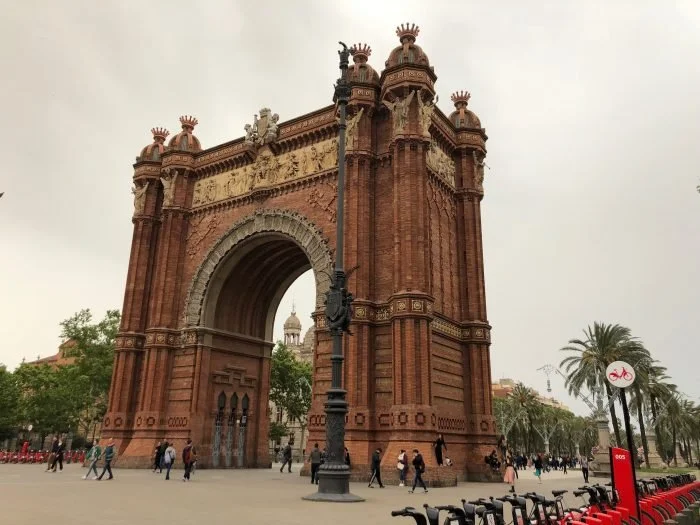
Edie got home tonight.
The last time I saw her was a month ago in Barcelona as I was tiptoeing out of the 17th floor AirBnB we’d rented on our last night in that magical city. I’d given her a peck on the cheek as she lay sleeping in a tumble of blankets on the couch before slipping into the hall to wait for the elevator. My backpack was cinched up tight and my other two carry-ons were bulging with souvenirs. Edie cracked the door of the apartment just as the elevator doors were opening, rubbing the sleep out of her eyes and waving a last goodbye. My heart swelled then farted as I stepped in, blowing her a kiss.
See you at home…
She’s dug some more crazy sites since then. After sleeping a bit later in the highrise condo, she lashed her own pack tight to her tiny shoulders and headed back to the core of the city to spend a last night with her friends there before making the respective scenes in Granada and Valencia, eventually passing back through Barcelona on her way to Budapest. That last link unfortunately took two days because she missed the flight out of Barcelona and was forced to endure punishing half-day layovers there and in Lisbon which please appreciate is not between Barcelona & Budapest, not even close. By the time she made it to Hungary she was not only hungry, but pretty darned sick. She saw a doctor who recommended she drink some water and stretch, and she rested a couple of days before getting evicted from the hostel and fleeing to Krakow with Joao from Brazil. From Poland, they hitchhiked through Slovakia on their way back to Budapest where Edie caught a flight to Heathrow and ultimately to Everett by way of LAX.
And that’s really not even the half of it. But I’m not going to hijack her stories. You can read them on her own blog…
************************************************************************
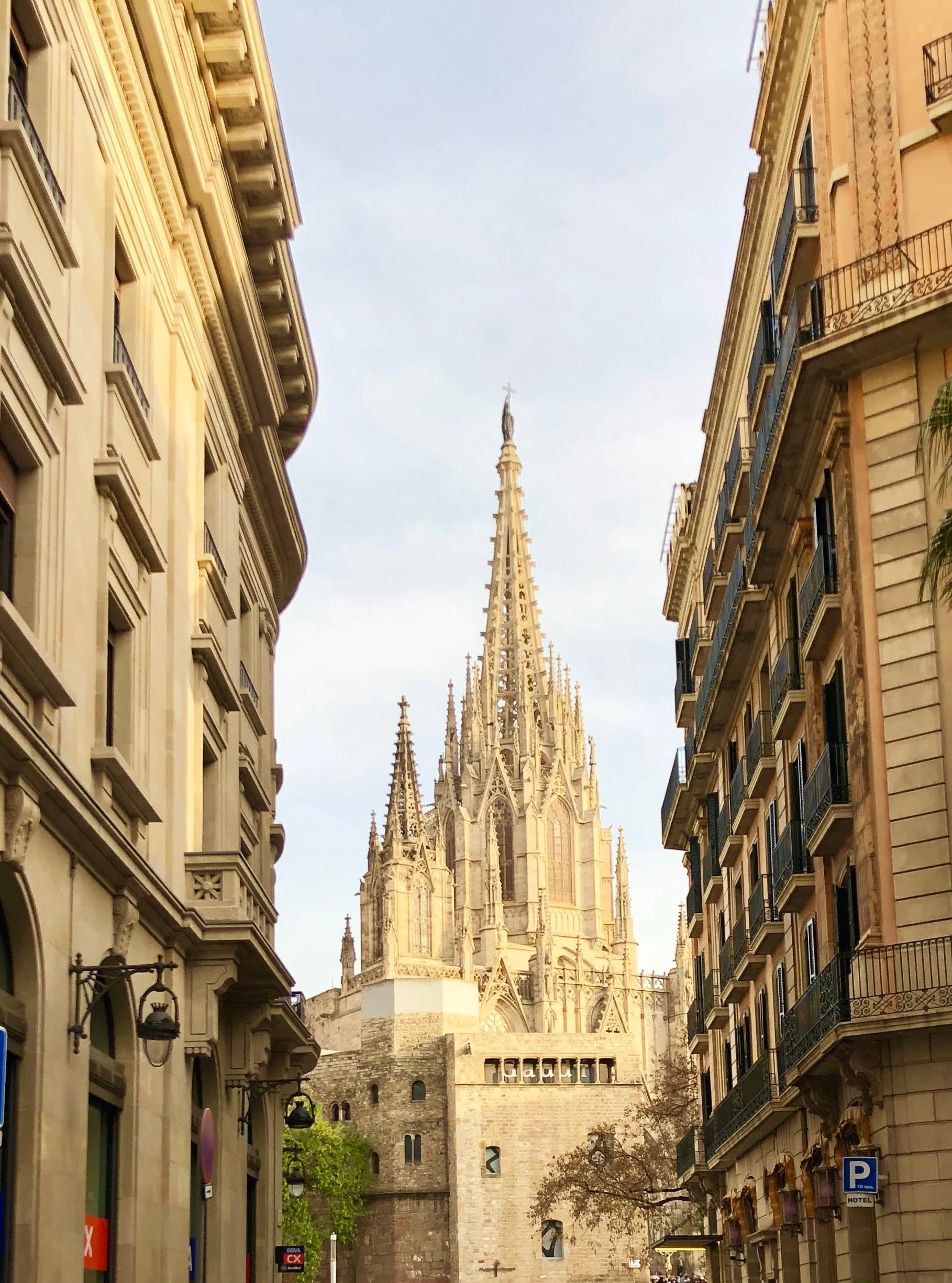
Barcelona Cathedral, Good Friday
We first arrived in Barcelona at 5pm on Good Friday. Born and raised on the West Coast of the US, I don’t know what it’s like to deal in a culture dominated by any religion stronger than Consumerism. Walking into Barcelona’s very catholic Gothic Quarter at peak hour on Good Friday was like a strange dream.
The plaza of the towering Barcelona Cathedral was packed with worshippers, and a procession wound through the crowd toward the wide front steps that lead to the lower square. Robed priests marched slowly at the procession’s head, chanting and waving the incense. Behind them, hovering above the heads of the crowd, drifted a lifesize crucifix. On the anniversary of his execution, the wooden Jesus rocked gently side to side spreading the faithful like Moses parting the Red Sea. (That was Moses, right?)
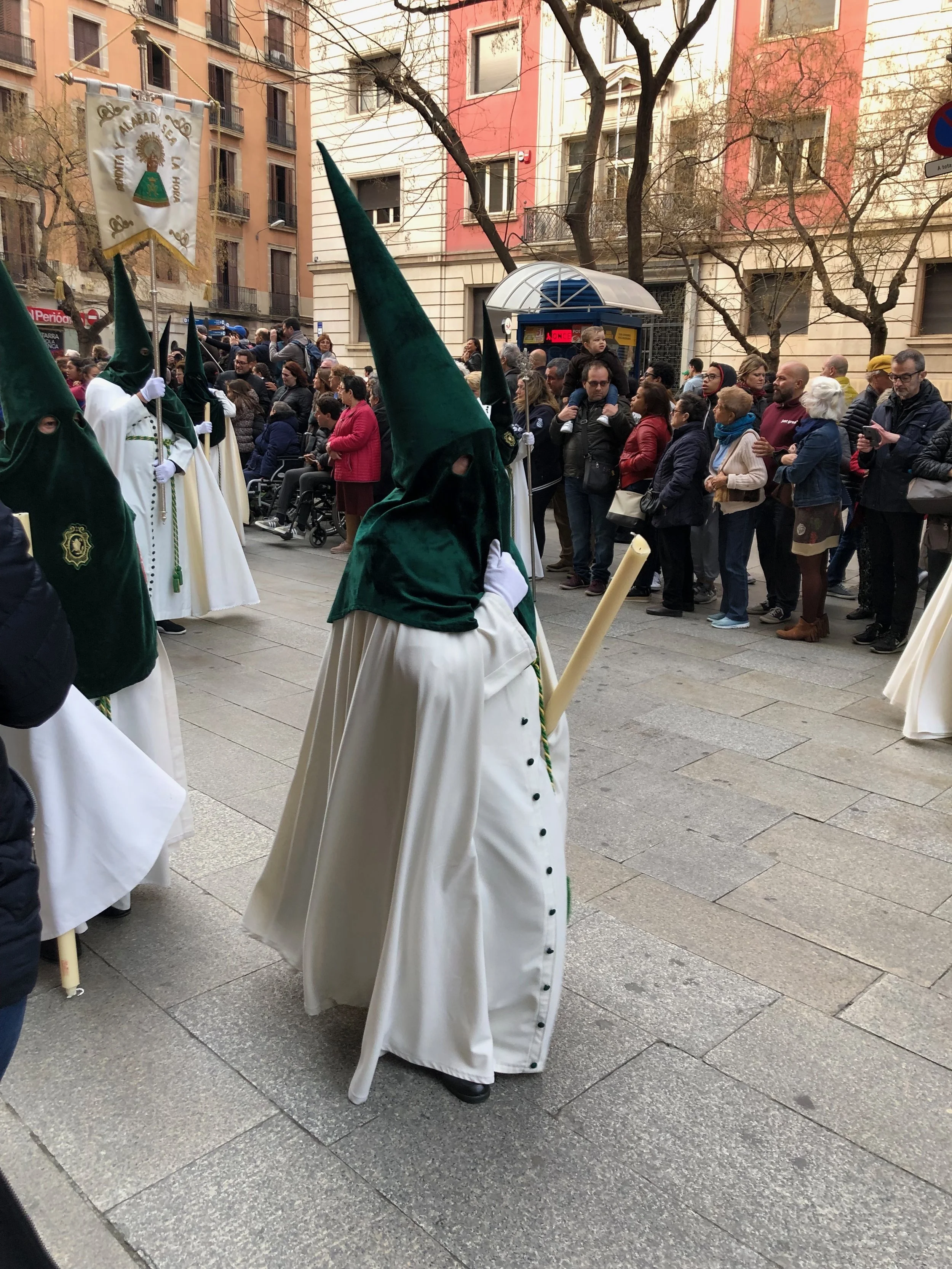
Anyway, the April evening sun was dropping in the general direction of Bellingham, and the narrow canyons of the Gothic Quarter were in shadows. Processions were converging on the Cathedral from multiple directions, and it was in these tributaries that the really whack action was percolating. Long rows of robed, hooded figures lurched silently through the ancient streets, paced by a single snare drum. It was one solemn parade. Floats laden with flowers and fruit and a glass-eyed statue of Mary atop were carried by-hand by dozens of miserable sinners with something to prove on this redeemingest of redemption days. Never mind that they looked like the Klan in their tall, pointy hoods with eyeholes cut out– carrying crosses and torches. Each group had its own colors, like marching bands from rival high schools– black, red, purple and of course your classic White. Many dragged elaborate networks of chains from ankle irons, their bare feet chafing on the cobbles. TGiF, man. That is some penitent shit right there…*
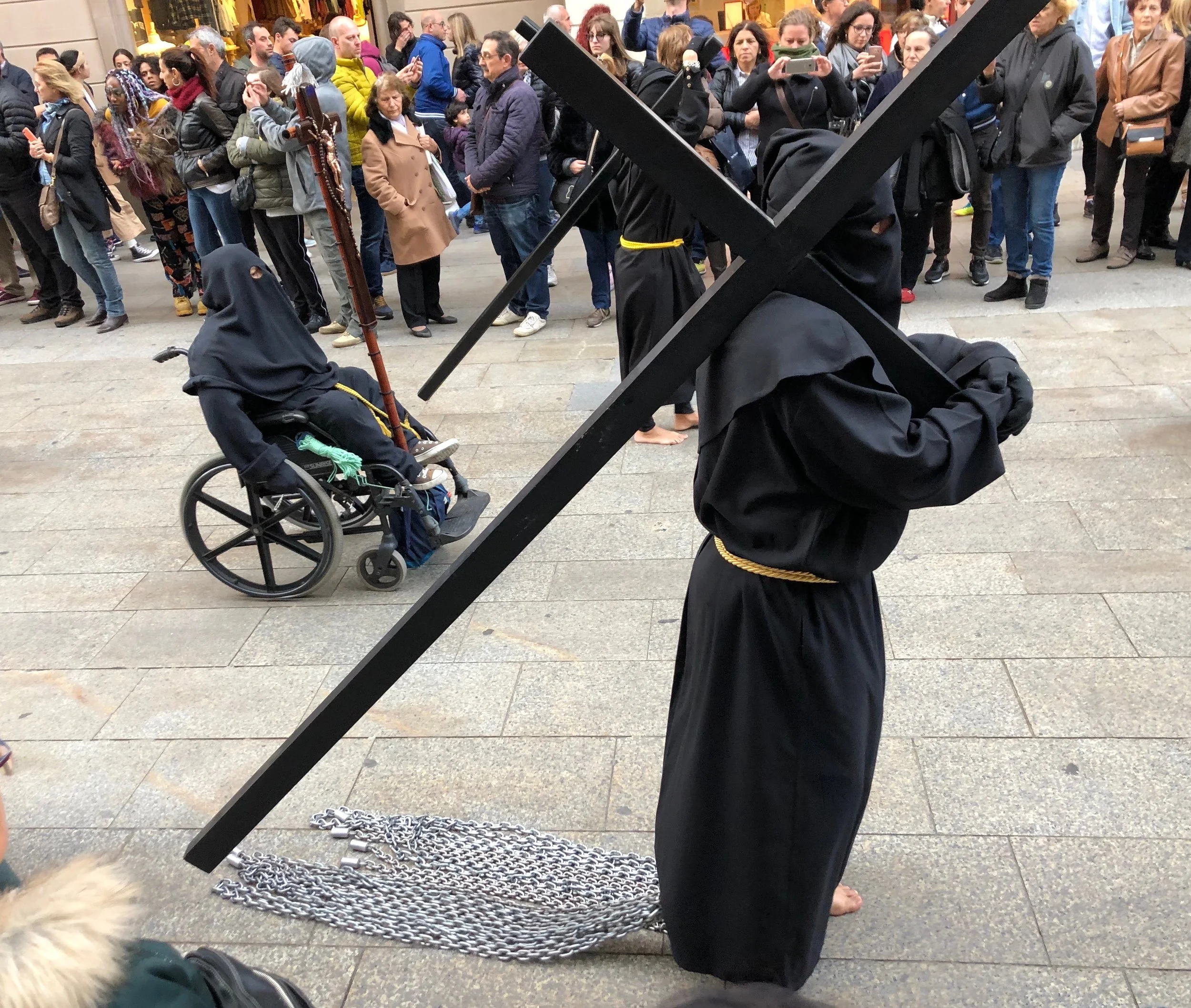
We had initially been anxious to locate our hotel and rid our packs, but the macabre proceedings pretty much froze us. Plus then we couldn’t figure out how to cross this river of repentance! Eventually we began to move upstream, in the opposite direction of the flow. We were looking for a place to cross, but the parade seemed to have no beginning. At one point the route veered left, so we cut right and tried circling around. But we only ended up further upstream and still blocked. This is where we fought off our first pickpocket.
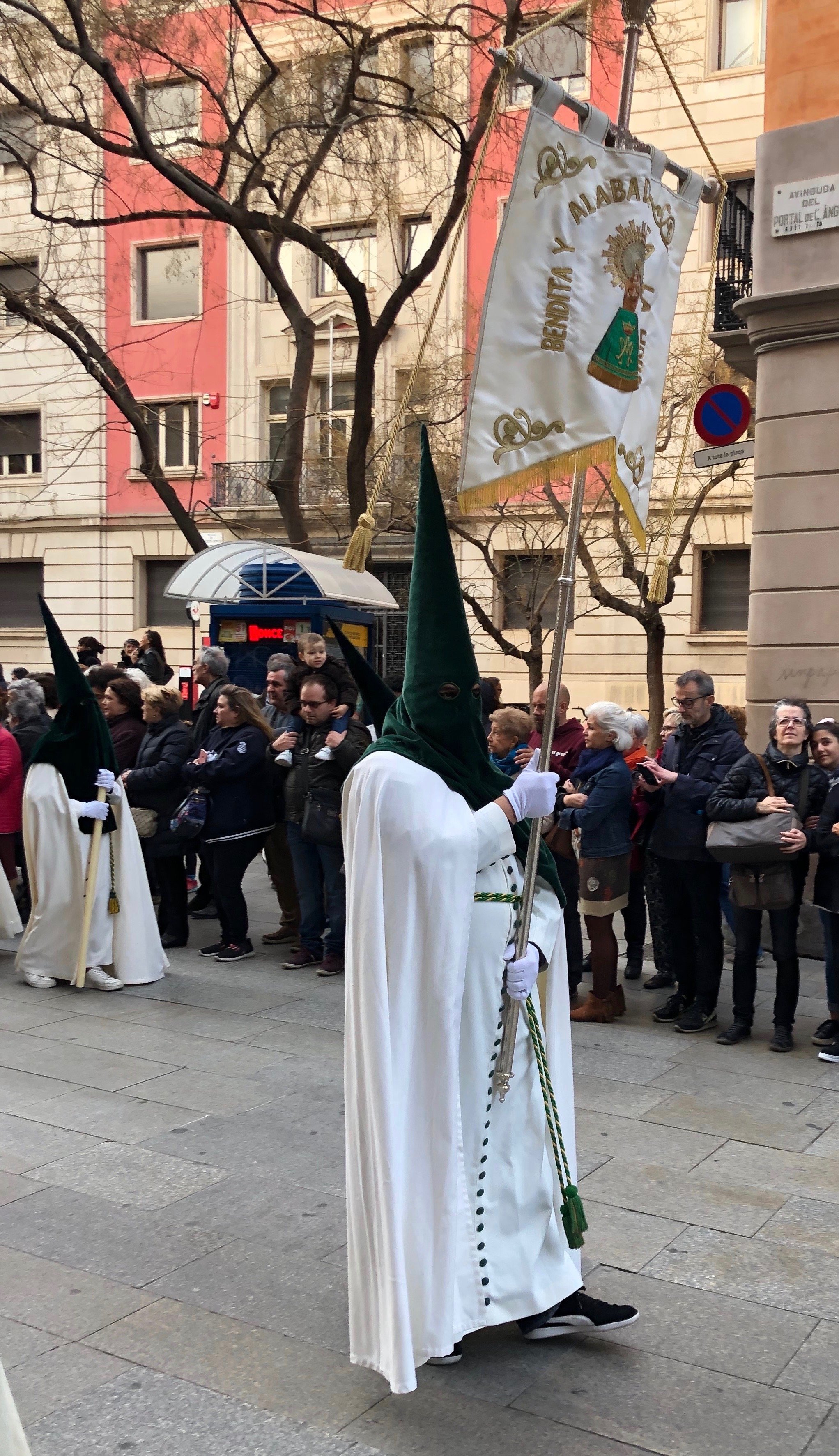
The farther we’d gotten away from the Cathedral, the more secular the crowd had become. There were some seriously authentic local believers pushing up against the fence at the church—but the deeper we got into the reaches of the Quarter, the less it seemed like Easter and the more it seemed like Bumbershoot. The crowd got younger and drunker and less-Catholic, and there were more phones held aloft stealing video of what was intended to be a very serious & purposeful religious demonstration. We ducked out of the pedestrian stream and into an ornate arched doorway to regroup and to ask Edie’s phone where in the hell our hotel was.
“Whoa,” I heard her say, as soon as she’d shouldered out of her pack. “That was weird…”
I was taking off my own pack and pulling out my water bottle. That’s literally all the time it had taken for two young men to grasp the shoulder straps of Edie’s day pack and start to walk away with it. She’d essentially watched them pick it up just inches from her and had grabbed the nearest strap before they were so much as a step away.
They shrugged and let go, disappearing nonchalantly into the festive mob. They didn’t run. Edie said she saw them later, and they’d gazed at her as if to say ‘OK, you win the first round…’ It was very Spanish.
The Hotel Continental was right on La Ramblas directly across from the Font de Canaletes. I don’t know if it was originally a prison or a tire store or what– but I don’t think it was built as a hotel. Eventually we navigated the Escheresque network of staircases and checked in at the mirrored front desk. Our 4th floor room had a balcony and an ashtray and two twin beds pushed together. We opened a bottle of white and called Patti to let her know we’d arrived safely in Spain before showering and changing into our eveningwear.
The Gothic Quarter. Never having been to Europe before, I totally dug London and of course Paris France is priddy neat also. But I fell hardest for Barcelona, and nowhere is the identity of this mysterious city on more authentic display than in the old centre. Sure, it’s had plenty of facelifts– some as recent as the 1970s. But the original spirit and function of the district is apparent to the extent you can almost still smell it. There are plenty of gargoyles and grotesques and fountains and menacing iron gates. Just the narrow carless streets and dark arched alleys are enough to give a visitor the essence of the place. Paris is gray. The streets, buildings, people and skies are gray. But Barcelona has so much rich brick and tile and color—it seemed very alive by comparison…
It was getting dark as we emerged from the Hotel Continental looking for soul food. The Good Friday night throngs flowed to and fro along Las Ramblas, the vendidors hawking everything from bottled water to Catalan flags to those propeller boomerang things that zoom 60’ in the air. It was a festive atmosphere quite unlike the somber mood back nearer the Cathedral. These folks were not nearly as bummed out to learn of JC’s death—they were here to partay.
Choosing a tapas restaurant in Barcelona is like trying to find your favorite tree in the forest. We walked by a dozen before ducking in to one that looked nice. They’re all nice! The dark & dashing waiter was appreciative of Edie’s excellent Catalan and she ordered us some plates, among them probably the best scampi I’ve ever had and I’ve had a lot of scampi. I loved that Edie was enjoying seafood, as she never did as a kid. Funny how a few months out of your comfort zone can adjust your tastes…
We left the restaurant with full bellies and a corked half-bottle of white and proceeded to continue exploring the ancient quarter. Lots of shops & bars were open, but in fact many were not– and we would discover that a lot of stuff either was not open at all during this holy week or else regular business hours were even more irregular than normal. Ah, the riddle of Spain!
We finished the restaurant takeout wine and Gulu’d another. In fairness I should say that I finished the wine and secured another. It was fun to have a glass with Edie here and there throughout Europe, and I got a kick out of her never being carded because carding isn’t a thing in Europe. But in reality, Edie didn’t usually have a drink even at mealtime, and on this particular night it was me who was drinking la parte del leon of the wine. Perhaps this fact was apparent, as it was about this time that we fought off our second set of Barcelona’s finest.
We were meandering down yet another charming calle when two jovial young men in their late teens approached on a bicycle—one at the wheel, the other in-front on the pegs. Edie & I were having such a good time, and as the boy in-front jumped off the bike it was apparent that he too was having such a great time tonight in Barcelona! Presently, he engaged me in a kind of playful dancing game, as if he were trying to steal an imaginary soccer ball I was dribbling. I was stoked that we were both having such a killer time! I looked down at our dancing feet and in the amount of time it took to do so, there were three more of his adorable, smiling friends also playing the playful dancing soccer ball game except that they were also digging their hands into my pockets and clawing at my bag. They weren’t trying to steal an invisible soccer ball.
Despite my relaxed state, I quickly realized what was happening and spun out of the dance circle, gripping tight my shoulder bag that contained my phone, money, journal and wine. Just as quickly as the gang had materialized, they were gone–folded silently back into the shadows of the Gothic Quarter in-search of some other tipsy chump. This victory was mine, but I wouldn’t venture into the streets of the city again all week without the flesh-colored moneybelt I’d promised Patti I would wear in Barcelona. The city is known for its pickpockets for good reason. They’re not violent or particularly aggressive—they don’t smash & grab. But they are clever, not to mention cute. We left the city leading 2-0, but we’ll be back some day and I’m sure they’ll be waiting for us…
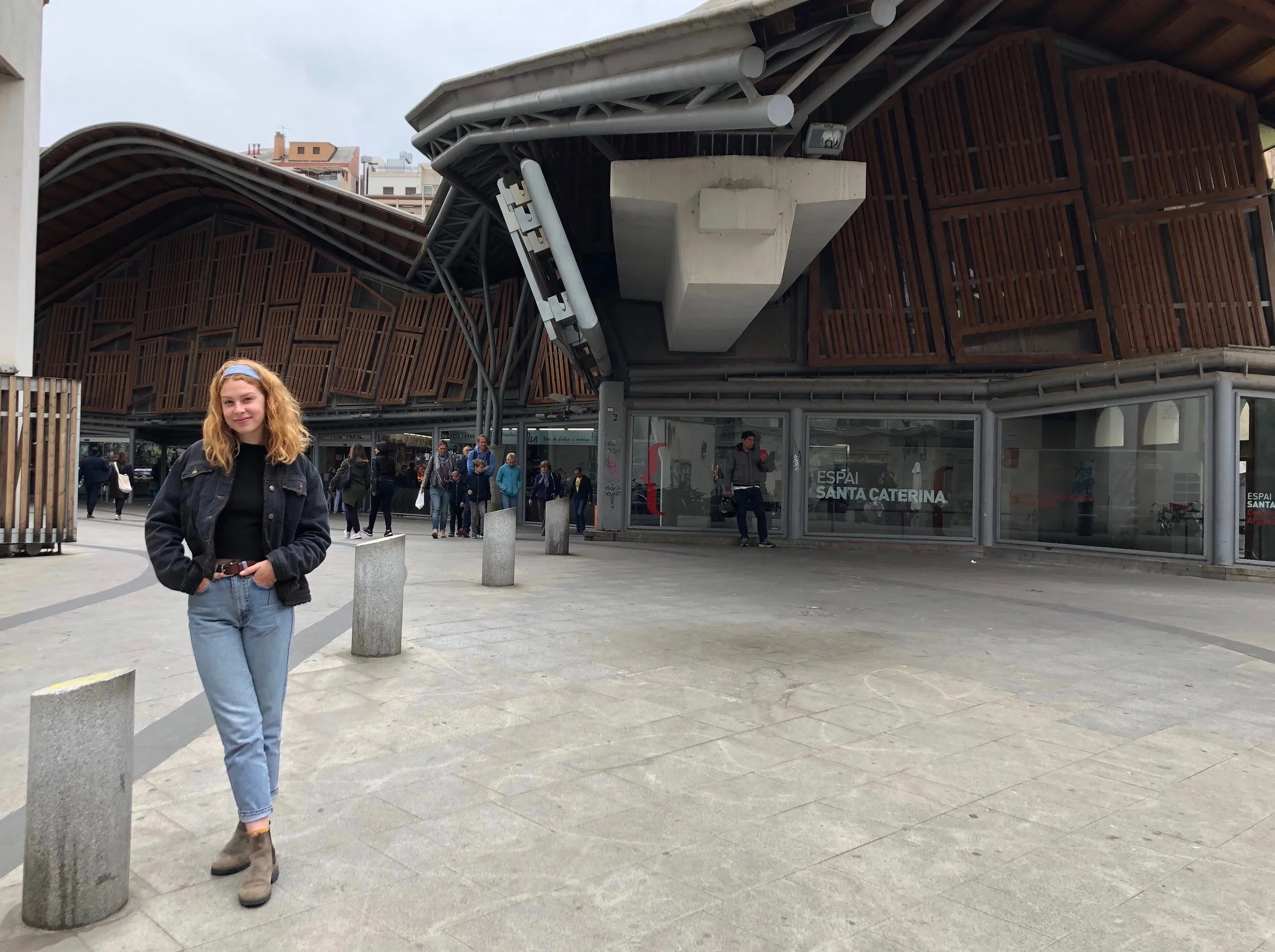
el Mercado
Holy Saturday commemorates the day Jesus lay in the tomb between crucifixion and resurrection. Even I know that. No better way to observe the occasion than to trip around the Gothic Quarter some more and visit the renowned MACBA Skate Spot at St. Jordi. Later we walked through the Mercado de La Boqueria. I wasn’t in the market for fresh swordfish or fresh eggplant or impossibly fresh poultry or fruit or cheese or ox livers or cockscomb. But if I were, I’d have been accommodated– with each stall specializing in one unimaginably fresh delicacy or another. I’d watched some fairly primitive live butchers in both England and France. These Spaniards were cutting animals, too, but there was not a drop of blood or fleck of membrane to be found. It was the cleanest working market I have ever seen– a veritable temple of sanitation.
Reluctantly we left the Quarter mid-afternoon to find our AirB in the Lesseps neighborhood just few Metro stops away. We ended up later by someplace called The Family Segrada or something, so we stopped there and walked around. But it was under construction, like The Pirates of the Caribbean sometimes is, so we didn’t go inside…
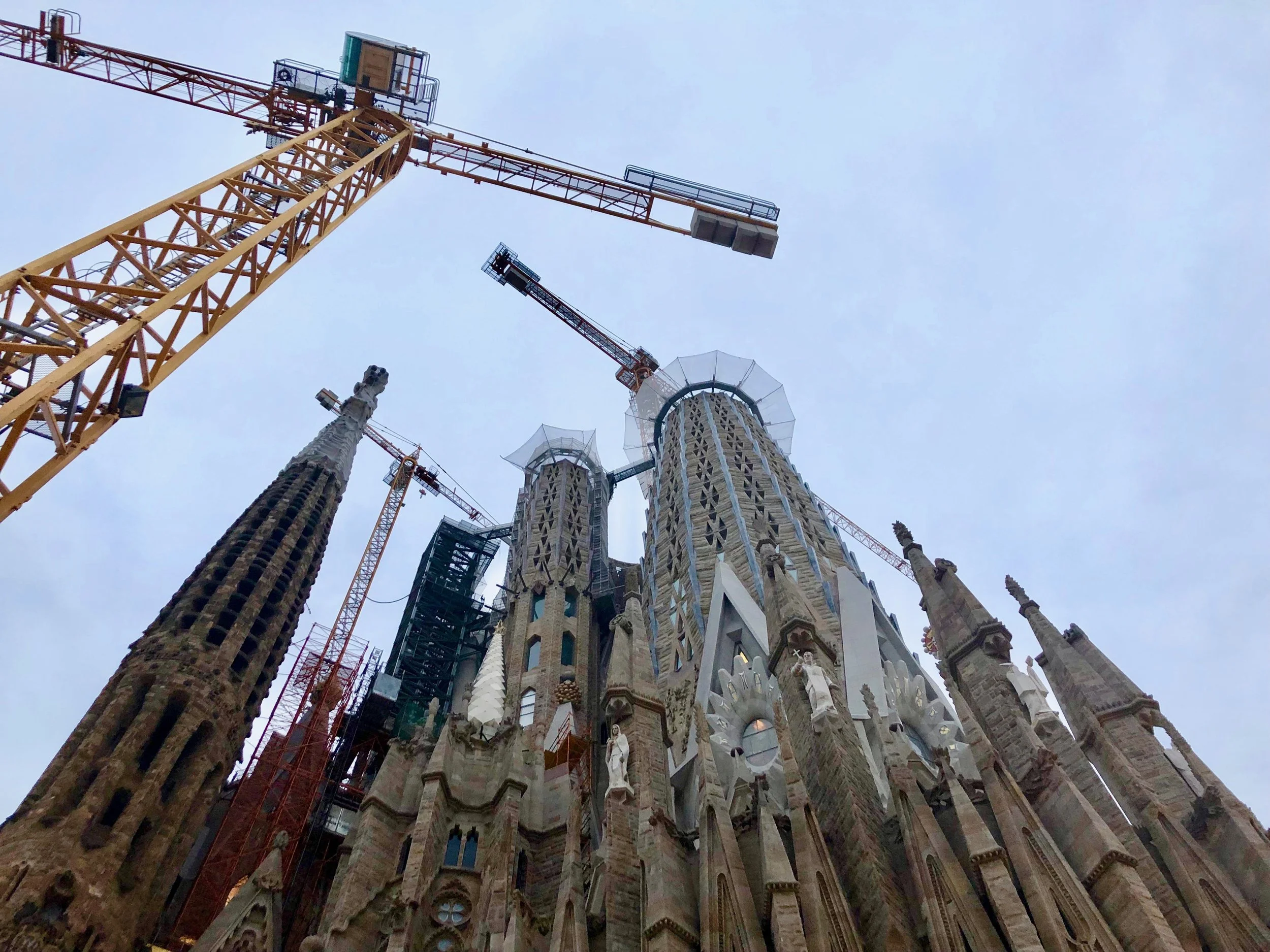
Closed for Construction
Easter Sunday in Barcelona was super fuckin’ windy. We’d been watching the weather for a week, and the forecasts for Barcelona had consistently featured those little animated blowing clouds, indicating wind. And sure enough, a strong breeze was blowing in from the south on Easter Sunday– and when a strong wind blows through an old city, you invariably get a lot of grit in your eyes and hair.
After a cappuccino and a quiche in Vila de Gràcia, we caught a Metro then a bus to the base of Tibidabo where we boarded an ancient cable tram that labored us to the top of the mountain—the highest point in Barcelona. It was even windier up there, and my hat blew off and across the plaza. Edie’s hair flew around her face like claymation and after staring at her for a long moment, I took a picture because I knew it would last longer.
Oh my heck, were having a such a great time. It would be a bold-faced falsehood to say that I hadn’t worried just a little bit before the trip about whether Edie & I would be compatible traveling companions for two full weeks. I knew were were going to be jazzed to see each other and that we’d be taking in some thrilling sites. I knew she’d been having a killer adventure and that she’d be relieved to have me paying for stuff after fending for herself for ten weeks by the time I showed up. But I totally was not prepared for how well we would travel together and for what an absolute riot we would have every step of the lengthy journey.
Ours were very close quarters. She went out with local friends a couple of times in Lyon & Barca, and I went out to see the Hammersmith Odeon on that last night in London. But otherwise, we were pretty much in the same immediate airspace 24hours for two full weeks including usually sleeping in the same room. And we could not have gotten along any better. We felt like walking at the same time. We felt like eating at the same time, talking at the same time or just being still and not talking at the same time. We had some very meaningful conversations but other times just laughed and laughed at the most inane nonsense. Practically until wetting our pants, we laughed.
But standing so small in front of the commanding Temple Expiatori del Sagrat Cor on the top of a holy mountain on Easter Sunday, I again felt the nagging of trip-end anxiety from somewhere inside me. By this point, I was halfway through the last leg. I’d be getting on a plane in a mere 72 hours and going back to grody ol’ America. Edie would remain in Europe for the last push of her mad season, but I’d be back at home sorting souvenirs and going through photographs, trying to put the Trip of a Lifetime into words. I still am.
Snapping out of my melancholy daze and resolving there wasn’t a moment to waste, we blasted back down the mountain through the ivy & cacti & scrub pines as fast as the cable tram would take us, which wasn’t actually very fast. First stop was Easter Brunch, which we presently conjured in the form of Sangria & Paella in the regal L’Antiga Esquerra de L’Eixample neighborhood. Sunday is laundry day in Barcelona, and Easter seemed no exception. Every balcony in the district had colorful garments draped over the rails drying, many with the Catalan flag underneath like a tablecloth.
We’d walked the sands of Sant Sebastia in the dark on Friday night, but hadn’t beheld the marvel of the sea in the light of day yet– so we followed the gritty breeze toward the mighty Mediterranean. Along the way, we fought through the vendors of La Barceloneta, selling everything from sunglasses to jewelry to visors and knock-off Adidas’s and Louis Vuiton [sic] handbags, laid out on blankets. Block after block, blanket after blanket. Each city had its version of these bootleg vendors all selling mountains the identical merchandise for one Euro. There’s something odd and perhaps even ironic about the Senegalese selling Eiffel Tower keychains made in China. Truly a global transaction. How there’s enough of a market for as many of them to be out there hawking is beyond me. Still, there they were.
Easter Brunch
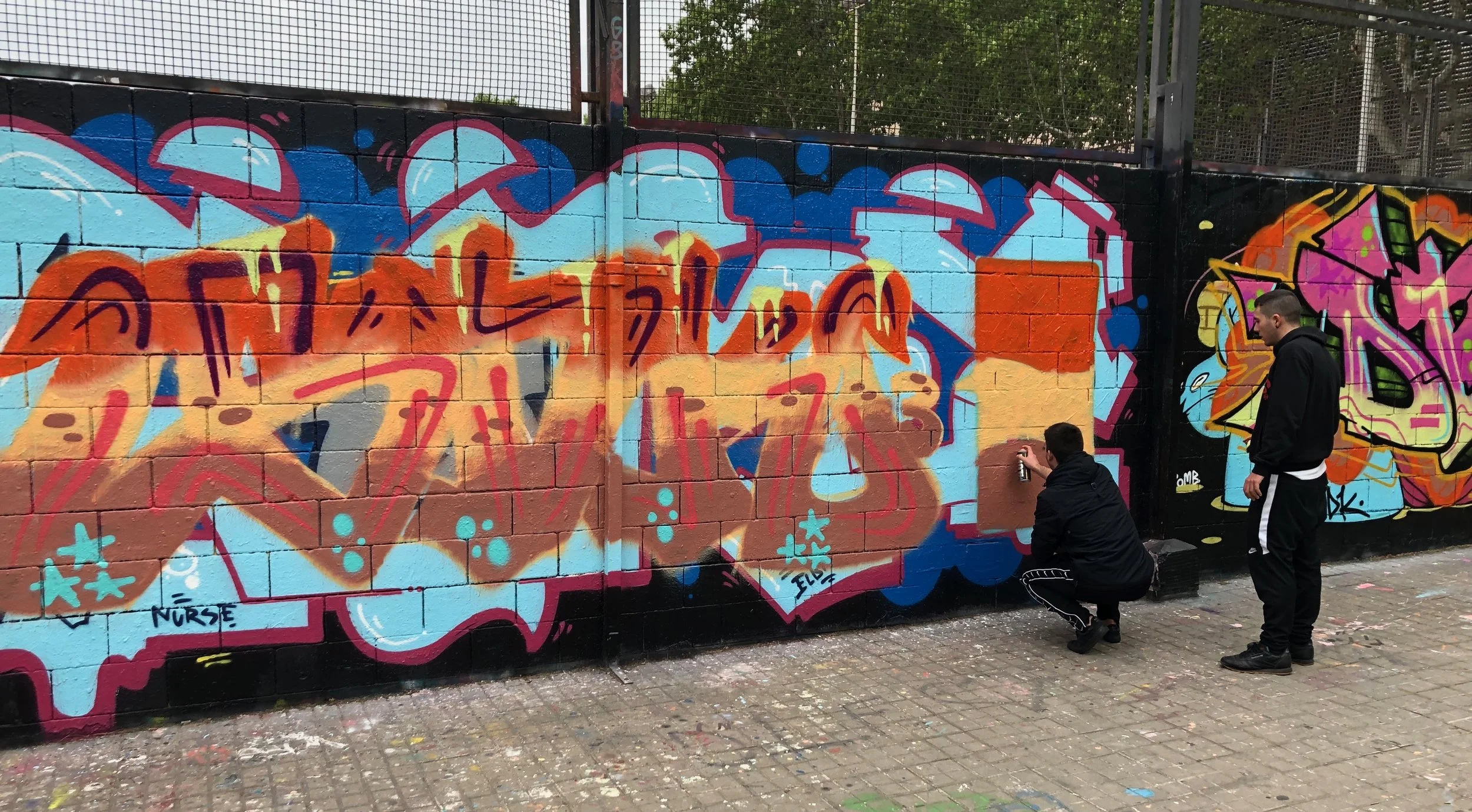
Jardins de les 3 Xemeneies
Beyond Vendor’s Row, we finally reached the beach. The tide was so far in that it looked like the surf was crashing right up to the seawall. All beaches are made of sand and salt water—but they’re not all the same. The Mediterranean Sea is different from the Pacific or the Atlantic. The sand is different for one thing. Not fine like Mexico or Florida– more coarse like at Tahoe. The water was the same color as the steely sky, and it was still super windy. The parasailers or wind gliders or wave stealers or whatever you call those insane maniacs were just flying all over the place, catching the tops of waves and sailing 40’ above the surface. There were a couple of little kids wading in the shallows, but other than that everyone was dry and mellow, sipping ten-Euro Mojitos and kicking the soccer ball (a real one). We sat and stared at the breakers for while before snapping a selfie and moving on. The clock was running.
I could have spent a week at the Mercat Port Antic just off the marina, with its tented booths overflowing with silver, brass & porcelain. I’m a sucker for an antique mall in the toddling Pacific Northwest, let alone the old world where there’s been something of a headstart. Some genuinely antiquated stuff in these booths, and as in France I fondled much of it but ended up settling for a couple of skeleton keys that I talked the vendor down on just as he was starting to pack up his collection for the night.
Next was the incredible Jardins de les 3 Xemeneies graffiti park. Barcelonans like their spray paint but there seem to be some unwritten rules observed where muraling is concerned. Churches generally are off-limits. I did not see any spraypainted dogs, cats or taxi’s. But a lot of the rest of the city is covered in beautiful urban murals. So much color and style and scale. I don’t know how good it is for the environment, but it’s pretty striking to look at. They also really like stickers. Doorways and light poles and parking meters and street signs are skinned in layer upon layer of stickers. Edie & I didn’t have any spraypaint, but we did get into the sticker act a bit. Not knowing if I’d be able to find the traditional PAAS easter egg dye kit in Spain, I bought one in Bellingham and packed it along. We had dyed a half-dozen eggs the night before, and I’d brought along the little sheet of stickers on our epic Sunday ramble. So in Jardins and through the Ciutat Vella we left our mark. Ours were subtle and humble contributions, but we got a pretty good kick out of behaving like natives. So European!
Happy Easter!
We’d been walking all day. We’d collected a few souvs and our daypacks were bulging. We Metro’d to Lesseps for a quick break and a change of shoes. Like Uncle John used to say, ‘take five if you’re tired; take more you’re fired.’ We didn’t have time to rest long. In an hour, we were back on the street. We hid the Easter eggs on the way to the sushi restaurant on the other side of the neighborhood. It’s not as if sushi is a traditional Easter meal for us. We just both felt like sushi and it was excellent.
Edie left from Lesseps to meet a couple of friends. I tried to Gulu a bottle of wine, but luck was against me this night. I got pretty lost walking back to the apartment, the neighborhood quite deserted by midnight. I eventually found it (yes: I am not still wandering in Barcelona looking for a rented apartment) and crashed out pretty hard. I had 10am tickets for the Museu Picasso in the morning.
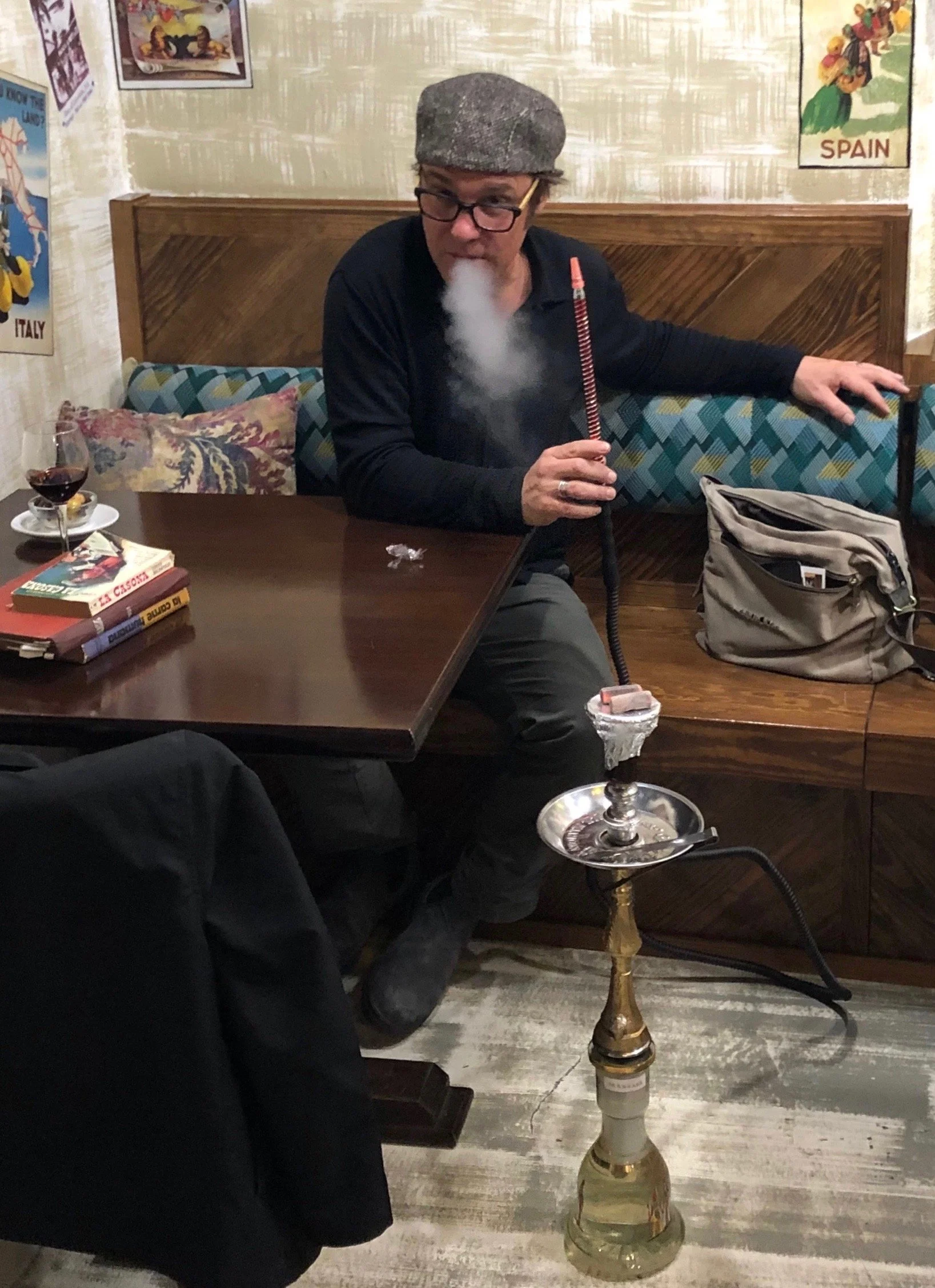
I don’t know much about art. I know what I like, as they say—but I don’t know a lot about real art. I dug the 5th floor of the Centre Pompidou in Paris and there were some rad busts in the British Museum in London. I’ve been to the Met and the Moma in NYC and I love the alligator pit in Golden Gate Park. Actually, I guess that’s an aquarium. The point is, I can look at art in a coffee table book. If I’ve got 4 days in big city, I have a little trouble spending even half of one inside nodding at art that could be anywhere. I’d rather watch locals buy meat or sit on a park bench and eavesdrop on the conversation of a couple of suited, smoking old men who look old enough to have drank with Dali. Even if I can’t understand what they’re saying. I just like watching people.
That said, the Picasso museum was pretty cool even though everyone was staring at their phones because that’s how the guided tour was administered. Not the little earbuds like some places. I didn’t buy the tour, and it made it feel kind of weird thinking everyone was just wandering around bumping in to each other checking their Instagram.
Edie had spent the night with friends and was supposed to meet me down there, but she didn’t. So I wandered around the Quarter for an hour after breaking Pablo trying to get to the bottom of my souvenir list: ashtrays crafted from aluminum cans, musty old novels en Espanol, airplane bottles of absinth, tiles from the tile store. I was getting pretty thirsty by this time, but everything was suddenly closed. We hadn’t spent a weekday in Barcelona yet, so I wasn’t sure how extensively siesta would be observed. But the neighborhood was fairly suddenly not open, and only then did it dawn on me why. Eventually I found an open Indian restaurant and ducked in for a half-carafe of sweet red and a hookah.
A little bit light-headed, I got back on the cobblestones for a leg of the trip I’d been dreading—the preparation for departure. I needed some kind of bag to use as a second carry-on and secured 20-Euro duffle with BARCELONA on the side for 15-Euro. I grabbed a slice of pizza and snapped one last selfie before ducking into the Metro station at Las Ramblas, bound for Lesseps.
(What wasn’t closed during siesta, or at any time at all throughout all of Europe was KFC. By far the most-popular American icon of any kind was the Colonel—more popular than Ronald McDonald or the Burger King or even the Starbucks mermaid. In terms of garment logos, hands-down the most common was The North Face, maybe because the Europeans still thought it was winter even though it was 60 (Farenheit). Levi’s, Blundstones and Doc Martens were also very popular. But the Colonel was King– no contest…)
Additionally, Barcelonans:
Smoke but also vape
Busk
Wear pale pink leather jackets (the ladies, at least…)
Root for the Los Angeles Dodgers in baseball
Use the code ‘coffee shop’ when soliciting marijuana
Guess that I am Italian (twice) or Mexican (once)
The fact that anyone would think I was from Mexico or Italy underscores one of the most pleasant surprises from my trip: that Europeans are not terribly fascinated by Americans or by extension particularly aghast at what is going on in America. Like Flava Flav, they got problems of they own– those strikingly similar to our problems here.
In bygone eras, Americans had probably walked through Europe wearing stars & stripes and dishing out high-fives– dignified members of the Greatest Generation from This Great Nation. By this late hour, I wore a maple leaf lapel pin and kept my voice down and they still thought I was Italian. In any event, Europeans couldn’t give two shits about Donald Trump– a fact I was quite relieved to learn.
************************************************************************
You can’t see Barcelona in five days. We’d tried– but headed south & west toward our final flop in the airport-convenient La Marina del Prat Vermell neighborhood Tuesday mid-day we encountered the stunning grounds of the Museu Nacional d’Art de Catalunya and I arrived at the grim realization that there would be much left unseen this trip. We used the Metro, a surface bus and eventually our feet to reach our final AirB. The key was buried in a planter outside and we wearily rode the elevator to the 17th floor.
I had fallen hard for Barcelona. In London I spoke the language. In Paris, there were some sites I expected would change me, as Paris does. But Barca made my heart race from the start. Her brick, her domes, her tile florets. The iron! She is a saucy dama with many pockets. I imagine one could live inside her for an entire lifetime and not solve her. I was there for five nights and haven’t stopped thinking about her since. But I don’t know anything– I’ve not been almost anywhere. If I spent five nights in Bali or Berlin or Bermuda, maybe then I wouldn’t have such a boner for Barcelona or even be stoked to live in Bellingham.
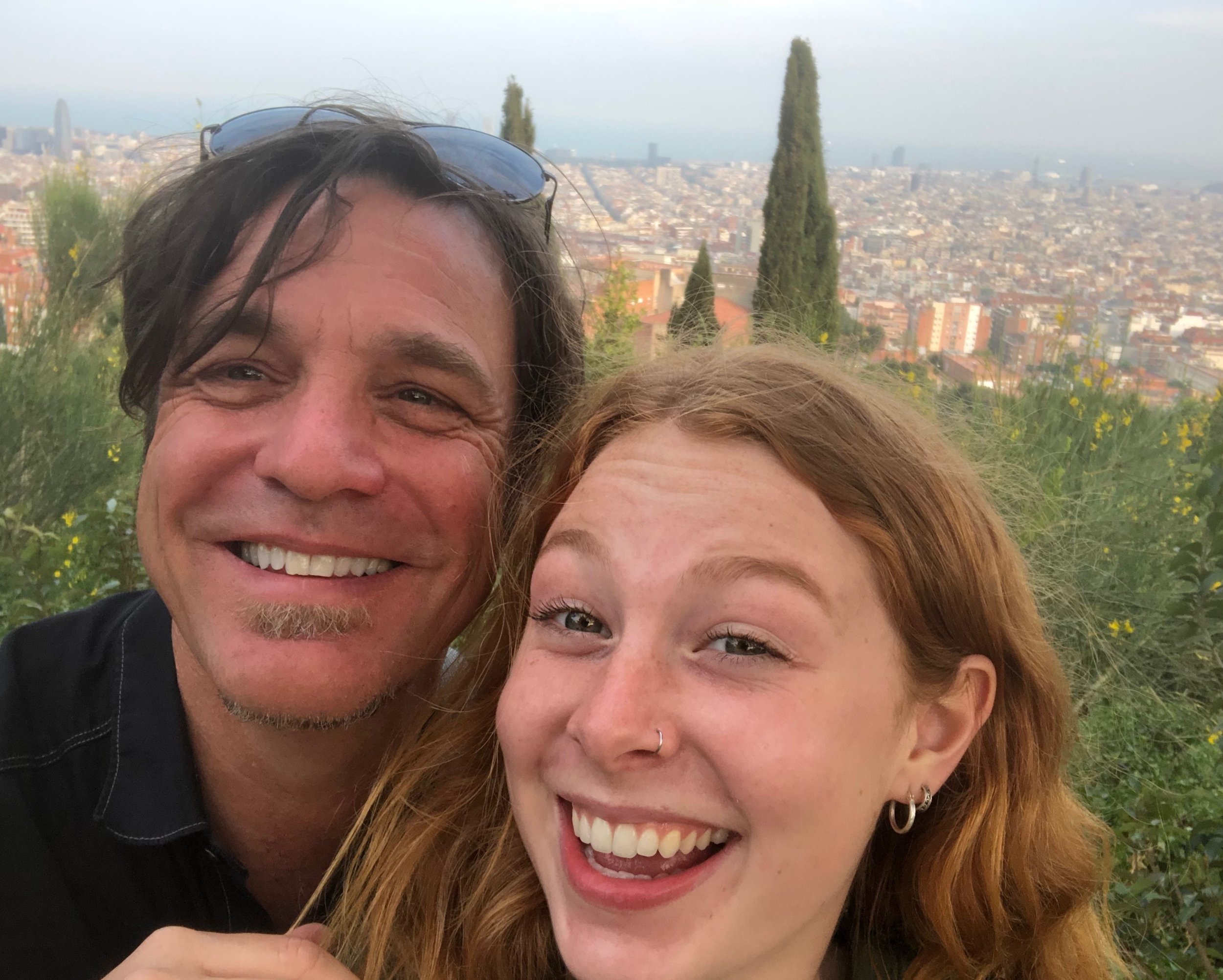
Selfies en la Parc
The sun hadn’t been out since that first evening in town, but it shown brightly that last late afternoon as we climbed up through the viaducts of Parc Guell. Antoni Gaudi’s seed is of course smeared lasciviously all over Barcelona. I’m glad he built the stuff he did–somebody had to. But I guess other than marveling at the pure zaniness of it, I kind of prefer the more traditional Spanish stuff. We didn’t see all the Gaudi buildings in Barca, but we saw several representative works. How it even stands up is a mystery, actually—it looks to have been made with paper mache or Bondo, not sticks & stones. It’s as if Dr. Seuss had designed a Playmobil castle. For my money (and of course merely gazing at architecture is often free) the Palau de la Musica Catalana or the Arc are more pleasing. But to each their own…
Descending from the Parc, the realization that I had less than twelve hours left with Edie was starting to set in. We were standing on a crowded shuttle weaving its way down the steep hills around the parc, and both our heads rolled from side-to-side with the lurching of the coach. We were just spent. But we had one more destination — one which I’d been anticipating since leaving Bellingham. The restaurant Can Maregarit had been recommended to us by the all-knowing Gottleib Cardini and I’d actually reset my Google password en Espanol earlier in the day in order to make a reservation—so we were going!
We made the Poble Sec neighborhood via Metro in plenty of time for our 21:00 reservation and closed on the location on-foot. The neighborhood did not look like where one would expect to find a internationally renowned eatery, but we kept plodding—hungry by this time and thirsty too. Thinking earlier that we were headed toward a fancy-shamncy destination, I’d suggested Edie wear the best clothes she had left. And those weren’t that great. Her scuffed-up trekking boots, torn cargo pants and a stained peagreen sweatshirt was the best she could do at this point in her 3-month backpack. I hoped the maître d’ would seat us.
We stood on the sidewalk regarding the building. Surely, there must be some mistake. The street had the right name and the numbers above the splintered wooden door were the same as what we were searching for. Google Maps congratulated us on having reached our destination. But this couldn’t be it…
We tentatively cracked the door, peeking inside thinking it might be somebody’s house or even a garage. There were candles burning on the crooked wooden table in the center of the room, and three huge dusty wine casks loomed along the right wall. We stepped in and looked around, our eyes adjusting to the light, even dimmer than the dark sidewalk. The space smelled like the fourteenth century.
Presently a very small yet authoritative older gentleman appeared and asked (in Catalan) if we had a reservation. Edie responded (in Catalan) that we did—for Braimes, a table of two at 21:00. He consulted the ledger on a side table for quite some time before nodding. He invited us to take a seat at the table before disappearing again.
Momentarily he re-appeared and strode to the wine casks, beckoning us to follow. He then informed us (in English) that the first cask was red, the second sweet white and the third strong white. He gave us both a small straight glass and elegantly demonstrated how to use the tap on the cask by filling a third glass for himself. He raised it in our direction, then disappeared again. Edie pulled herself a glass of the sweet white; I chose the strong. We sat back down.
We were alone in the cavernous foyer. The rough-hewn raftered ceilings were 20’ high and the floor was of ragged brick. The high windows were opaque from years of candlesmoke and the table hadn’t been wiped off since it was built. We had arrived…
This was the perfect time for me to break down in tears, telling Edie how proud I was of her and how much I’d valued the opportunity to walk with her these past 15 days. She was so capable, so resourceful and courageous. I could scarcely believe that the boisterous toddler I’d played balloon games with a mere seventeen years ago was the same poised young woman interpreting for us in Spanish and navigating every public transportation and accommodation through three countries. Her hair was starting to dread and her boots were a fucking mess. But she glowed strong in the dim, dank light and she too shed one as we sipped the homemade white and reflected back on the high times of the past two weeks.
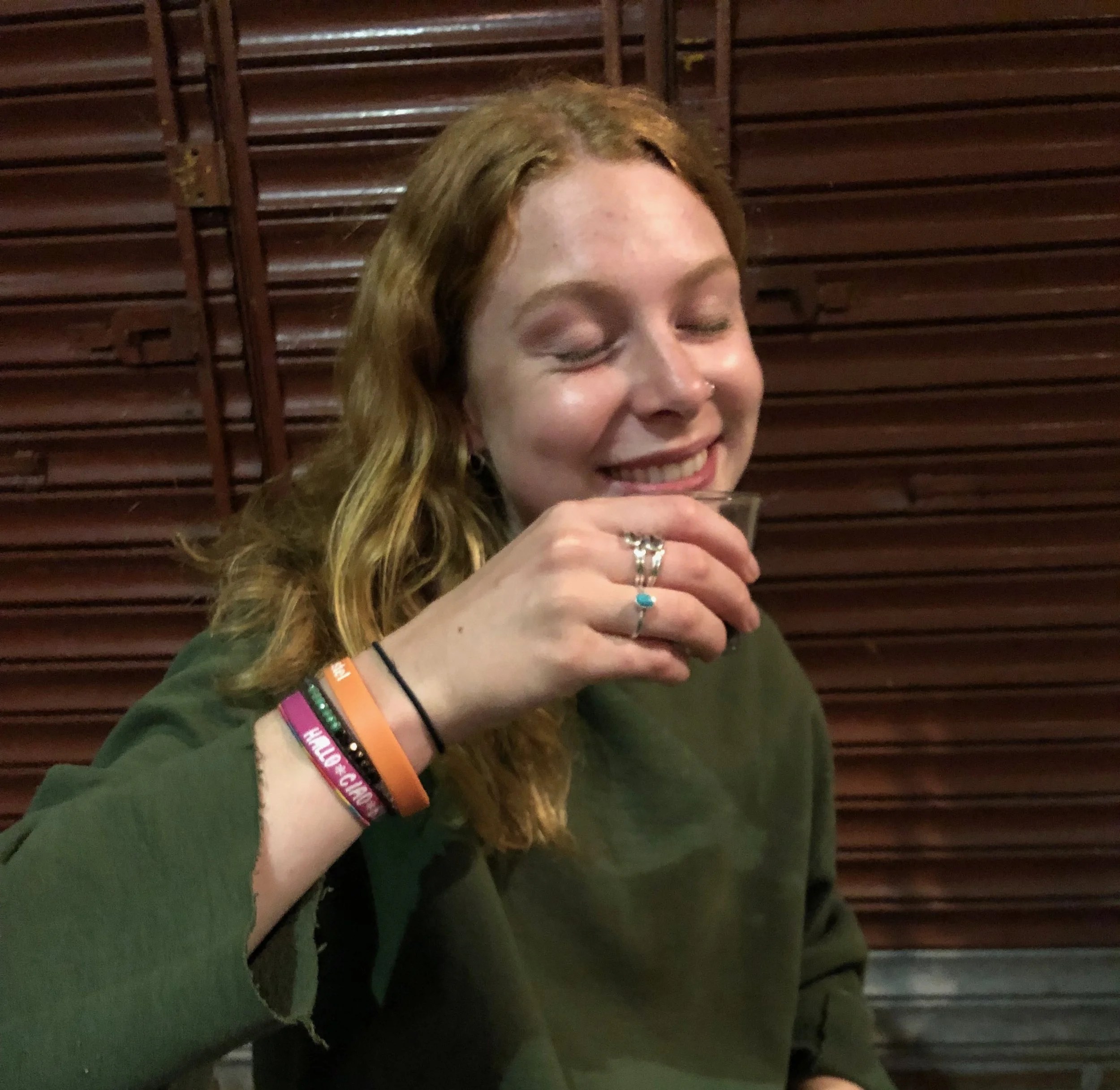
the sweet white
The meal, of course, was completely insane. The menu was a tattered page without prices, barely legible. I ordered lamb chops, and Edie—on Cardini’s recommendation– had the rabbit.
“Dad,” she asked, peering at her plate in the candlelight, “is this the rabbit’s face?”
“Dude,” I said, pouring myself another small straight from the decanter of strong white on the table, “I’m sure they don’t cook the rabbit’s head!”
Edie discreetly forked the rabbit’s head toward me and I saw if not its floppy ears then at least its obvious jawline and rabbitty row of rabbitty incisors. And of course we just laughed and laughed. An it was delicious.
Nine hours later I was on a Metro headed toward the Barcelona Airport. Doppelgangers had presented themselves throughout the journey, but on this last hour in Europe I found it strange that Kim Reeves would be sitting next to Tom Isenhart with Jason Wheeler standing near the door.