

A Brief History of Panic
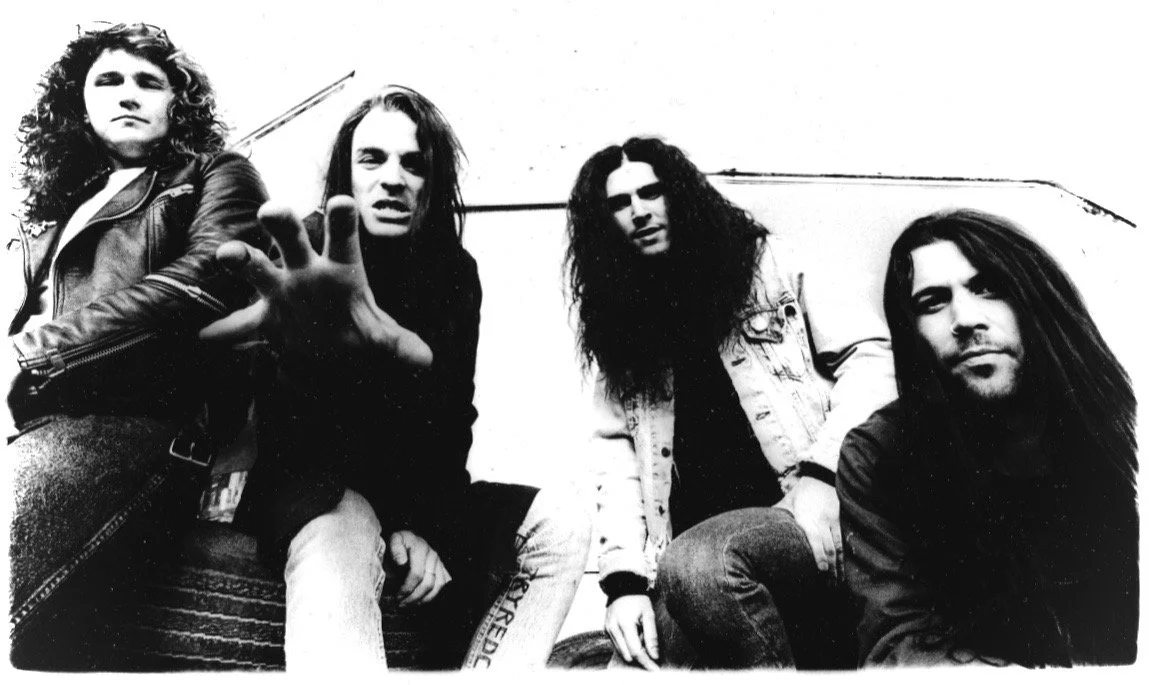
In the autumn of 2016, I got a Facebook message from a headbanger in Moscow (Russia, not Idaho!) asking some questions about Panic. In itself, this was not unusual. Once every few months I hear from someone asking about the band. I figure it’s easiest to track me because I have an uncommon name…
Konstantin Chilikin has an on-line metal magazine called Stay Heavy and wondered if I’d agree to an interview. I said of course, and gave him my email address to send the questions.
What he sent was the most-exhaustive list of prompts I’d ever seen. How this guy from the other side of the world could even know about some of the shit was beyond me. It sounded like he was writing from Burien! For a second, I actually thought it might be someone from within the Circle of Trust playing an internet prank on me– because some of this stuff bordered on inside jokes. And it’s not like this guy has just been sitting in his parents’ basement in Moscow obsessing on Panic since the 1990s. He’s clearly one of these guys who enjoys research, and he has accumulated this level of knowledge about hundreds if not thousands of American metal bands from the last 30 years.
I was pretty overwhelmed at first, and hastily shut down the email– trying to forget about it. Occasionally I’d open it back up and eventually I started pecking away at it. More than a year later, I’d finished what had become an 10,000 word history of the band, using Konstantin’s questions as an outline. It was actually a real gas to write, with lots of trips down memory alley and more than a few fact-checking sidetrips. It’s fun to research yourself– you can find out some stuff you’d forgotten.
Anyway, it’s far from ‘complete’ but it is accurate. Also, it is not for everyone. I’d say for completists only. Some of you will find yourselves in here. A few of you might not find the light in which history has recalled you to be very flattering, in which case maybe you shouldn’t have been such a fuckin’ dick at the time. History aint pretty…
In order to keep as much of your attention as possible, I’ll break this into three movements. I’ll add Konstantin’s prompts at the top of each section for context. Jack, George & Marty have already read this and issued their fondest endorsements. I hope you like it, too, although truthfully I don’t really expect you to read it…
Stay heavy,
–Braimes
Well, Jeff, let’s imagine we have a time machine and now we are ready to jump in the past. Location: Seattle, Year: 1987. Ronald Reagan is still in the White House, Starbucks still is a local company, Def Leppard has released “Hysteria”, while Guns ‘n Roses have unleashed “Appetite For Destruction”, “Slippery When Wet” is the most selling album in the USA and Nirvana is doing its first steps. And what about you and your band mates? What were you doing in 1987?
What about music scene in Seattle in the late 80’s? For many people this city is the cradle of Grunge but was there any interest in heavy metal? Were you close with guys from Forced Entry, The Accused and Sanctuary? Were you influenced by local heavy metal heroes Culprit? Did you have any troubles with hardcore / indie bands like The Melvins, Beat Happening etc.?
Tell me about the very early days of Panic. What influenced you to get in touch with other guys and form a band? What can you say about your first demo from 1988? Was it any good? Would you play it to your children nowadays?
I won’t bother you with questions about each demo but can you say a few words about that demo-era of Panic in general? Was it flooded with live gigs, new friends, business contacts, parties and whatever or was it pretty steady?
Summer of 1987
First of all, Konsantin, thanks for this very comprehensive questionnaire! Your perception of what it was like to be a PacificNorthWestern American headbanger in this particular era is very keen!
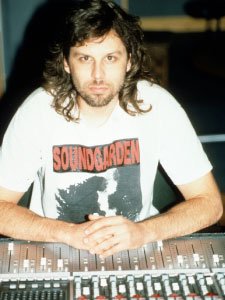
Terry Date, Seattle WA
Panic was two years old and transitioning from the name Cold Steele at this point in time. We were experiencing something of an identity crisis, torn between a few competing styles of metal. We were definitely more interested in Appetite for Destruction than Slippery When Wet or Hysteria– the latters of which we heartily despised. What we were listening to most at that time, however, was the best of the contemporary thrash metal of the day. Overkill’s Taking Over was a favorite and of course Among the Living. We were still squeezing the glory out of the previous year’s Master of Puppets, but the release of Garage Days Revisited in August really was a game-changer. Except for Marty, we weren’t much into Slayer—and we mocked Exodus openly which is ironic since they ended up mentoring us years later. We dug Trouble and Loudness and Accept. But the grunge movement hadn’t achieved liftoff yet and Cowboys from Hell was still three years away also…
Terry Date had the hot hand in Seattle at the time, and though we weren’t unanimously nuts about some of the local stuff he’d done (Sanctuary, Soundgarden, Fifth Angel) we admired his tones and sought to attach our name to his. We saved our money and went into Steve Lawson Studios with him that summer and did four songs. It’s a beautiful demo and it was really the first time we’d heard ourselves properly recorded. After the Saturday night sessions, around midnight, we jumped the 8’ chainlink fence that surrounded the festival grounds of Seattle Center, where the famous Space Needle is. It was Labor Day weekend, when the city hosts its Bumbershoot festival. It’s a much bigger deal these days, and in the post-911 security culture of the US we probably would have been arrested if not shot. But this was 1987, and instead security just escorted us off the grounds. We were pretty full of ourselves that particular night…
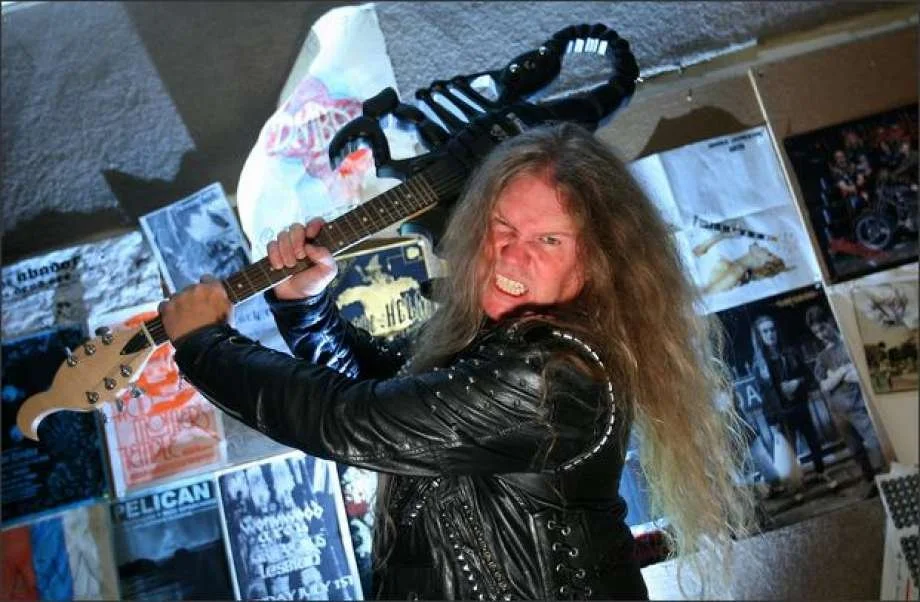
Jeff Gilbert, Pain Brain
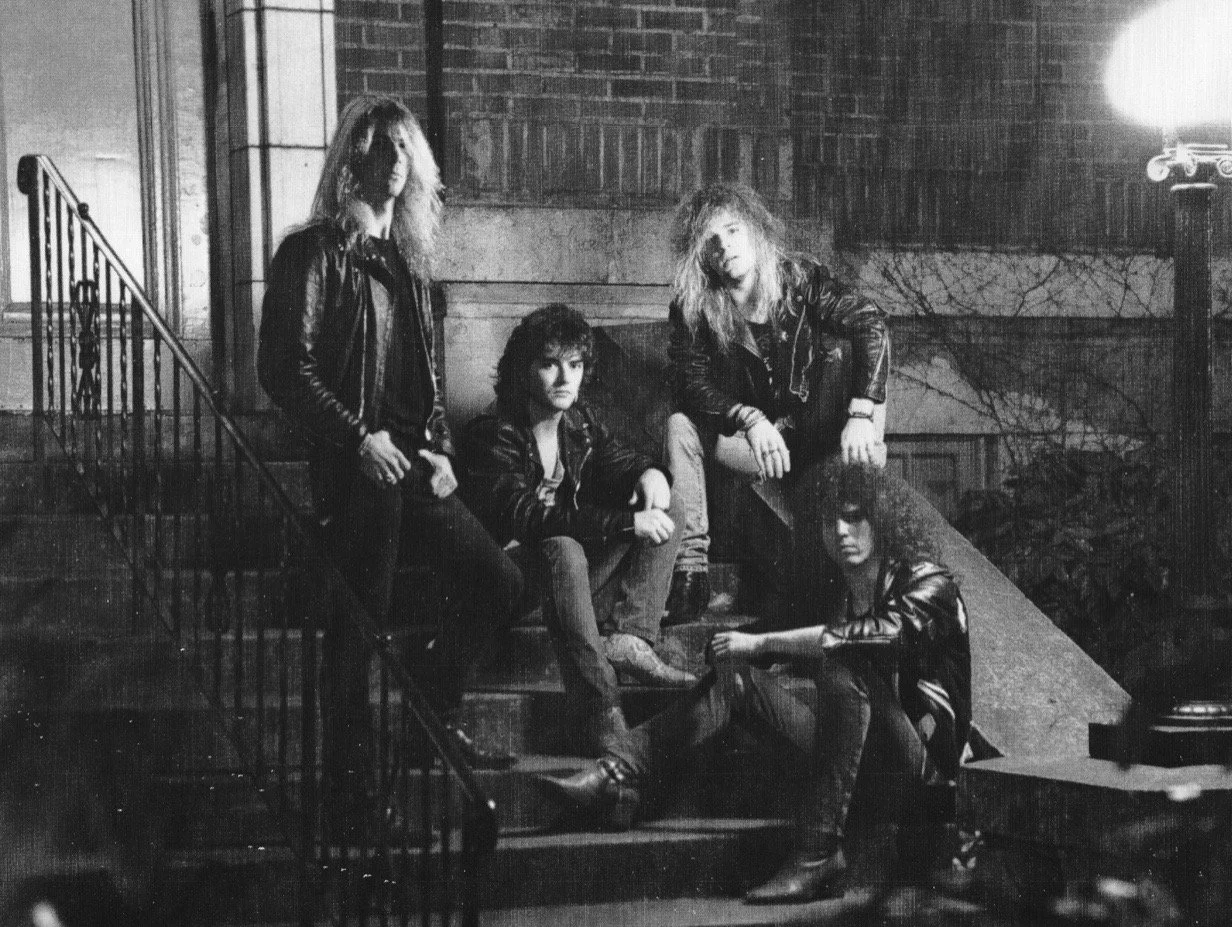
We worked this demo hard, sending it to radio stations, magazines and record labels. George had designed a killer logo and we took some photos on a stone staircase off Green Lake in Seattle. I pasted up some liner notes with lots of special thanks. The initial run of 100 cassette tapes was financed by a local record store manager named Lance Goodwin. Bubble Records was a great outlet for the latest in heavy metal, and Lance was a fan & friend. After exhausting our budget on studio time, we didn’t have enough money to pay for production!
The demo didn’t get us a record deal, but it did get the attention of Jeff Gilbert who at the time was still hosting his Brain Pain radio show on Sunday nights at the University of Washington’s KCMU radio station (now the commercially-popular KEXP). Jeff was very supportive of Panic and played the tape every week. Jeff Gilbert was definitely the first and most-important Seattle media to get behind Panic, and really helped us graduate from suburban booger pickers to downtown Seattle legitimacy in a very short time.
Late ‘80s Seattle
As you astutely point out, the late 1980s was the pre-grunge era in Seattle. It’s not as if that music hadn’t been invented yet, because Green River was certainly playing and recording as were Crisis Party, Catbutt, Malfunkshun and a bunch of other bands that would wear the grunge label later– after it was identified. The scene back then was more integrated– with the possible exception of metal. Metal is metal is metal—that has always been the case. People who don’t specifically like metal often go out of their way to avoid it; and by the same token metal fans often only consume metal shows and records. That said, Panic was always embraced to an extent by the unmetal community, and we billed up with lots of bands from outside our genre. It wasn’t a Thinking Man’s Metal shtick like BÖC—more like Drinking Man’s Metal…
I’m sorry to say it, but in those days there was quite a bit of self-aware competition between the bands in our class. Sanctuary, Queensryche and Metal Church had already graduated, of course– they had major label deals and tour support. Panic and Forced Entry and Bitter End were left to jockey for position and though there was much comradery (much of which endures to this day) there were also some conflicts. Forced and us in particular were pretty competitive. They hailed from a suburb north of Seattle and we came from the southend. So Panic’s mantra was “Northend Metal Sucks”—a phrase I still use on a regular basis to this day, even if I’m just in the supermarket or riding my bicycle. Northend metal sucks!
Culprit and Overlord and TKO were a half-generation before us, and those guys were gods to us. We were just kids going to metal shows at rollerskating rinks, and they were fuckin’ Culprit, man—the heavy metal sentence! There’s a whole coffee table book on that scene & period coming out by some guys out of Portland going by NW Metalworx. They’re putting out records, too—a real cool movement. I’ll connect you with them. I can definitely say that Culprit and Overlord and Wild Dogs had as much of an influence on my personal development as a performer as any NWoBHM band. Possibly that was because I had such great access to them—any given weekend ‘82-‘85 I could go see one of these kickass local metal bands. Those really were heady days.
I think the Melvins and particularly The Accused hold a special place in NW Heavy history. There’s never been another band like either of them—true crossover genius, both.
Early Days of Panic
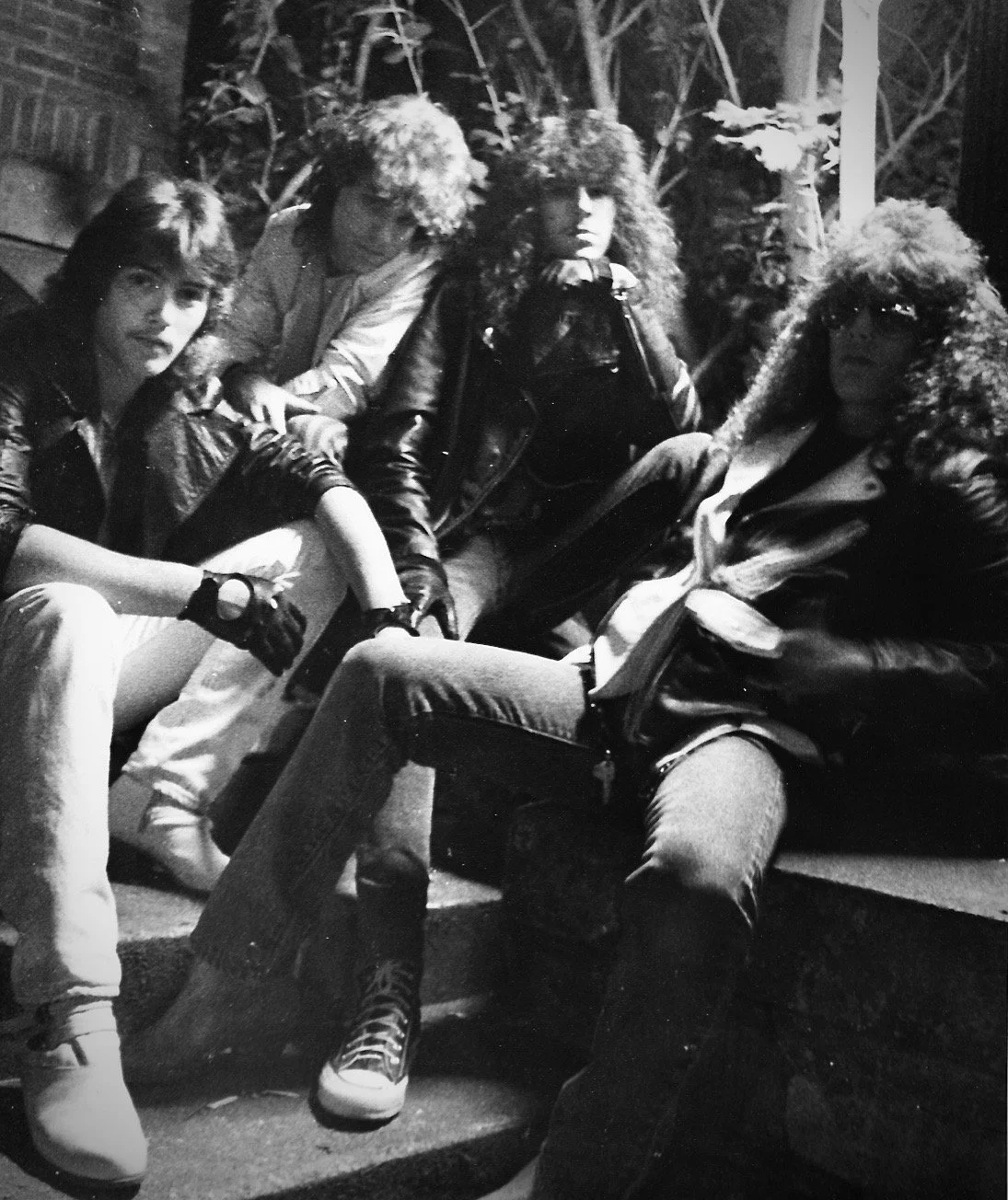
Early Cold Steele promo– Auburn, WA. L-R: Rondo, Braimes, George, Gary
Cold Steele had been practicing in the loft of George’s parents’ barn in Auburn, 25 miles south of Seattle. He & Gary (Allard) were juniors in high school and Rondo (Middleton) was a college sophomore like me in Bellingham, 100 miles north. I had done some college radio and some promoting and fanzine writing and thought I was already a rock star even though I’d never been in a band. My ego was developed enough to try singing, though, so I went down to Auburn with Rondo on Saturday, May 18, 1985 and joined the band. George likes to recall that I was drinking a beer and smoking a cigarette at 9am—and I’m not sure that’s true. But we ran through some Iron Maiden and Raven covers and there was no question about it. Instant chemistry!
We were pretty stoked. The guys were committed and they had real gear. It was hard to rehearse, though, because of the distance and because George & Gary worked on weekends. When we were able to get together it was rad– and we practiced hard and started writing some songs, the first of which was called “High Noon.” We played our first gig at a grange hall in the woods and ironically Marty & Jack’s band Strychnine was the headliner but they ended up not getting to play because we blew out the PA. Our second gig was at a kegger in the woods and Strychnine was on that bill, too– but they couldn’t play that time because the party got busted by the Kent Police.
Those were high times. None of us had been in a band before except for Rondo, but we knew we had something special. Rondo & I liked to drink beer and smoke pot in those days, but the music was always first. Lots of bands (including ours to an extent) lose that focus after time, but in those days we were very focused and totally intense on the music. The first demo from ‘87 was with Terry and then we made another one (Sex & Violence, which featured the song “911” which eventually ended up on the first record) in ‘88 with Michael Tortorello at Triad Studios. That tape wasn’t quite as even, but still had some great moments. Jeff Gilbert played the spots off it, too. And– like the first tape– it failed to land us a record deal.
Next up: personnel changes, Metal Blade, the Elton rule…
At short last, here is the second wordy, cloying, indulgent installment of a not-so brief history of Panic. Questions up-top; responses below. Pack a sandwich…
Tell me about the very early days of Panic. What influenced you to get in touch with other guys and form a band? What can you say about your first demo from 1988? Was it any good? Would you play it to your children nowadays?
I won’t bother you with questions about each demo but can you say a few words about that demo-era of Panic in general? Was it flooded with live gigs, new friends, business contacts, parties and whatever or was it pretty steady?
Why did Rondo Middleton quit the band and how did you get to know Jack Coy? Am I right thinking that Jack is older than others in Panic and already had some experience of playing in a band?
How did you get a deal with Metal Blade Records? Was this label your main goal? Did you send your demos to other companies? Do you remember your feeling when you got positive answer from Metal Blade? Was it like a dream came true or were you confident and ready to conquer the world?
And now the time machine brought us in San Francisco, 1991. You’re in Alpha Omega Studio with Gary Holt and Rick Hunolt, Steve “Zetro” Souza is scheduled to record back vocals for you, Marc Senasac is the guy who will mix the album. How cool was that?! I bet you were like children in a candy store! How did you like famous San Francisco and Bay Area? Was it still a kind of thrash metal Mecca by the time of 1991? Did you get a chance to meet other bands and musicians like Paul Baloff, Kirk Hammett etc.?
How do you view the album “Epidemic” nowadays? Do you still listen to it once in a while? How substantial was contribution of Gary Holt and Rick Hunolt to this record?
Can you comment on the lyrics on this album? They sound a little bit strange to a non-native speaker like me. What kind of message you tried to express on this album?
What can you say about the response on the “Epidemic” album? Were you satisfied with the level of promotion of your debut effort? Was it possible to see your video for “Blackfeather Shake” on MTV?
Early personnel changes
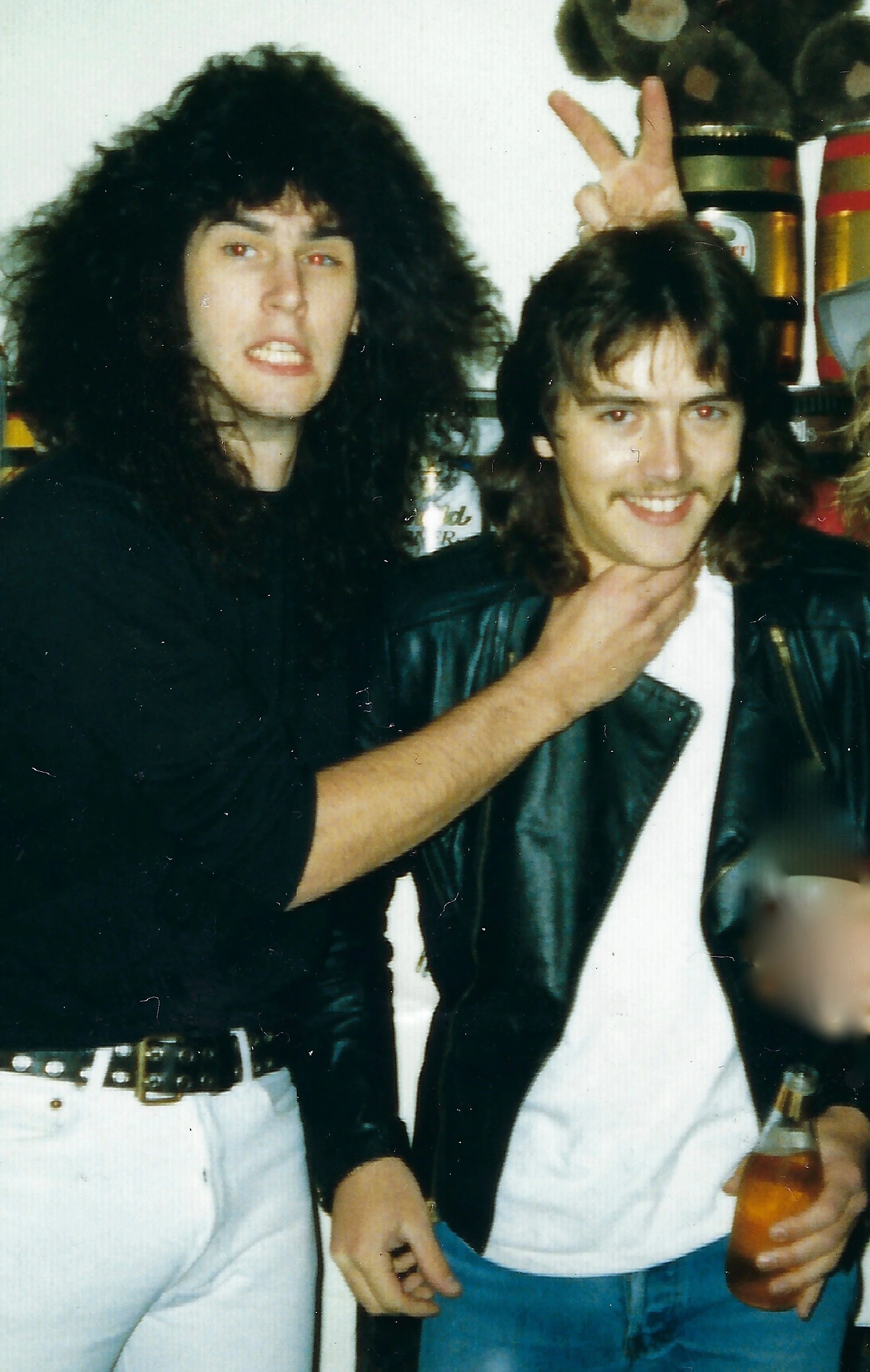
George & Rondo, NYE 1985
Rondo had quit college by the autumn of 1985, and one day he & George drove to Bellingham to tell me they wanted to fire Gary and get Marty in the band. I told them they were crazy. Gary Allard was a great guy and a solid player. He had a car and a job. He came from a supportive family and was really cute and totally reliable. Marty was a dirtbag dropout who barely even had a guitar, let alone a car. I was outvoted, and the change was swiftly made. It turned out to be the right choice, of course. Marty is a gifted musician—the best guitarist I’ve ever known let alone played with. He’s also a great songwriter with a wide range of musical interests and one of my closest friends for more than 30 years. You can see him now alongside another Seattle legend, Eddie Spaghetti in the Supersuckers.
It wasn’t too long afterward that George & Marty drove to Bellingham to say they wanted to fire Rondo and get Jack. After Marty’s departure, Strychnine had shuffled some personnel and reformed as Myra Mainz. As with Gary, I was reluctant to change members. I was friends with Rondo– he’d introduced me to the band. But it was also true that he was a single-bass drummer in a double-bass genre. And though he was certainly no tapper, he also wasn’t an animal like Jack Coy. The change was made. Rondo briefly joined Myra Mainz, but largely out of spite, I think. Panic was again a stronger band for the switch.
Kent, Washington was a small town. We knew those Myra guys and would see them at parties. Bad blood was costly, but George was ambitious. I’ve never known a more pure guy in my life than George Hernandez. Dedicated craftsman, disciplined student of the genre. Driven, and fiercely loyal—unless he needed to dismiss you from the band to get someone better, in which case you were a stone goner. Nothing personal, just business. He’s now a fully-vested member of Sanctuary always touring Europe.
I am about a week older than Jack. I didn’t know him very well before he joined Panic, but we became pretty fast friends once he did. Jack really liked alcohol, and he & I really pushed each other in those early days. George & Marty weren’t 21 yet, so Jack & I would spend some time drinking in the bars. Jack is the happiest cat I’ve ever known—always a nice word and he thinks everything is a goddamned laugh riot, which is true if you want it to be. Jack was a foreman on a concrete crew in those days. Still is. He always had a killer tan on his huge tattooed arms, but if you ever saw him in shorts his legs were pale because he had to wear long pants at work even in the summer.
Metal Blade
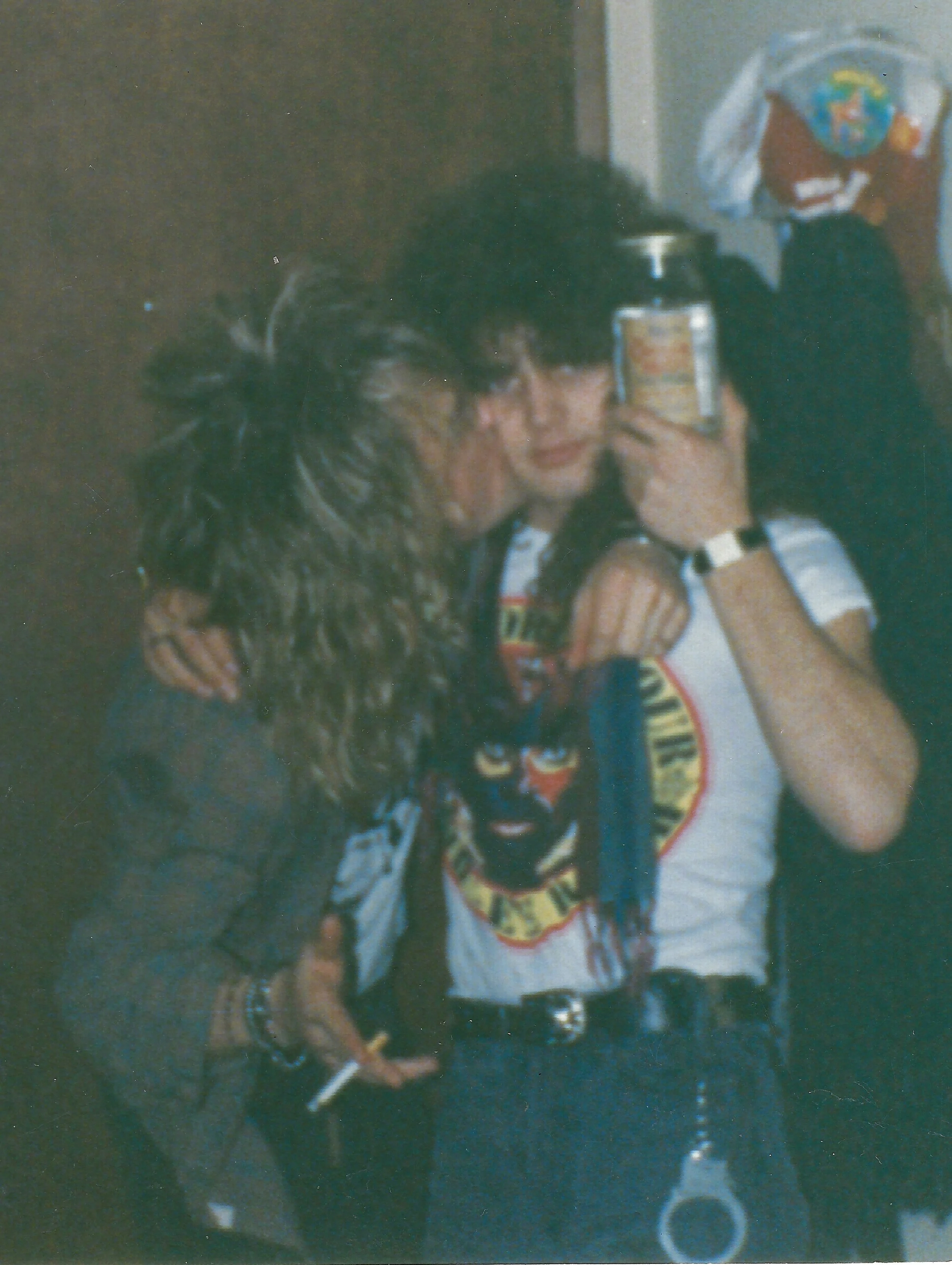
Jeff & Gary + corn whisky 1986
With the line-up in place, we turned all our attention to the band. We all worked day jobs, but every spare minute and every spare dollar was spent on building the Panic brand. With Jeff Gilbert’s help, we started to get better gigs. We were just breaking into the bar scene, which at the time did not yet feature the anchors of the OffRamp and RockCandy– the two places where the metal/heavy grunge scene really thrived later. The Crocodile was just getting started and though we were welcome at Pioneer Square bars like the Colourbox and Central Tavern, the central city bars like the Vogue, Squid Row and Ditto were not as interested in us.
We recorded another demo in about 1989, called Morbid Curiosities. The song later featured on Epidemic made its first appearance here. We continued sending these tapes out to labels and media, but we were still having trouble attracting attention from outside Seattle.
About this time, we connected with local promoter Soozy Bridges who started booking us. Soozy had spent time working with Susan Silver who managed Soundgarden & Alice in Chains. We still weren’t in that cool kids’ club, but we were getting closer. Soozy helped us get even better gigs and pretty soon we were playing weekends at the better clubs as RockCandy and the OffRamp opened up and moved into instant prominence.
Our big break came in the summer of 1990. Soozy had helped us get a showcase at a fledgling music conference in Seattle called the Northwest Area Music Association (NAMA). NAMA fancied itself the NW version of SXSW, and although it never took off completely, it did have a couple of good years. We played a daytime showcase at the conference and we just sucked. Sandy Pearlman was there and he told us we’d played too loud. It wasn’t what a proud young metal band was particularly anxious to hear, but he couldn’t have been more correct. It was 2 o’clock in the afternoon at a sterile convention center that was not very metal-friendly to begin with. Luckily, we also had a club date scheduled for Sunday night, the last night of the conference. Gary Holt and his manager Toni Isabella were in Seattle for a panel at NAMA. We didn’t realize it at the time, but Gary & Toni had come to Seattle very specifically to identify a baby metal band that Gary could produce. Mustaine had done the Sanctuary record and it had worked out very well for both mentor and protégé. Gary knew Seattle was popping and he sought to attach himself to something hip but still heavy coming out of this hotbed. I think he could have looked at a thousand bands and still chosen us, but the fact was that we were one of the few really viable options he would be exposed to that weekend. We were heavy & hungry, but still more contemporary than what was happening in the Bay Area at the time. And we had that all-important label, MADE IN SEATTLE.
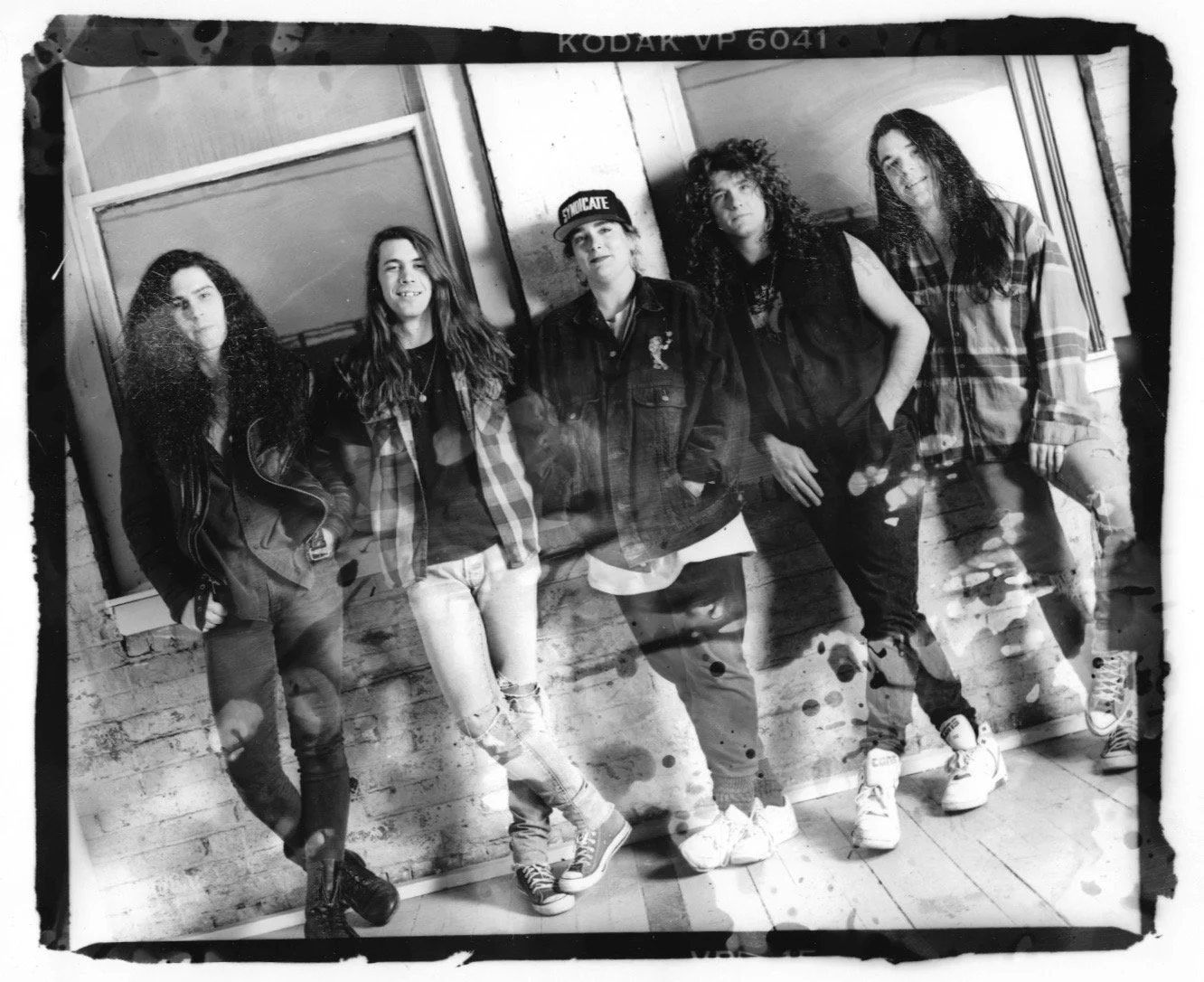
With Toni (in Syndicate hat). Photo by Karen Mason
Gary approached us backstage after we played a totally killer set and said “I love your guys’ band and I want to produce your record.” I don’t even remember knowing he was in the crowd. It was a very powerful moment. We’d worked hard for 5 years, and now here was this established rock star guy saying he wanted to take us under his wing. We were stoked.
Toni was awesome to work with. She was used to herding cats dealing with Exo, and she put her skills to work managing Panic. She had a deep network of connections, and she got us in-front of a lot of major labels, but we were too heavy metal for all of them. It was the end of 1990 by now, and the grunge cat was well out of the bag. The labels were swarming Seattle looking for the next grunge heroes but none of them wanted a metal band. Forced Entry and Bitter End lacked the management we had lucked into, and they couldn’t get a major deal either. In the end, all three bands settled for minor league deals. Ours was with Metal Blade.
In the end Metal Blade didn’t turn out to be a very good fit for us, but I don’t think any of us second-guess the choice. The minor leagues all looked about the same, and we liked the idea of working with Brian Slagel. In the end, he didn’t turn out to be the advocate we’d hoped he would be. He was more interested in putting out re-issues of Thin Lizzy albums than cultivating the current, relevant talent on his roster. He, like everyone, liked the idea of humping the Seattle Dream. But he was more-inclined to say Alice in Chains was his favorite Seattle band than he was a band on his own fucking label.
Toni Isabella worked for Bill Graham Presents, and she squared us up with some perks & delights we had not necessarily earned yet. We went to San Francisco to demo some songs with Marc Senesac at Different Fir Studios in the Mission District in the spring of 1991. We flew to Los Angeles for the Concrete Convention later that year. We certainly weren’t encouraged to ‘quit our dayjobs’ (never did) but we did get some nice meals and a lot of cocktails. Whether we were paying for them all along via advances, I don’t think we ever understood for sure. But we were having a pretty good time thinking we were just an album away from the motherfucking Grammys. Sometimes pretty girls would stop to chat.
As we moved toward the June release date, there was some hype gathering. I had a friend at Rolling Stone who had committed to doing a “New Faces” column on us. Rip magazine was prepared with a “Fresh Metal” piece. Toni thought she could get Rikki Rachtman to play the video on Headbanger’s Ball. We played a big outdoor show in the shadow of Seattle’s iconic Space Needle on a sunny Friday in June, the week the record was released. Shortly thereafter we drove to Phoenix, Arizona to start a 2-week West Coast tour with David Wayne’s new band Reverend. We were stoked to be on a real tour with a real record to promote. We’d always been fans of David’s, and we had a great time getting to know him and his band, celebrating a homecoming in Seattle at the end of the run.
Epidemic
We finally got into the studio to start working on Epidemic in January 1991. We packed all our gear into a rented van and drove down the west coast to San Francisco, a trip of 800 miles that we’d already made a few times by then. I was born and raised in San Francisco, and had been proud to show off The City to my mates during previous trips. By now, it belonged to all of us equally—our home away from home. We were booked into Sandy’s studio Alpha & Omega, which was in a very bad part of San Francisco known as the Tenderloin. It’s worse these days, but back then it was home to lots of skidrow alcoholics and prostitutes. We loved it! Toni set us up at the very (in)famous Phoenix Hotel, at the corner of Larkin & Eddy, just twoblocks from the studio. The Phoenix was where the cool touring bands would stay when in San Francisco, and the management had a generally loose standard in terms of behavior. The rooms were arranged in a large 2-story horseshoe surrounding a pleasant courtyard and swimming pool. The Phoenix had a Caribbean theme, right down to Miss Pearl’s Jam House restaurant and bar. During the day, they piped the sounds of tropical birds into the courtyard; at night, the soundtrack changed to crickets.
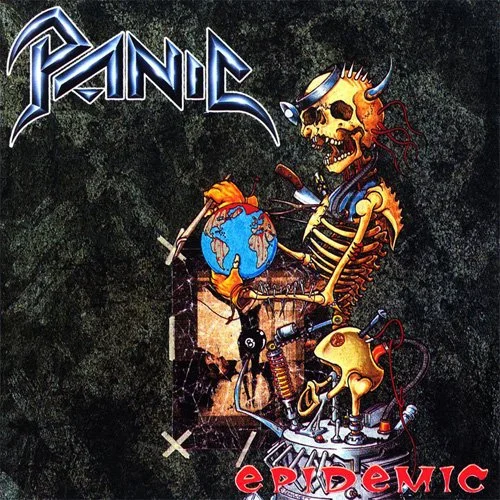
I really don’t remember a lot about the 3-week recording process. I don’t generally care for recording—I much prefer the live performance aspect of being in a band. I remember I had a little trouble getting going and was pretty frustrated a couple of nights in terms of how my voice was responding to the pressure of being in a bigtime recording situation. Everyone else nailed their parts fast like they always did. We were prepared, there was no doubt about that. We’d been playing some of these songs for years by this time and even the newer ones were well-rehearsed. Panic was very well-rehearsed. We were tight.
Eventually I got in a groove vocally and the second half of the sessions was more fun, doing the overdubs, backing vocals and various sweetening. Gary & Rick were around, and we had a lot of laughs. I don’t really recall what their specific input was—there wasn’t any room in the arrangements for interpretation. Every note was already
accounted for, and we didn’t change a thing in the studio. I suspect they were consulted extensively in getting guitar tones, but otherwise I just remember them smoking a lot of pot. We had a riot doing the background vocals. One session in particular recording the background shouts on “Morbid Curiosities” was hilarious. Rick and Marty can be heard stumbling on the trainwreck! line in an outtake at the end of side one of the record. Zetro didn’t hang around too much, but did come in to help with backing vocals on “I Stole Your Love” which are pretty signature Zet. Gary & Rick did guitar solos on that song as well, of course. Aside from it being a cover song, it sounds different than the rest of the stuff on the record, which I like.
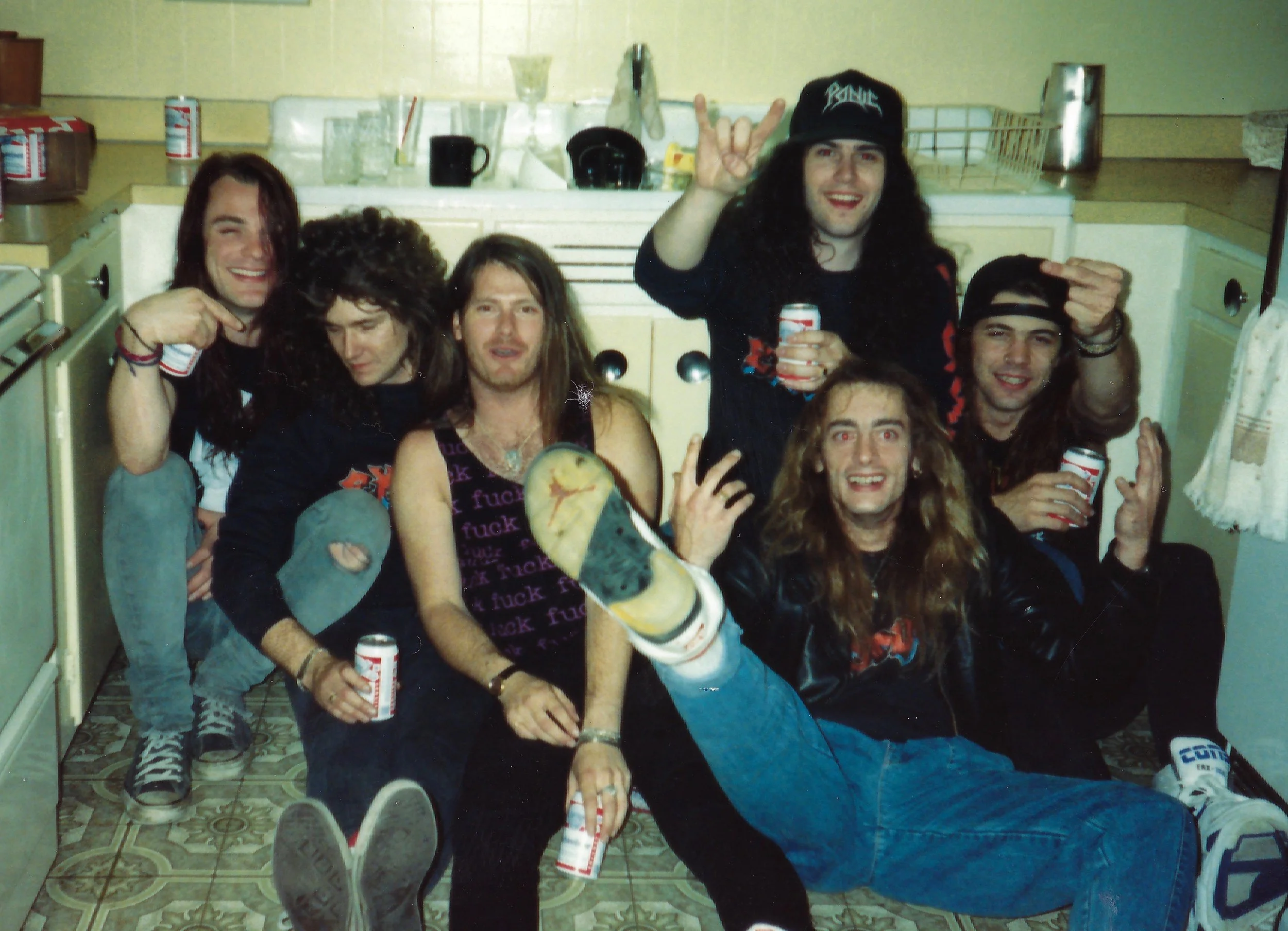
Panic & the H Team, drunk again. Beacon Hill, 1991
Marc Senasac is a great guy, very patient. We had already done some demos with him by that time, so we were used to working together and Exo liked him, too. Sandy wasn’t there a lot, but Marty and I would get some real quality Sandy Pearlman time when mixing the next record. Toni was at the studio every day, keeping us honest. It was an incredible experience. We’d get up in the late morning every day, grab some coffee & doughnuts and wander down to the studio. We’d work through the afternoon and take a burrito break in the evening. We’d work as late as Marc could stand it, then we’d go back and drink in our hotel room at the Phoenix and watch TV. I don’t remember going out much. One night Toni took us to see the Red Hot Chili Peppers, but otherwise we just lurched between the studio and the hotel. Sometimes we’d play poker. One night we ran out of beer during a card game, so we went back to the studio in the middle of the night to raid the soda machine which we knew was stocked with Budweiser.
On the night the record was finished, we all jumped in the pool in the middle of the night, naked. We ran back to our room giggling, like a bunch of little girls. We were always laughing about something. Those were very free times. We didn’t have the goddamned internet in our pockets all the time, and we weren’t afraid of anything. We were convinced that what we were doing was right, and we didn’t give a shit about fuck.
We went back to Seattle to wait. We hadn’t done this before, and we had no idea what was supposed to happen next. We had some vague notions about touring, and I suppose we had an outline of what the promotional process would look like. We knew we had a killer product, though. Epidemic is a very good record—I liked it then and I think it has really held up well. We didn’t want to make a record that sounded like Testament or Death Angel or Exodus or Metallica. We liked a lot of what those bands were doing, but we had different ideas about tones and beats. We’d resisted the urge to add a second guitar player, something which separated us from the prevailing sound coming out of the Bay Area. All those bands were two-guitar bands. The fact that we just had one put us in a slightly different category and made us way more unique, more balanced. On record is one thing, since there’s always a ton of guitar tracks. But live we were really able to reproduce what we were doing on-record, and the clarity that resulted from not having that wall of guitars was a valuable attribute. It wouldn’t work for just anyone. You had to have a very strong guitar player to be able to hold that up, and you had to have an equally strong bass player to understand the dynamic and play to it. We had those guys in Marty & George.
Both those guys are very talented songwriters. I know they both look back fondly on the time they spent together crafting those songs. It was a pretty even collaboration in my recollection. George would have a riff and he’d teach it to Marty and maybe Marty would have another piece for a turnaround and they’d sit knee-to-knee for hours building these insane songs. Really complicated riffs some of them, but ultimately very digestible. Toni used to say that some of our songs were like three songs all in one, and eventually she tried to get us to simplify things a bit. But I think those nine original songs on Epidemic are timeless—smart, catchy and super heavy.
For my part, I definitely sought to avoid the Bay Area vocal trap. Listening back to those records now, I wasn’t entirely successful—particularly on the second album. But my favorite metal singers were not the growlers. I preferred John Bush and Bobby Blitz to Hetfield and Baloff, or Zetro for that matter. I fancied myself more of a rock singer than a metal singer and I definitely thought of myself as more of an intellectual than most other metal lyricists. I did write songs about drugs (“Pile of Bones”, “Spider Desire”) religion (“Devil’s Night Out”) mental illness (“911”, “Hypochondriac”) and politics (“Hellfire Club”) like everyone else. But my approach to them was more abstract and indirect than most others. I’m sure to a non-native English speaker a lot of those songs don’t make any sense whatsoever! The truth is that some of those songs probably don’t make much sense to kids who grew up speaking English. But I took a lot of pride in my lyrics. I studied literature in school and have always been fascinated by words. They’re too important to waste…
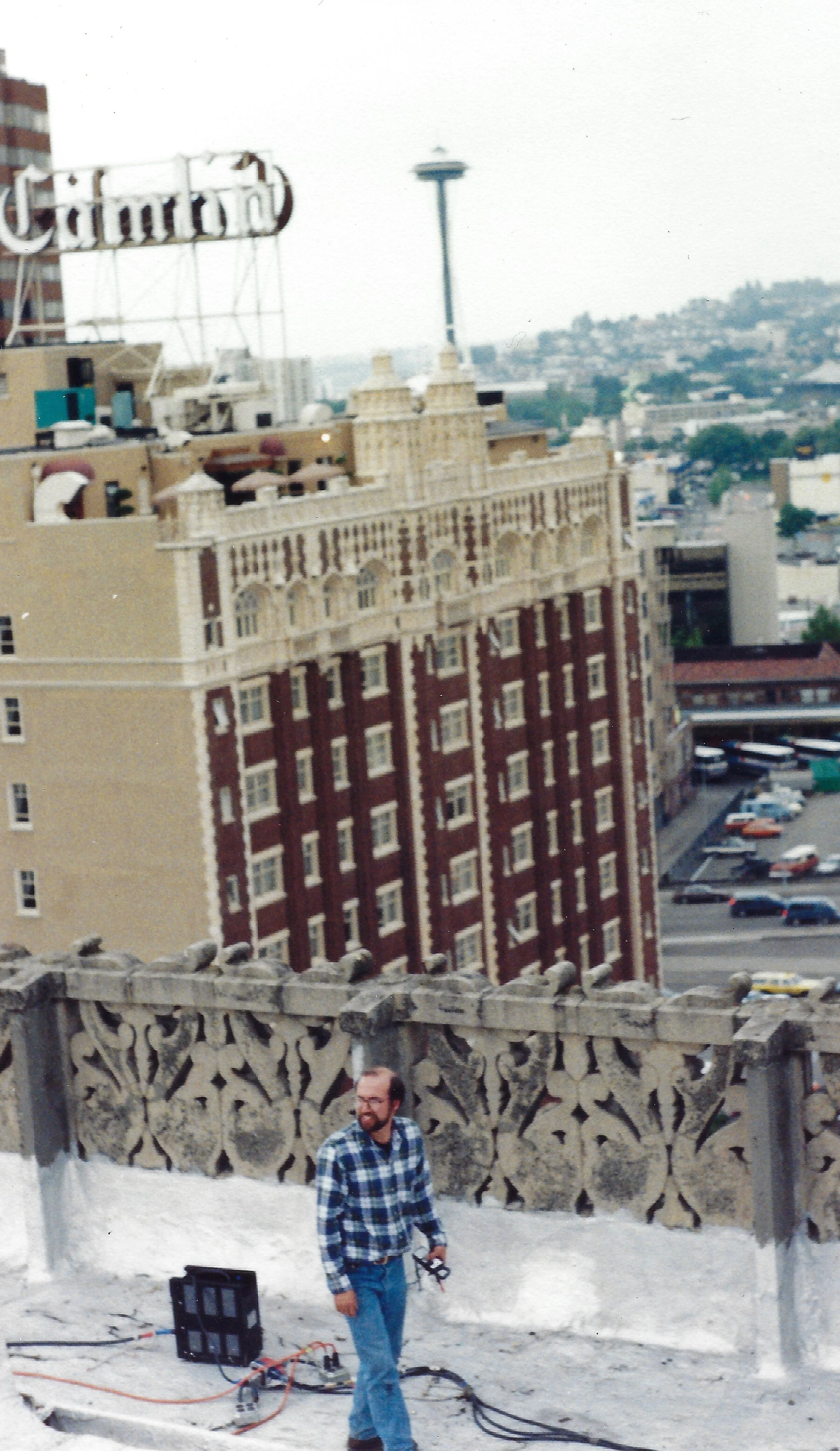
Seattle icons Camlin Hotel, Space Needle, and Tom Ensign. Top of the Paramount Hotel for the “Blackfeather Shake” video shoot, 1991
With the record in the can, we turned our attention to packaging. Toni got San Francisco artist Sean Wyatt to do the artwork, including the eyeball compass logo which we all got tattoos of. (Our roadie Pinky is the only other person with the tattoo). Seattle photographer Karen Mason took the photos. George & I flew to LA to do a couple of days of telephone and lunch interviews. Jim Sorrenson from Seattle designed some new shirts. And we hired Bellingham filmmaker Tom Ensign to make a real live music video.
Making the video was a wild experience. We rented a helicopter for Tom to shoot us from, hovering over the roof of Seattle’s historic Paramount Theater where we had set up. On the second day of that shoot, the theater management burst onto the roof and yelled at us because people were running out of the matinee performance of the ballet being staged downstairs because the sound of the chopper was scaring them! Again, in our post-9/11 security culture, you could never hover around downtown Seattle in a helicopter!
Surprisingly, the most-expensive thing about the video was not the helicopter, but instead the trained crow. “Blackfeather Shake” is a metaphorical song about crows, and we hired a bird charmer who brought her trained crow. The crow can be seen in various clips of the video, perched on my shoulder or on the headstock of George’s bass.
From there, we drove in a rented 24’ motorhome across the United States to upstate New York where we joined a tour with Coroner and Nuclear Assault. Marty & I were big SOD fans, and we were pretty stoked to be hanging out with Dan Lilker. Danny turned out to be a really cool guy and he seemed relieved to have some young goofballs like us on the tour. We didn’t have much in common with the other bands musically, and they both had followings in every town. But we always put 100% into our set every night as we made our way down the east coast, doubling back through the American Midwest. Danny joined us onstage at the First Avenue in Minneapolis on the last night of the Nuclear leg for a rousing version of “United Forces.” It was November and the snow drifts were four feet high. We were home in Seattle by Christmas, hoarse & sore and not sure what was supposed to happen next.
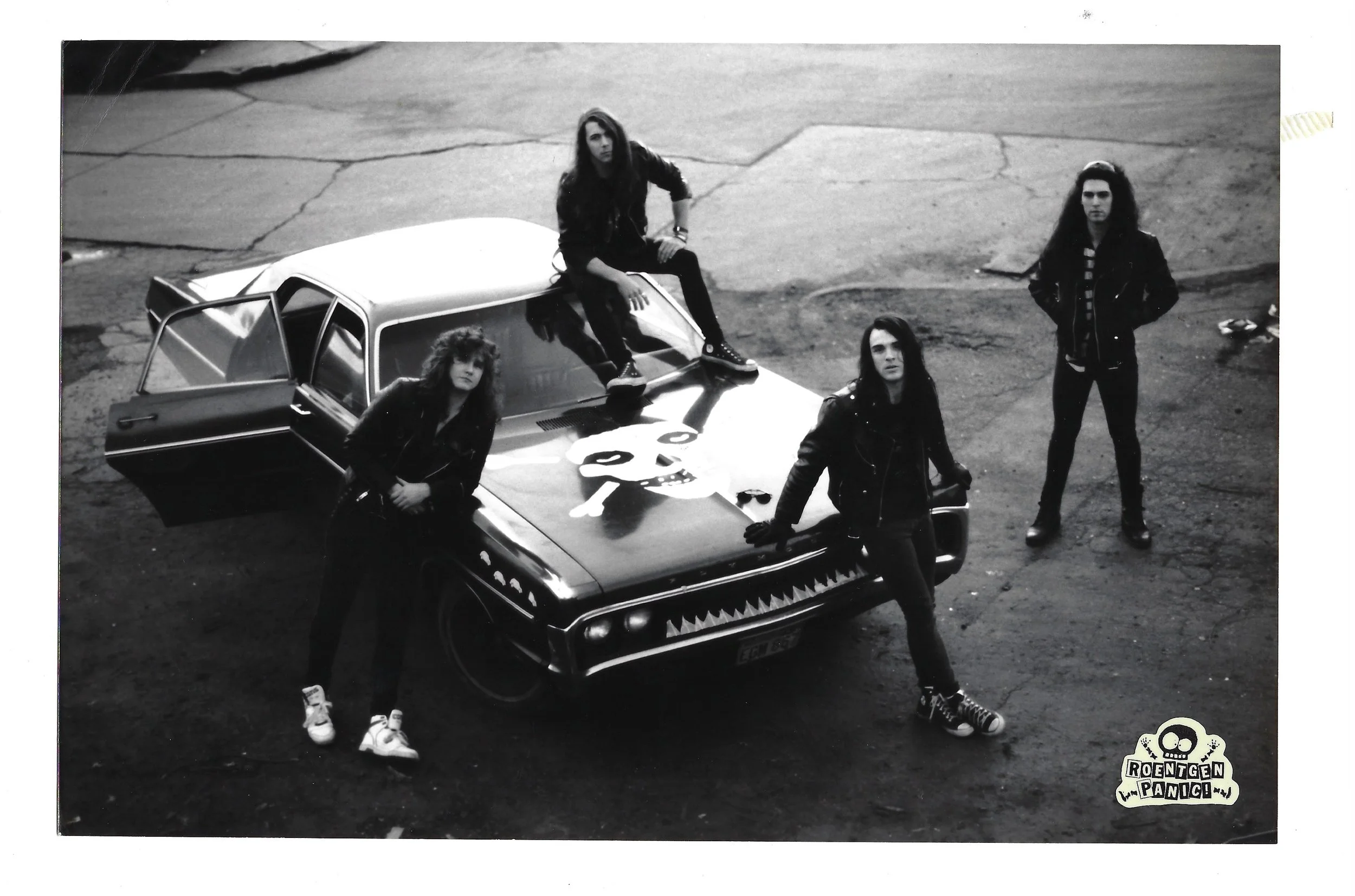
At the urging of Russian journalist Konstantin Chilikin, I accidentally wrote an exhaustive history of the rock group Panic, the third installment of which is printed below. It was fun to write, even if I’m the only one who actually read all the way to the bottom. Perhaps there will yet be another chapter…
Now let’s skip a couple of years: Record II, Medocine, California. You’re doing you vocal parts for the “Fact” album. This time Marc Senasac is in position of producer. What can you remember about the atmosphere in the studio? Would you say that you saw the beginning of the end already? The album “Fact” sounds to me more matured in terms of music and heavier in terms of production. Would you agree with me? How important were cover artworks for you? Did you pay attention to them? Did you have a chance to say your word and share opinions with Metal Blade Records about what you’d like to see on the covers? Did you play enough shows in support of your albums? Were there any tours with bigger bands? Did you play outside your area? Did you get any offers to play live in Europe? Why did the band split-up? Was it because of Grunge or were you tired of constant struggle for survival in music business? Tell me please about your life after Panic. As far as I understand you own construction business. Does it mean that you quit music entirely?Do you still stay in touch with Marty, George and Jack? Is there any chance to see re-issues of both CDs by Panic? Feel free to say anything you like to round up this interview:
FACT
We seemed to be finished with long tours by Christmas 1991. Bill Graham had died tragically while we were on the Nuclear Assault tour, and BGP was a bit of a mess. Toni was having trouble enough getting support for Exo. We were not her priority…
So we went back to doing what we knew best—namely writing kickass songs and killing it live locally. By that time, we were established enough to get opening slots on the better touring metal bills, and we had the good fortune to share Seattle stages with White Zombie, Heathen, Suicidal Tendencies, Soundgarden, and Dee Snider’s Widowmaker. We did a leg of dates in California with Testament and even opened for Pantera at the Stone in San Francisco.
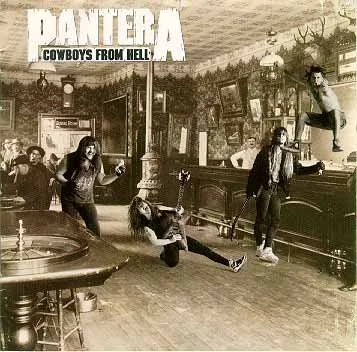
the prototype
Cowboys from Hell was easily the most-impactful record ever on Panic’s development. George had been into Mach I , before Phil was in the band. They were good even then, but what happened to them between their first record with Anselmo and Cowboys was a pretty stark transformation. Phil cut his hair, they ditched the spandex, and proceeded to craft this sound that was unlike anything that had come before it. It seemed like every five years or so– in that particular golden age of heavy metal—a band would come out that would set a new standard for heavy. In the late ‘70s it was Motorhead, the early ‘80s Iron Maiden. Late ‘80s Metallica. And then in the early 1990s here was this record that was so loud & sharp & punishing that it sounded like a hyper-coiled version of the band was inside your speakers playing it live. The production on Cowboys from Hell made everything that had come before it sound 3rd World. And it wasn’t just the sounds. The songs and the performances were so good—we could hardly believe it was real.
I wouldn’t say that record influenced our writing as much as it did our sonic aspirations. Our new batch of songs was already taking shape and it definitely sounded like the second Panic record and not like the follow-up to Cowboys from Hell. We knew where we were going musically. But we wanted those tones.
Very unfortunately, we were not able to get them. Pantera had years of experience experimenting in their own studio. They had a major label budget and they had Terry Date. We didn’t have any of those things.
We went to Mendocino in October 1992 to make Fact. The studio, Record II, was supposedly an exact replica of Quincy Jones’ Record I in Los Angeles. It was a nice room—great space. There was lots of space outside the studio, also. The overall atmosphere could not have been more different than the one in which we recorded Epidemic. Mendocino is a picturesque coastal town of 700 people, on the northern shore of California. The studio was on a sprawling acreage in the woods, which was also dotted with cabins which served as dormitories. In San Francisco, we had slept two-to-a-bed for three weeks. In Mendocino, we each had our own cabin, hundreds of feet from the next guy.
This might have been a productive atmosphere for some projects. It wasn’t for ours.
As with the first record, the band was prepared. Basic tracks were slain quickly and we settled down to vocals and sweetening. There was more improvisation in these sessions—more experimentation with sounds, effects and even arrangements. As with the Epidemic experience, I had a little trouble finding a vocal groove. Unlike Epidemic, I never really found one.
The lesson I thought I’d learned recording Epidemic was that I didn’t need to press. There was plenty of time, and I didn’t have to get all my parts sung in a day. This was even more true in Mendocino, with more space and a more-forgiving budget. There was time to try something out and then go back the next day and re-do it if it didn’t sound good. Unfortunately as a result, there was more day-drinking and less focus on my part. My perspective on the songs wasn’t as keen as it had been going in to the Epidemic sessions, and by the end of the project, any perspective I did have was totally shot. I wasn’t able to step outside my role, and I didn’t know if it was any good or not.
As it turned out, it wasn’t. In fact, it was fairly awful. I haven’t listened to that record in years– it’s just too painful. The songs and the musical performances are really good. But the singing is pinched and tuneless. There’s no character to it at all. No color or humor. It fuckin’ blows…
We finished tracking on Halloween night 1992. We killed the rest of the bourbon and put on KISS makeup and ended up hitting golfballs in a steady rain at dawn on November 1st. I remember Toni leaving that morning, shaking her head. I think she knew the record wasn’t very good.
I didn’t really know it yet. Back home in Seattle while we were waiting to go mix, I convinced myself that the raw mixes were flat and that the finals would pop. Then Marty & I went back to the Bay Area and made matters even worse.
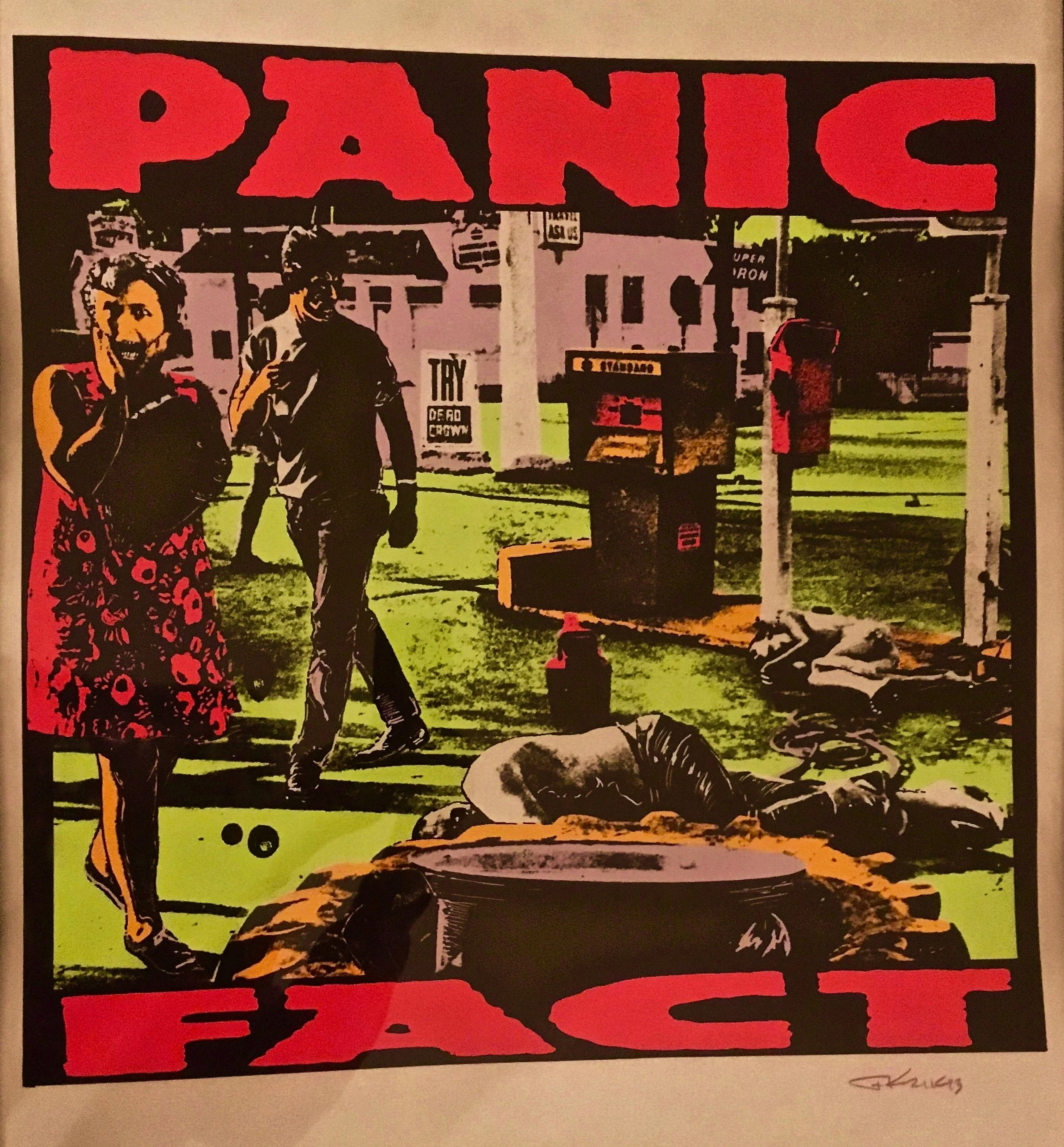
“what they wanted”
We were striving for that sound. Vulger Display was out by now, and though we didn’t like the songs on that record nearly as much as those on Cowboys, we still wanted that sound. Unfortunately, we didn’t have the budget, producer or experience to get it. And what we ended up with instead was a thin, clicky imitation. Plastic and practically unlistenable in my opinion.
The packaging of the record ironically turned out killer. As on Epidemic, the idea for the title was Marty’s. The concept of Fact was a stark, undeniable truth. Fact. No getting around it. In your face, in your shit.
Custom culture darling Frank Kozik was commissioned to do the cover art. Kozik was popular in the underground at the time, but metal was not something he was associated with. Kozik was famous for his colorized photographs, and he sent us a stack of fucked-up images to choose from. The one we selected was ghastly. Like a lot of Frank’s stash, the photo was of the scene of an accident. It pictured a horrified woman, the wife/mother of a father & son who had just been killed by the exploding tractor tire they’d been filling with compressed air. The cars in the background suggested the photo might have been from the late 1950s. The enormous tire was in the foreground, and the woman was looking directly into the lens of the camera, a scream on her lips.
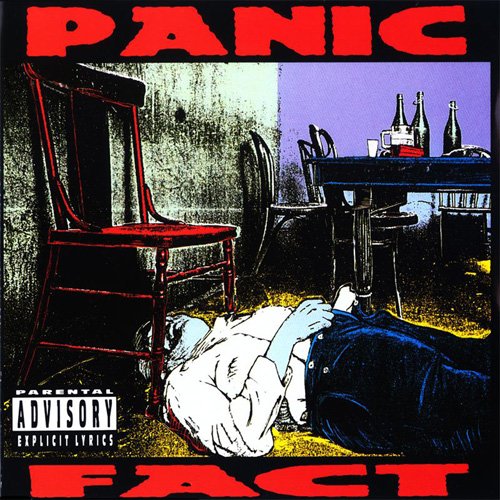
“what they got”
We loved it! We were going to take our photos at a gas station and give out promotional tire gauges with Fact printed on them. There was just one problem: the woman in the photograph was still alive, meaning the image was not yet in public domain. We would need her consent to use the image or else risk a weighty lawsuit.
After some procrastination, Toni contacted the now old woman via telephone. Having to re-live the experience was hard on her, and ultimately she said she wouldn’t sign off unless it paid better than Metal Blade was willing to cough up. But Kozik had already made the silkscreen! There are a few copies of the image floating around to this day, but of course no records were produced with this cover. It was like Spinal Tap! We settled instead for the abstract image of the man lying under the straight chair. I love this cover and the related images from the inside of the package. Probably the only thing I do love about Fact. (We still did take the photos at a gas station…)
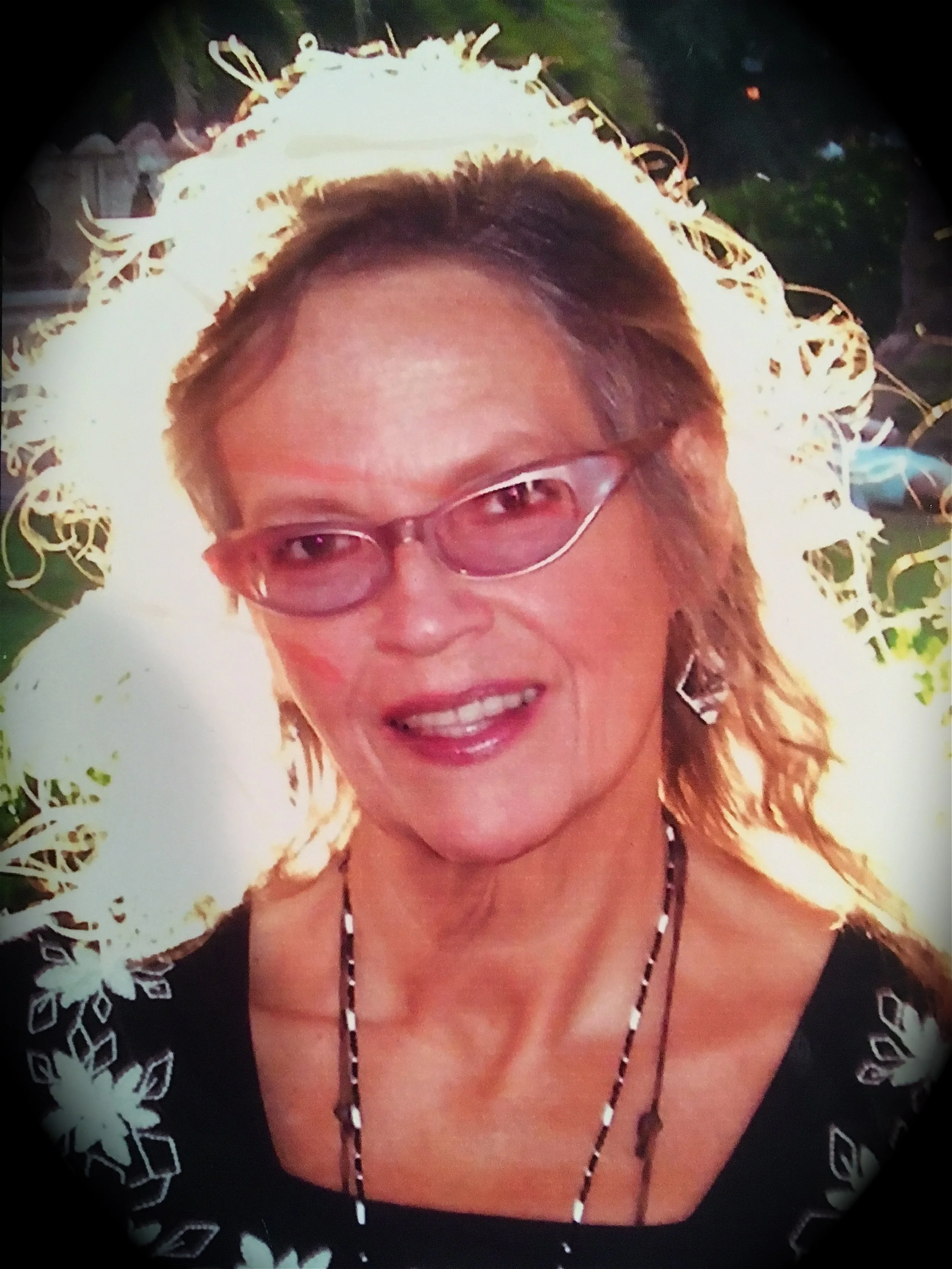
Toni dumped us soon after the album’s release, and we started working more closely with Soozy. She had a big heart and she loved us as individuals and as a band. She was getting us great shows at home, headlining bigger clubs on weekends. But we just didn’t have the national connections. We had a new record and we needed to get out on the real road. But we couldn’t find the onramp.
Soozy Bridges
We went to California for a week’s worth of dates in July. A showcase in Los Angeles was a total flop and everyone at Metal Blade were mass fags, including Slagel. For the first time ever, I was totally bored and couldn’t wait to get away from the whole thing. The morning after the last show, I was scheduled to fly from San Francisco to visit my mother in Arkansas. As I tiptoed out of the hotel room at dawn, I smelled what I thought was the end. As it turned out, it was only Jack’s underpants, but it definitely smelled like the end of something. I remember looking back into the room at my snoring bandmates and crew, scattered across the tiny room at the Phoenix, open duffle bags and shit strewn everywhere. My neck and liver ached. I was broke. I’d lost my hat. I shook my head and closed the door gently behind me. I took a deep breath before limping down the stairs, past the pool, and out the front gate onto Eddy Street to hail a cab, the Tenderloin coming slowly to life in the early morning light.
When I got back to Seattle a couple of weeks later, the band met for drinks and looked at the facts, as they were. There wasn’t much to squeeze from this record. We had no tour support and no national press. Marty was listening to Exile on Main Street every day and I just wanted to cut my hair and play garage rock. George & Jack conceded. It’s hard to be a convincing metal band if your heart isn’t in it, and I for one had really had it. We decided it would be best to kill it before it killed us.
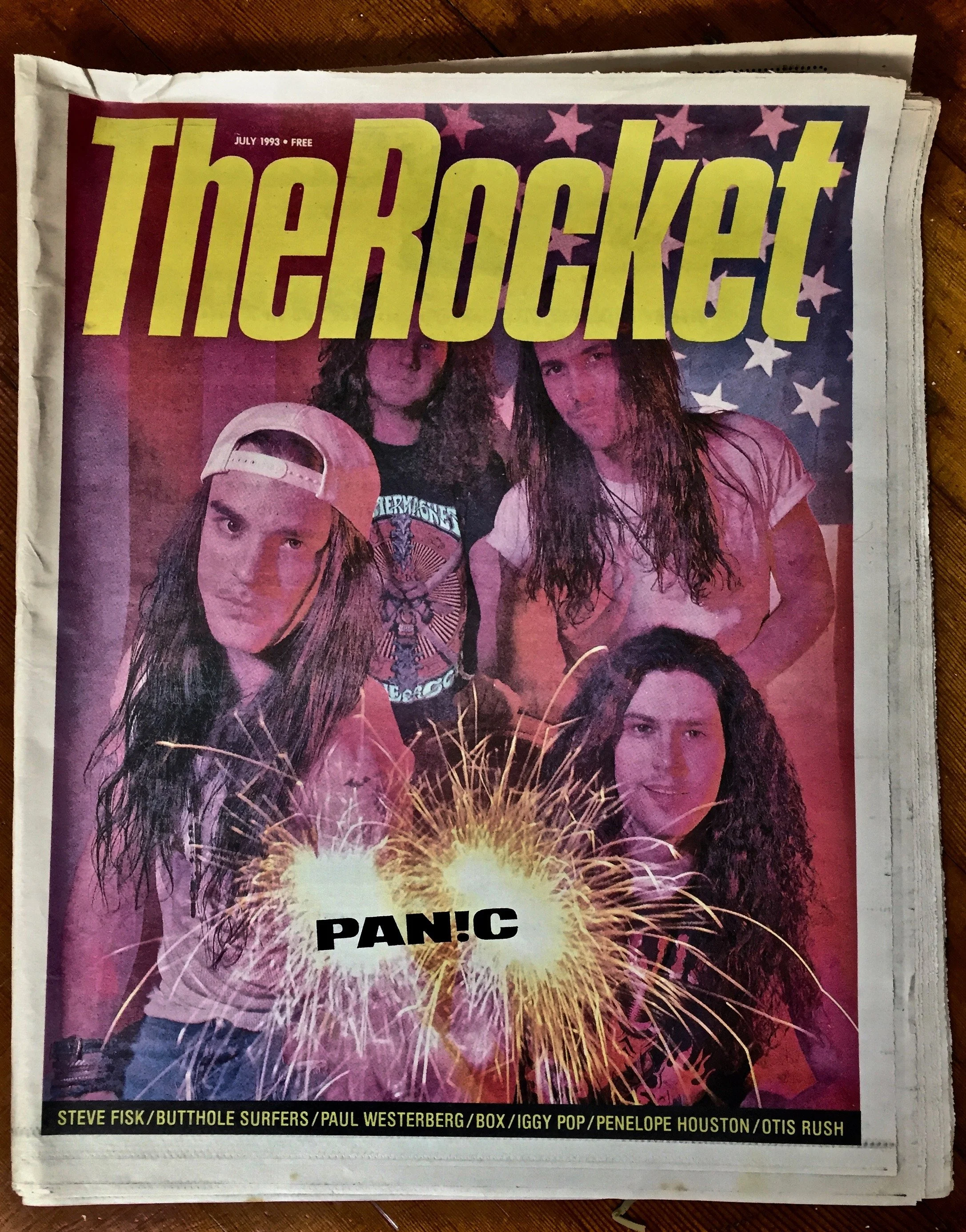
Ironically, we were on the cover of Seattle’s Rocket magazine at the time of the breakup. It was a pretty big honor to be on the cover of this beloved monthly periodical, and it felt weird to see it on the newsstand for the rest of July, knowing we were running out the clock. The band played its last show on Ocotber 9 at the Colourbox in Pioneer Square on a rich bill of friend’s bands. It was wild celebration—a kickass ending of a very loud era. I hadn’t washed my hair in weeks, knowing I was just going to shave it off after the show. I did.
In retrospect, we might have given it one more record. Three is kind of a magic number when it comes to breaking albums. There were some new songs taking shape, and we could have killed a year playing bars and hoping Metal Blade would pay for a third album. But the signs were bleak and we’d been working so hard for so long already. The timing felt right, and I don’t think it was wrong.
Marty immediately formed 50 Paces with some old friends. His project The Ones followed that before he joined the Supersuckers.
George hasn’t ever gone without a band, either, playing with the likes of Blacklist, Landfill, Chasing the Bullet and eventually Sanctuary.
Jack has stayed off the drum stool, at least as far as being in a working band. He’s been more interested in playing guitar & piano than drums as far as I know.
I had fun playing drums in a goofy garage band, then joined a project called HellCat with guys from Gruntruck and Poison Idea. Later, I hooked up with my garage rock heroes from the Mono Men to form Watts and we put out a record on Estrus in 1999.
I don’t own a construction company. I’m a limp-wristed Realtor now in Bellingham, WA just south of the Canadian border. I’ve been married for 22 years to the girl I was dating when Panic broke up and we have two wicked awesome kids, both musicians. My son actually played his first ever rock show with Marty at Pinky’s wedding when he was 8. So, you know—the apple don’t rot too far from the tree…
Thanks again for asking about Panic, Kon. I hope you don’t wish you hadn’t. It’s been fun to work on this history. I don’t know of how much interest it will be to your readers, but it’s been fun for me to re-live.
See you on the fence.
–jb