

Loading archive…
Bellingham Rock City
Originally published in PMA Magazine # 3, 2020
A column in the early issues of PMA Magazine was Great Escapes —a travel feature on a geographical secret shared with the reader with a wink and a tickle. Terry did Todos Santos in the innagural issue and Letman did Kawaii for #2. I did Bellingham for #3 before the concept was abandoned. I don’t believe we experienced a real estate boom as a result of the exposure…
Sometimes concessions are made by invaders of paradise. Visitors to Todos Santos in Bobby Bortolo’s Great Escapes entry in PMA 001 were encouraged learn and speak Spanish. In his guide to Kawai in 002, Jon Letman admonishes guests to listen more and talk less.
Modern conquerors of the former milltown of Bellingham, WA are harder to spot from the sidewalk than more conventional invaders of paradise-- basically new whites crowding the established ones. Europeans began arriving in what is now Bellingham in the mid-19th century to the surprise of the Nooksack and Lummi tribes who’d already set up shop here and were doing just fine. Nowadays folks who’ve been here since longer than about the Reagan era consider themselves practically ‘native,’ rolling eyes in the direction of the coachloads of bearded pioneers landing downtown every day.
It’s kinda hard to fault generations of the curious. Located conveniently between the international power centers of Seattle and VCBC, Bellingham offers peace and whimsy not seen in either of those venues for decades. At 90,000 people, the smart yet lazy village once known for the acrid stench of the Georgia Pacific pulpmill is waking up and finding that much has changed while it was anap.
The line on Bellingham used to be that there were no jobs here. Graduates of Western Washington University lulled to passivity couldn’t find work at any anthropology or history firms in town, and there seemed to be ten qualified applicants for every vacant teaching job (WWU churns out a lot of teachers from its 15,000 undergrad population). Still, they’d fallen in love with the pace, price and endless recreational opportunities of Bellingham and just never got around to leaving. So they stayed. Now they’re rolling their eyes.
To be super clear, there are still no traditional jobs here. When GP began shutting down in 2001, the first of 2,000+ working wage industrial jobs perished with it. Hi-tech (whatever that is) has decade and again passed on Bellingham as a host. The current local economy is precariously represented in public sector jobs: health care, local government, education-- plus a rainbow of non-profits and a small army of Realtors. And now instead of ten applicants for every teaching job, there are 50. And they all have PhDs-- though not usually from WWU…
But unlike during the 20th century, folks don’t need an old-fashioned job to live in a city that doesn’t have any. Thanks to something called telecommuting or something, people can live anywhere. And they are.
During the Great Inward Migration of 2004-2007, a lot of the new faces in town had liver spots and wore trifocals. Sunset and Forbes had fallen for Bellingham in the hardest promotional way, and Whatcom County was consistently rated as the #2 retirement destination in the US (behind Fort Collins, CO). Much early Bay Area Boomer money was pouring into town and the median price of a home in Bellingham proper was suddenly $345,000 rising as rapidly as the average age.
The you-know-what of 2007-2012 reset the table. The retirees who’d been able to sell in their previous markets were cozy in their new one-level Bellingham charmers—but the moat was full of alligators and a number of fledgling businesses closed, abruptly deprived of a projected infusion of new blood and money. The overextended lost their homes and the ‘natives’ scowled, if gloating a tiny bit maybe…
Then, like a record player whirring back to life after a power outage, Happy Days returned. The getting being again good in neighboring markets, those weary of big city wallop were invited to exit stage north to Bellingham, where the median home price has re-risen to a pornographic $460,000 with little relief in-sight.
But this time the average age is falling. Unlike 2006, the inbound profile is the young couple or new family from Seattle. Refugees not able to get out of King County fast enough are kicking in doors in Bellingham. Families of 3.1 (plus pets) are parachuting into town every day while scrolling listings on Zillow.
Without a job market, it’s an effort to move to Bellingham. No one ends up here on accident (except students). A percentage of the well-meaning new-in-town grownups actually have or find traditional work here, though most of them telecommute. A few of them hard commute. But another segment senses this is their chance to realize the dream of opening that restaurant or starting a non-profit. Or brewery. Bellingham is startlingly over-represented in craft breweries, its thirst seemingly knowing no limits.
It wasn’t always this way. Janet Lightner, co-owner of Bellingham’s revered Boundary Bay Brewery, remembers when the landmark opened in 1995.
“Bellingham felt more like a small town then,” Lightner says, recalling a version of the old days. “People wondered why Ed (Bennett, husband and co-owner) would choose that scary end of Railroad Avenue for his new business. There were no condos and no permanent home for the Farmers Market. It was dark down there!”
These days—thanks in part to the fearless homesteading of BB-- that south end of downtown is lit any time of day or night. Plenty of residential, combined with food & drink, the BAAY children’s theater and Depot Square (permanent home of the Bellingham Farmers Market) translate to a healthy mix—one that includes students from nearby WWU. And right in the middle of it is the Boundary Bay ‘campus’ which now consists of three live music venues spread across 15,000sqft on two levels. The taproom, bistro, deck, garden and events-only Mountain Room employ 130 people pouring, cooking, serving, brewing and canning.
“We strongly believe in Buy Local Be Local,” Lightner says, smiling (she’s always smiling). “Bellingham will always be home to us!”
Boundary Bay’s undying commitment to community is a shining example of the spirit that defines this town. Buy Local is not just a campaign slogan in Bellingham—it’s a way of life. (Although it is also a campaign slogan…)
Buying local works here. A 100-mile diet is possible here. Bellinghamsters are willing to put their money where their mouths are, supporting independent merchants even if it costs more to do so. This noble localism is a source of great consternation to the Chains, who struggle here. Sure, there are some recognizable logos in Bellingham. But in general, the scrappy, locally-sourced merchant is held close and fiercely defended.
Perhaps no single organization embodies the notion of localism more than the business networking cooperative Sustainable Connections. Wrangling the foundational values of green building, sustainable fooding, waste stream reduction and buying local under one living roof, the 17-year old non-profit is a kind of ideological mascot of Bellingham. With a growing staff and 400 dues-paying members, SC is headquarters for awesome ideas in Bellingham.
“In my experience, Bellingham is extraordinary in that business owners often see localism as a mindset that creatively integrates business, community and the environment,” says Executive Director Derek Long, outlining the organizational tenet of the triple bottom line. “They tend to see and act on the connections in an effort to add value to all. This kind of local business leadership helps inspire all our community members to do the same.”
Unlike a lot of other Western Washington municipalities its size, Bellingham is a true Place—a small city rather than a large suburb. Built around the protected shores of Bellingham Bay, the town features an actual working waterfront bordering a thriving downtown business district surrounded by dense gridded residential neighborhoods. Eventually the flow is interrupted by Interstate 5 to the east, beyond which the more modern neighborhoods feature less of the character found in the older core. These subdivisions from the 1970s-2000s act almost as suburbs on a scale relative to the size of downtown—even though they are well within the city’s proper limits and greater UGA. There are plenty of pleasant neighborhoods and recreational attractions east of the freeway. But Bellingham really is all about downtown—even if it hasn’t always been that way.
Nearly choked out entirely in the late ‘80s by the opening of Bellis Fair Mall, downtown suffered in silence for a decade. Longtime downtown anchors moved to the mall or closed down altogether and tumbleweeds blew down the deserted corridor of once-bustling Cornwall Avenue. But by the early aughts the new-mall smell had faded, and a romantic re-discovering of downtown began drawing merchants back. Bold tax incentives helped spur aggressive redevelopment, with shuttered taverns and blighted crack hotels being replaced with mixed-use mid-rises and expanded public spaces. But still, downtown seemed tentative-- not yet ready to seize its day.
“Bellingham’s always been kind of like the pretty girl who doesn’t really realize she’s pretty,” says Downtown Bellingham Partnership Executive Director Alice Clark, gazing out the window at the very pretty young lady downtown has grown into. “At some point she started thinking maybe she ought to start wearing makeup and actually talk to people.” Call it tourism.
Clark has been one of that shy girl’s most enthusiastic cheerleaders for decades, having kicked a lot of boulders down the hill. In 1998 she co-founded the beloved Pickford Cinema which is now the regionally-renowned Pickford Film Center featuring top-shelf first-run independent film on three screens around town. In 2009, she launched the hysterically-successful summertime neighborhood artwalk the Sunnyland Stomp. There was the Bellingham Wigout and Alice’s Pies, and now a percolating brainchild that could be her wiliest challenge yet: a 30,000sqft all-hands-on-art interactive museum on the re-developing waterfront. BOOM!
For a city built on a bay, Bellingham has historically had surprisingly little public access to the water because of GP’s dominance of the flats. Converted from a cannery in the early 20th century, the mill covered 130+ acres of the central waterfront, a staggering 4,300 square feet of shoreline. With its demise came an opportunity for repurposing of a waterfront that had been enclosed in chainlink and steeped in mercury & chlorine as long as anyone alive could remember.
The Port of Bellingham swapped GP the land for the environmental hot potato responsibility in 2006 and entered into a partnership with the City to much fanfare. Citizen steering groups were formed. The Department of Ecology got involved. Babies were born at St. Joseph’s Hospital and matured to puberty, but still—no new waterfront.
It’s a pretty big project, to be fair. By presstime, there is a thru street that crosses the site. The Granary Building, one of the few salvageable structures from the old mill, has been renovated and is partially occupied by optimistic new lessees. There is a parkish park with a beachish beach and an expensive centerpiece of industrial art. The waterfront redevelopment is happening, but the process has been slow and at times contentious-- and some residents have lost patience/interest. In the future it will be a jewel with a healthy mixture of residential, commercial (including legitimate maritime trade) and public land. Stay tuned…
Further south along the Bay shore from what will eventually be a brand new waterfront district is one of the city’s oldest neighborhoods, the historic district of Fairhaven. This photogenic commercial center was once its own municipality, back when what is now Bellingham was actually four separate towns. Today it is a very dear brick shopping district with its own identity, its own Village Green and its own pricing structure. Posh by Whatcom County standards, Fairhaven is home to the landmark Village Books, a number of slick new tippling houses, and Tony’s Coffee House—proudly caffeinating hippies since 1971. The paper doll definition of what a ‘hippy’ looks like has changed, but the location and coffee haven’t.
Residential Fairhaven features a rich mix of architectural styles. Bordered by modern mansionettes & sprawling mid-century moderns in Edgemore to the south; the grand, registered Craftsmans and Tudors of South Hill to the north; and the dusty Folk Victorians and student-soaked 70s multi-family of Happy Valley to the east, south Bellingham is . The village itself is home to one of the larger concentrations of condominiums in the city also--much of it modern construction-- built of brick and well-integrated into the existing character of the district.
Lots of times condos are bedeviled in cranky gentrification rants like this story. But it would actually be great if there were some new condominiums built in Bellingham. Developers can’t build apartments fast enough right now, with vacancy rates hovering around one percent. With the median home price rocketing toward $450k, Bellingham could use some affordable home ownership options, and condominiums traditionally help fill that need. But developers have shied away from the risks associated with building condos, widening the gap.
Housing has been highlighted as a marquee issue in a closely-contested Mayoral race coming down to the wire at presstime. Like everywhere else on the West Coast, Bellingham is struggling with a homeless dilemma. With housing costs rising disproportionate to wages, more and more working residents are finding themselves unsheltered. There are solutions baking, but they’re not quite done yet. The City and the Lighthouse Mission Ministries have been working together to find a site for a new shelter. Further upstream, The Bellingham Housing Authority is working toward redeveloping the site of the formerly blighted Aloha Motel to provide 150 affordable rental units. Another rung up, Kulshan Community Land Trust is partnering with Habitat for Humanity to build 50+ townhomes on the city’s northern boundary that will be owner-occupied and remain affordable in perpetuity.
But it’s a drop in the Bay. Bellingham’s creatives and working families are finding it harder and harder to live here— whether owning or renting. And that’s not good for anybody.
Still, Bellingham WA is a nice place to visit. You can still put a nickel in an analog parking meter, and if you don’t mind bussing your own table, there’s plenty of good meals to be had. Stop by and sit a spell. They don’t call it The City of Subdued Excitement for nothing…
Hard Fixed, the DTs
Estrus Records press release by Callous French, 2004
Nepotism is the practice of giving jobs, promotions, or fawning press coverage to family members or other drinking buddies because they ask nicely and because you already like them pretty well. (It doesn’t hurt when you actually love their work, but it’s still nepotism…)
If it aint fucked up, don’t fix it.
Hard Fixed, the smouldering debut by Bellingham, Washington’s DTs is neither fixed nor fucked, rather a collection of saucy rhythm and soul with enough jolt to flatten the proudest. Sure, it’s real purdy at a glance, but watch out for that big goddamn hammer. I said WATCHOUT!!
An ardent departure for Sir Estrus Dave Crider’s former work with the Mono Men and Watts, this band draws its muse from the blue moods of ‘60s soul. Hard Fixed is a dynamic romp through themes of love, loss and revenge—stuff no one sings about these days.
The DTs label themselves Hard Soul. To dare a record like this you need a shit hot chick singer like Diana Blanchard. Girl’s got Voice and the guts to use it— inviting the listener in with a sultry taste, then turning with wanton wail that harkens Tina or Janis. Her vocals are powerful and sure at either extreme, and her lyrics are the stuff of life lived. “I’m down on the ground, but I’ve been here before” she snarls on “On the Ground,” summing up the lyrical attitude of the album—that which does not shatter my heart only makes me stronger.
Drummer Phil Carter takes it to the roof, and organist Patti Bell lays down an opaque bass that sets the DTs apart from all the other hard soul bands out there right now jockeying for position. As if! The DTs are on a train all their own with a sound part borrowed, part new and all blue. No one’s pushing this kind of junk right now.
The album kicks off with “Loaded Gun,” featuring Dave on some great slide guitar, and closes with a murderous version of Tina Turner’s “Chopper,” one of two covers on the record. Hilights in between include every one of the other 8 tracks. “Proud Man” drives hard in low gear while “Hurt is Over” climbs hypnotically from cool to fucking insane-- baby baby baby babaay! “The Slide” and the desperate “Star 69” are sparser and feature Diana at her slyest.
Calmly etched in a weekend at legendary Egg Studios in Seattle with his Honor Tim Kerr at the wheel, Hard Fixed is a collection of feel ‘n’ fury for any era. Together a year as a three by the time Patti joined last April, the band hit the road ‘neath the summer skies to testify on jaunts with the Immortal Lee County Killers, the Midnight Evils and the Makers. Mercy missions overseas are planned in support of the record later this year.
Damn handsome packaging, too. Meticulously crafted by northwest illustrator extraordinaire Jim Blanchard (relation), the metallic snakeskin themotta represents perfectly the pretty yet gritty and sincere inner sinner of the DTs. The foldout mini-comic tells a narrative all its own, another dimension to the Hard Fixed device.
Hell, on second thought, this record is both fixed and fucked. In the hardest way. Baby…
— Callous French
Michael Costelloe
Originally published in What’sup Magazine, February 2003 (written under the pen name Callous French)
Ask Michael Costelloe to describe himself, and you probably won’t get far. Painter? Singer? It’s not that he’s elusive or that he minds interest. Father? Teacher? It’s just he’d rather talk than answer. Irishman? A label’s in there somewhere, if you delve deep enough. But who needs labels?
Though he is likely best known to readers of this magazine as the painter of the medium-heavy scenescapes hanging in local bars, or as the loose-hipped & quiver-lipped singer of the late Elvis, Michael Costelloe is not the same man to all peoples.
To his students at Wellspring, the alternative high school where he’s taught art for the past seven years, Costelloe is likely better known for being a kickass art teacher. And to his ten-year-old son Conor, he goes simply by “Dad.”
“I got Conor an electric guitar for Christmas,” says Costelloe excitedly, explaining that he’d already picked one out before letting the the boy play every guitar in Smash Your Guitar. But when he fetched the Dan Electro he’d had in mind, it was clear from his son’s reaction that this was the one. Kinda like destiny.
Kinda like. Or else he was just lucky. He is Irish, after all.
Costelloe’s Irishness is an elment of his persona that permeates all of his work, without dominating it. It is present in the folk music of the Elvis, and also in his painting, but not to the point where it’s patronizing. His accent is still strong, but dude is as much Bellingham as he is Irish.
Born “without an e” on the fourth of July in Dublin, the son of a devout Catholic mother and a Republican father (“Republican in the Irish sense…”), his early inclinations were toward soccer. But by the time he was Conor’s age he was making his own comics, and by the early 1990s he was far from home in Bellingham, Washington, piecing together a living with a paintbrush that, even then, was very powerful.
“Bellingham has been good to me,” he says, stepping back to gain perspective on his latest painting, a 9’x5’ commissioned mural for the Grand Street Ale House. The piece features the likeness of the Sweethearts of the Rodeo, captured live at the bar, and is scheduled for completion when it’s finished. You can’t rush it.
Like “Boundary Sketches,” the series of less-developed oil and pastel pieces featuring the Monday Night Project twang and Tuesday jazz scenes at Boundary Bay, this new mural is an example of the sight-specific, moment-in-a-bottle style that has become one of Costelloe’s signatures. Along with his extensive works featuring various mayhems at the 3B, Costelloe’s work has become a kind of visual history to which the music scene in Bellingham has added the soundtrack. A soundtrack that has often included himself.
Though the Elvis broke up over a year ago, Costelloe has continued to work on his chops. And just this past New Year’s Eve, he brought them back out of the living room and onto the sticky planks of the 3B stage. It wasn’t planned as a 75% Elvis reunion, but the coincidence that Peadar had just rolled back into town after six months in Spain (I’m sure it wasn’t just his arms that were tired) was pretty hard to overlook.
“It was great,” Costelloe says of the imprmptu set that also featured Elvis upright player George Hossaphatt. “Just completely off the cuff, you know. What key is it in? It was New Year’s Eve…”
That was New Year’s Eve. But tonight is just another Monday night. Just another pound of acrylic. Costelloe does not skimp where paint is concerned. There is enough on the coveralls he is wearing to paint the YMCA. But his brand new adidas, a Christmas present, have nary a fleck on them. This will change before tonight’s session is done.
Breathing through a cigarette, reclining in a chair adjacent to the work area in his waterfront studio, Costelloe is surrounded by his art and the art of others—paintings, blockprints and sculptures of wood, clay, metal and soapstone. He shares the space with longtime friend and co-conspirator Francis X. Donovan and the principal of Wellspring, also a sculptor. Though none of his spacemates are working tonight, there is a spirit of cooperation present in the long, tall room. There are no barriers between stations. A newly-released CD of unreleased Bob Dylan recordings plays politely in the background.
Micheal Costelloe dances with his painting.
“It’s gotta be physical,” he says, pacing the floor in front of the mural, applying cottonball-sized globs of paint at seemingly random locations on the scape. “You just gotta kind of dance around it.” Splat.
Up close, the piece has a rugged texture that almost defies comprehension. But as you move away from it, its lines become more logical, and you can almost hear the melody and taste the second-hand smoke. A record of time; art of music.
If there is some kind of magical recipe for the mixing of visual art and music, it is a mystery to Costelloe. He digs making both art show and rock show, but does not necessarily envision a way to integrate one with other. “They’re the ultimate compliment of each other,” he says of the brothers of different fathers. “They definitely come from the same wellspring of the body and soul.”
Splat.
It’s late. Micheal has discovered a spot of yellow paint on his new adidas and, giving up trying to rub it out, switches to pen and ink. As we talk, a nude emerges, rolled over on her side. His pen works lazily, yet with great decisiveness, and I ask how in the world he ever knows when something is finished.
“It’s been said,” he says, pouring a little beer on the drawing and smearing a line between her thighs, “that any work of art can be created with twelve strokes. Any more and you’ve done too much.”
“You gotta know when to stop,” he says, stopping. “Especially with nudes.”
“Done.”
-- Callous French
If they keep making paint, Micheal Costelloe will have already unveiled the Grand Street mural by the time this book goes to press. Stop in for a stiffy and check it out. Then head over and buy a guitar at Smash your Guitar and dig another of Costelloe’s latest, a snap of holder of the key to the city, Bob Logg III, who will probably just kick the fucking door down like he always does when he visits Bellingham later this month, key or no key. If you’re not in the market for a new ax, then you can always just enjoy the painting for free. It’s on the cover of this magazine.
Jim Blanchard
Originally published in What’sup Magazine, 2010 (by Callous French)
Another artist profile for What’sUp by Callous French.
Jim Blanchard looked me in the eye and summarized his point.
“That’s the true test of art.”
I don’t have a fuck’s idea what his point was by then, because we were both pretty drunk already. But it shows up in my “notes” from our conversation, so I know he said it.
Also in the notes are some other profound statements similarly orphaned of context, like:
“The medium is the message.”
“I’ve been rejected by many printers…” and
“When you have a toothache, you just can’t stop touchin’ it (with your tongue.)”
Blanchard, or Jimm b as he signs his art, has a lot to say. But he is most often given to saying it with images, not words. His vast and varied body of work spans three decades and includes most of the limbs of the craggy visual art counter culture monster, from fanzines to comics, rock flyers to original art. His resume includes extensive collaborative work with the Peter Bagge, Jim Goad and Pat Moriarity, as well as creditsin Exit, Answer Me! and even Newsweek.
He’s one of us now, having moved to Bellingham on September 11, 2001 with his wife Diana, the saucy lead singer of the DTs. His path here has been a long and staggering one, with his most recent headquarters being Seattle-- a cultural universe away from his formative home of Bartlesville, Oklahoma.
Can growing up in a hideous void like northeastern Oklahoma cultivate in one’s brain a fascination with double-dick Satans, exploding eyeballs and coprophelia? If not, then Jimm b’s got some explaining to do, because there’s this and a lot more lurking in his highly-developed style which includes mediums as diverse as collage and sticker art.
But his out pitch, the one that is probably most central to his most important work is the trusty pen and ink.
“It’s kinda my freak” he said of the medium, drawing on a tall glass of bourbon, no ice.
And what freak. The startling detail in Blanchard’s pen work absolutely boggles consciousness. Whether conveying the multi-frame descent into mind-mashing psychedelic death in The Execution of Carl Jung or laying down the sincere and literal milk in portraits of middle-shelf 1960s celebs like Lee Marvin and Captain Beefheart, Blanchard exhibits that hyper-keen scientific gift that the great realists have in common where proprietizing likeness and freezing time are concerned.
There’s always commercial work available to artists with these skills, and Blanchard supplements his creative projects with “commercial” work to pay the rent. But when your day clients are Loompanics, Hustler and the Stranger, you can hardly call it straight work.
After the wild success of 2002’s sticker art series, for which Blanchard created 4’ x 4’ portraits of Teli Savalis, Steve McQueen and other offroad personalities composed primarily of produce stickers over black acrylic (a favorite juxtaposition was James Caan and kosher stickers), the frontier might have seemed just about conquered to even the most adventurous artistes. But new to Blanchard’s todo list this spring is an interpretation on Chicken Little, actually commissioned by the Kings of underground destruction themselves, the Disney Corporation! Thirty respected artists from across the wide world of Disney were approached with the task of applying their own peculiar spins to a common 8” Chicken Little figurine. The results will be auctioned off in Los Angeles and New York this month and next, with proceeds going to charity. How Jim Blanchard of Bellingham, Washington—an artist much more interested in serial killers than cereal boxes—wound up on this short list seems a bit of a mystery, even to Blanchard himself.
“Disney didn't actually approach me,” had admitted. “It was some firm in Boston that specializes in promotion and hooking bigwig companies up with hip, underground artists. I'm sure Disney doesn't have a clue I exist, and that suits me fine.”
The Disney-commissioned Chicken Little project might suggest than Blanchard has “done it all,” coloring the inevitable question “what’s next for Jim Blanchard of Bellingham, Washington?” But there’s always something evil lurking in the heart of this man.
Set to a backdrop of unorthodox music and coffee (a.m.) or beer (p.m.), Blanchard is currently immersed in a compilation of his portrait penwork for an 80-page coffee table book to be published by his old buddies at Fantagraphics, for whom he worked during his years in Seattle. Beasts & Priests is due out in December, and will probably not be suitable for just any coffee table.
I guess that’s the true test of a coffee table.
--Callous French
www.jimblanchard.com
www.comicartcollective.com
Five Wild Dogs Shows That Changed History
Published in Rusted Metal— A Guide to Heavy Metal and Hard Rock Music in the Pacific Northwest (1970-1995) 2020
Matt McCourt and the Wild Dogs were a huge influence on me in ways that I still struggle to articulate. I was first exposed to them on August 29, 1982 just 10 weeks out of high school. I went to see them every time they played in Seattle for the next several years. It was like religion for us, maybe even a cult.
Scraps of this consolidated piece were published previously in Denim & Leather by one of the other members of the cult. But this expanded summary was pulled together for Rusted Metal when it was published in 2020. These are the days of our lives…
No one who saw Wild Dogs play live was ever the same again. But whether a regional indi-metal band from the pre-internet age in a B-market could change the course of history has been the subject of much speculation. Until now...
5. Wild Dogs, Metal Church, Slayer—Mountaineers Club, Seattle-- June 29, 1984
The Dogs were a Puget Sound skating rink favorite by this point, but this was an important show for them. Metal Church had a considerable headstart and Slayer was already Slayer. Wild Dogs had the most to lose or gain on this night. Matt had some brand new metallic spiked shoulderpads, and the show started off well with the band seemingly aware of the bigger stage & higher stakes. But then some bullethead jumped out of the front row and tackled Matt and instantly the singer was back at the bloodwrestling pit that was Lakehills. His eyes grew wild and he punched a heckler in the face and tore out a handful of her bleached hair.
Slayer went on to become one of the highest grossing bands in metal history.
4. Headbanger’s Ball—Overlord, Wild Dogs, Culprit-- Lake Hills. October 30, 1982
This was only the second time the Dogs had played Seattle after their stunning debut on the same stage just 62 days prior. The element of surprise was no longer a tool in their studded belt, but the Dogs came out and promptly re-marked their territory, pissing on every bush and lapping up the heightened expectations. Matt greeted us in the front row as old friends—banging our heads and shaking his fists, pretending to hang himself from the rafters above the stage. The energy was high and the line between band & audience was indistinct. “We thought Seattle was great before,” he panted famously into the mic, “but this is the best fuckin gig we’ve had!”
Actually, it was their fourth-best…
3. Wild Dogs, Shadow—Stargate, Fremont. May 6, 1983
Like the most colorful memories, this show teetered on the edge between hi-voltage rock and roll party and an all out blood turf rumble. Staged at a converted church beneath the Aurora Bridge, this was the first time our scene had ventured so far west. Away from the comfort of Crossroads, we were exposed to a much more urban & sophisticated crowd—namely real live punk rockers twisted on real live drugs. There was a weird energy to the setting, high on tension. The punks seemed to want to fight. We just wanted to rock. Shadow managed to complete their set without being eaten. The Dogs came on next, extending an olive branch of cymbal crashes and raw volume. When the punks’ eyes rolled back in their heads at the end of the set, we made a break for it and beat it back to the ‘burbs.
2. Wild Dogs, Lipstick, Shadow—Bellevue Community College
What kind of world did we live in during the mid-1980s when this type of whack shit could happen at a community college? We’d waited all afternoon for the band to show up at Kim Harris’ EasyStreet Records. When they finally did, we nearly pushed their van over sideways, all seven of us. We felt like we were celebrating a world championship.
We were. We were celebrating the release of the self-titled Wild Dogs debut— a world championship record of rock. Produced on Mike Varney’s Shrapnel Records, it was (finally) a 2-dimensional representation of the songs we’d been headbanging to at the Dogs live shows all autumn. We already had ‘The Tonight Show’ from US Metal II, but now here was the whole record. Ten songs. Autographed and ready to slap on the turntable.
But first there was the show tonight. There were better actual performances, but this night Matt was dressed like Fred Flintstone with dyed black hair and a shredded orange shirt w/ black smudges. At one point, he leapt off the bass rig and landed on Paul Passarelli’s Jack Daniels bottle, badly twisting his ankle. He finished the set wincing in pain, but no less intense. Rock’s not dead…
1. NW MetalFest II, Crossroads—August 29, 1982
This afternoon changed my life. I’d just graduated from high school and had driven alone to LakeHills in my 1972 Impala. I had never been to a rock concert that wasn’t in a sports arena. I had no idea how to behave at an event like this.
There’s nothing like the first time. Wild Dogs were a late substitution on this bill and no one had any idea what to expect. They weren’t from Lake City or Juanita. This was only their second show with the classic lineup-- just a week removed from the NorthBeach debut with Varney’s band Cinema. Overlord had turned in a spirited performance preceding, and Culprit would make a strong impression later. But it was like a whole different filter on the room when Wild Dogs were on-stage. Most of these metal bands were 2-guitar attacks, but Dogs had this big farty bass and a shrill guitar on top and inbetween was this old, fat, insane maniac guy who I wouldn’t have looked in the eye if I’d seen him next door at the 7-11.
To be fair, Matt wasn’t old or fat, not really. He wasn’t 19 and 135lbs like the rest of us, though, and he was thoroughly insane. What made Matt McCourt such a compelling performer was his heart. He wasn’t sexy like Sinsel. He wasn’t mysterious like Van Liew. He couldn’t sing like L’Heureux. But he was just so pure and engaged and genuinely interested in sharing the glory. It was as if he’d been required to keep a long secret and was suddenly liberated—he wanted everyone in on it, to an almost evangelical degree. He was a mess—splashing with sweat and spit, eyeliner smeared like a panda, belly flopping over the wasteband of zebra spandex. He ran up and down the front line like… well, like a wild dog, looking for a break in a chainlink fence. He loved each us, his children, equally-- like a Wild God…
Yeah, we were pretty into it. We thought it would last forever—why shouldn’t it have? Imagine our surprise, then, when we found out that Matt had been kicked out of Wild Dogs! Replaced by the contemptible puffter John Tjeda, Matt was banished to Siberia, the band opting for a more-conventional, less ridiculous approach to heavy metal. In retrospect, the move seems obvious and justifiable. The eventual replacement Michael Furlong had a great contemporary metal voice, and Wild Dogs were a more marketable band with either of them in front. At the time, however, we were outraged and took it upon ourselves to sabotage our once-favorite band every chance we got.
6. Wild Dogs, Gorilla Gardens (the infamous Mild Dogs show). February 2, 1985
Hartman took the x-acto knife to the flier for this show, flipping the ‘W.’ He made a half-million copies and papered the entire county. How we even had the balls to turn up to the venue, let alone wait at the front of the line for the doors to open is beyond me now-- but suddenly there was Dean screaming at us. Not only did he did not share our zeal for the cut ‘n’ paste, but he seemed to be preparing to kick our skinny whites. Of course we used this opportunity to lobby for Matt’s return to the band, but Dean was having none of it.
“I THOUGHT YOU GUYS WERE OUR FANS!!” he bellowed in a very authoritative voice as a crowd gathered ‘round. Hartman and I, naturally, were in hysterics, the whole situation growing more hilarious with each passing moment. I don’t think we even went into the club, instead getting some Mooseheads and heading off to listen to Twisted Sister Ruff Cutts.
7-8. Wild Dogs—Lynwood Rollaway, etc
Matt’s out of the band… The new singer sucks…Let’s gob him... hey I’ve got some acid… The Moose is Loose… Take this next exit… Never Gonna Stop! Who are these people? Pulling Tjada’s hair… Roadies are huge when they’re tackling you... Lynnwood Police, handcuffs, scowls... Mouthfull of blood—mine? Bad crazy… Craig Cook-- shut the fuck up and let me handle this… Glaring cops, listening to Craig Cook… Rubbing my wrists after the cuffs are unlocked, just like Pacino… Hartman split his head open on the monitor… taken to hospital... That’s why they plucked me out of the crowd, to tell me... Towering paranoia… Where is the hospital?
I don’t think it was the same night, but in my mind’s bloodshot recollection it feels like the same gimmick. I’m driving the same girlfriend’s ‘73 Mach I, but this time Hartman is in the passenger seat in a tuxedo & blackface and his brother is in the backseat with a bale of mushrooms. State Patrol pulls not only us over, but also Maryann & Gayle, who are following us, angling toward an exit. We’re all on the shoulder of I5—me, the cop, then Gayle’s Nova. It is Halloween. I do not have a driver’s license or a registration. It is not my automobile. I should not be driving. The trooper is inconveniently African American. He looks hard at Bret. Just as he is about to tell me to get out of the car, Gayle makes a run for it. Trooper slams his palm down on the roof of the Mustang and runs back to his car. He rumbles past me with lights & siren wailing, catching her in a quarter mile, just past the exit. I start the Mustang and slowly roll down the ramp, into the night. This kind of shit could not happen today. It was the mid-1980s…
Cat MacIntyre, Humanitarian
Personality Profile from FaceBook, April 2022
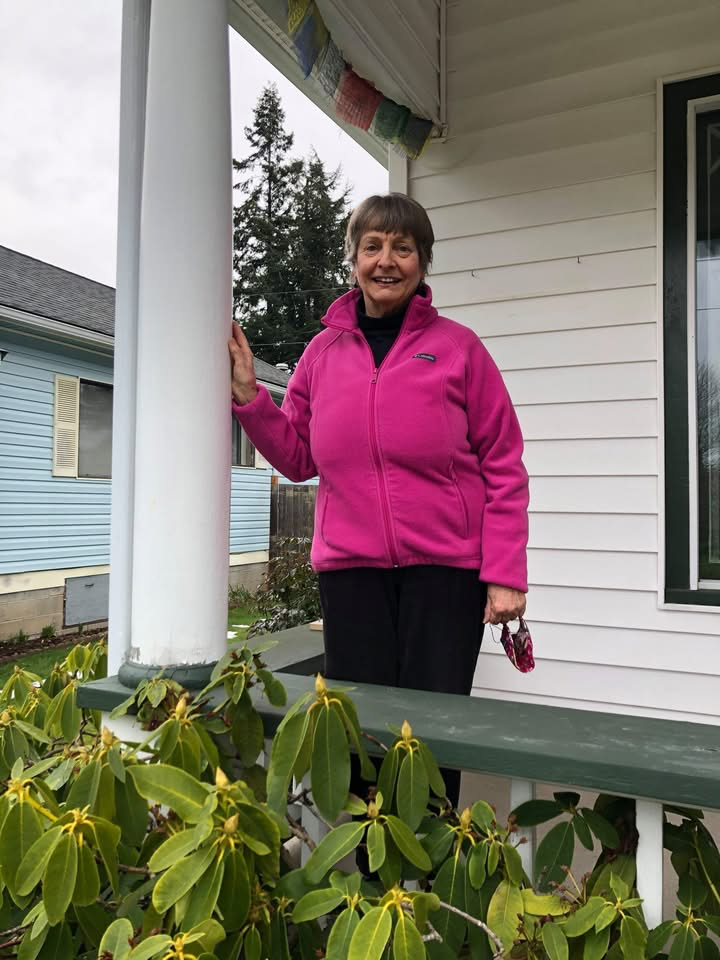
This is my nextdoor neighbor Cat. She is nice. Not only has she put up with the often startling sounds and smells coming from our house for the past 5 years, but she also is attempting to single-handedly defeat the local housing crisis by selling her home to a rad young family for a fraction of its fairly obscene 'market' value. This is after signing over not only her first but also her second Covid stimulus check to worthy local non-profits like Kulshan Community Land Trust and Bellingham Food Bank.
"I'm on a fixed income," she said at the time with a shrug. "I don't need this extra money."
The concept of 'extra money' is not one that gets much play in these pre-apocalyptic times, but Cat put hers where her mouth is every chance she gets.
We'll miss her, but are looking forward to getting to know our new neighbors who wouldn't otherwise be able to establish permanence in Sunnyland or probably any neighborhood in Bellingham without Cat's mercy and grace.
And the best part of this feel-good Friday tale is that we're having a garage sale to offload Cat's 'extra things' next weekend. Come by on Saturday for some bargains or even bring something of your own to sell-- we'll have plenty of space. And of course, all proceeds will go to Planned Parenthood, duh.
Panic 22
FaceBook ruminations on re-release of 1991’s Epidemic, published October 2022

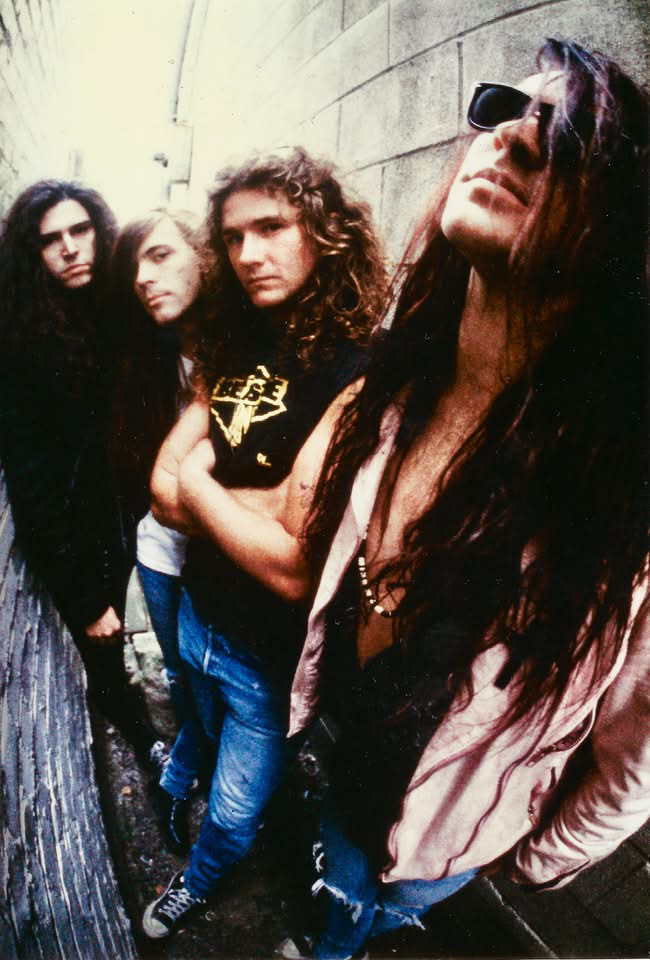
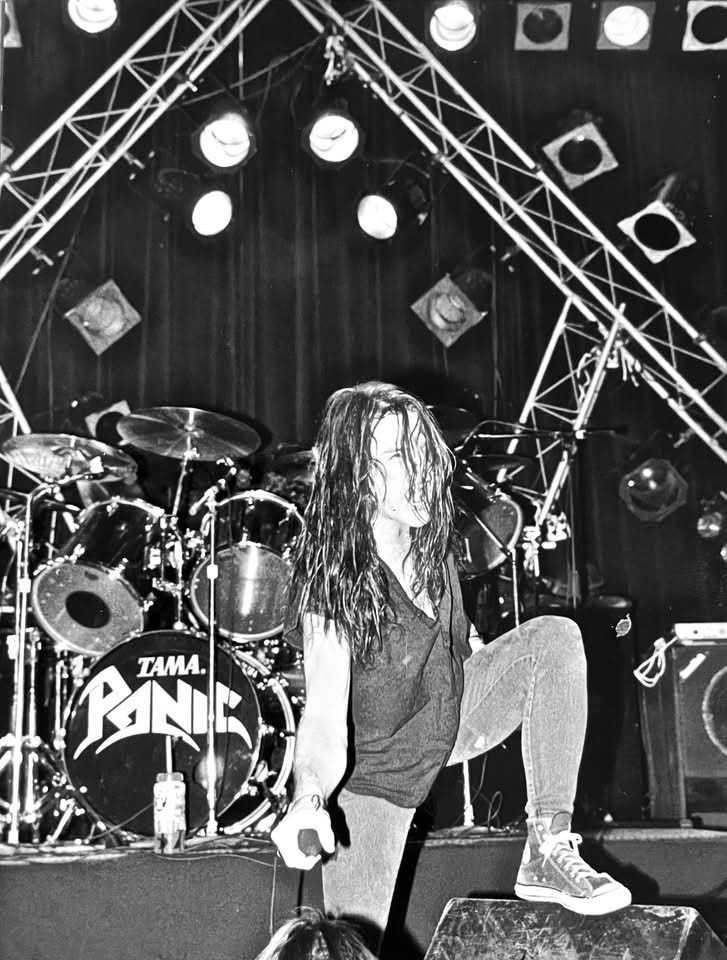
My feelings are mixed about the re-issue of the 1991 Panic debut Epidemic. An advance copy arrived in this morning's post.
For those who haven't known me for 31 years, I was a teenage headbanger. That's right-- an unwashed, underemployed, denim & leather wrapped, fully involved disco-hatin' rivet head.
To be fair, I'm still a little rough-hewn. But in my 20s I was an authentic dirtbag. And a pretty bitchin' heavy metal singer to boot.
My first band was Panic (5/18/85--10/08/93) and it was pretty much the only thing that mattered to me for most every one of those days. I managed to keep some relationships together and I did gut out a bachelor's degree and somehow avoided getting hooked on dark drugs. But from the time he woke up in the afternoon until the time he ran out of gas in the middle of the night, Jeff was all about THE BAND.
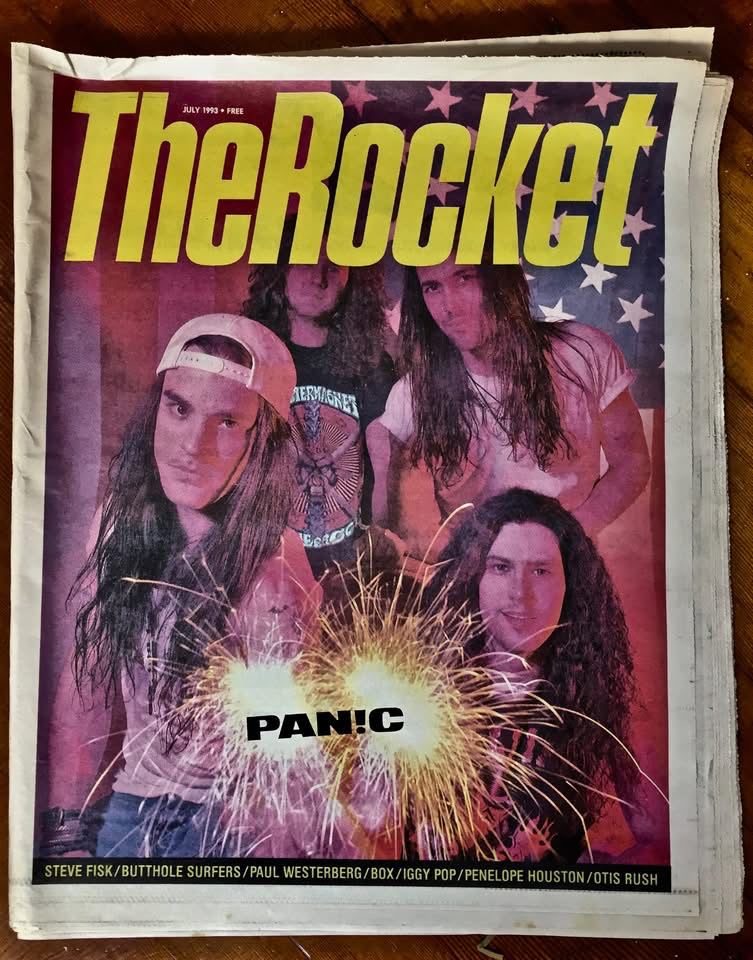
We didn't make it. Our timing was just a few ticks off, as you-know-what plugged in and took over Seattle (and the world) in the early 90s. The once-dedicated audience for heavy Heavy Metal went fickle and the labels & media wouldn't return calls. We walked before they made us run, quitting while we were-- if not ahead-- then at least not yet a total joke. It is true, in fact, that we were on the cover of the beloved Rocket Magazine at the time we mutually decided to throw in the bandana. There's some heavy metal irony for you right there...
It was unreasonably fun and rewarding being in a struggling heavy metal band. I wouldn't trade the experience for anything, but at the same time I don't entirely see the point in revisiting it. Reissuing Epidemic wasn't mine or anyone in the band's idea. In fact, I begged the guy who purchased the licensing from the original label not to do the project. I don't blame him for following through with it-- reissues are part of what his label does and he'd paid good money to Metal Blade for the rights. I just thought it was perfectly fine where it was-- fairly rare (12,000 original cops sold, most on CD & cassette, though some vinyl was pressed) and out of print. It wasn't hurting anyone, and I'd have preferred it stay that way.
But it was going to come out with or without my cooperation, so I wrote some liner notes and sent a bunch of photos and relics to M-Theory to make an updated insert. And it looks fine. Part of the reason I resisted the idea to begin with is because I know what a hungup loon I've become about stuff like this-- and if I can't control every aspect of production, I'll resent the finished product. So I certainly would have laid it out differently. And used different fliers. And a different typeface. But they did a decent job with it visually and didn't edit my notes and the ad copy someone wrote for it is actually very good and so I'm not complaining or at least shouldn't be. I'm not.
I haven't listened to it because my record player is broken. I'm sure it sounds fine, but you can also just listen to it on Sonicare or whatever the fuck it's called. Nobody knows where the masters are, so I imagine it was duped off a CD. There is a download card for a 3-song demo recorded the summer before the record was-- songs from the album, but demo versions. That part's kind of interesting, I'm sure I haven't heard those since then. But that was duped off a cassette (I assume) so it warbles a bit. Gives it some character, I guess.
Another reason I'd hoped Epidemic wouldn't be reissued is that I expected to feel a tiny tug to observe the release with a party or even a show. With a solitary exception, Panic has avoided the weary trend of reuniting and in fact have only performed once in the 29 years since we disbanded, at a reunion for a sick friend. That benefit raised nearly $10,000 which made it totally worth it. But I believe that heavy metal ship has sailed, and without SOMETHING THAT I CAN TOTALLY CONTROL like a live show to celebrate the release, it just seems a bit hollow.
I don't know how much these cost, but there's only 300 of them. So if you want one then order before midnight tonight and receive as an added gift the scabs and/or beard clippings from a band member. Order before noon tomorrow and receive a stool or seed sample. Before the weekend you get a ketchup packet. After that not sure...
Metal Gateway
Appearance on Metal Gateway podcast April 2024
Super stoked for my good friend Brian Sibley and his new podcast Metal Gateway. Each week Brian interviews a different used-up rivethead about how they first got into heavy metal. Lots of interesting historical discussions ensue.
Episode III lands today featuring a particularly chafed piece of spent metal trash.
Pass it on!
Read (& Buy) My Novella
FaceBook launch of ‘Like a Nepenthe’ October 2, 2024
I know we’re not supposed to write novellas. My friend Jeff G has some tips on how to keep a short story from turning into one. I should have paid closer attention.
“This,” he said of ignoring his advice, “is how novellas happen.”
To be fair, I wasn’t in my right mind. I had Covid 19 in the spring of 2022 and was confined to the attic where there’s also a bath and my writing desk. I had a pretty good fever going on day 2 and didn’t want to waste it, because I think unusual art can be wrestled from fever if you’re lucky and don’t expect too much. I started writing a story that had been on my mind for years. It was actually a true story, as told by a friend. I didn’t know many of the details, so I used what I did know and began to apply some shading around the edges to fill in the rest.
By the time my fever broke, I had 20,000 words-- almost none of them true. It had turned fairly unexpectedly to fiction and it kind of wrote itself. I was really only reacting, and was as surprised and offended as anyone by the developments.
The central event of the story, revealed in the first chapter, is truthy. The rest of it is recklessly embellished and in fact outright made up. Likeness to any person living or dead is coincidental. For the most part. You know who you are…
Like a Nepenthe is not really a mystery, though there is some intrigue. It’s definitely not a love story, though there is some affection and also even some actual sex. Amid the despair that permeates most of the story, there is hope—and in the end perhaps even some genuine redemption.
Several of the characters are young adults and as a result it sometimes reads like YA. But there’s also more cursing and bong hits, drunk driving and littering than in conventional YA, so I’m claiming my own genre. I am planting my flag in YFA!
In addition to the unsafe modeling, there’s also some spare use of vocabulary that we no longer use today but which was common in 1977 when the story is set. That’s just how people talked back then. They smoked indoors, too! I should know: I Was There. And though I wasn’t driving with a beer between my knees or smoking in the dentist waiting room when I was 12, I was there-- taking notes. I’m a Boomer after all. By three months. I was born this day in 1964.
If we were together I’d let you pick up lunch. If we’d already eaten, I’d suggest you buy me a drink instead. Not gifts so much as courtesies, issued on one’s birthday.
But we’re not together. So all there is left for you to do for me is read my stupid novella.
Not today though! I wouldn’t ask that. You can read the first chapter today, however. On my birthday, as a courtesy to me.
Register for my SubStack. That’s how I’m going to publish this story. I’m going to post it on SubStack, one chapter at a time. So you don’t have to read it today even though today is my birthday. You can read it tomorrow or the next day if you want.
It’s easy and free to register for by following the link below. I don’t think you’ll get tortured too much by SubStack, if you’re someone who worries about registering for stuff. It’s not the dark web or the deep state or the black sabbath or whatever the fuck it is you call it. It won’t ask for any sensitive information and it won’t ask you for money. It might offer the opportunity to give me money, but please don’t do that. If that option appears, just click on NOT NOW or CONTINUE AS GUEST or DEADBEAT CHICKENLICKER or whatever the opposite of PLEDGE is. You can buy me an ice cream sandwich or a lap dance next time we’re together. For now, I’d be super stoked if you just registered and read the first chapter. It’s 2000 words and should take you less than 10 minutes.
I’ll be in Canada if you need me for anything. With the exchange, I’m only like 52 up there.
--jb
(You can now purchase the whole novella in convenient PDF format, by clicking here.)
Odd Ones Out
Originally published in What’s Up! Magazine, 2014

It always works, dressing children up as adults. Like those greeting cards from the '90s with the 8-year-old couple dressed in pearls & oversized porkpies, kissing on a parkbench. Cute! Or talking animals— it works every time.
But about halfway through the second verse of any Odd Ones Out song, a listener realizes these kids can actually play. Whoa. They can actually play really good...
Comprised entirely of middle school students, a couple kids in this band aren’t even technically teenagers yet. When Callous French was 12, he was still eating dirt. These boys are playing regular paying gigs and getting ready to make an album. And sometimes they even dress up like rock stars.
Readers of this magazine may remember Vinnie Blackshadow, the kooky 9-year-old who wore self-styled KISS makeup and his mother’s platform boots in 2006, spitting fake blood during his solo sets opening for the DTs, the Trucks and No-Fi Soul Rebellion. The kid stayed odd, but eventually got bored playing solo shows for grown-ups, yearning for homies of his own.
Tanner Wallace was a new kid in town, and the two boys quickly found common ground on a fretboard, spending hours learning and writing songs while their peers played violent video games. The duo was invited to perform at school, but knew that in order to take this thing to the next level, they would need to flesh out a proper band. Still, finding kids their age who could actually play ( and who wanted to rock ) proved no easy task.
Through BAAY the boys fell in with keyboard & utility wiz Kaleb Harrison. Another kid at school they’d been pressuring to join—bass player Gus Danielson—reluctantly agreed. And in the spring, the last piece of the odd puzzle was added when Vinnie & Tanner arranged a donught meeting at LeFeen’s with Toby Bruce, an 11-year-old blue-eyed drummer from Australia. It was all settled…
With personnel in-place, the marvels realized they needed songs, gigs & better gear—and an arms race broke out. Piece-by-piece, the ante was raised: tube amps started showing up; bass rigs; keyboards with seemingly infinite numbers of keys & sounds; road cases; Fenders, Gibsons & Gretches—oh, my!
The songs flowed. Vinnie had a pretty good backlog of material from his solo days, much of which was adaptable for OOO. He & Tanner continued working on original material while the band learned a gang of covers that by Halloween would enable them to play an impressive two hours if necessary. They did-- and more gigs followed.
Like I said, the first time you see the band you can’t help but cock your head and say “Aww-- look at that little fella behind that huge drum kit. The bass player’s wearing mirrored sunglasses indoors, how cute. Whoa—is that Moby Dick they’re playing?” It totally is. Including the drum solo. They play a couple of Zeppelin songs, actually. But don’t call them classic rock unless you want a headstock in the junk.
“We’re more like vintage rock,” the band texted me, “You don’t hear our songs on the radio. Not Yet.”
Perhaps the most remarkable feature of this band, though, is its versatility. Cellos, violins, ukeles, shoulder-mounted harmonicas. Kaleb doubles on sax ( see ya later, Alligator ). Bellingham Youth Jazz Band, Mt. Baker Youth Symphony, busking regimen, BAAY, tutors—all of it. They’re like a middle-school hard rock Devotchka, passing instruments around and singing harmonies. They read, but they still rock. It’s actually pretty fucked up.
After their homework is finished, they plan to make a record at Binary and a viral-friendly video with HandCrank. They intend to lie to some more motel desk clerks and stay up super late. They’re Odd Ones Out.
Sunshine too bright
Unpublished review, 2023
Patti comes from a big family and once every few years there’s a reunion.
It was OK I guess.
The beds were comfortable but I didn’t sleep very well. The towels seemed brand new, but they were blue and I like white towels best in vacation rentals. The weather was hot and the pool felt good to swim in but your hair always looks bad later after it dries. Plus going inside to get more beer in wet shorts always makes you cold because the air conditioning worked pretty strong. There was plenty of propane in the barbecue, but we didn’t get enough oysters so we had to cook some of those frozen hamburger patties and I always eat too many of those because they’re so small. The patio was cracked and Auntie Patti stubbed her toe twice. Also the can opener didn’t work!!!
The house was pretty big and there were lots of board games— not that we played any, instead sitting around drinking beer and talking about the people that weren’t there. I’d rather play board games.
Kim & Caleb were nice, and he came right over to fix the stereo but he was wearing a black cowboy hat and I don’t know if he’s an antifa or not.
But yeah, it was OK I guess. Lots of parking. Two stars.
Joe the Barker
Originally published on The Electric Kool-Aid Real Estate Test, January 2015
Just in time for the holidays, this happened.
A Papa Murphy's pizza restaurant in Bellingham, WA teamed up with a local job placement service to re-assign and elevate a popular disabled neighborhood panhandler, creating a win-win-win situation for the ages.
Joe B. made a decent supplemental living for years working the southeast corner of James and Alabama Streets in Bellingham's up-and-coming Sunnyland neighborhood with a cardboard sign that read NO DRUGS. In October, thanks to the creativity of a forward-thinking caseworker, Joe was handed a W2 and issued a uniform and a foamcore arrow sign advertising Papa's famous pizza dough (baked fresh daily). Joe’s territory hadn't changed-- but everything else had.
"It seemed like an obvious application," said Isaac Fornettes, Joe's case manager at Service Alternatives a social service that specializes in job placement for the disabled. "I approached Papa Murphy’s and they were very receptive. The rest was easy."
Haven Cole, manager of the Papa store in Sunnyland Square hired Joe on the spot, after an hour-long interview.
"Joe had a lot of questions," explained Haven smiling, suggesting Joe was as much interviewing her as the other way around. If she is trying to conceal her pride in having Joe on her staff, she's doing a terrible job of it. With deep, expressive eyebrows, a medusa, and earlobes stretched from tapers, Haven beams when talking about her star barker. “Joe’s got a big heart,” she said, shrugging. “Why wouldn’t you hire him?”
For his part, Joe is very committed to what he’s doing, putting that big heart on display every shift. Throwing himself into his work with seemingly little regard for his rotator cuffs, his curb crackles with energy. Crouching and leaping, Joe cycles through a routine of moves, but favors one he calls steering wheel-- a vigorous side-to-side shimmy guaranteed to grab the attention of even the most distracted driver. Sometimes he dances. Often he waves. Occasionally he sings, changing the words of folk songs to incorporate pizza, signs and cars. But mostly, it’s steering wheel for up to four hours at a time.
“As long as it works,” he says, punctuating the statement with a finger in the air.
Originally from Arizona, Joe moved to Washington State ten years ago in search of better healthcare. He is very open in discussing the automobile accident and the resulting brain injury that has stunted his physical and non-physical development. Joe was two years old at the time of the accident. He’s now 35.
Relaxing in the subsidized apartment where he lives alone, Joe indeed has questions. He wonders why people would be interested in reading his story. The drapes in his apartment are drawn against the late afternoon sun shining over the traffic on I-5 just outside the window. It is the Tuesday before Thanksgiving and the windchill outside makes it feel like it’s about zero degrees. The heat in the apartment is turned up very high.
To go with his questions, Joe has plenty of answers, and he doesn’t mind being asked stuff. His responses generally start out low, then crescendo in the middle as his engagement in the topic builds, before tapering down and concluding where they started, almost in a whisper. His favorite pizza is the 5-meat, which he takes with Diet Pepsi. The smore dessert pie is pretty good, too, for $5. Plus he gets half-off after his shift, so it’s only $2.50. Even I can easily divide $5 in-half, but Joe is very good with numbers, quickly recounting to the minute his last four shifts and effortlessly calculating their corresponding gross pay. He also has a deep knowledge of the WTA bus system and can tell you most any stop on most any route.
Joe doesn’t drive. He “tricks” traffic by walking King Street under Alabama. He’s well-known in Sunnyland and can be seen on his way to work or the bank. His previous straight job, before he was with Service Alternatives, was filling soap bottles at Brambleberry Soaps, also in Sunnyland. Joe likes his current position better, saying the soap job was “boring, after all.”
And while he admits the Papa Murphy’s job pays better than panhandling (a term he & Isaac both use freely), he does not look back on it as a negative chapter in his life. In fact, he may actually still keep it as a hobby, though not in Bellingham.
“It’s been rewarding to watch this transformation in Joe,” says Isaac. “But he was a bit reluctant at first to give up panhandling. He knows he has a presence in the community now, though, and that he can’t have both.”
Joe explains how he apprenticed under an experienced panhandler who still works Sunset Square. At the time, Joe would wander the sidewalks in front of the smaller shops flanking what was then Cost Cutter. But The Master taught Joe how to design a sign, always being careful to include NO DRUGS and/or ALCOHOL. Joe also learned to take a perch on the corner, where the automobile traffic was. But since the Sunset corners were crowded, Joe struck out on his own, staking his claim on James Street, where he stayed until falling in with Isaac & Haven late this summer.
Next time you pass Joe on the corner give him a wave or a shimmy with your wheel. Better yet, pull in to Papa Murph’s and grab a pie. Tell ‘em Joe sent you!