Vietnam 2026
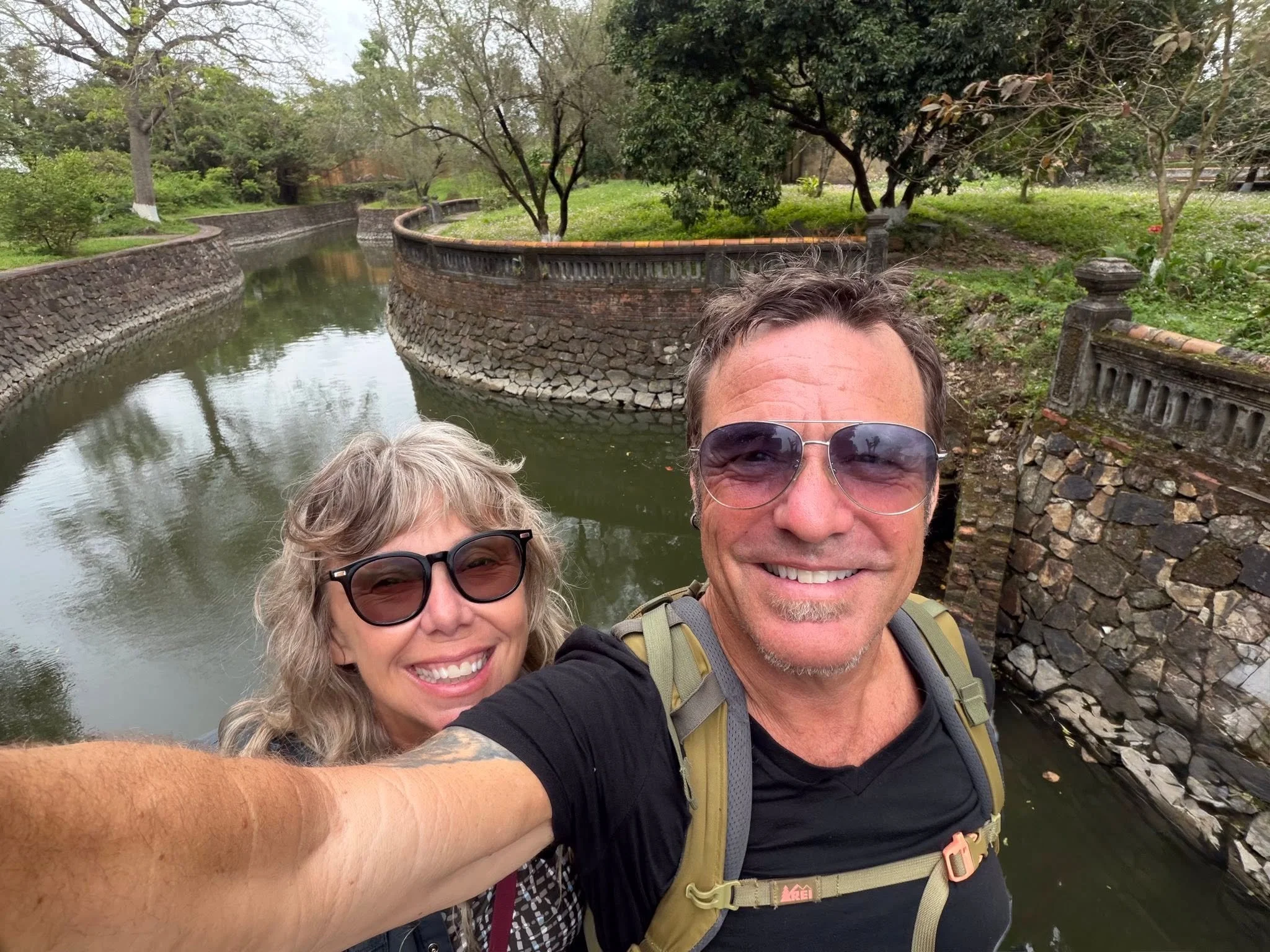
I met an Ong from Dong Hoi City and
He was headed for
Marble Mountain and some
Homemade Bun Mam Nem
From Son Doong Cave the Co’s are travelin’ down
To Hoi An’s sunny shores
From Hanoi clear down to Saigon town
The traffic it will slow you down
But there’s no place like home
for Tet…
It has been such a thrilling treat to be in Vietnam for this colorful celebration! Imagine landing in the US on December 10 without understanding why everyone has LED lights on their fences and pine trees on the tops of their cars and why the same songs seem to be playing in all the stores. A couple of bearded dudes keep showing up— one in red and the other is always barefoot and you’re not sure if they’re different spins on the same guy or if they’re rivals or what. Everyone seems busy yet happy and people keep greeting you in a code that doesn’t really translate on Google.
That’s like Tet.
It’s rich & complex, like a lot of stuff in Vietnam. We knew before coming here that Tet is like Christmas and New Years and Easter all rolled into one. We understood it to be the observance of the start of the Lunar New Year and that is lasts a month. We were prepared for a crescendo of celebration and commerce to be followed by a quiet period during which we might not be able to get a ride or a sandwich.
But as it turns out, there’s a lot more to Tet.
To grasp the concept more completely, you need to first understand the religious landscape of Vietnam. If anyone does in fact understand the religious landscape of Vietnam, I would appreciate being filled in!
With temples and pagodas and skyscraping Buddhas everywhere, you’d think that Vietnam is a very religious place. But the fact is that 4 out of 5 Vietnamese identify as atheist or at least non-religious. The Buddhisty icons and imagery (and practice) are everywhere—but the most widely-claimed organized religion is actually Christianity at less than 20% of the population.
It’s awkward. For centuries, Southeast Asia had a perfectly good Buddhist swing going, and then the French and Portuguese showed up with their bro Jesus during the 17th century and now shit’s all fucked up.
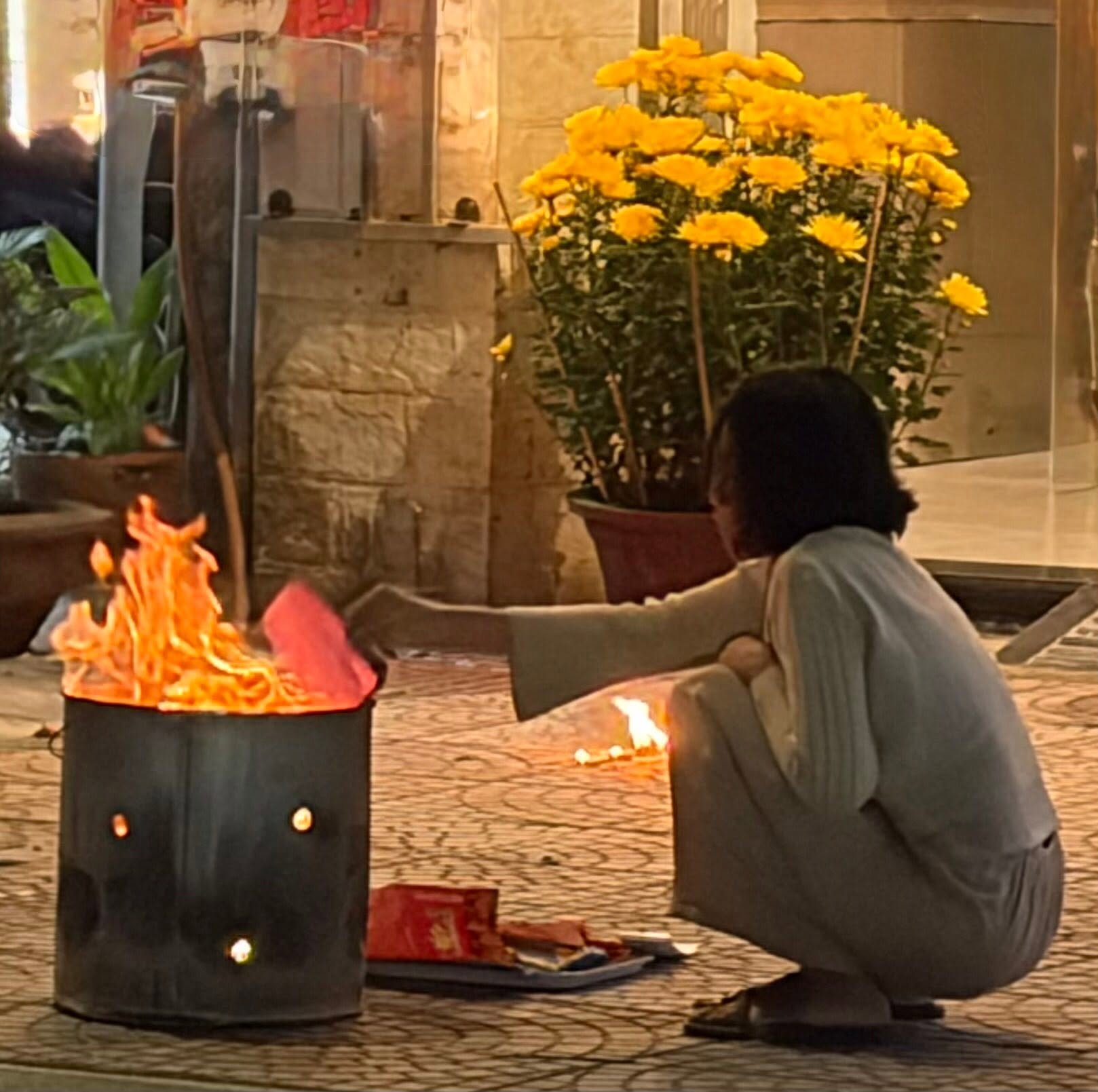
Not for the Vietnamese themselves— more just for busybody foreigner bloggers trying to figure out who’s in charge religiously. In the west, we have a very ‘my god can beat up your god’ approach to religion. Not so here. Best I can tell, folks generally worship ancestry, luck, and ceremony for ceremony’s sake. You don’t really need a proper God to burn incense or make a remembrance to your deceased grandparents. You don’t need dogma to pray for prosperity in the coming year. You just need the incense and some candles, a few energy drinks— maybe some cigarettes if grandpa smoked.
And of course he did! Every Vietnamese man over the age of 14 smokes. Not the ladies, at least not in public. But the men, they smoke tough.
******************************************************************
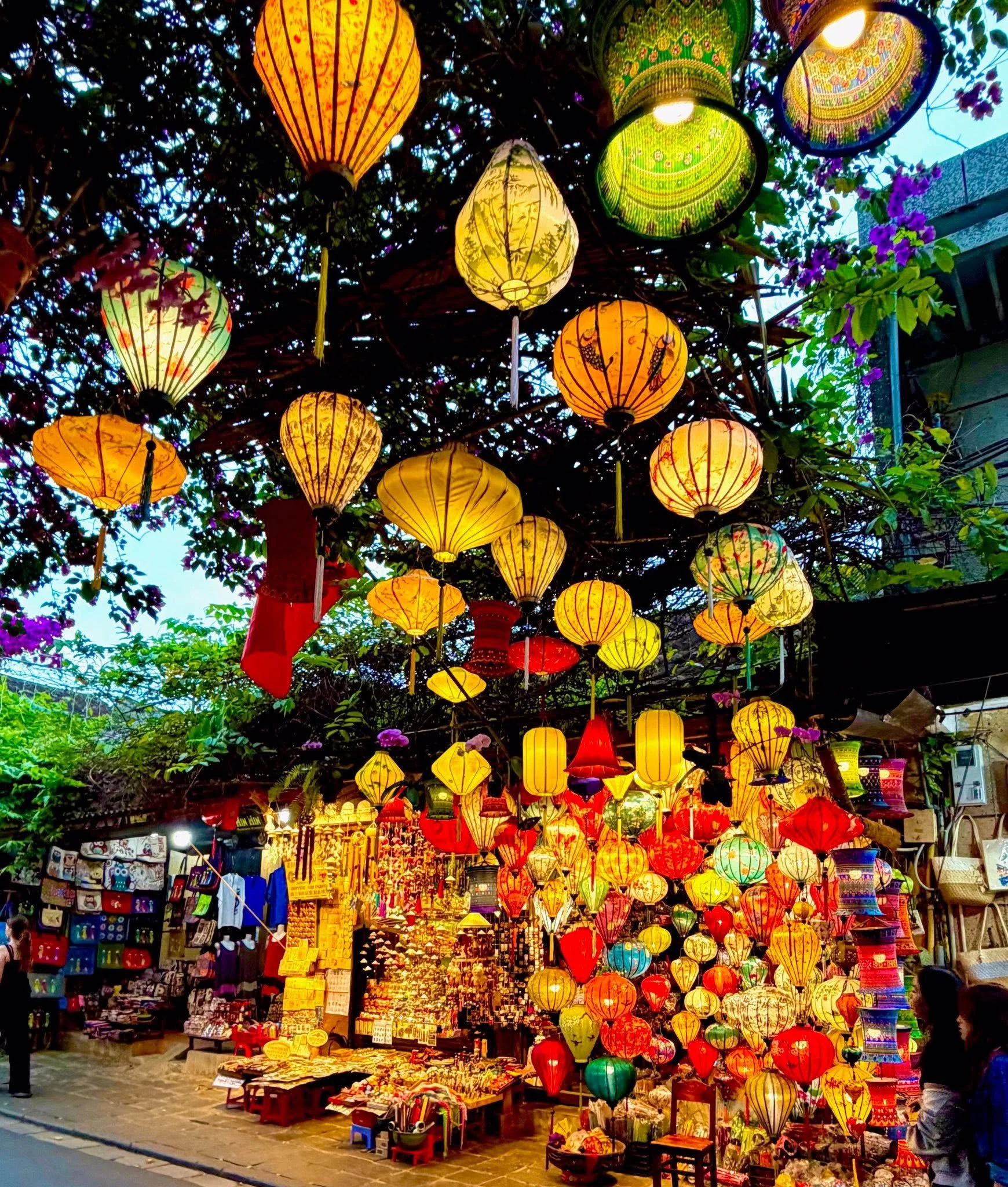
We arrived in Hoi An on Saturday afternoon via Grab ride from Da Nang. We’d heard Hoi An was ‘over-run’ with foreigners, particularly Americans. We were somewhat apprehensive about the leg, despite the fact that every driver or waitress had swooned when we said we would be in Hoi An for peak Tet. Hoi An with its ancient quarter and mad market. Hoi An with its canals and lamplit gondolas. Hoi An with its tailors and cobblers and disco beaches.
And its tourists, sure. Lots of honkies here, and Hoi An might have seemed even whiter had it not been at the climax of Tet when every native resident of Hoi An is also out, hotrodded in traditional red & gold Ao Dai dress, merrily reaching the bottoms of their Tet lists and preparing for as many as nine days off. It was like a swirling, festive holiday turf war, with the tourists staggering around all sweaty while the locals very purposefully navigated the narrow streets and alleys, busily acquiring greens and corn and rice. Herbs and a chicken. Flowers and decorations.
No last-minute trips to Fred Meyer. The Hoi An Central Market is the eye of the storm and you can get everything you need right there. WE didn’t get ANYthing there— partially because we didn’t need anything but also because it felt safer and more respectful to just stay the heck out of the way and let the professionals shred. These professionals are the aged market ladies who know their wares, how to trade with them, and how best to get from one side of the market to the other— sometimes on a motorbike or bicycle going as fast as the seething foot traffic will allow. When (if) you see them coming, you simply step aside. They are beyond reproach—the absolute top of the labor chain and an exquisite marvel to behold.
If you want souvenirs, they’re nearby— stall after stall hawking keychains and t-shirts, coasters and coffee. Beyond those stalls are the leather shops and tailors where things start to get really interesting.
Patti and I had planned on having suits made in Hoi An, known for its tailors and bespoken garments. And we’d actually stricken up a What’sApp conversation with Ms Lan from Shine Tailors, a referral from our Delta Easy Rider guide Sonny. Ms Lan had answered YES to all our questions during the previous week as we asked if her shop would be open during Tet, if she shipped to the US, if she liked music or kept any pets. We were just making conversation. We had no idea what was happening on the other end of the app or what Shine would be like once we arrived.
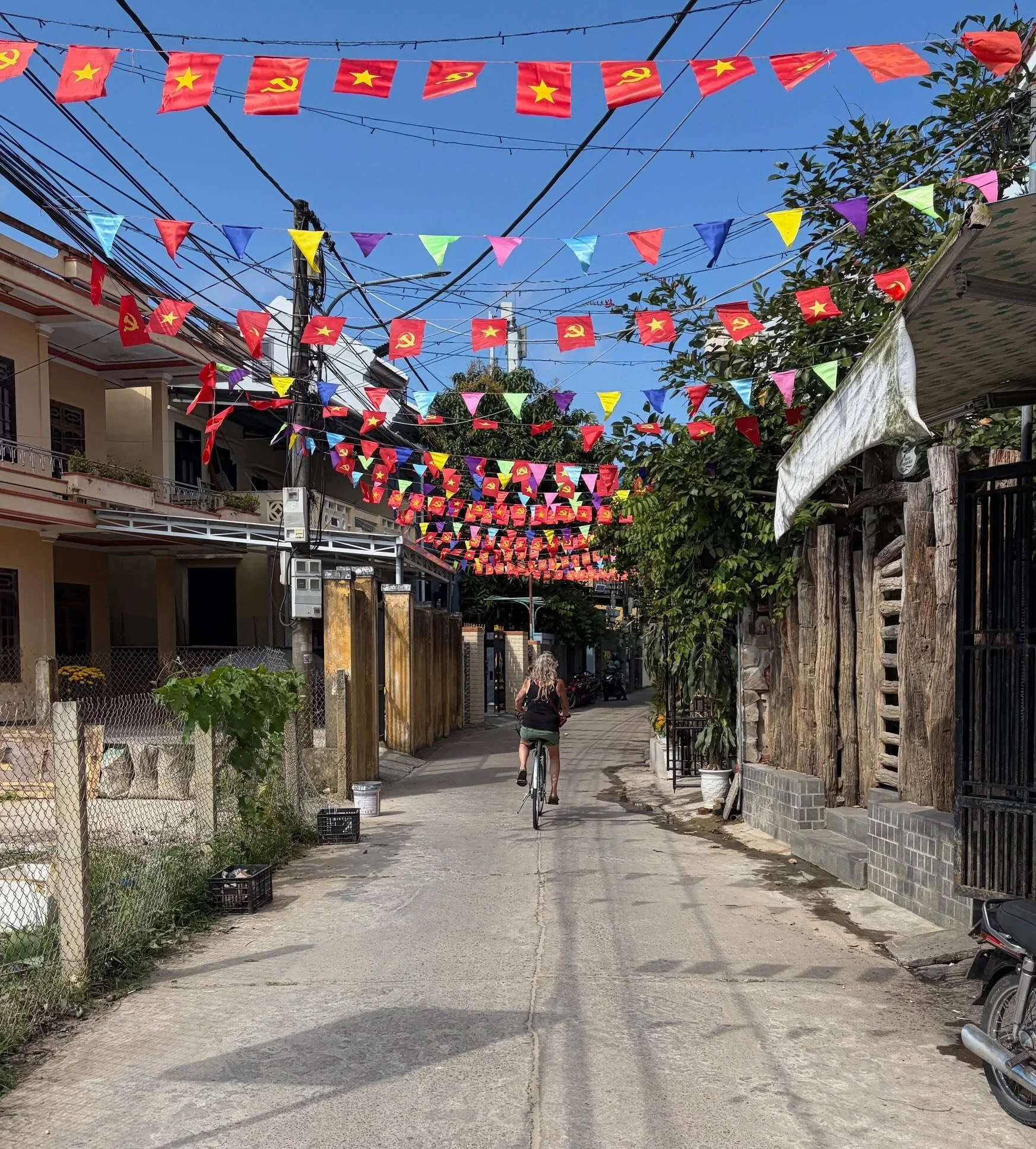
Grabs were already getting hard to come by on that Sunday afternoon, so we jumped on hotel bicycles at our groovy flop at the Ancient Garden Homestay a few kilometers outside the core. The traffic was terrific. Motorbikes everywhere, criss-crossing at every conceivable angle—the odd delivery van, horn blaring, forging a path of its own in what we quaintly like to refer to in the US as ‘the oncoming lane.’ The motorbikes just give as much as they need to in order to avoid collision— mere inches separating dozens of speeding projectiles made of steel, fiberglass and rubber. And then here’s me and Patti in the middle of everything, trying to make a left across the flow, ten motorbikes wide. No helmets, no lights, no brakes. It was quite insane. Riding a bicycle in inner Hoi An during Tet was definitely the most-dangerous thing I’ve ever done more than once.
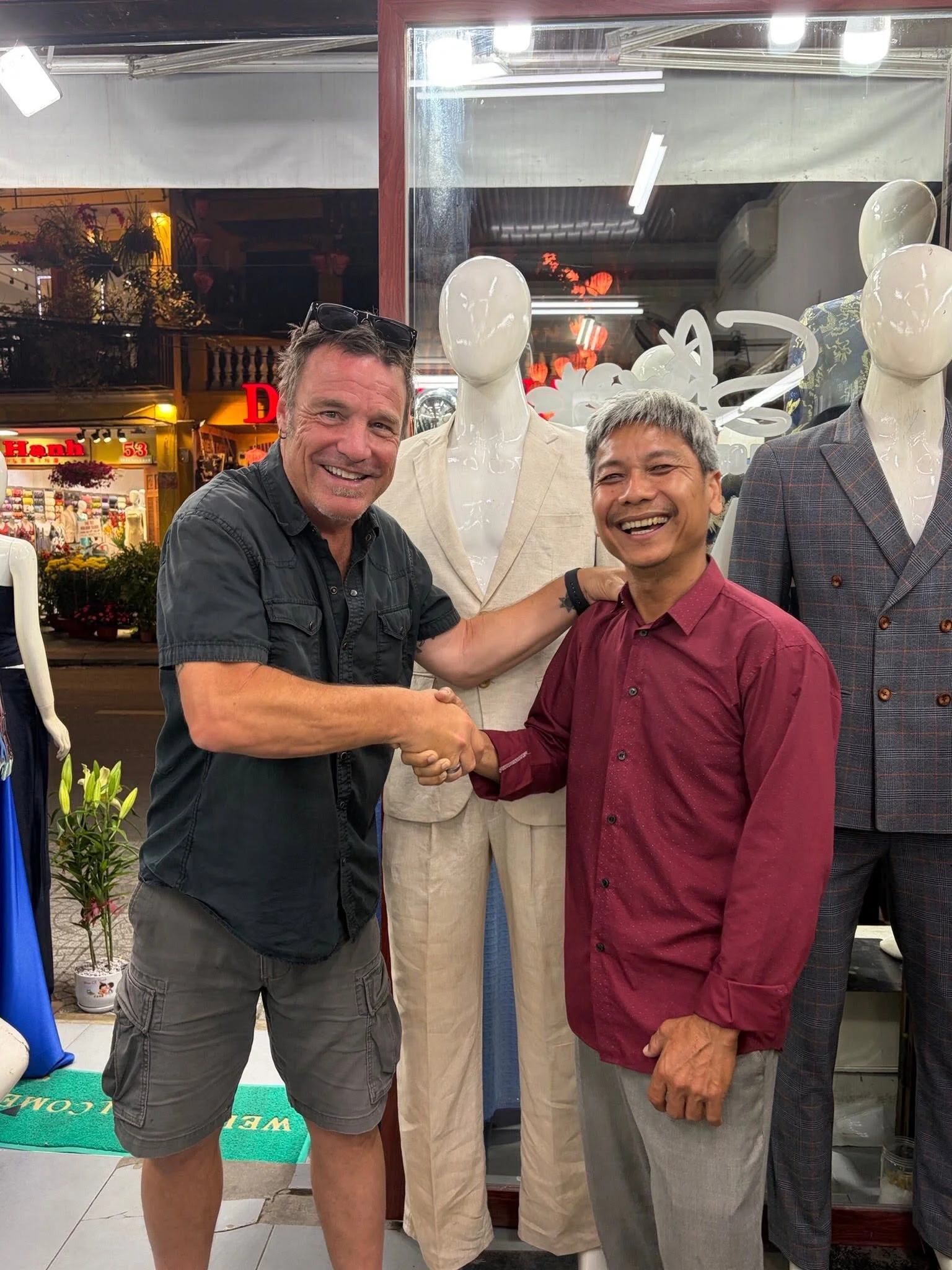
And then dig Ms Lan. I don’t know what we expected. Like she was just going to be alone in her soft, quiet shop— sitting at her sewing machine, watching the door for us to walk in? We naive Americans! We would end up spending a lot of time in Shine over the course of the next three days and I don’t know if she ever connected us to the text thread with Sonny’s friends from America. There wasn’t time. From the minute you enter the shop until you emerge exhausted, it’s high-stepping fast-talking action. The shop is just like all the others on Tran Hung Dao Street, with hairless, faceless, sharp-dressed manikins on the sidewalk and flanking the tiled entrance. The interior of the shop is narrow with a series of long tables running the center and fabric shelves up and down both outer walls. There are half-dressed Swedes and Australians standing at the double-sided mirror at the back of the shop being measured, chalked and pinned by Ms Lan and her daughter. The son is scribbling down the measurements the ladies are furiously dictating in tailor’s Vietnamese. And working the front of the room is the ringmaster Chinh, the gentleman of the household.
Chinh carries on no fewer than five conversations with various groups of customers at any given moment. But when he’s talking with you, sitting sideways, left arm slung languidly over the back of the chair, you get the feeling you’re the only person of importance to him in the shop. In the whole city! There’s no hurry— no problem. He’s asking you where you’re from, what you do there, how long you’ve been in Vietnam, where you’re going next. The usual stuff, but he is such a gifted conversationalist (in his second language) that you don’t realize you’re being measured and chalked. And then seemingly in the middle of a sentence he casually rises and pivots to one the other accounts, all the time greeting new arrivals and handing out bottles of cold water.
We both overpaid for our suits (by Vietnamese economic standards) but it was an extraordinary experience and after all it WAS Tet. The garments were ready for a fitting within 24 hours and alterations were complete in another 24. Basically like on Christmas Eve they were sewing our suits, despite our objections (kind of). The work is great and the suits are in the mail now. It will be interesting to see if they do actually arrive. I don’t expect them before Memorial Day either way.
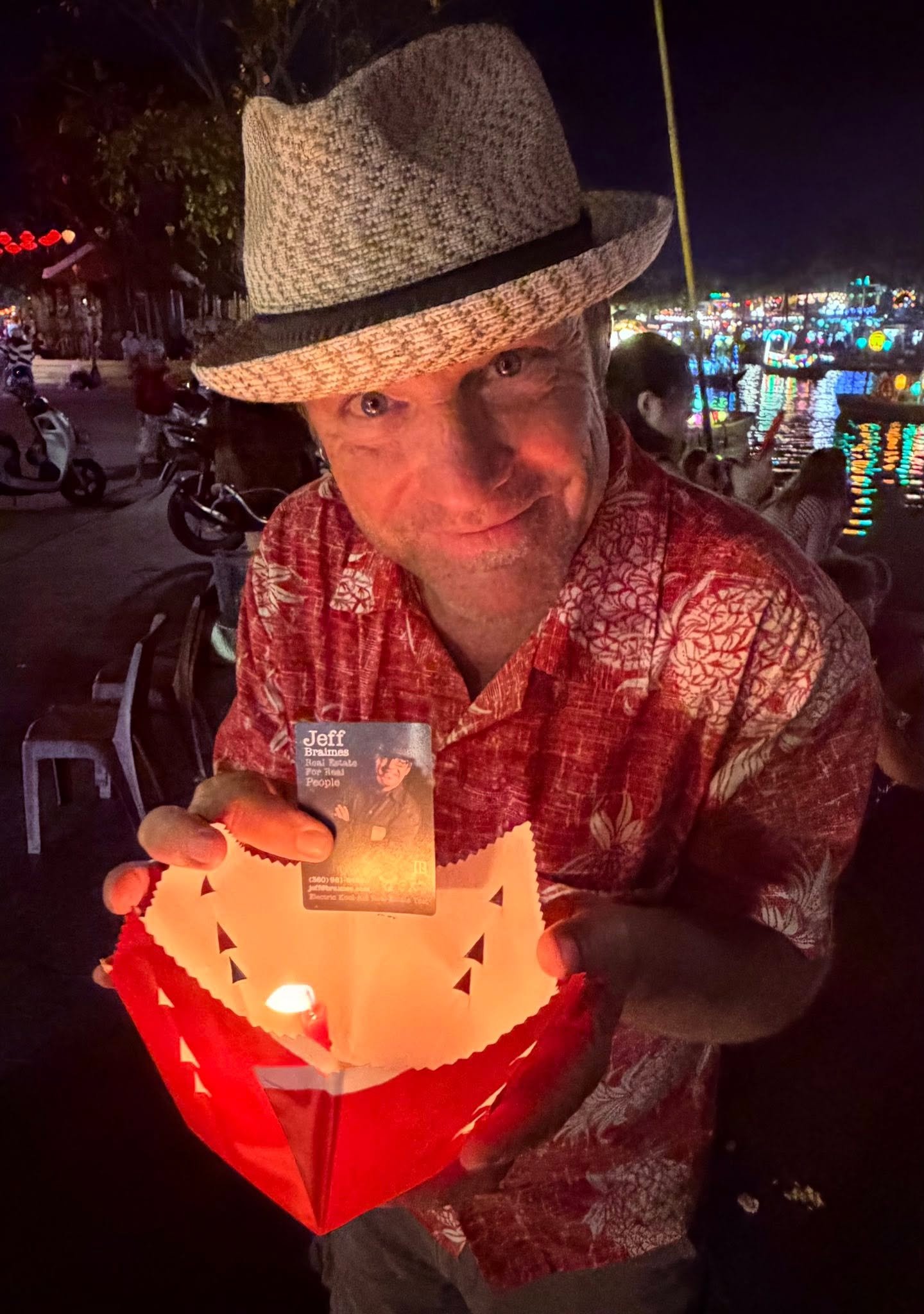
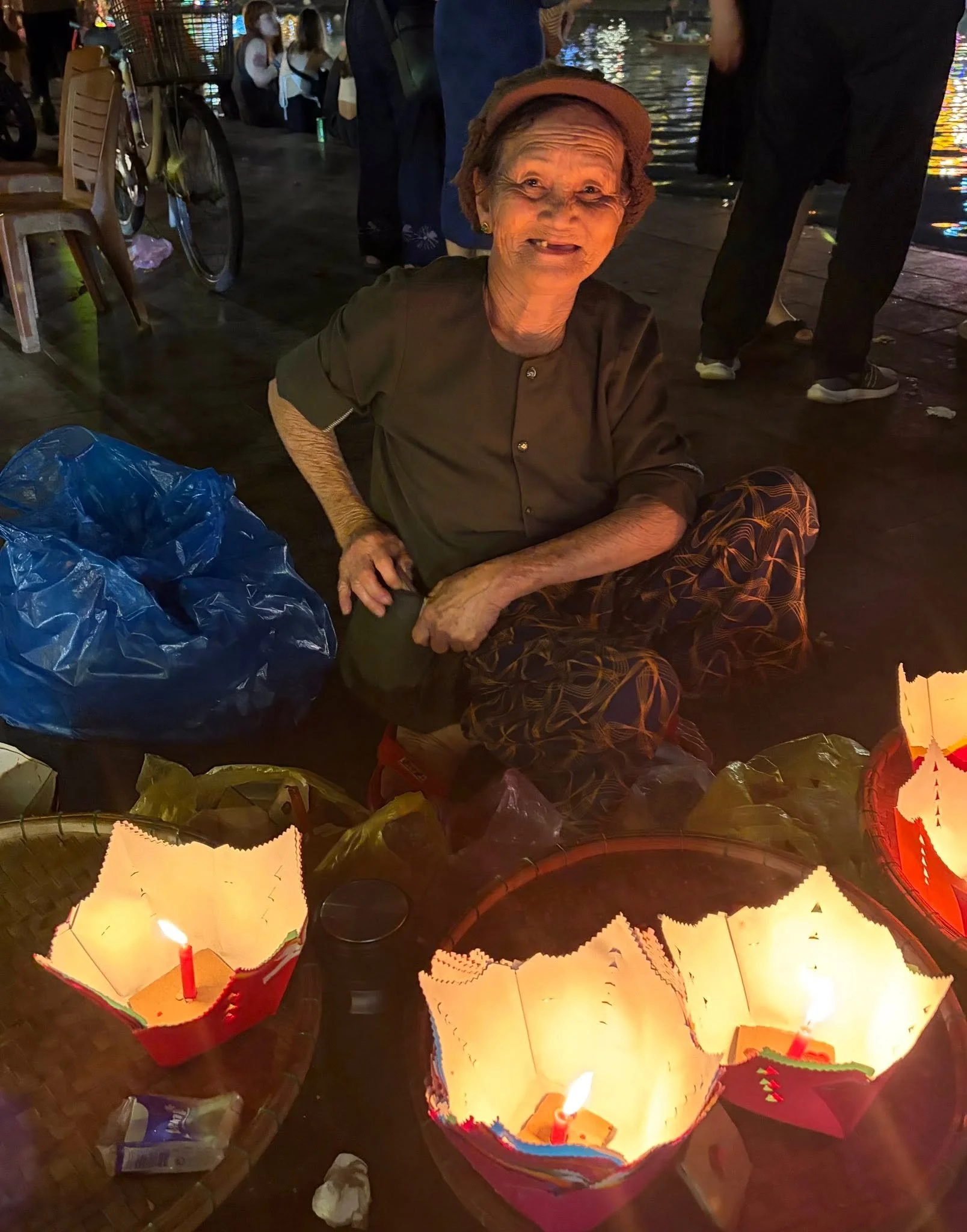
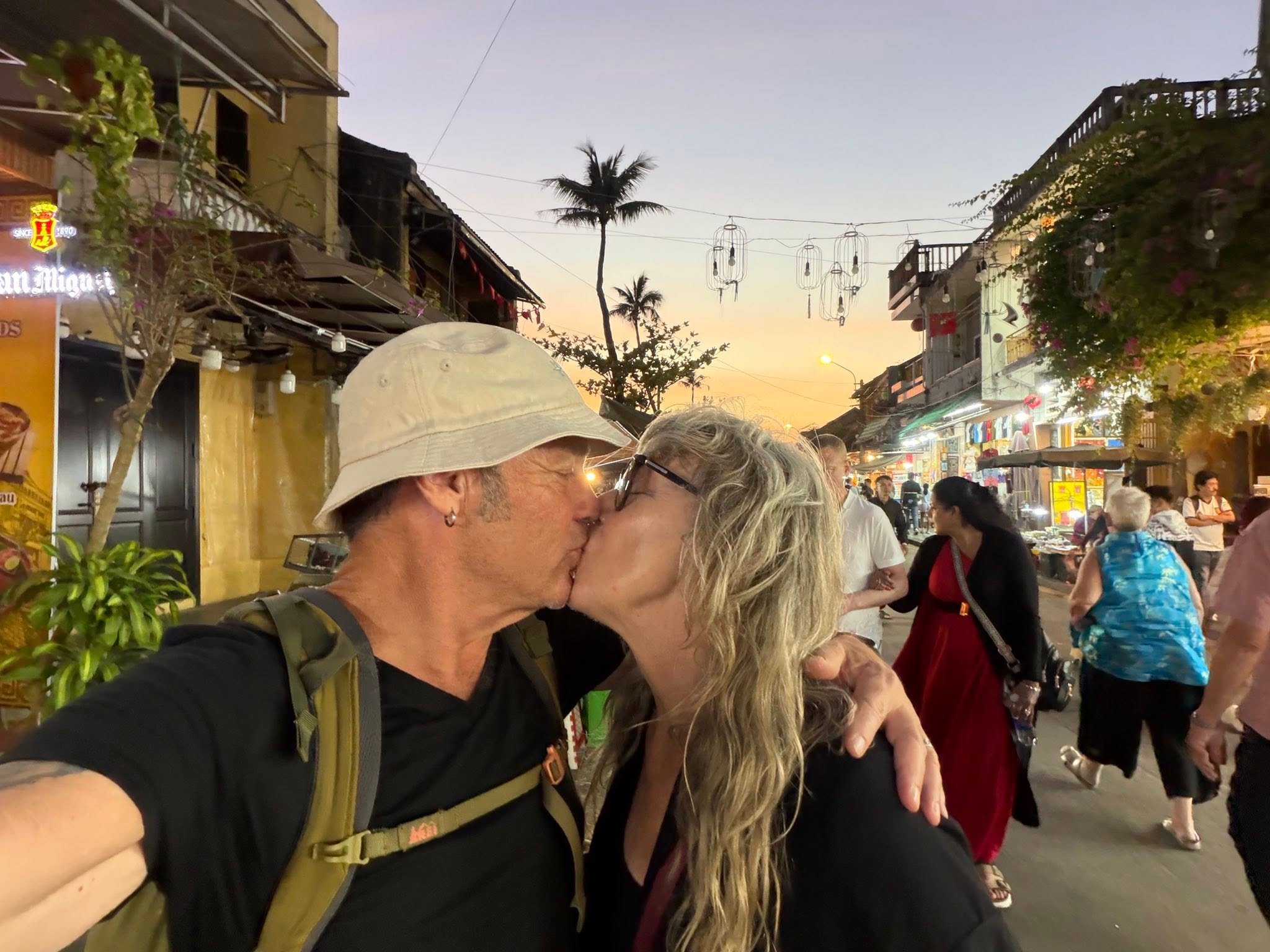
On the night of the 17th, we pedaled back to the old town around 9pm to wait for the fireworks and experience the turning of the clock on another lunar year. 2026 is the Year of the Horse and there was much optimism and toasting in the streets and along the stone-lined canals. Lots of the shops had closed by now, but there was still plenty of street food for the eating, Hudas for the drinking, and paper lanterns for the launching. We bought one each for the kids’ health and I launched one for prosperity in my business. We used the hearty grinning ba lao’s 10’ bamboo ladle to lower them into the canal and watched them float lazily down the polluted waterway toward the East Vietnam Sea. A striking, slender Vietnamese woman in a gold brocade Ao Dai and conical stepped gently onto the Cam Nam Bridge, the handlebars of a bicycle in one hand and her identically dressed 7-year-old son’s hand in the other. The crowd parted as the two made their way to the other side of the footbridge where the family Tet celebration was already underway. Big magic.
******************************************************************
With considerable regret, we bade farewell to the adoring staff at the Ancient Garden and climbed onto the backs of two Easy Rider motorcycles bound for the Imperial Capitol city of Hue. We would spend some moments fondly recalling our Delta guides Sonny & Tim, as today’s Riders simply were not as Easy. Coarse where our previous guys had been kind; pushy where the others were patient; smoking constantly where Sonny & Tim didn’t smoke— it was a different experience altogether, and we were glad it was only a day trip.
We did get to see the mind-bending City of Ghosts in An Bang, basically a 700-acre cemetery of ADU-sized tombs. Built and owned by individual families, each its own mosaic variation on a very strict theme— front entrance with staircase leading to the open central platform and ultimately to the enclosed altar in the back. Symmetry is the standard in all Vietnamese architecture, including monuments of worship and memorial. But nowhere is it more evident than in the luxury death villas at An Bang.
There was a different kind of Tet energy in Hue. Like Hoi An, there were hoards of locals out Tetting in the downtown area, but this was a much more contemporary scene. A much younger crowd, and instead of traditional dress they were wearing black and ready for clubbing. House music bounced from the larger open-air bars and it was clear that this cycle of Tet was for seeking companionship— at least for the kids in this university town. We had sushi this night and were asked by a pedi-cab driver if we were looking for the cocaine. It felt like Hong Kong.
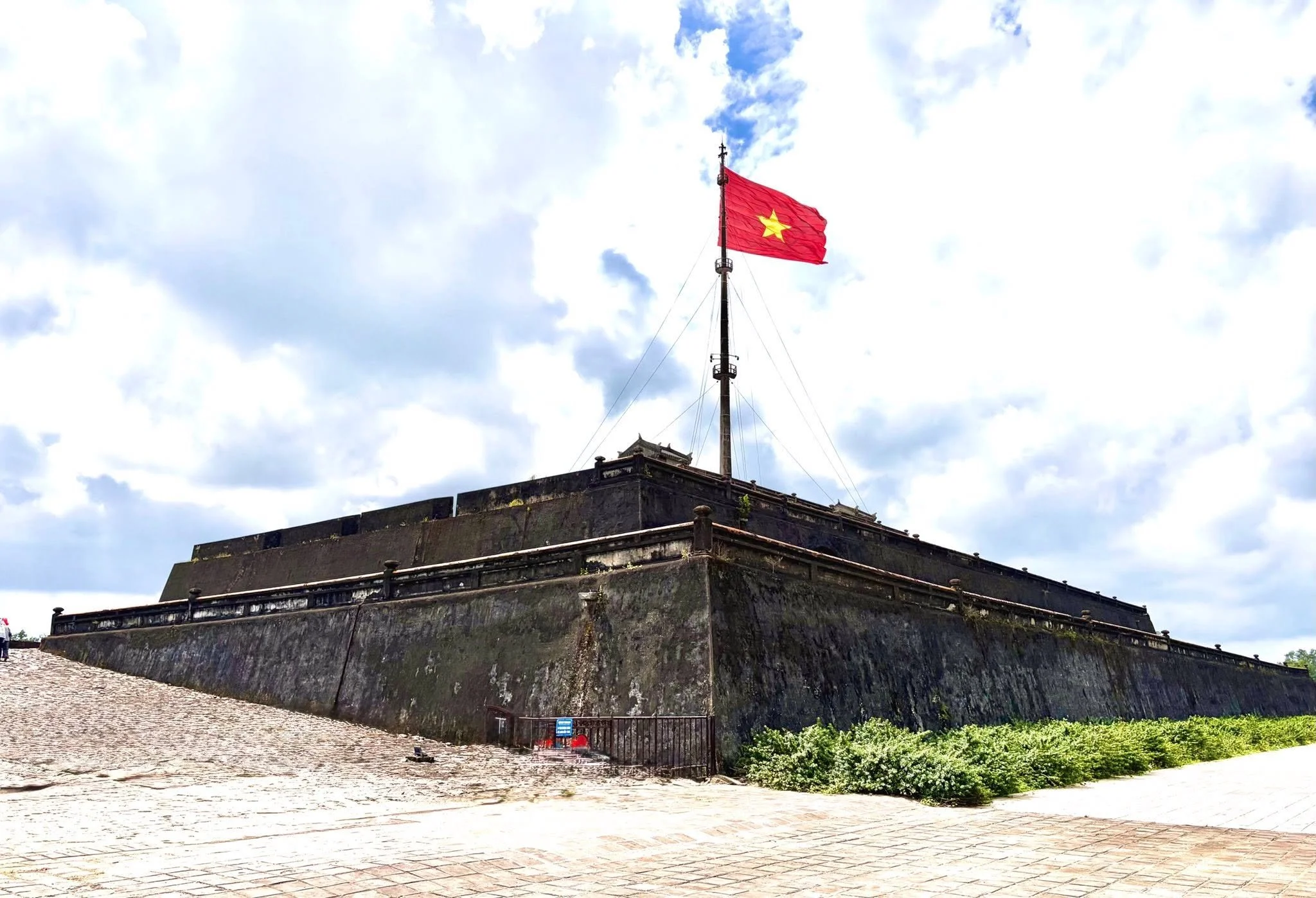
We did explore the Imperial Palace complex the next day, the walled city the Nguyen Dynasty Emperor commissioned in the 19th century. The grounds were sprawling, and the elegant main palace had been renovated in a sweeping public project during Covid. Bao Dai abdicated in 1945, handing the keys to Vietnam over to Ho and dissolving the Monarchy.
And that was all super interesting and everything else like that, but we had other stuff on our minds. We had to pack for the next morning’s sleeper bus that would take us to Dong Hoi and ultimately to Phong Nha and the world’s greatest caves